
Single Member LLC: Indiana

A Single Member Limited Liability Company (LLC) in Indiana offers entrepreneurs a flexible and straightforward structure for operating a business while safeguarding personal assets. As the simplest form of LLC, it combines the liability protection of a corporation with the tax advantages and operational ease of a sole proprietorship. Indiana’s business-friendly environment streamlines the formation process, requiring minimal paperwork and no mandatory annual reports, making it an appealing option for solo business owners. This structure allows individuals to maintain full control over decision-making while benefiting from pass-through taxation. Understanding the requirements, benefits, and potential limitations of a Single Member LLC is essential for anyone considering this model in Indiana.
Forming a Single Member LLC in Indiana: Key Considerations
What Is a Single Member LLC in Indiana?
A Single Member LLC in Indiana is a business structure that combines the flexibility of a sole proprietorship with the liability protection of a corporation. It is owned and managed by one individual, shielding personal assets from business debts. Indiana recognizes Single Member LLCs under state law, provided they follow registration and compliance requirements.
See AlsoSingle Member LLC: Colorado| Key Feature | Detail |
| Ownership | One individual or entity |
| Liability Protection | Personal assets shielded |
| Taxation | Pass-through by default |
| Formation Requirement | Articles of Organization filed with Indiana SOS |
Steps to Form a Single Member LLC in Indiana
To establish a Single Member LLC in Indiana, follow these steps:
1. Choose a unique business name compliant with Indiana naming rules.
2. File Articles of Organization with the Indiana Secretary of State (SOS).
3. Appoint a registered agent with a physical Indiana address.
4. Obtain an EIN from the IRS for tax purposes.
5. Create an Operating Agreement (recommended but not mandatory).
| Step | Requirement |
| Filing Fee | $95 (online) / $100 (mail) |
| Processing Time | 1-3 business days (online) |
| Name Reservation | Optional ($20 fee) |
Tax Implications for Indiana Single Member LLCs
By default, Indiana Single Member LLCs are treated as disregarded entities for tax purposes. Profits/losses flow to the owner’s personal tax return. However, owners must pay Indiana state income tax (3.23% flat rate) and self-employment tax. Electing corporate taxation (IRS Form 8832) is optional.
See AlsoSingle Member LLC: Massachusetts| Tax Type | Details |
| Federal Tax | Pass-through via Schedule C |
| State Tax | 3.23% income tax |
| Sales Tax | 7% if selling taxable goods |
Compliance Requirements for Indiana Single Member LLCs
Indiana requires Single Member LLCs to file a Biennial Report every two years ($50 fee) to maintain active status. Failure to comply may result in administrative dissolution. Additionally, businesses must renew licenses/permits and update the SOS about major changes (e.g., address or registered agent).
| Requirement | Deadline |
| Biennial Report | Due every even-numbered year |
| Franchise Tax | Not applicable to LLCs |
| Recordkeeping | Maintain financial/legal documents |
Benefits of an Operating Agreement for Indiana Single Member LLCs
Though not legally required, an Operating Agreement clarifies ownership structure, profit distribution, and procedures for dissolving the LLC. It strengthens liability protection by proving the LLC operates separately from the owner’s personal affairs.
See AlsoSingle Member LLC: Tennessee| Component | Purpose |
| Management Structure | Defines decision-making authority |
| Dissolution Terms | Outlines closure process |
| Asset Protection | Reinforces limited liability status |
What is the point of a single-member LLC?
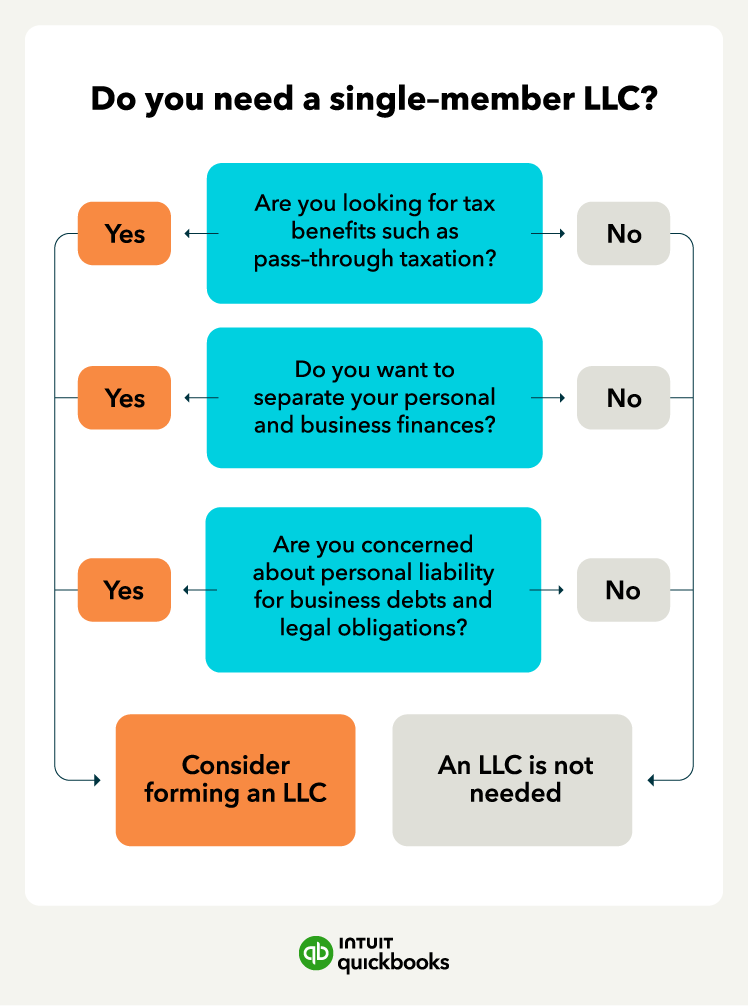
What Are the Core Benefits of a Single-Member LLC?
A single-member LLC combines the liability protection of a corporation with the simplicity of a sole proprietorship. It shields personal assets from business debts and legal claims while offering tax flexibility. Key advantages include:
See AlsoNew Mexico Single Member LLC Filing Requirements- Limited liability: Personal assets (e.g., homes, savings) are protected from business liabilities.
- Pass-through taxation: Profits/losses are reported on the owner’s personal tax return, avoiding double taxation.
- Operational flexibility: Fewer formalities compared to corporations (e.g., no board meetings).
How Does a Single-Member LLC Protect Personal Assets?
A single-member LLC creates a legal separation between the owner’s personal finances and business obligations. For example, if the LLC faces a lawsuit or debt, creditors typically cannot pursue the owner’s personal assets. This protection hinges on:
- Maintaining corporate formalities: Keeping business and personal accounts strictly separate.
- Proper registration: Filing Articles of Organization with the state.
- Avoiding commingling: Never mixing personal and business funds.
What Tax Advantages Does a Single-Member LLC Offer?
By default, the IRS treats single-member LLCs as disregarded entities, meaning profits are taxed only once via the owner’s personal return. However, owners can also elect corporate taxation for potential savings:
See AlsoSingle Member LLC: Wyoming- Sole proprietorship taxation: Simpler reporting with Schedule C.
- S Corp election: Reduces self-employment taxes by splitting income into salary and distributions.
- Deductible expenses: Business-related costs (e.g., equipment, travel) lower taxable income.
Why Choose a Single-Member LLC Over a Sole Proprietorship?
While both structures are simple, a single-member LLC adds enhanced liability protection and professionalism. Unlike sole proprietorships:
- Legal separation: Personal assets are not at risk in business disputes.
- Credibility: An LLC structure may attract more clients or investors.
- Tax options: Flexibility to optimize tax strategies beyond sole proprietorship limits.
How Easy Is It to Manage a Single-Member LLC?
Single-member LLCs require minimal administrative effort compared to corporations. Key management features include:
- No board requirements: No need for annual meetings or complex governance.
- Simpler recordkeeping: Basic financial records suffice in most states.
- Scalability: Easily add members or convert to a multi-member LLC later.
How is a single-member LLC taxed in Indiana?

Federal Tax Treatment of a Single-Member LLC in Indiana
A single-member LLC in Indiana is typically treated as a disregarded entity by the IRS for federal tax purposes. This means the LLC’s income and expenses are reported on the owner’s personal tax return using Schedule C (Form 1040). The owner is subject to:
- Self-employment tax (15.3%) on net earnings.
- Federal income tax based on the owner’s individual tax bracket.
- Potential estimated quarterly tax payments to avoid penalties.
Indiana State Income Tax for Single-Member LLCs
Indiana imposes a flat 3.15% state income tax (as of 2023) on the LLC owner’s taxable income. Key considerations include:
- Reporting business income via Form IT-40 (Individual Income Tax Return).
- Deducting business expenses to reduce taxable income.
- Potential additional county-level income taxes, depending on the owner’s residence.
Sales Tax Obligations for Single-Member LLCs in Indiana
If the LLC sells goods or taxable services, it must register for a Indiana Registered Retail Merchant Certificate and collect sales tax (7% state rate, plus local rates). Requirements include:
- Filing Sales Tax Returns (Form ST-103) periodically.
- Remitting collected sales tax to the Indiana Department of Revenue.
- Maintaining records of taxable transactions for audits.
Self-Employment Tax and Deductions
Owners must pay self-employment tax (Social Security and Medicare) on net earnings. Strategies to minimize liability include:
- Deducting business expenses (e.g., supplies, travel, home office).
- Contributing to a SEP-IRA or Solo 401(k) for tax-deferred savings.
- Claiming the 20% Qualified Business Income Deduction (if eligible).
Annual Reporting and Compliance Requirements
Indiana requires single-member LLCs to file a Business Entity Report biennially, with a $50 fee. Additional obligations include:
- Maintaining a registered agent and updated business address.
- Renewing industry-specific licenses or permits.
- Separating personal and business finances to preserve liability protection.
Do single-member LLC pay taxes?
How Do Single-Member LLCs Report Income to the IRS?
A single-member LLC is typically treated as a disregarded entity by the IRS, meaning the business itself does not file a separate tax return. Instead, the owner reports income and expenses on Schedule C (Form 1040) as part of their personal tax return.
- Pass-through taxation: Profits or losses pass through to the owner’s personal tax return.
- Self-employment taxes: Owners must pay Social Security and Medicare taxes on net earnings.
- Quarterly estimated taxes: Owners may need to pay taxes quarterly if expecting a tax liability of $1,000 or more.
Are Single-Member LLCs Subject to Self-Employment Taxes?
Yes, single-member LLC owners must pay self-employment taxes (15.3%) on net income, covering Social Security and Medicare contributions.
- Net earnings threshold: Applies to profits exceeding $400 annually.
- Deductions: Owners can deduct 50% of self-employment taxes paid.
- Exemptions: Passive income (e.g., rental income) may not be subject to self-employment taxes.
Do Single-Member LLCs Pay State Taxes?
State tax obligations vary but often mirror federal treatment. Most states require single-member LLCs to report income on the owner’s personal tax return.
- State income tax: Paid based on the owner’s residency or where the LLC operates.
- Franchise taxes: Some states (e.g., California) impose annual fees or taxes on LLCs.
- Sales tax: Required if the LLC sells taxable goods or services.
Can a Single-Member LLC Opt for Corporate Taxation?
A single-member LLC can elect corporate tax status by filing Form 8832 with the IRS, changing its default tax classification.
- C corporation: Pays corporate income tax, and profits distributed as dividends are taxed again.
- S corporation: Avoids double taxation but requires payroll taxes on owner salaries.
- Deadline: Must file Form 8832 within 75 days of the tax year starting.
What Deductions Are Available for Single-Member LLCs?
Owners can claim business deductions to reduce taxable income, similar to sole proprietors.
- Operating expenses: Rent, utilities, and supplies.
- Home office deduction: For workspace exclusively used for business.
- Health insurance: Premiums may be deductible if the LLC shows a profit.
Frequently Asked Questions About LLCs (FAQs)
What are the steps to form a Single Member LLC in Indiana?
Forming a Single Member LLC in Indiana involves several key steps. First, choose a unique business name that complies with Indiana naming rules and includes LLC or a similar designation. Next, appoint a registered agent with a physical address in Indiana to receive legal documents. Then, file the Articles of Organization with the Indiana Secretary of State, either online or by mail, along with the required filing fee. You’ll also need to obtain an Employer Identification Number (EIN) from the IRS, even if you don’t have employees. Finally, consider drafting an Operating Agreement to outline business operations and liability protections, though it’s not legally required in Indiana.
Does a Single Member LLC in Indiana require annual reporting?
Yes, Indiana requires Single Member LLCs to file a Business Entity Report every two years. This report, submitted to the Indiana Secretary of State, ensures your LLC’s contact and registered agent details are up-to-date. The filing fee is $50, and the deadline typically falls on the anniversary month of your LLC’s formation. Failure to file may result in penalties or administrative dissolution of your LLC. Additionally, Indiana does not impose a separate franchise tax on LLCs, simplifying annual compliance.
How is a Single Member LLC taxed in Indiana?
A Single Member LLC in Indiana is treated as a disregarded entity by default for federal tax purposes, meaning profits and losses are reported on the owner’s personal tax return via Schedule C. Indiana follows federal tax treatment but requires LLCs to file a state tax return if they owe state income tax. The state imposes a flat 3.15% individual income tax rate on pass-through business income as of 2023. Additionally, Indiana LLCs may need to pay sales tax, use tax, or withholding tax depending on their activities. Electing S-corp taxation is also possible for potential tax savings.
What liability protections does a Single Member LLC offer in Indiana?
A Single Member LLC in Indiana provides limited liability protection, separating personal assets from business debts and legal claims. This means creditors generally cannot pursue the owner’s personal property, such as a home or savings, for business-related obligations. However, this protection isn’t absolute: courts may pierce the corporate veil if the owner fails to maintain legal and financial separation between personal and business affairs. To preserve liability protections, ensure proper documentation, avoid commingling funds, and adhere to compliance requirements like annual filings.
Leave a Reply
Our Recommended Articles