
How to Find a Technical Cofounder

Starting a tech-driven venture often hinges on partnering with a skilled technical cofounder, yet many non-technical entrepreneurs struggle to bridge this gap. A technical cofounder brings not only coding expertise but also the ability to transform ideas into scalable products, navigate complex development challenges, and align technology with business goals. However, finding the right match requires more than networking; it demands a strategic approach to identify someone who shares your vision, complements your skills, and commits to the long-term journey. This article explores actionable steps—from leveraging niche communities to fostering trust through shared milestones—to help you secure a technical partner capable of turning your startup vision into reality.
How to Find a Technical Cofounder: A Step-by-Step Guide
1. Identifying Your Technical Needs and Project Scope
To find a technical cofounder, start by clearly defining your project’s technical requirements and scope. Understand whether you need expertise in software development, AI/ML, mobile apps, or scalable infrastructure. Outline the minimum viable product (MVP) goals and long-term vision. This clarity helps attract candidates whose skills align with your project. For example, a fintech startup may prioritize blockchain developers, while a SaaS product might need full-stack engineers.
See AlsoHow to Find Startup Partners| Aspect | Details |
|---|---|
| Technical Role | Backend Developer, Frontend Developer, Data Scientist |
| Key Skills | Python, React, Cloud Architecture, DevOps |
| Project Stage | Ideation, MVP Development, Scaling |
2. Networking in Tech Communities and Events
Attend tech meetups, hackathons, and startup incubators to connect with potential cofounders. Platforms like Meetup.com or Eventbrite list local tech events. Engage in online communities such as GitHub, Stack Overflow, or LinkedIn groups focused on tech innovation. Building relationships in these spaces increases your chances of meeting someone passionate about your industry.
| Platform | Focus |
|---|---|
| Hackathons | Collaborative coding events |
| Startup Incubators | Mentorship and networking |
| LinkedIn Groups | Industry-specific discussions |
3. Leveraging Online Platforms and Co-Founder Matching Services
Use co-founder matching platforms like CoFoundersLab, Y Combinator’s Co-Founder Matching, or AngelList. These platforms let you filter candidates by technical expertise, location, and industry experience. Include a detailed pitch about your project’s vision and the equity structure to attract serious candidates.
See Also Where Can I Find a Pre Seed and Seed Venture Capital List in the United States
| Platform | Purpose |
|---|---|
| CoFoundersLab | Connect with verified professionals |
| AngelList Talent | Startup job and co-founder listings |
| Indie Hackers | Community for bootstrapped startups |
4. Evaluating Technical Skills and Cultural Fit
Assess a candidate’s technical proficiency through code reviews, portfolio projects, or technical interviews. Use platforms like HackerRank or CodeSignal for skill validation. Equally important is cultural fit—ensure their work ethic, communication style, and risk tolerance align with yours.
| Evaluation Method | Focus Area |
|---|---|
| Portfolio Review | Past projects and problem-solving |
| Behavioral Interviews | Conflict resolution and teamwork |
| Technical Challenges | Real-world coding tasks |
5. Structuring Equity and Roles Fairly
Define equity splits and roles early to avoid conflicts. Use vesting schedules (e.g., 4-year vesting with a 1-year cliff) to ensure commitment. Tools like Founder’s Pie Calculator or legal templates from YC’s Startup Library can guide fair agreements. Highlight how the cofounder’s contributions align with long-term growth.
See Also Which Investors Can I Approach for Funding an Idea Stage Startup
| Element | Recommendation |
|---|---|
| Equity Split | 30-50% based on role and risk |
| Vesting Period | 4 years with a 1-year cliff |
| Role Clarity | CTO vs. Lead Developer responsibilities |
How to find a CTO for your startup?
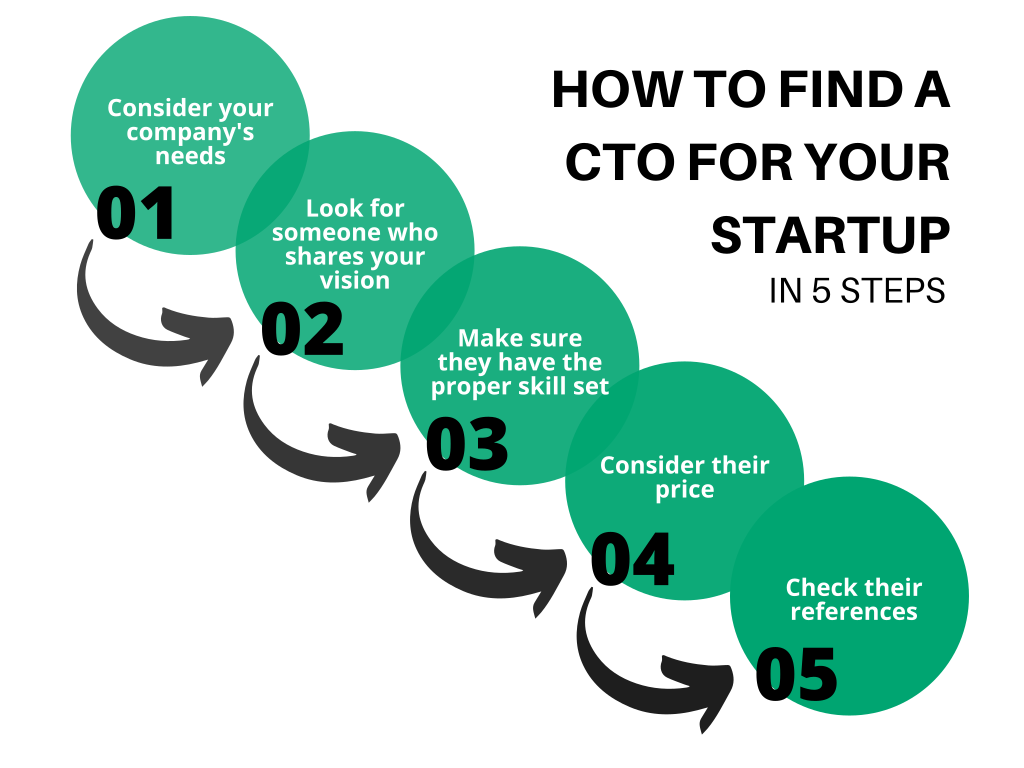
Understanding the Role of a CTO in Your Startup
A Chief Technology Officer (CTO) is critical for shaping your startup’s technical vision and execution. They oversee product development, manage engineering teams, and align technology with business goals. To find the right fit:
- Define your startup’s technical requirements (e.g., software stack, scalability needs).
- Identify whether you need a hands-on builder or a strategic leader.
- Prioritize candidates with industry-specific experience to accelerate growth.
Leveraging Professional Networks and Communities
Networking is a powerful way to connect with potential CTO candidates. Focus on tech-focused platforms and communities:
- Attend industry conferences or hackathons to meet experienced developers.
- Use LinkedIn to search for profiles with keywords like “CTO” or “Technical Co-Founder.”
- Engage in startup incubators or online forums (e.g., Y Combinator’s community).
Utilizing Freelance Platforms and Recruitment Agencies
If traditional networking isn’t yielding results, explore alternative hiring channels:
- Post opportunities on specialized job boards like AngelList or Wellfound.
- Hire a tech recruitment agency with expertise in startup roles.
- Consider freelance platforms like Toptal for short-term CTO candidates.
Crafting a Compelling Value Proposition
Top-tier CTOs seek startups with clear vision and growth potential. To attract them:
- Offer equity or co-founder status to align long-term interests.
- Highlight innovative projects or unique market opportunities.
- Showcase existing traction (e.g., funding, user base) to build credibility.
Evaluating Technical and Leadership Skills
Assessing a candidate’s technical expertise and leadership abilities is crucial:
- Review their past projects or open-source contributions.
- Conduct technical interviews with coding challenges or system design questions.
- Check references for team management and crisis-handling skills.
What to look for in a tech cofounder?

Technical Expertise and Problem-Solving Skills
A tech cofounder must possess deep technical knowledge in areas critical to your product, such as software development, system architecture, or data management. Look for someone who can translate vision into functional solutions and troubleshoot challenges creatively.
- Assess their proficiency in relevant technologies (e.g., programming languages, frameworks).
- Evaluate their track record of solving complex technical problems.
- Ensure they stay updated on emerging trends and tools in the industry.
Alignment with Vision and Passion
A tech cofounder should share your long-term vision and demonstrate genuine enthusiasm for the mission. Misalignment here can lead to conflicts or disengagement as challenges arise.
- Discuss their belief in the product’s purpose and target market.
- Confirm their willingness to commit long-term despite startup uncertainties.
- Gauge their ability to articulate how their skills align with the company’s goals.
Cultural Fit and Communication Style
Team dynamics are crucial in early-stage startups. A tech cofounder must complement your working style, communicate transparently, and foster a collaborative environment.
- Observe their conflict-resolution approach during disagreements.
- Prioritize transparency in decision-making and feedback sharing.
- Ensure their work ethic and values align with the company culture.
Adaptability and Resilience
Startups face constant pivots and setbacks. A strong tech cofounder must embrace change and maintain focus under pressure.
- Look for examples of past adaptability (e.g., shifting project scopes, learning new skills).
- Assess their response to failure and ability to iterate quickly.
- Verify their capacity to balance perfectionism with practicality in fast-paced environments.
Entrepreneurial Mindset and Business Acumen
Beyond coding, a tech cofounder should understand business fundamentals and contribute to strategic decisions, from fundraising to market positioning.
- Check their awareness of budgeting, timelines, and resource allocation.
- Evaluate their ability to communicate technical concepts to non-technical stakeholders.
- Seek evidence of proactive problem-solving beyond their immediate role (e.g., customer discovery, partnerships).
How do I find a cofounder?

Identifying Your Needs and Ideal Cofounder Profile
To find a cofounder, start by clearly defining your startup’s vision, values, and the skills required to achieve your goals. Assess your own strengths and weaknesses to identify complementary expertise. For example, if you’re technical, you might need someone with business development or marketing experience.
- Write a detailed description of your ideal cofounder, including hard skills (e.g., coding, finance) and soft skills (e.g., leadership, communication).
- Define non-negotiables, such as commitment level, risk tolerance, and alignment with long-term goals.
- Use tools like personality assessments (e.g., Myers-Briggs) to evaluate compatibility during later stages.
Leveraging Your Existing Network
Your personal and professional networks are often the best starting point. Many successful cofounder relationships begin with trusted connections who already understand your work ethic and values.
- Reach out to former colleagues, classmates, or mentors who align with your startup’s mission.
- Attend industry-specific events or alumni meetups to meet potential candidates.
- Ask for referrals from friends or advisors who can vouch for a candidate’s skills and reliability.
Engaging in Startup Communities and Events
Participate in startup ecosystems like incubators, hackathons, or pitch competitions to meet like-minded individuals. These environments attract driven professionals interested in collaboration.
- Join platforms like Meetup, Eventbrite, or LinkedIn Groups to find local or virtual startup events.
- Attend cofounder-matching sessions at conferences like TechCrunch Disrupt or Web Summit.
- Volunteer for roles in these communities to demonstrate your skills and work ethic.
Using Online Cofounder Matching Platforms
Specialized platforms connect entrepreneurs based on skills, interests, and goals. These tools streamline the search process by filtering candidates systematically.
- Create profiles on sites like CoFoundersLab, Founder2Be, or Y Combinator’s cofounder matching.
- Highlight your startup’s vision, stage, and specific needs to attract aligned candidates.
- Review profiles carefully and prioritize those with verifiable experience or endorsements.
Testing Compatibility Through Small Projects
Before formalizing a partnership, collaborate on a low-stakes project to assess communication, problem-solving, and work styles. This reduces the risk of long-term mismatches.
- Propose a short-term task, like developing a prototype or conducting market research.
- Evaluate how potential cofounders handle deadlines, feedback, and unexpected challenges.
- Discuss roles, equity splits, and decision-making processes openly during this trial phase.
What is a technical co-founder?
What Is a Technical Co-Founder?
A technical co-founder is a partner in a startup who specializes in building and managing the technology stack required to develop the product or service. Unlike non-technical founders, they possess hands-on expertise in coding, software architecture, and product development, enabling them to lead engineering teams and make critical technical decisions. Their role is pivotal in transforming an idea into a functional product while aligning with the startup’s business goals.
Roles and Responsibilities of a Technical Co-Founder
The technical co-founder oversees the creation and execution of the startup’s technological vision. They are responsible for:
- Product development: Building the core product, ensuring it meets market needs and technical feasibility.
- Technical strategy: Deciding on tools, frameworks, and infrastructure to optimize scalability and performance.
- Team leadership: Hiring and mentoring engineers, fostering a collaborative and efficient development environment.
Why Startups Need a Technical Co-Founder
A technical co-founder is essential for startups aiming to innovate in tech-driven industries. They provide:
- Speed to market: Rapid prototyping and iteration to launch an MVP (Minimum Viable Product) efficiently.
- Investor confidence: Demonstrating technical credibility to attract funding and partnerships.
- Problem-solving: Addressing complex technical challenges, from security to scalability, early in the development cycle.
Technical vs. Non-Technical Co-Founders: Key Differences
While non-technical co-founders focus on business development and operations, a technical co-founder prioritizes:
- Codebase ownership: Direct involvement in writing, reviewing, and maintaining software.
- Technical decision-making: Evaluating trade-offs between speed, cost, and quality in product design.
- Resource allocation: Balancing engineering bandwidth with feature prioritization and deadlines.
How to Identify the Right Technical Co-Founder
Finding a compatible technical co-founder requires evaluating:
- Alignment with vision: Shared passion for the startup’s mission and long-term goals.
- Proven expertise: Experience in relevant technologies and a track record of delivering projects.
- Adaptability: Ability to pivot strategies in response to market feedback or technical hurdles.
Key Skills to Look for in a Technical Co-Founder
A successful technical co-founder should excel in:
- Programming proficiency: Mastery of languages and frameworks critical to the product (e.g., Python, React, AWS).
- Leadership and communication: Translating technical jargon into actionable insights for non-technical stakeholders.
- Problem-solving agility: Debugging issues, optimizing performance, and staying updated on industry trends.
Frequently Asked Questions (FAQs)
Where Should I Look to Find a Technical Cofounder?
Networking at tech events, online communities, and startup accelerators are prime places to start your search. Attend industry meetups, hackathons, or conferences focused on entrepreneurship or specific technologies relevant to your project. Platforms like LinkedIn, AngelList, or specialized forums like GitHub or Stack Overflow can connect you with developers open to collaborations. Additionally, startup incubators or co-working spaces often host mixers where you can meet technical talent. Building genuine relationships, rather than pitching immediately, increases your chances of finding someone aligned with your vision.
How Do I Approach a Potential Technical Cofounder?
Begin by clearly articulating your business idea, market opportunity, and long-term goals to demonstrate credibility. Focus on how their technical expertise will solve a critical problem or fill a market gap. Avoid leading with equity offers; instead, emphasize shared passion, ownership, and growth potential. If you lack a prototype, consider creating a mockup or wireframe to showcase your commitment. Be transparent about your own skills and what you bring to the partnership—trust is built on mutual respect and clarity.
What Qualities Should I Prioritize in a Technical Cofounder?
Look for complementary skills, cultural fit, and commitment. Technical proficiency alone isn’t enough—ensure they understand startup challenges, such as pivoting quickly or working with limited resources. Assess their problem-solving approach, communication style, and willingness to take risks. A strong candidate will ask critical questions about your business model and show curiosity about the market. Verify their past projects or contributions to gauge reliability and passion for innovation.
How Can I Incentivize a Technical Cofounder to Join My Startup?
Offer a combination of equity, shared ownership, and clear role definition to align interests. Early-stage startups often can’t compete with corporate salaries, so emphasize the potential for long-term rewards. Structure equity agreements with vesting schedules to ensure commitment. Highlight opportunities for creative freedom, leadership, and impact—many developers seek projects where they can shape the product directly. If possible, provide a small stipend or revenue-sharing model to bridge financial gaps during the initial phase.
Leave a Reply
Our Recommended Articles