
How to Dissolve an LLC in Illinois

Dissolving a Limited Liability Company (LLC) in Illinois requires adherence to specific legal steps to ensure proper closure and avoid future liabilities. Whether due to shifting business goals, financial challenges, or retirement, formally terminating an LLC involves more than ceasing operations. Illinois mandates compliance with state regulations, including settling debts, filing final tax documents, and submitting dissolution paperwork to the Secretary of State. Overlooking these obligations may result in ongoing fees, tax penalties, or legal complications. This guide outlines the critical procedures—from member voting and asset distribution to filing Articles of Dissolution—to help business owners navigate the process efficiently and maintain compliance with Illinois law.
Steps to Dissolve an LLC in Illinois: A Comprehensive Guide
1. Understanding the Legal Requirements for Dissolution
To dissolve an LLC in Illinois, you must comply with state laws outlined in the Illinois Limited Liability Company Act. Begin by reviewing your LLC’s operating agreement for specific dissolution procedures. If the agreement is silent, state law requires member approval (usually a majority or unanimous vote). You must also settle all debts, file final tax returns, and submit formal dissolution documents to the Illinois Secretary of State (SOS).
See AlsoHow to Dissolve an LLC in Texas| Key Requirement | Description |
| Member Approval | Follow voting rules in the operating agreement or state law. |
| Debt Settlement | Pay off creditors and resolve outstanding liabilities. |
| State Compliance | File Articles of Dissolution with the Illinois SOS. |
2. Filing Articles of Dissolution
The Articles of Dissolution formally terminate your LLC’s existence. File this form with the Illinois SOS online or by mail. Include details like the LLC’s name, dissolution date, and member approval status. A $5 filing fee applies. Once processed, the state will issue a Certificate of Dissolution, confirming your LLC’s closure.
| Step | Details |
| Form Preparation | Complete the Illinois SOS Form LLC-35-15. |
| Filing Method | Submit online, by mail, or in person. |
| Fee | $5 (non-refundable). |
3. Settling Tax Obligations
Before dissolution, file final state and federal tax returns. Illinois requires LLCs to pay outstanding sales taxes and submit a Final Business Tax Return. Federally, file Form 1065 (if multi-member) and issue Schedule K-1s. Close your IRS EIN account and settle any payroll taxes.
See AlsoHow to Dissolve an LLC in Oklahoma| Tax Type | Action Required |
| State Taxes | File final returns and pay liabilities via MyTax Illinois. |
| Federal Taxes | Submit final IRS forms and close EIN. |
| Sales Tax | Settle unpaid sales tax with the Illinois Department of Revenue. |
4. Notifying Creditors and Settling Debts
Illinois law requires LLCs to notify creditors of dissolution. Send written notices and publish a dissolution announcement in a local newspaper if required by your operating agreement. Settle valid claims and maintain records of payments. Remaining debts may be resolved through asset liquidation.
| Action | Description |
| Creditor Notification | Inform creditors via certified mail or publication. |
| Claims Resolution | Pay valid claims or dispute invalid ones in court. |
| Asset Liquidation | Sell assets to cover unpaid debts if necessary. |
5. Distributing Remaining Assets
After settling debts, distribute remaining assets to members according to the operating agreement or Illinois default rules (proportional to ownership). Document distributions to avoid disputes. Retain records for at least 7 years post-dissolution.
See AlsoHow to Dissolve an LLC in North Carolina| Step | Details |
| Asset Allocation | Follow ownership percentages or agreement terms. |
| Tax Reporting | Report distributions on members’ individual tax returns. |
| Record Retention | Keep dissolution documents for legal compliance. |
How do I officially close an LLC?
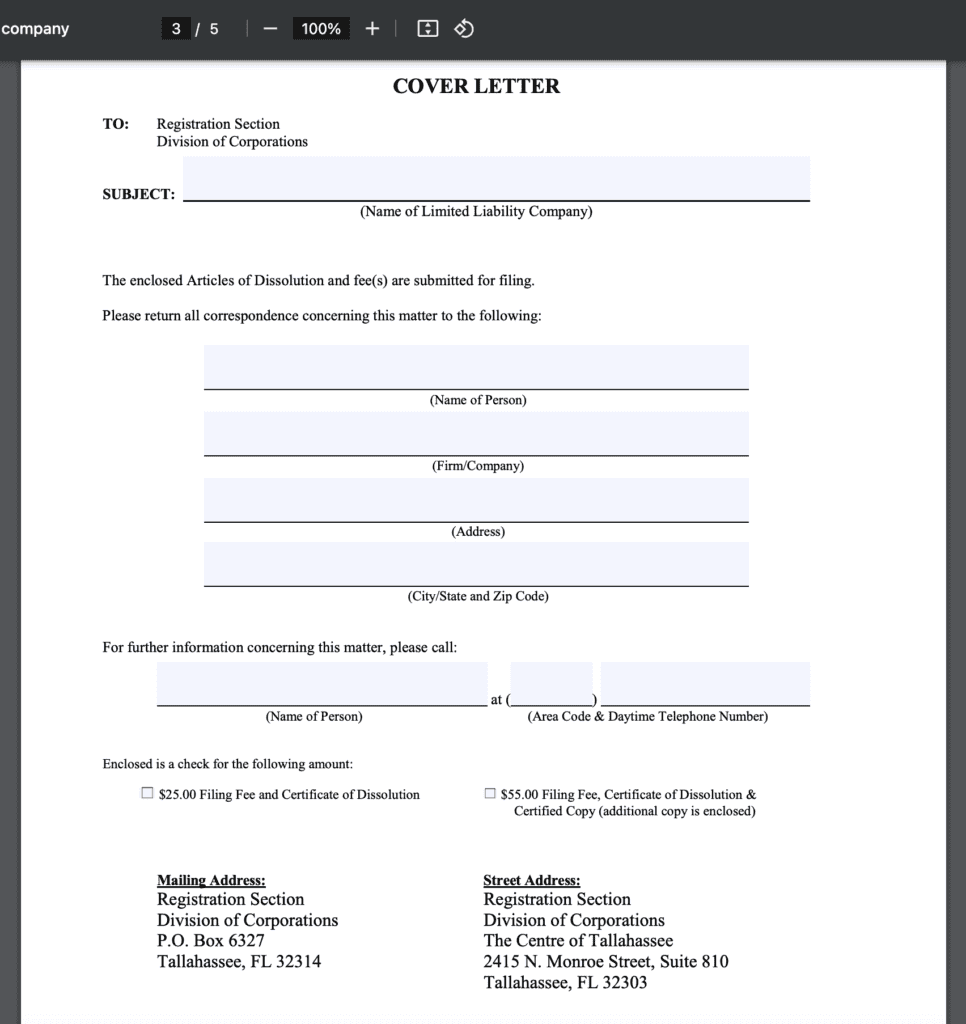
Steps to Dissolve an LLC According to State Requirements
To officially close an LLC, you must follow your state’s specific dissolution process. This typically involves:
- Reviewing your operating agreement for internal dissolution procedures.
- Obtaining member approval through a formal vote, as outlined in the LLC’s bylaws.
- Filing Articles of Dissolution (or a similar form) with the state agency, often the Secretary of State, and paying associated fees.
Settling Debts and Tax Obligations
Before dissolving, ensure all financial responsibilities are resolved:
- Notify creditors and settle outstanding debts or negotiate payment plans.
- File final federal, state, and local tax returns, including IRS Form 966 for corporate liquidations if applicable.
- Address sales tax permits, payroll taxes, and any other industry-specific obligations.
Canceling Licenses, Permits, and Registrations
Terminate all business-related authorizations to avoid future liabilities:
- Cancel business licenses, permits, and fictitious business names (DBAs).
- Close the LLC’s Employer Identification Number (EIN) account with the IRS.
- Terminate business bank accounts and credit lines to prevent unauthorized use.
Notifying Employees, Clients, and Partners
Formally communicate the LLC’s closure to stakeholders:
- Issue final paychecks and fulfill benefits obligations for employees.
- Send written notices to clients, vendors, and partners about the dissolution.
- Update public-facing materials (websites, social media) to reflect the closure.
Maintaining Records Post-Dissolution
Keep documentation even after the LLC is dissolved:
- Retain financial records, tax filings, and dissolution paperwork for 3–7 years.
- Store member meeting minutes and dissolution approval documents as legal proof.
- Monitor mail for potential tax notices or unresolved claims addressed to the LLC.
Should I dissolve my LLC or keep it?

Assessing the Current Financial Health of Your LLC
Evaluating whether to dissolve or retain your LLC starts with analyzing its financial stability. Review revenue streams, outstanding debts, and ongoing expenses. If the LLC is consistently unprofitable or lacks a viable business model, dissolution may prevent further losses. Conversely, if it holds assets, contracts, or tax benefits, maintaining it could be strategic.
- Review profit-and-loss statements to gauge profitability.
- Calculate outstanding liabilities (e.g., loans, vendor payments).
- Consider future financial obligations (e.g., annual fees, taxes).
Evaluating Business Activity and Future Opportunities
Determine if your LLC is actively operating or dormant. A dormant LLC with no plans for future projects may incur unnecessary costs. However, retaining it could be advantageous if you anticipate new ventures, partnerships, or licensing opportunities.
- Assess current projects or clients tied to the LLC.
- Identify potential markets or partnerships requiring an active entity.
- Weigh the cost of reinstating the LLC later versus maintaining it now.
Tax Implications of Dissolving vs. Maintaining an LLC
Tax considerations are critical. Dissolving an LLC may trigger final tax filings or fees, while keeping it could offer ongoing deductions or pass-through taxation benefits. Consult a tax professional to avoid surprises.
- Analyze state-specific dissolution fees and tax requirements.
- Review annual report and franchise tax obligations if retained.
- Explore potential tax savings from LLC-related deductions.
Legal Liability and Asset Protection Considerations
An LLC provides limited liability protection, shielding personal assets from business debts. Dissolving it exposes you to personal liability for any post-closure claims. Ensure all obligations are settled before dissolving.
- Confirm outstanding legal disputes or potential claims.
- Transfer or close business bank accounts and assets properly.
- File articles of dissolution to formally terminate liability.
Long-Term Business Goals and Administrative Burden
Align your decision with long-term objectives. If the LLC no longer fits your goals, dissolution simplifies operations. However, retaining it might save time and resources if reactivation is likely.
- Evaluate the time and cost of annual compliance tasks.
- Consider how the LLC aligns with 5-year business plans.
- Determine if rebranding or restructuring could revive its value.
Frequently Asked Questions About LLCs (FAQs)
What are the steps to dissolve an LLC in Illinois?
To dissolve an LLC in Illinois, you must follow a formal process. First, members or managers must vote to dissolve the LLC as outlined in the operating agreement. Next, file Articles of Dissolution with the Illinois Secretary of State, either online or by mail, and pay the required filing fee. Before filing, ensure all state taxes and annual reports are up to date. Additionally, you must settle debts, notify creditors, and distribute remaining assets to members. Finally, retain business records for at least seven years post-dissolution.
Are there tax obligations when dissolving an LLC in Illinois?
Yes, resolving tax obligations is critical. File final federal and state tax returns, marking them as final to inform authorities of the dissolution. Illinois requires payment of any outstanding sales tax, income tax, or franchise tax. You may need to request a tax clearance from the Illinois Department of Revenue to confirm no liabilities remain. At the federal level, submit IRS Form 966 if applicable, and ensure payroll or business-related taxes are settled. Failure to address taxes can result in penalties or legal complications.
Can an LLC be reinstated after dissolution in Illinois?
An LLC can be reinstated within five years of dissolution under certain conditions. To reinstate, you must file an Application for Reinstatement with the Illinois Secretary of State, pay all outstanding fees, penalties, and taxes, and submit any missing annual reports. If the LLC was administratively dissolved, resolving the compliance issues that led to dissolution is mandatory. However, if the LLC voluntarily dissolved, reinstatement typically requires a court order or unanimous member consent, depending on the circumstances.
What happens to liabilities when dissolving an LLC in Illinois?
Dissolving an LLC does not automatically erase liabilities. Members must settle all debts and obligations before distributing remaining assets. Creditors must be formally notified of the dissolution, and a publication notice may be required in a local newspaper to alert potential claimants. If debts remain unpaid, creditors might pursue claims against the LLC’s assets or, in rare cases, hold members personally liable if fraud or misconduct is proven. Properly documenting the dissolution process and debt resolution is essential to minimize legal risks.
Leave a Reply
Our Recommended Articles