
LLC Operating Agreement: Illinois

When forming a limited liability company (LLC) in Illinois, drafting a comprehensive operating agreement is a critical step to establish clarity and structure for your business. While Illinois state law does not legally require LLCs to maintain an operating agreement, this internal document serves as the foundation for defining member roles, profit-sharing arrangements, management procedures, and dispute-resolution mechanisms. It also helps preserve the liability protection afforded by the LLC structure by reinforcing its legal separation from personal assets. Tailored to meet the specific needs of your business, an Illinois LLC operating agreement should address state-specific regulations, voting rights, dissolution protocols, and amendments, ensuring alignment with both member expectations and compliance requirements.
- Understanding the Importance of an LLC Operating Agreement in Illinois
- Is an operating agreement required for an LLC in Illinois?
-
Can I write my own operating agreement for my LLC?
- Can I Legally Write My Own Operating Agreement for My LLC?
- What Should Be Included in a Self-Drafted Operating Agreement?
- What Are the Risks of Writing Your Own Operating Agreement?
- How to Ensure a Self-Drafted Operating Agreement Is Enforceable?
- When Should You Consult a Lawyer Instead of Drafting Your Own Agreement?
- Is an LLC operating agreement the same as an LLC agreement?
- Does an LLC operating agreement need to be notarized?
- Frequently Asked Questions About LLCs (FAQs)
Understanding the Importance of an LLC Operating Agreement in Illinois
Key Components of an Illinois LLC Operating Agreement
An LLC Operating Agreement in Illinois outlines the internal structure and rules governing the LLC. Key components include:
- Ownership percentages and member contributions.
- Management structure (member-managed vs. manager-managed).
- Profit and loss distribution methods.
- Voting rights and decision-making processes.
- Procedures for adding/removing members and dissolving the LLC.
| Component | Description |
|---|---|
| Ownership Structure | Defines members' ownership stakes and capital contributions. |
| Management Roles | Specifies whether members or managers control daily operations. |
| Profit Allocation | Details how profits/losses are divided among members. |
Legal Requirements for LLC Operating Agreements in Illinois
While Illinois does not legally require an operating agreement, having one is critical to avoid default state rules under the Illinois Limited Liability Company Act (805 ILCS 180/). Key legal considerations include:
- Compliance with Illinois LLC statutes for enforceability.
- Ensuring clarity on tax classification (default is pass-through taxation).
- Including dissolution terms to prevent disputes.
| Requirement | Illinois Law Reference |
|---|---|
| Registered Agent | Mandatory for service of process (805 ILCS 180/1-20). |
| Articles of Organization | Must be filed with the Secretary of State. |
| Annual Reports | Required to maintain good standing. |
Member Roles and Responsibilities in an Illinois LLC
The operating agreement must define member duties, such as:
- Voting authority on major decisions (e.g., mergers, asset sales).
- Financial obligations, including capital calls.
- Fiduciary responsibilities to act in the LLC's best interest.
| Role | Responsibility |
|---|---|
| Managing Member | Oversees daily operations and financial decisions. |
| Silent Member | Invests capital but has no managerial role. |
Amending an LLC Operating Agreement in Illinois
Amendments require adherence to procedures outlined in the original agreement. Common steps include:
- Member approval (typically a majority or supermajority vote).
- Documentation of changes in writing.
- Filing updates with the Illinois Secretary of State if structural changes occur.
| Amendment Step | Requirement |
|---|---|
| Proposal | Submit changes for member review. |
| Voting | Meet quorum and approval thresholds. |
| Implementation | Update the operating agreement and distribute copies. |
Consequences of Not Having an Operating Agreement in Illinois
Without an operating agreement, Illinois LLCs default to state-mandated rules, which may lead to:
- Unclear profit splits (equal distribution regardless of investment).
- Disputes over management authority.
- Difficulty resolving member exits or dissolution.
| Risk | Implication |
|---|---|
| Personal Liability | Members risk losing liability protection in disputes. |
| State Default Rules | Illinois law dictates decision-making processes. |
Is an operating agreement required for an LLC in Illinois?
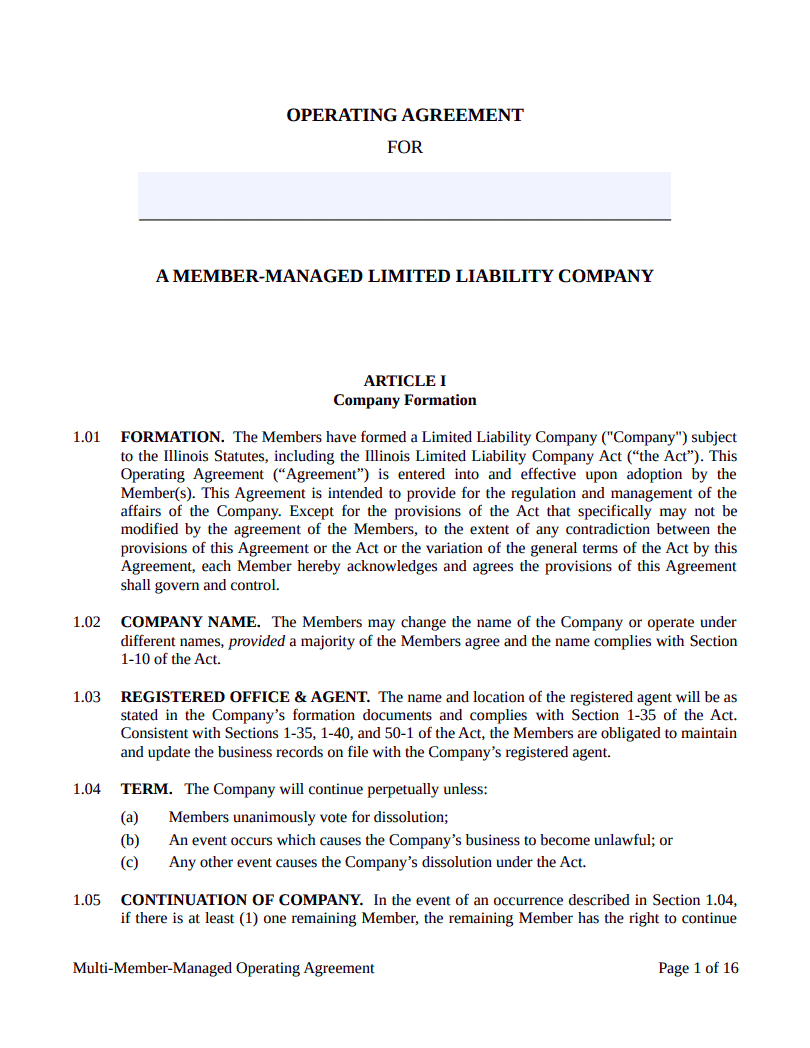
Legal Requirements for LLCs in Illinois
In Illinois, an operating agreement is not legally required to form or operate an LLC. However, state law (805 ILCS 180/) recognizes the validity of such agreements if created. While the Illinois Secretary of State does not mandate filing this document, drafting one is strongly advised to establish clear rules and avoid disputes.
- No statutory requirement to submit an operating agreement to state authorities.
- LLCs without an agreement default to Illinois default LLC laws.
- An agreement helps define member roles, profit distribution, and management structure.
Benefits of Having an Operating Agreement
An operating agreement provides critical protections and clarifications for LLC members. It ensures the business operates under custom rules rather than generic state laws, reducing ambiguity during conflicts.
- Protects limited liability status by demonstrating a formal business structure.
- Clarifies profit-sharing ratios and decision-making processes.
- Defines procedures for adding or removing members and dissolving the LLC.
Consequences of Not Having an Operating Agreement
Operating without an agreement leaves the LLC vulnerable to state default rules, which may not align with members’ intentions. This can lead to disputes, inefficiencies, or unintended legal outcomes.
- Illinois law governs profit distribution equally, regardless of capital contributions.
- Members may face unresolved disputes over management authority.
- Risk of personal liability if the LLC’s structure is challenged in court.
Key Clauses to Include in an Illinois Operating Agreement
A well-drafted agreement should address critical aspects of the LLC’s operations. Tailoring clauses to the business’s needs ensures legal compliance and operational clarity.
- Management structure (member-managed vs. manager-managed).
- Voting rights and procedures for major decisions.
- Dissolution terms and buyout provisions for departing members.
How to Draft an Operating Agreement in Illinois
While Illinois does not require a specific format, the agreement should be written, signed by all members, and kept with business records. Legal guidance is recommended to ensure enforceability.
- Use customizable templates or consult an attorney for complex clauses.
- Include governing law provisions referencing Illinois statutes.
- Review and update the agreement annually or when membership changes.
Can I write my own operating agreement for my LLC?
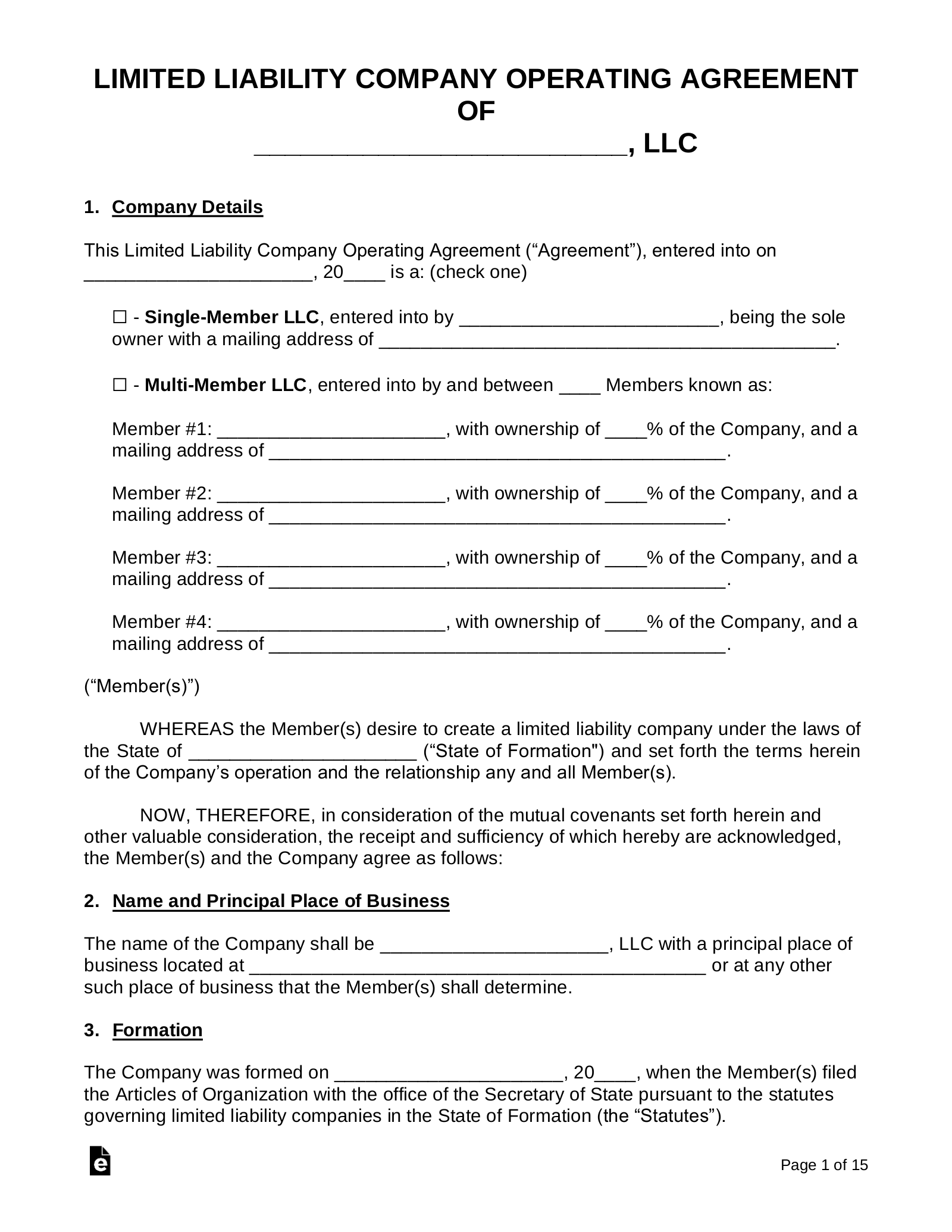
Can I Legally Write My Own Operating Agreement for My LLC?
Yes, you can legally write your own operating agreement for your LLC in most U.S. states. While some states do not legally require an operating agreement, having one is highly recommended to clarify member roles, profit distribution, and dispute resolution. However, ensure it complies with your state’s LLC laws.
- State-specific rules: Research your state’s requirements for operating agreements (e.g., California requires written agreements for multi-member LLCs).
- Flexibility: Customize clauses for management structure, voting rights, and dissolution procedures.
- Legal validity: Even self-drafted agreements are enforceable if properly signed and aligned with state law.
What Should Be Included in a Self-Drafted Operating Agreement?
A comprehensive operating agreement should outline the LLC’s internal operations and member obligations. Key sections ensure clarity and reduce future conflicts.
- Member details: Names, ownership percentages, and capital contributions.
- Management structure: Specify if the LLC is member-managed or manager-managed.
- Profit/loss distribution: Define how earnings and losses are allocated.
- Dissolution terms: Steps for winding down the LLC.
What Are the Risks of Writing Your Own Operating Agreement?
While drafting your own agreement saves costs, risks include oversights in legal compliance or ambiguous clauses.
- Ambiguity: Unclear terms may lead to disputes among members.
- Non-compliance: Missing state-mandated provisions could invalidate parts of the agreement.
- Incomplete coverage: Failing to address scenarios like member exit or bankruptcy.
How to Ensure a Self-Drafted Operating Agreement Is Enforceable?
To ensure enforceability, the agreement must meet legal standards and reflect the LLC’s actual operations.
- State law alignment: Cross-check clauses with your state’s LLC statutes.
- Member consent: All members must sign and retain copies.
- Regular updates: Revise the agreement as the business evolves.
When Should You Consult a Lawyer Instead of Drafting Your Own Agreement?
Consider consulting a lawyer for complex situations to avoid legal pitfalls.
- Multi-state operations: If your LLC operates in multiple states.
- Complex ownership: Multiple classes of membership or foreign investors.
- High-risk industries: Businesses with regulatory or liability concerns.
Is an LLC operating agreement the same as an LLC agreement?
Is an LLC Operating Agreement the Same as an LLC Agreement?
An LLC Operating Agreement and an LLC Agreement generally refer to the same legal document. Both terms describe the internal contract governing the operations, ownership, and management of a limited liability company (LLC). However, terminology may vary by jurisdiction or context. In most cases, the terms are used interchangeably, but some states or legal professionals might prefer one term over the other.
Key Differences in Terminology and Usage
While the terms are often synonymous, subtle differences may arise depending on regional legal frameworks or drafting preferences.
- Jurisdictional preferences: Some states, like Delaware, commonly use LLC Agreement, while others favor Operating Agreement.
- Scope interpretation: Rarely, LLC Agreement might imply a broader set of governing documents, including formation certificates.
- Legal drafting styles: Attorneys or template providers may adopt one term based on tradition or clarity.
Common Elements Found in Both Documents
Whether labeled an Operating Agreement or LLC Agreement, the document typically includes core provisions to structure the LLC’s operations.
- Ownership percentages: Details members’ capital contributions and profit-sharing ratios.
- Management structure: Defines if the LLC is member-managed or manager-managed.
- Voting rights and procedures: Outlines decision-making processes for major company actions.
Legal Implications of Using Either Term
The choice of terminology rarely affects the document’s enforceability, but clarity is critical to avoid confusion.
- State compliance: Most states recognize both terms as valid, provided the content meets statutory requirements.
- Ambiguity risks: Inconsistent terminology in other documents (e.g., bylaws) could create interpretation disputes.
- Cross-border operations: Using regionally preferred terms ensures smoother recognition in multi-state or international contexts.
Why Clarity in Terminology Matters for LLC Governance
Precise language prevents misunderstandings among members and aligns expectations.
- Member alignment: Clear terms ensure all parties understand roles, rights, and responsibilities.
- Dispute prevention: Explicit definitions reduce conflicts over operational or financial matters.
- External credibility: Standardized terminology improves professionalism when dealing with banks, investors, or regulators.
Does an LLC operating agreement need to be notarized?
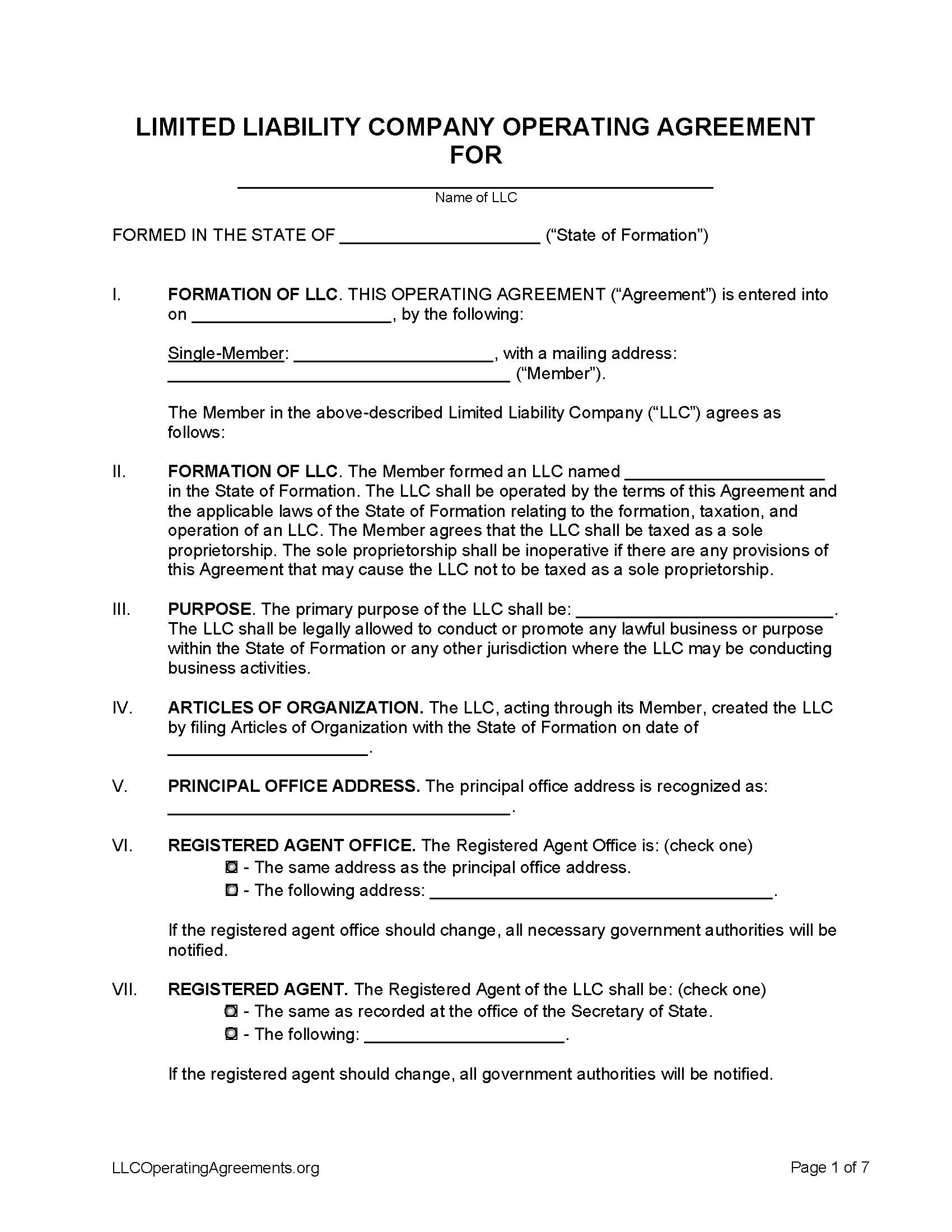
Is Notarization Legally Required for an LLC Operating Agreement?
No, state laws in the U.S. generally do not require an LLC operating agreement to be notarized. However, the document must be signed by all members to ensure its legal validity.
- Most states treat the operating agreement as an internal contract between members, not a public filing.
- Some states may recommend notarization to prevent disputes over signatures.
- Even without notarization, the agreement remains enforceable if properly signed and dated.
Why Consider Notarizing an LLC Operating Agreement?
While not mandatory, notarization adds an extra layer of authenticity to the document.
- Notarized signatures are harder to challenge in court, reducing fraud risks.
- It may help with third-party verification, such as opening a business bank account.
- Provides peace of mind by ensuring all members acknowledge the terms.
How to Properly Execute an LLC Operating Agreement
Proper execution involves following state-specific guidelines and member consensus.
- Draft the agreement with clear terms, including profit-sharing and management roles.
- Ensure all members sign and date the document in the presence of a witness or notary.
- Store copies securely and update the agreement as the business evolves.
Potential Risks of Not Notarizing an LLC Operating Agreement
Skipping notarization may lead to legal vulnerabilities in certain scenarios.
- Members could dispute the authenticity of signatures during conflicts.
- Banks or lenders might request notarized documents for verification.
- In rare cases, courts may question the agreement’s validity without notarization.
Common Misconceptions About LLC Operating Agreements
Misunderstandings about notarization and enforceability persist.
- Myth: Operating agreements are legally void without notarization (false in most states).
- Myth: Only multi-member LLCs need operating agreements (single-member LLCs benefit too).
- Myth: Verbal agreements hold the same weight as written ones (written agreements are legally superior).
Frequently Asked Questions About LLCs (FAQs)
Is an LLC Operating Agreement legally required in Illinois?
An LLC Operating Agreement is not legally required in Illinois, but it is highly recommended. While the state does not mandate the creation of this document, operating without one can expose members to default rules under the Illinois Limited Liability Company Act (805 ILCS 180). The agreement serves as a contractual foundation for managing the LLC, outlining member roles, profit distribution, and dispute resolution processes. Without it, the LLC may face internal conflicts or legal ambiguities.
What key provisions should an Illinois LLC Operating Agreement include?
An effective Illinois LLC Operating Agreement should detail member ownership percentages, voting rights, management structure (member-managed vs. manager-managed), and procedures for adding/removing members. It should also address profit and loss allocation, tax treatment elections, and dissolution protocols. Including clauses for dispute resolution and buyout rules ensures smoother operations. Illinois-specific considerations, such as compliance with state annual report requirements, should also be referenced.
Can an LLC Operating Agreement be amended in Illinois?
Yes, an Illinois LLC Operating Agreement can be amended, provided the changes follow the procedures outlined in the original agreement. Typically, amendments require a majority or supermajority vote of the members. Once approved, the updated agreement should be documented in writing and signed by all members. While amendments do not need to be filed with the Illinois Secretary of State, keeping internal records is critical to avoid future disputes.
What happens if an Illinois LLC operates without an Operating Agreement?
Without an Operating Agreement, an Illinois LLC defaults to the state’s default rules under the Illinois LLC Act. This may lead to unintended outcomes, such as equal profit distribution regardless of capital contributions or member deadlocks in decision-making. Additionally, the absence of a customized agreement weakens the LLC’s liability protections, potentially exposing members’ personal assets in legal disputes. Courts may also intervene in internal matters, resulting in costly litigation.
Leave a Reply
Our Recommended Articles