
How to Dissolve a Corporation in Delaware

Dissolving a corporation in Delaware involves a structured legal process to ensure compliance with state laws and avoid potential liabilities. As the preferred incorporation destination due to its business-friendly legal framework and Court of Chancery, Delaware requires specific steps to formally terminate a business entity. Whether due to strategic restructuring, financial challenges, or operational closure, proper dissolution safeguards directors, shareholders, and stakeholders from future legal or tax complications. This process typically includes board resolutions, filing a Certificate of Dissolution, settling debts, obtaining tax clearance, and distributing remaining assets. Understanding these requirements is critical, as incomplete dissolution may leave the corporation vulnerable to ongoing fees, penalties, or involuntary administrative dissolution by the state. This guide outlines the essential steps to efficiently and legally dissolve a Delaware corporation.
Understanding the Process of Dissolving a Corporation in Delaware
Determining Eligibility for Dissolution
To dissolve a Delaware corporation, you must first confirm eligibility. The corporation should be in good standing with the Delaware Division of Corporations and have no pending legal disputes. Shareholders or the board of directors must approve the dissolution via a majority vote or as outlined in the corporation’s bylaws. If the corporation has already begun operations, ensure all business activities have ceased.
See AlsoHow to Dissolve an LLC in Iowa| Key Element | Details |
|---|---|
| Good Standing | No outstanding fees or penalties with the state. |
| Approval | Board resolution or shareholder majority vote required. |
| Legal Compliance | No active lawsuits or liabilities. |
Filing the Certificate of Dissolution
Submit a Certificate of Dissolution to the Delaware Division of Corporations. This document must include the corporation’s name, date of incorporation, and a statement confirming dissolution approval. File either a Short Form (if the corporation hasn’t started business) or a Long Form (if operations have commenced). A filing fee of $204 (as of 2023) applies.
| Step | Details |
|---|---|
| Prepare Documentation | Complete the Certificate of Dissolution form. |
| Submit & Pay Fees | File online, by mail, or via an agent; include payment. |
| Effective Date | Dissolution becomes effective upon state approval. |
Notifying Creditors and Settling Debts
After filing, notify creditors and settle outstanding debts. Publish a dissolution notice in a Delaware newspaper and send written notices to known claimants. Use remaining assets to pay obligations. Failure to properly notify creditors may result in personal liability for directors or shareholders.
See AlsoHow to Dissolve an LLC in New York| Action | Requirement |
|---|---|
| Notify Creditors | Written notices and public newspaper announcement. |
| Settle Claims | Pay debts using corporate assets. |
| Record Keeping | Maintain proof of notifications and settlements. |
Distributing Remaining Assets
Once debts are paid, distribute remaining assets to shareholders proportionally, as per the corporation’s bylaws or stock ownership. Delaware law prohibits distributions if the corporation is insolvent. Obtain written agreements from shareholders to avoid disputes.
| Consideration | Details |
|---|---|
| Order of Priority | Debts first, then shareholders. |
| Legal Compliance | Follow state laws and corporate bylaws. |
| Documentation | Record distributions for tax purposes. |
Tax Clearance and Final Obligations
Obtain a Tax Clearance Certificate from the Delaware Department of Finance to confirm all state taxes are paid. File final franchise tax reports and close federal tax accounts with the IRS. Retain corporate records for at least 3 years post-dissolution.
See AlsoHow to Dissolve an LLC in Ohio| Requirement | Details |
|---|---|
| Tax Compliance | Pay outstanding franchise taxes and fees. |
| IRS Filings | Submit final Form 1120 and close EIN. |
| Record Retention | Keep dissolution documents accessible. |
How much does it cost to close a Delaware corporation?
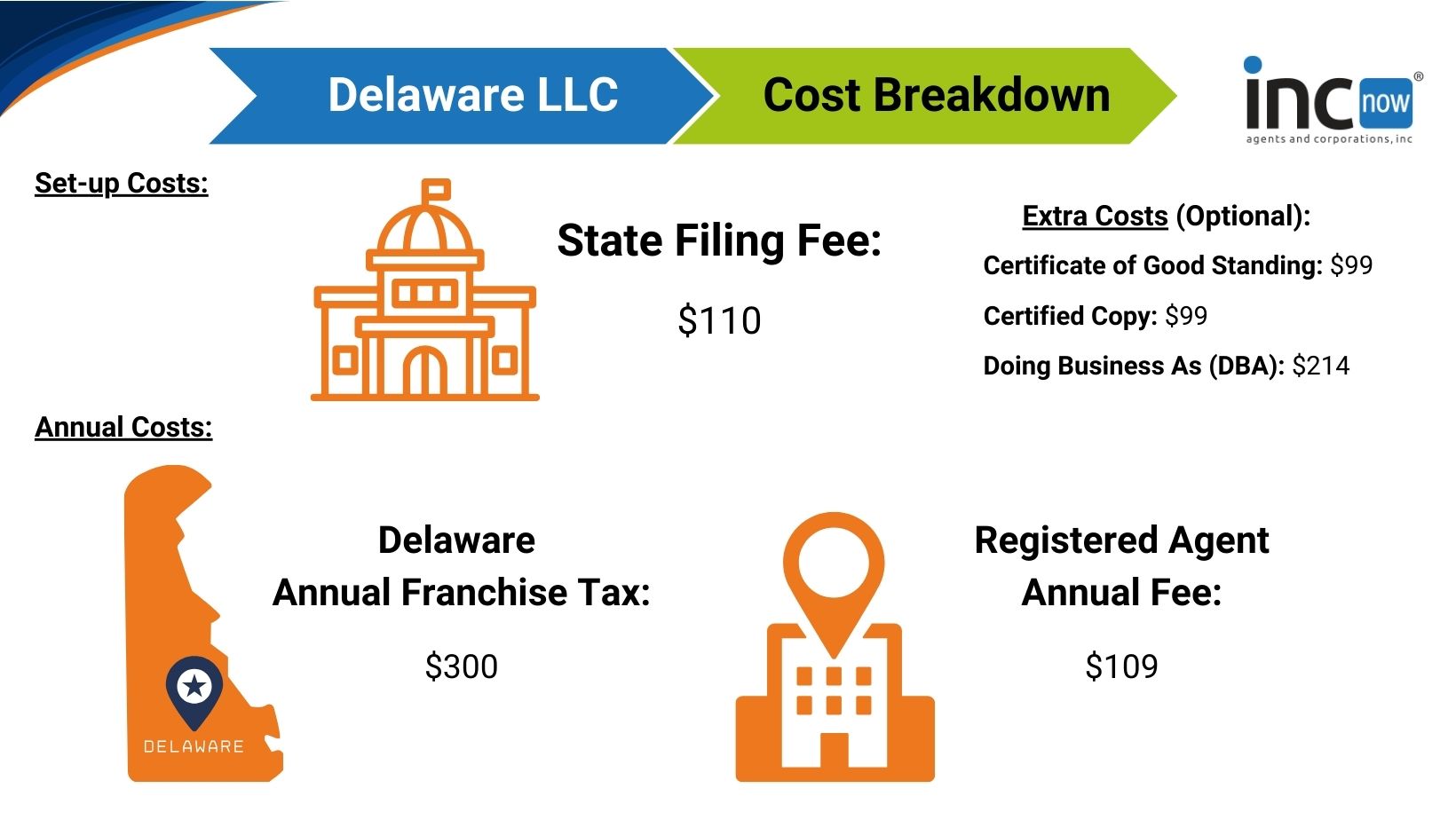
Filing Fees for Dissolving a Delaware Corporation
The primary cost to close a Delaware corporation includes state-mandated filing fees. To dissolve a corporation, you must file a Certificate of Dissolution with the Delaware Division of Corporations, which costs $204 as of 2023. Additional fees may apply depending on the method of filing (online, mail, or in-person).
See AlsoHow to Dissolve an LLC in Arizona- Certificate of Dissolution fee: $204.
- Expedited processing: Optional fees ranging from $50 to $500 for faster processing.
- Legal entity compliance: Ensure all annual franchise taxes and reports are paid to avoid penalties.
Outstanding Taxes and Penalties
Before dissolving, Delaware requires corporations to settle outstanding franchise taxes and any penalties. Failure to do so may delay dissolution or result in legal consequences.
- Franchise tax arrears: Delaware calculates taxes based on authorized shares or the assumed par value method.
- Late fees: Penalties for unpaid taxes can accumulate up to 200% of the owed amount.
- Final tax return: File a final tax return to confirm all obligations are met.
Legal and Professional Service Costs
Hiring a registered agent or attorney to handle dissolution can add to the total cost. These services ensure compliance with Delaware’s legal requirements.
- Attorney fees: Typically range from $500 to $5,000, depending on complexity.
- Registered agent fees: May charge $100–$300 to file dissolution documents.
- Third-party service providers: Offer dissolution packages starting at $500–$2,000.
Outstanding Liabilities and Creditor Notifications
Corporations must resolve debts and notify creditors before dissolution. This process may involve additional administrative costs.
- Debt settlement: Pay off outstanding loans, contracts, or vendor invoices.
- Creditor notifications: Costs for certified mail or publication in newspapers, if required.
- Contingent liabilities: Set aside funds for potential future claims.
Post-Dissolution Compliance Costs
After dissolution, corporations must address final compliance steps to avoid lingering obligations.
- Annual report fees: Even if dissolved mid-year, Delaware may require payment for the full year.
- Business license cancellations: Fees to terminate local or industry-specific licenses.
- Record retention: Costs to store corporate documents for the mandated 3–5 years.
What is required to dissolve a Delaware corporation?

Steps to Initiate the Dissolution Process
To dissolve a Delaware corporation, the process begins with board approval followed by shareholder consent. The corporation must ensure compliance with its bylaws and state laws.
- Hold a board of directors meeting to propose dissolution and draft a resolution.
- Obtain shareholder approval via a majority or supermajority vote, as specified in the bylaws.
- Document the dissolution decision in written resolutions or meeting minutes.
Filing the Certificate of Dissolution
Delaware requires submitting a Certificate of Dissolution to the Delaware Division of Corporations. This legal document officially terminates the corporation’s existence.
- Choose between a Short Form Dissolution (if the corporation hasn’t started business or issued stock) or Long Form Dissolution.
- Complete the appropriate form, including details like the corporation’s name and dissolution date.
- Pay the filing fee ($204 for Long Form; no fee for Short Form if eligible).
Settling Debts and Tax Obligations
Before dissolution, the corporation must resolve all financial liabilities and tax obligations to avoid penalties.
- Notify creditors and settle outstanding debts or disputes.
- File a final state tax return and pay any owed taxes, including franchise taxes.
- Obtain a Tax Clearance Certificate from the Delaware Division of Revenue to confirm compliance.
Distributing Remaining Assets
After settling debts, remaining assets must be distributed to shareholders according to ownership interests.
- Liquidate non-cash assets, if necessary, to convert them into distributable funds.
- Follow the priority order outlined in the corporation’s bylaws or state law.
- Document all distributions to shareholders for legal and tax purposes.
Post-Dissolution Requirements
Even after dissolution, certain obligations remain to ensure compliance and avoid liability.
- Maintain corporate records for at least 10 years, as required by Delaware law.
- Address any post-dissolution claims through a statutory trust or escrow account, if applicable.
- Cancel business licenses, permits, and registrations in other states where the corporation operated.
How do I shut down a business in Delaware?

How to Legally Dissolve a Delaware Business Entity
To legally dissolve a Delaware business, follow state-specific procedures based on your entity type (e.g., corporation, LLC). Start by filing a Certificate of Dissolution (or Certificate of Cancellation for LLCs) with the Delaware Division of Corporations. Ensure all taxes, fees, and annual reports are up to date.
- File Formally: Submit the appropriate dissolution form (e.g., Certificate of Dissolution for corporations) with the Delaware Secretary of State.
- Pay Outstanding Fees: Settle any unpaid state taxes, franchise taxes, or annual report fees.
- Board/Member Approval: Obtain approval from shareholders (corporations) or members (LLCs) as required by your operating agreement or bylaws.
Tax Obligations When Closing a Delaware Business
Delaware requires businesses to fulfill tax obligations before dissolution. File final federal, state, and local tax returns, including payroll and sales taxes. Notify the Delaware Division of Revenue and IRS to close tax accounts.
- File Final Tax Returns: Submit state and federal returns, marking them as “final.”
- Request Tax Clearance: Delaware does not require a tax clearance certificate, but ensure all taxes are paid to avoid penalties.
: Terminate business-specific licenses to prevent future tax liabilities.
Settling Debts and Notifying Creditors
Before dissolving, settle outstanding debts and formally notify creditors. Failure to do so may leave owners personally liable.
- Notify Creditors in Writing: Send dissolution notices via certified mail to all known creditors.
- Pay or Dispute Claims: Address creditor claims or establish a reserve fund for unresolved debts.
- Publish a Dissolution Notice: Some states require public notices; check Delaware’s specific requirements.
Distributing Remaining Assets
After settling debts, distribute remaining assets to owners or shareholders according to ownership agreements or state law.
- Follow Governing Documents: Adhere to the LLC operating agreement or corporate bylaws for distribution rules.
- Prioritize Hierarchy: Pay shareholders based on stock class (corporations) or membership interests (LLCs).
- Document Distributions: Keep records to resolve potential disputes post-dissolution.
Post-Dissolution Compliance in Delaware
Even after dissolution, maintain compliance with record-keeping requirements and address potential liabilities.
- Retain Business Records: Store financial and legal documents for at least 3–5 years.
- Respond to Legal Claims: Appoint an agent to handle future lawsuits or tax notices.
- Close Business Accounts: Terminate bank accounts, credit lines, and vendor contracts.
How long does Delaware dissolution take?
Factors Influencing the Timeline of Delaware Dissolution
The duration of a Delaware dissolution depends on multiple factors, including the company’s structure, compliance status, and complexity of obligations. Typically, the process ranges from 2 to 6 months, but delays can occur if unresolved liabilities or administrative hurdles exist. Key considerations include:
- Corporate approvals: Obtaining board and shareholder consent may take weeks, depending on internal processes.
- Filing requirements: Submitting the Certificate of Dissolution to the Delaware Division of Corporations usually takes 1-2 weeks, but expedited options are available.
- Creditor notifications: Settling debts and notifying creditors can extend the timeline if disputes arise.
Required Documentation for Delaware Dissolution
Proper documentation is critical to avoid delays. Essential filings include:
- Certificate of Dissolution: Must be filed with the Delaware Division of Corporations, which processes standard submissions in 7-10 business days.
- Tax clearance: A Tax Compliance Certificate from the Delaware Department of Revenue is mandatory, often taking 4-6 weeks.
- Board resolutions: Written consent approving dissolution must be prepared and archived.
Role of the Delaware Division of Corporations
The Division of Corporations governs dissolution timelines through its review and approval processes:
- Filing review: Standard processing takes 7-10 business days; expedited services reduce this to 24 hours for an additional fee.
- Compliance checks: The state verifies that all annual reports and franchise taxes are up-to-date before approving dissolution.
- Public record updates: Once approved, the dissolution is recorded, finalizing the entity’s inactive status.
Potential Delays in Delaware Dissolution
Common delays stem from unresolved obligations or administrative oversights:
- Pending lawsuits or liabilities: Active legal disputes can pause dissolution indefinitely.
- Tax noncompliance: Unpaid franchise taxes or late filings require resolution before dissolution.
- Incomplete paperwork: Errors in forms or missing signatures lead to rejection and resubmission.
Voluntary vs. Administrative Dissolution in Delaware
The dissolution method impacts timelines:
- Voluntary dissolution: Initiated by the company, typically taking 2-4 months if all steps are followed correctly.
- Administrative dissolution: Forced by the state due to noncompliance, which may add months to resolve penalties and reinstate before dissolving.
- Reinstatement requirements: Administratively dissolved entities must clear all violations before proceeding, extending the process.
Frequently Asked Questions (FAQs)
What are the basic steps to dissolve a corporation in Delaware?
Dissolving a corporation in Delaware involves several key steps. First, the corporation’s board of directors must propose dissolution, followed by shareholder approval (if required by the bylaws or certificate of incorporation). Next, the corporation must file a Certificate of Dissolution with the Delaware Division of Corporations, which formally initiates the process. Before filing, the corporation must settle outstanding debts, notify creditors, and resolve any pending legal obligations. Additionally, Delaware requires corporations to pay all state taxes and fees before dissolution is finalized.
What documents are required to dissolve a Delaware corporation?
The primary document needed is the Certificate of Dissolution, which must include the corporation’s name, date of incorporation, and a statement confirming shareholder or board approval. If the corporation has not issued stock or commenced business, a Certificate of Dissolution by Incorporators or Initial Directors may be filed instead. Tax clearance from the Delaware Division of Revenue is also required, confirming all taxes, including franchise taxes, are paid. Additional documents, like a board resolution or shareholder consent, may be needed depending on the corporation’s structure.
How long does it take to dissolve a corporation in Delaware?
The timeline varies based on the corporation’s compliance and complexity. Filing the Certificate of Dissolution typically takes 1–2 weeks for standard processing, though expedited services (24–72 hours) are available for an extra fee. Settling debts, taxes, and legal obligations may extend the timeline, especially if disputes arise. Tax clearance from the Delaware Division of Revenue can take several weeks, so initiating this process early is critical. Overall, dissolution may take anywhere from a few weeks to several months.
Can a dissolved Delaware corporation be reinstated?
Yes, under certain conditions, a dissolved Delaware corporation can be reinstated by filing a Certificate of Revival with the Delaware Division of Corporations. This requires resolving the reason for dissolution (e.g., unpaid taxes or fees) and paying all outstanding penalties. The corporation must also submit a revival fee and updated franchise taxes. Once reinstated, the corporation regains its legal standing retroactively, as if dissolution never occurred. However, revival is not guaranteed and depends on compliance with Delaware’s statutory requirements.
Leave a Reply
Our Recommended Articles