
How to Dissolve an LLC in Indiana

Dissolving a limited liability company (LLC) in Indiana involves a structured legal process to ensure compliance with state regulations and avoid potential liabilities. Whether due to business restructuring, retirement, or shifting priorities, properly winding down an LLC requires careful attention to administrative, financial, and legal obligations. Indiana mandates specific steps, including member approval, settling debts, filing dissolution documents, and addressing tax requirements. Failure to follow these procedures may result in penalties, continued fees, or personal liability for remaining obligations. This guide outlines the essential actions to dissolve an LLC in Indiana efficiently, helping business owners navigate the process with clarity and confidence while safeguarding their legal and financial interests.
How to Dissolve an LLC in Indiana
1. Understanding the Legal Requirements for Dissolution
To dissolve an LLC in Indiana, you must follow state-specific legal procedures. First, review your LLC’s operating agreement for internal dissolution rules. If the agreement is silent, Indiana law requires majority approval from members. Next, ensure all tax obligations and outstanding debts are settled. File Articles of Dissolution with the Indiana Secretary of State to formally terminate the LLC. Failure to comply may result in penalties or continued liability.
See AlsoHow to Dissolve an LLC in Iowa| Key Requirement | Details |
| Operating Agreement | Follow internal dissolution procedures if specified. |
| Member Approval | Majority vote required if no agreement exists. |
| Tax Compliance | File final state and federal tax returns. |
2. Filing Articles of Dissolution with the Indiana Secretary of State
The Articles of Dissolution must be submitted to the Indiana Secretary of State to legally dissolve your LLC. This form requires basic details like the LLC’s name, date of dissolution, and a statement confirming debt settlement. File online via the Indiana Business Services Portal or mail the form with a $30 filing fee. Processing typically takes 7-10 business days.
| Step | Details |
| Form Submission | Complete and submit Form 49459. |
| Filing Fee | $30 (non-refundable). |
| Processing Time | 7-10 business days. |
3. Settling Debts and Tax Obligations
Before dissolving, Indiana requires LLCs to resolve all financial obligations. Notify creditors, settle outstanding debts, and distribute remaining assets to members. File a final tax return with the Indiana Department of Revenue and the IRS. Obtain a Certificate of Existence to confirm compliance, which may be required for closing bank accounts or terminating licenses.
See AlsoHow to Dissolve an LLC in Arkansas| Action | Deadline |
| Debt Settlement | Before filing dissolution. |
| Final Tax Return | Due by the LLC’s tax year end. |
| Certificate of Existence | Request after tax clearance. |
4. Notifying Creditors and Government Agencies
Formally notify creditors, clients, and government agencies of the LLC’s dissolution. Publish a dissolution notice in a local newspaper if required by your operating agreement. Cancel business licenses, permits, and registrations. Update the IRS using Form 966 and notify the Indiana Department of Revenue to close tax accounts.
| Entity | Notification Method |
| Creditors | Written notice via mail or email. |
| IRS | File Form 966 (Corporate Dissolution). |
| State Agencies | Submit termination requests online or by mail. |
5. Maintaining Records Post-Dissolution
Indiana law mandates retaining LLC records for 7 years after dissolution. Keep copies of the Articles of Dissolution, tax filings, and debt settlement documents. Store financial records, member agreements, and meeting minutes securely. This ensures compliance with potential audits or legal disputes.
See AlsoHow to Dissolve an LLC in Kentucky| Document | Retention Period |
| Tax Returns | 7 years. |
| Dissolution Forms | Permanently. |
| Financial Records | 7 years. |
How to close an LLC in Indiana online?

How to File Articles of Dissolution Online in Indiana
To formally close an LLC in Indiana, you must file Articles of Dissolution with the Indiana Secretary of State. This process can be completed online through the INBiz portal, the state’s official business services platform.
- Log in to your INBiz account or create one if you don’t have an existing profile.
- Navigate to the “File a Business Dissolution” section and select your LLC.
- Complete the required dissolution form, ensuring all information matches your LLC’s official records.
- Pay the $30 filing fee using a credit/debit card or electronic check.
- Submit the form and await email confirmation or check your filing status via INBiz.
Settling Tax Obligations Before Closing an LLC
Before dissolving your LLC, ensure all tax liabilities are resolved with the Indiana Department of Revenue. Failure to do so may delay or invalidate your dissolution.
- File final state tax returns (sales tax, withholding tax, etc.) through the INTax online system.
- Request a tax clearance certificate to confirm no outstanding taxes are owed.
- Cancel your LLC’s Registered Retail Merchant Certificate (if applicable) online.
- Address any federal tax obligations, such as filing a final IRS Form 966.
Winding Up Business Affairs and Notifying Creditors
Indiana law requires LLCs to wind up operations and settle debts before dissolution. Properly notifying creditors minimizes legal risks.
- Distribute remaining assets to members after paying off outstanding debts.
- Notify creditors in writing via certified mail or email, providing a deadline for claims.
- Document all communications and financial transactions for legal protection.
- Close business bank accounts and cancel recurring payments tied to the LLC.
Canceling Licenses, Permits, and Business Name Registrations
Terminate all licenses and permits to avoid future fees or compliance issues.
- Cancel industry-specific licenses (e.g., health, construction) through the issuing agency’s online portal.
- Withdraw your LLC’s assumed business names (DBAs) via INBiz if applicable.
- Notify local municipalities to terminate business tax registrations or permits.
Confirming Dissolution and Maintaining Records
After filing, verify your LLC’s status and retain essential documents.
- Check the Indiana Secretary of State’s business search tool to confirm dissolution.
- Keep copies of dissolution filings, tax documents, and creditor notices for 7 years.
- Notify credit bureaus and business credit agencies to close the LLC’s commercial credit profile.
Should I dissolve my LLC or leave it as inactive?

Legal and Financial Obligations of an Inactive LLC
Leaving an LLC inactive does not absolve you of ongoing responsibilities. Most states require annual fees, tax filings, and compliance with reporting requirements, even if the business is not operational. Failure to meet these obligations can result in penalties or administrative dissolution. Consider the following:
- Annual fees: Most states charge yearly fees to maintain an LLC, regardless of activity.
- Tax filings: Federal and state tax returns may still be required, even for inactive entities.
- Compliance risks: Missing deadlines could lead to fines or loss of liability protection.
Costs of Dissolving vs. Maintaining an LLC
Weighing the financial implications of dissolution versus inactivity is critical. Dissolving an LLC often involves one-time fees (e.g., state dissolution fees), while inactivity incurs recurring costs. Key considerations include:
- Dissolution fees: Typically range from $50 to $500, depending on the state.
- Ongoing maintenance costs: Annual reports, registered agent fees, and taxes add up over time.
- Future savings: Dissolving eliminates future expenses but forfeits the LLC’s name and registration.
Potential Reactivation and Future Business Plans
If you anticipate restarting the business, keeping the LLC inactive might be advantageous. Reactivation is often simpler than forming a new entity. However, assess:
- Timeframe: If reactivation is likely within 1–2 years, inactivity may be practical.
- State rules: Some states impose penalties or back fees for reactivating after prolonged inactivity.
- Name retention: An inactive LLC typically reserves the business name, whereas dissolution releases it.
Liability Protection and Legal Risks
An inactive LLC generally retains its liability protection, shielding personal assets from business debts. However, this protection weakens if compliance lapses occur. Key points:
- Continuous compliance: Liability protection depends on meeting state requirements.
- Outstanding debts: Dissolving the LLC may discharge certain obligations, but creditors can still pursue unpaid debts pre-dissolution.
- Legal exposure: An inactive LLC with unresolved liabilities risks lawsuits or claims.
Administrative Burden and Long-Term Simplification
Dissolving an LLC reduces administrative tasks, freeing you from future filings and record-keeping. Evaluate your capacity to manage paperwork:
- Time commitment: Inactive LLCs still require annual reports and tax documentation.
- Record-keeping: Dissolution involves final tax returns and closure of business accounts.
- Peace of mind: Formal dissolution provides closure and eliminates uncertainty.
How do I officially close an LLC?
Step 1: Vote to Dissolve the LLC
To officially close an LLC, the first step is obtaining member approval as outlined in the operating agreement. Most states require a formal vote by the LLC’s members.
- Review the LLC’s operating agreement for dissolution procedures.
- Hold a meeting to vote on dissolution, ensuring a majority or unanimous consent as required.
- Document the decision with written meeting minutes or a resolution.
Step 2: File Articles of Dissolution
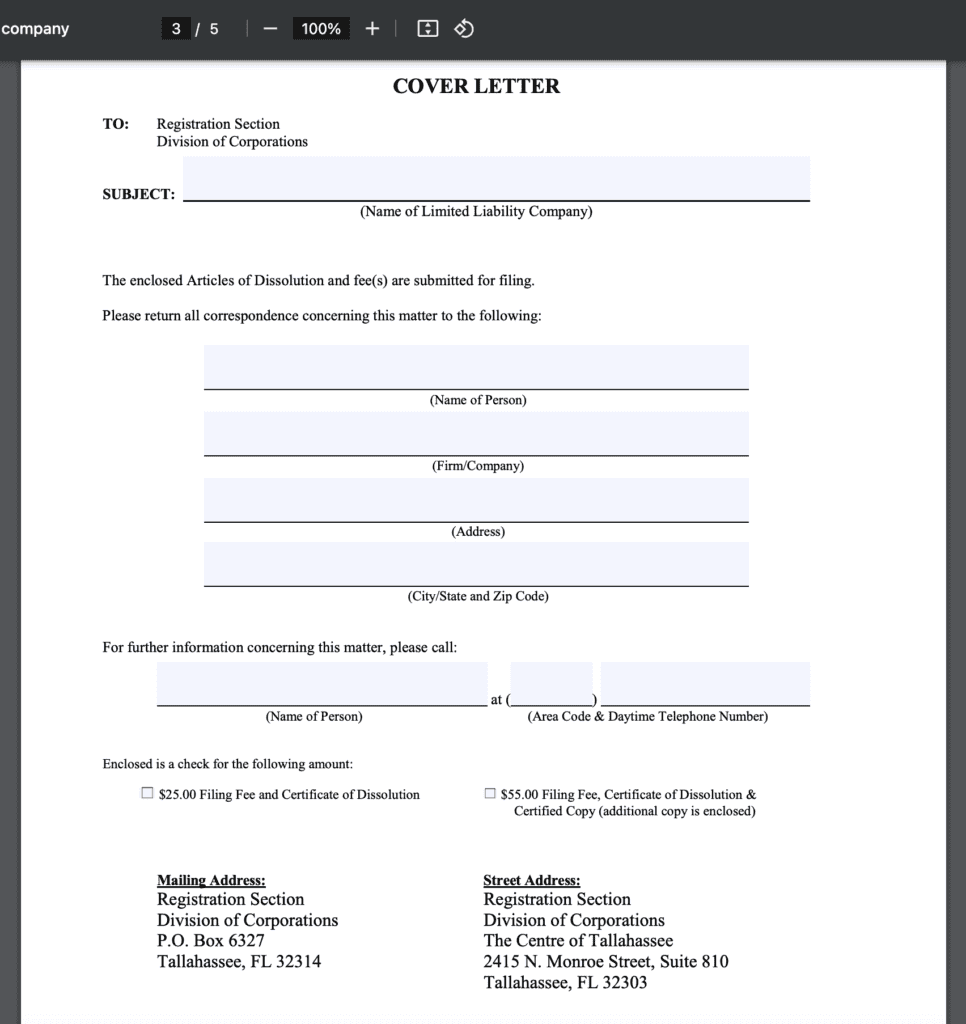
Submit Articles of Dissolution (or Certificate of Cancellation) to the state where the LLC was formed. This legally terminates the business entity.
- Check your state’s specific form and filing requirements (e.g., fees, paperwork).
- Submit the form to the Secretary of State or equivalent agency.
- Keep a copy of the filed document as proof of dissolution.
Step 3: Settle Debts and Obligations
Before dissolving, the LLC must resolve all outstanding financial obligations to avoid legal complications.
- Notify creditors, settle debts, and address pending contracts or lawsuits.
- Distribute remaining assets to members according to the ownership percentages.
- File final federal, state, and local tax returns and pay owed taxes.
Step 4: Cancel Licenses and Permits
Terminate all business-related licenses, permits, and registrations to avoid future liabilities or fees.
- Cancel the LLC’s Employer Identification Number (EIN) with the IRS.
- Close business bank accounts and cancel business licenses, sales permits, or industry-specific certifications.
- Notify local agencies, such as county clerks or tax offices, about the closure.
Step 5: Notify the IRS and State Tax Agencies
Formally inform tax authorities to finalize the LLC’s dissolution and prevent future tax filings.
- File Form 966 with the IRS if the LLC has corporate tax status.
- Mark the final tax return as “Final” and include dissolution details.
- Close state tax accounts, including sales tax or payroll tax IDs.
Is dissolving an LLC hard?

Dissolving an LLC (Limited Liability Company) is generally a structured process but varies by state. While it isn't inherently hard, it requires careful attention to legal, financial, and administrative steps to ensure compliance and avoid future liabilities.
What Are the Steps to Dissolve an LLC?
Dissolving an LLC involves a series of state-specific procedures and internal actions. Key steps include:
- Member approval: Most LLCs require a formal vote by members to dissolve.
- Filing Articles of Dissolution: Submit this form to your state’s business filing agency, often with a fee.
- Notify creditors and settle debts: Pay outstanding obligations or establish a plan to address liabilities.
- Liquidate assets: Distribute remaining assets to members according to the operating agreement.
- Tax clearance: File final federal, state, and local tax returns and obtain a tax clearance certificate if required.
What Challenges Arise When Dissolving an LLC?
Common challenges include unresolved liabilities, administrative oversights, and state-specific requirements:
- Unpaid debts or lawsuits: Failure to settle obligations may lead to personal liability for members.
- Incomplete paperwork: Missing dissolution forms or tax filings can leave the LLC active in state records, incurring fees.
- State-specific rules: Some states mandate publishing dissolution notices or require additional documentation.
How Do Tax Obligations Impact LLC Dissolution?
Tax compliance is critical to avoid penalties during dissolution:
- Final tax returns: File federal (IRS Form 1065 or 1120-S) and state returns, marking them as final.
- State tax clearance: Certain states require a certificate confirming all taxes are paid.
- Sales tax and payroll obligations: Settle any outstanding sales tax or employee-related taxes before closing.
What Legal Requirements Must Be Met to Dissolve an LLC?
Legal compliance ensures the LLC is formally terminated:
- State dissolution filings: Submit required forms (e.g., Articles of Dissolution) to the Secretary of State.
- Operating agreement adherence: Follow dissolution procedures outlined in the LLC’s internal documents.
- Business licenses and permits: Cancel all registrations to prevent renewal fees or legal issues.
Can You Dissolve an LLC Without Member Consensus?
Dissolving without unanimous agreement depends on the operating agreement and state law:
- Operating agreement terms: Some agreements allow dissolution via majority vote or specific triggers.
- Judicial dissolution: Members may petition a court to dissolve the LLC in cases of deadlock or misconduct.
- Administrative dissolution: States can forcibly dissolve an LLC for non-compliance, though this risks penalties.
Frequently Asked Questions About LLCs (FAQs)
What are the steps to dissolve an LLC in Indiana?
To dissolve an LLC in Indiana, you must follow a formal process. First, members or managers must vote to dissolve the LLC, as outlined in the operating agreement. Next, file Articles of Dissolution (Form 49459) with the Indiana Secretary of State, either online or by mail, and pay the required fee. Before filing, ensure all tax obligations are settled with the Indiana Department of Revenue and the IRS. You must also notify creditors, settle outstanding debts, and distribute remaining assets to members according to ownership percentages. Keep records of dissolution steps for legal protection.
Do I need tax clearance to dissolve an LLC in Indiana?
Indiana does not require a tax clearance certificate to dissolve an LLC. However, you are legally obligated to resolve all state tax liabilities, including sales tax, withholding tax, and franchise tax, before filing dissolution documents. Contact the Indiana Department of Revenue to confirm your LLC’s tax status and file final returns. Failure to address tax obligations could result in penalties, audits, or legal complications even after dissolution.
Can I dissolve an Indiana LLC if it’s inactive or never conducted business?
Yes, you can dissolve an Indiana LLC that is inactive or never operated. The process is the same as for active LLCs: file Articles of Dissolution with the Indiana Secretary of State. If the LLC never conducted business, indicate this on the dissolution form. Ensure all initial filings (like annual reports) are up to date, and pay any pending fees. Dissolving an unused LLC prevents future tax filings, fees, or legal liabilities associated with maintaining an inactive entity.
What happens if I don’t formally dissolve my Indiana LLC?
Failing to formally dissolve an LLC in Indiana leaves it active on state records, requiring continued compliance with annual report filings and associated fees. The state may administratively dissolve the LLC for non-compliance, but this does not absolve members of liabilities. Creditors could still pursue unpaid debts, and the LLC may face tax penalties or legal disputes. To avoid risks, follow the formal dissolution process to terminate all obligations and protect members’ personal assets.
Leave a Reply
Our Recommended Articles