
Do Vc Firms Invest in Start Up Retail Companies Looking to Franchise for Scalability

Venture capital (VC) firms play a pivotal role in fueling innovation and growth across industries, and the retail sector is no exception. As startups in the retail space increasingly explore franchising as a scalable business model, the question arises: do VC firms invest in these ventures? Franchising offers a unique opportunity for rapid expansion, leveraging established brand recognition and operational frameworks. However, it also presents challenges, such as maintaining quality control and ensuring consistent profitability. This article examines whether VC firms are drawn to retail startups with franchising ambitions, the factors they consider, and how this trend is shaping the future of scalable retail businesses.
-
Do VC Firms Invest in Start-Up Retail Companies Looking to Franchise for Scalability?
- Why Do VC Firms Favor Franchising Models in Retail?
- What Criteria Do VC Firms Use to Evaluate Retail Start-Ups for Franchising?
- How Does Franchising Impact the Growth of Retail Start-Ups?
- What Are the Risks Associated with Investing in Franchising Retail Start-Ups?
- What Are Some Successful Examples of VC-Backed Franchising Retail Start-Ups?
- What are VC investors looking for?
- What do venture capitalists typically invest in?
- What businesses do venture capitalists invest in?
- Can retail investors invest in venture capital?
-
Frequently Asked Questions by our Community
- Do venture capital firms typically invest in retail startups planning to franchise?
- What criteria do VC firms use to evaluate retail startups looking to franchise?
- Are there specific challenges for retail startups seeking VC funding to franchise?
- How can retail startups improve their chances of attracting VC investment for franchising?
Do VC Firms Invest in Start-Up Retail Companies Looking to Franchise for Scalability?
Venture capital (VC) firms often invest in start-up retail companies that aim to scale through franchising. This strategy allows retail businesses to expand rapidly without the need for significant capital investment in new locations. Franchising offers a proven business model, which reduces the risk for both the franchisor and the franchisee. VC firms are attracted to such models because they provide a clear path to scalability and profitability. However, the decision to invest depends on several factors, including the strength of the brand, the market potential, and the management team's ability to execute the franchising strategy effectively.
See Also As a New Business What Are the Odds of Getting Venture Capital Funding
Why Do VC Firms Favor Franchising Models in Retail?
VC firms favor franchising models in retail because they offer a low-risk, high-reward opportunity. Franchising allows retail companies to expand quickly by leveraging the capital and resources of franchisees. This model also ensures consistent brand representation and operational standards across locations, which is crucial for maintaining customer trust and loyalty. Additionally, franchising reduces the need for significant upfront capital from the VC firm, making it an attractive investment option.
What Criteria Do VC Firms Use to Evaluate Retail Start-Ups for Franchising?
VC firms evaluate retail start-ups based on several criteria, including market potential, brand strength, and operational scalability. They look for businesses with a unique value proposition, a strong management team, and a clear growth strategy. The ability to standardize operations and maintain quality control across franchise locations is also critical. VC firms often conduct thorough due diligence to assess the feasibility of the franchising model and the potential return on investment.
See Also How Do I Write a Good Cover Letter for a Internship at a Venture Capital Firm
How Does Franchising Impact the Growth of Retail Start-Ups?
Franchising significantly accelerates the growth of retail start-ups by enabling rapid expansion into new markets. It allows start-ups to scale without the need for substantial capital investment, as franchisees bear the costs of opening and operating new locations. This model also provides access to local market knowledge and expertise, which can enhance the success rate of new outlets. However, the success of franchising depends on the ability to maintain consistent brand standards and operational efficiency across all locations.
What Are the Risks Associated with Investing in Franchising Retail Start-Ups?
Investing in franchising retail start-ups comes with several risks, including brand dilution, operational inconsistencies, and regulatory challenges. If franchisees fail to adhere to brand standards, it can harm the overall reputation of the business. Additionally, managing a large network of franchisees can be complex and resource-intensive. Regulatory issues, such as compliance with local laws and regulations, can also pose challenges. VC firms must carefully assess these risks before making an investment decision.
See Also Why Are Venture Capital Funds Mostly for Tech Startups?
What Are Some Successful Examples of VC-Backed Franchising Retail Start-Ups?
Several retail start-ups have successfully scaled through franchising with the backing of VC firms. Examples include The Halal Guys, a fast-casual restaurant chain, and Anytime Fitness, a global fitness franchise. These companies have demonstrated the ability to maintain brand consistency and operational excellence across multiple locations, making them attractive investment opportunities for VC firms. Their success highlights the potential of franchising as a scalable growth strategy for retail start-ups.
| Criteria | Description |
|---|---|
| Market Potential | Assessing the size and growth potential of the target market. |
| Brand Strength | Evaluating the uniqueness and recognition of the brand. |
| Operational Scalability | Determining the ability to standardize and replicate operations. |
| Management Team | Assessing the experience and capability of the leadership team. |
| Growth Strategy | Evaluating the clarity and feasibility of the expansion plan. |
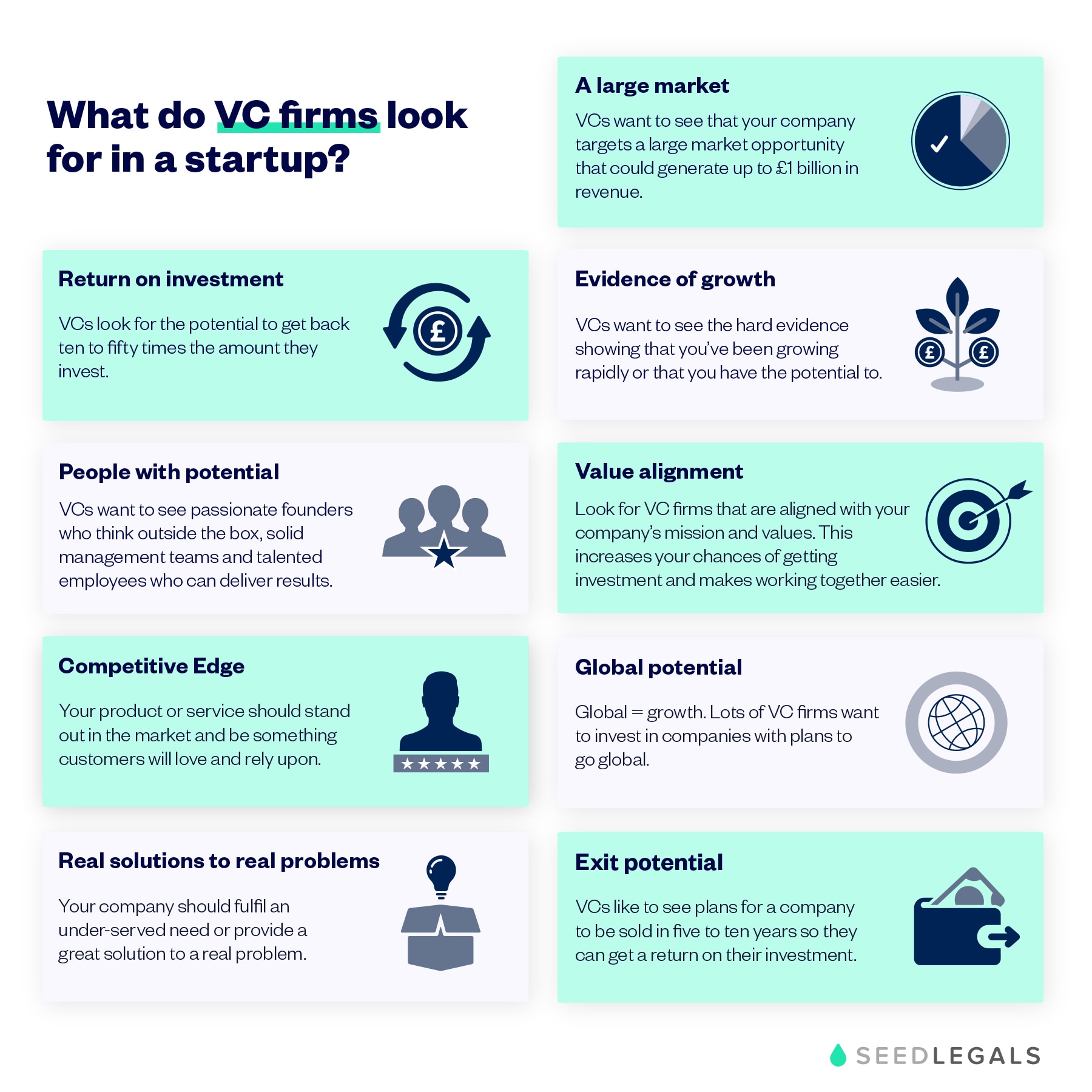
What are VC investors looking for?
 How Do I Become an Lp in a Vc Fund?
Strong Market Potential
VC investors prioritize startups that operate in markets with significant growth potential. They look for industries that are expanding rapidly or have untapped opportunities. Key factors include:
- Market size: The total addressable market (TAM) should be large enough to support scalable growth.
- Market trends: Investors favor industries aligned with emerging trends, such as AI, renewable energy, or healthcare innovation.
- Customer demand: Evidence of strong and growing demand for the product or service is critical.
Innovative and Scalable Solutions
VCs seek startups that offer unique, innovative solutions with the potential to scale globally. They focus on:
- Unique value proposition: The product or service should solve a problem in a way that competitors cannot easily replicate.
- Scalability: The business model should allow for rapid expansion without proportional increases in costs.
- Intellectual property: Patents, trademarks, or proprietary technology can provide a competitive edge.
Experienced and Committed Team
A strong founding team is one of the most critical factors for VC investors. They evaluate:
- Relevant expertise: Founders should have a deep understanding of the industry and the problem they are solving.
- Track record: Prior entrepreneurial success or relevant professional experience increases credibility.
- Commitment: Investors look for teams that are fully dedicated to the startup’s mission and growth.
Clear Revenue Model
VC investors want to see a well-defined and sustainable revenue model. Key considerations include:
- Revenue streams: Multiple sources of income can reduce risk and increase stability.
- Profit margins: High margins indicate the potential for profitability as the business scales.
- Customer acquisition cost (CAC): A low CAC relative to customer lifetime value (CLV) is highly attractive.
Traction and Milestones
Demonstrating traction is essential to attract VC funding. Investors look for evidence of progress, such as:
- User growth: A rapidly increasing customer base or user engagement metrics.
- Revenue growth: Consistent and significant increases in revenue over time.
- Partnerships: Strategic alliances or collaborations that validate the business model.
What do venture capitalists typically invest in?
What Types of Companies Do Venture Capitalists Invest In?
Venture capitalists typically invest in high-growth potential companies that operate in industries with significant scalability. These companies are often in their early stages but demonstrate the potential for rapid expansion and substantial returns. Common sectors include:
- Technology startups: Software, hardware, and innovative tech solutions.
- Biotechnology and healthcare: Companies developing new drugs, medical devices, or health tech.
- E-commerce and consumer goods: Businesses with scalable online platforms or unique products.
What Stage of Business Do Venture Capitalists Focus On?
Venture capitalists often focus on specific stages of a company's growth. These stages include:
- Seed stage: Early funding to develop a product or idea.
- Early-stage (Series A): Funding for companies with a working product and initial traction.
- Growth stage (Series B and beyond): Investments to scale operations and expand market reach.
What Are the Key Factors Venture Capitalists Look For?
When deciding to invest, venture capitalists evaluate several critical factors:
- Strong founding team: Experienced and capable leadership.
- Market potential: Large and growing target markets.
- Innovative product or service: Unique value proposition and competitive advantage.
How Do Venture Capitalists Structure Their Investments?
Venture capitalists structure their investments to balance risk and reward. Common methods include:
- Equity financing: Acquiring ownership stakes in the company.
- Convertible notes: Debt that converts into equity at a later stage.
- Board seats: Active involvement in company decisions to guide growth.
What Are the Risks and Rewards for Venture Capitalists?
Venture capital investments come with both risks and potential rewards:
- High failure rate: Many startups fail, leading to potential losses.
- High returns: Successful investments can yield significant profits.
- Long-term commitment: Investments often take years to mature and provide returns.
What businesses do venture capitalists invest in?
Technology Startups
Venture capitalists often invest in technology startups due to their high growth potential. These businesses typically focus on innovative solutions and disruptive technologies. Common areas include:
- Software as a Service (SaaS): Companies offering cloud-based software solutions.
- Artificial Intelligence (AI): Startups developing AI-driven applications and platforms.
- Fintech: Businesses revolutionizing financial services through technology.
Biotechnology and Healthcare
Venture capitalists are drawn to biotechnology and healthcare businesses because of their potential to address critical medical needs. Investments often target:
- Drug Development: Companies working on novel pharmaceuticals.
- Medical Devices: Startups creating innovative diagnostic or treatment tools.
- Digital Health: Platforms that improve healthcare delivery through technology.
E-commerce and Consumer Goods
Venture capitalists frequently invest in e-commerce and consumer goods businesses, especially those with unique value propositions. Key areas include:
- Direct-to-Consumer (DTC): Brands that sell directly to customers online.
- Sustainable Products: Companies offering eco-friendly or ethical goods.
- Subscription Services: Businesses with recurring revenue models.
Clean Energy and Sustainability
With growing environmental concerns, venture capitalists are increasingly investing in clean energy and sustainability businesses. These include:
- Renewable Energy: Startups focused on solar, wind, or other renewable sources.
- Energy Storage: Companies developing advanced battery technologies.
- Circular Economy: Businesses promoting recycling and waste reduction.
EdTech and Workforce Development
Venture capitalists also target EdTech and workforce development businesses, which aim to transform education and training. Key areas are:
- Online Learning Platforms: Companies offering digital education solutions.
- Skills Training: Startups focused on upskilling and reskilling workers.
- Corporate Training: Businesses providing tailored training programs for enterprises.
Can retail investors invest in venture capital?

What is Venture Capital?
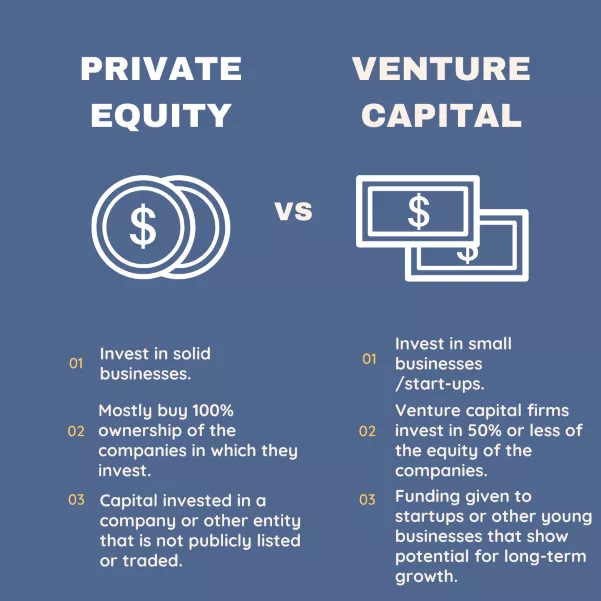
Venture capital (VC) is a form of private equity financing that is provided by venture capital firms or funds to startups, early-stage, and emerging companies that have been deemed to have high growth potential or which have demonstrated high growth. This type of investment is typically characterized by high risk but also the potential for high returns.
- High-risk investment: Venture capital investments are inherently risky due to the uncertainty of the success of the startups.
- High potential returns: Successful investments can yield substantial returns, often much higher than traditional investments.
- Illiquid investment: VC investments are not easily liquidated and often require a long-term commitment.
Can Retail Investors Participate in Venture Capital?
Traditionally, venture capital has been the domain of institutional investors and high-net-worth individuals. However, there are ways for retail investors to participate in venture capital, albeit indirectly or through specific platforms.
- Venture capital funds: Some VC funds allow retail investors to invest, though often with high minimum investment requirements.
- Crowdfunding platforms: Platforms like AngelList and SeedInvest enable retail investors to invest in startups with smaller amounts of capital.
- Equity crowdfunding: This method allows retail investors to buy shares in startups through regulated platforms.
What Are the Risks for Retail Investors in Venture Capital?
Investing in venture capital as a retail investor comes with significant risks that need to be carefully considered.
- High failure rate: Many startups fail, leading to a total loss of the invested capital.
- Lack of liquidity: Investments in startups are typically illiquid, meaning they cannot be easily sold or converted to cash.
- Limited information: Startups often have limited financial history, making it difficult to assess their potential accurately.
What Are the Benefits for Retail Investors in Venture Capital?
Despite the risks, there are potential benefits for retail investors who choose to invest in venture capital.
- High returns: Successful investments can provide substantial returns, often outperforming traditional investments.
- Diversification: Adding venture capital to a portfolio can provide diversification and reduce overall risk.
- Early access: Retail investors can gain early access to potentially groundbreaking companies and technologies.
How Can Retail Investors Start Investing in Venture Capital?
For retail investors interested in venture capital, there are several steps to take to begin investing.
- Research: Understand the venture capital landscape and the specific risks involved.
- Choose a platform: Select a reputable crowdfunding or investment platform that caters to retail investors.
- Start small: Begin with smaller investments to gain experience and mitigate risk.
Frequently Asked Questions by our Community
Do venture capital firms typically invest in retail startups planning to franchise?
Venture capital (VC) firms often consider investing in retail startups that have a clear plan to franchise for scalability. However, their interest depends on several factors, such as the market potential, the startup's unique value proposition, and the strength of the franchise model. Retail startups with a proven track record of success, a scalable business model, and a strong brand identity are more likely to attract VC funding. Franchising can be an attractive strategy for VCs because it allows for rapid expansion with relatively lower capital investment compared to opening company-owned stores.
What criteria do VC firms use to evaluate retail startups looking to franchise?
VC firms evaluate retail startups based on several key criteria. These include the market size and growth potential, the startup's competitive advantage, the strength of the management team, and the scalability of the franchise model. Additionally, VCs look for startups with a clear revenue model, strong unit economics, and a well-defined plan for franchisee support. Startups that demonstrate the ability to generate consistent cash flow and maintain high franchisee satisfaction are more likely to secure investment.
Are there specific challenges for retail startups seeking VC funding to franchise?
Yes, retail startups seeking VC funding to franchise often face specific challenges. One major challenge is proving the scalability of the franchise model, as VCs want to see evidence that the business can grow rapidly without compromising quality or profitability. Another challenge is demonstrating brand strength and customer loyalty, as these are critical for attracting franchisees. Additionally, retail startups must show that they have a robust operational framework in place to support franchisees, including training programs, marketing support, and supply chain management.
How can retail startups improve their chances of attracting VC investment for franchising?
Retail startups can improve their chances of attracting VC investment by focusing on several key areas. First, they should develop a compelling business plan that highlights the scalability and profitability of the franchise model. Second, they should build a strong brand identity and demonstrate a loyal customer base. Third, startups should establish a track record of success, even if it's on a small scale, to prove the viability of their concept. Finally, having an experienced management team with expertise in both retail and franchising can significantly increase the likelihood of securing VC funding.
Leave a Reply
Our Recommended Articles