
What Are the Different Types of Venture Capital Firms?


Venture capital firms play a pivotal role in fueling innovation and growth by providing funding to startups and emerging companies. However, not all venture capital firms operate in the same way. They vary significantly in their investment strategies, focus areas, and stages of involvement. Understanding the different types of venture capital firms is essential for entrepreneurs seeking funding, as well as for investors looking to align their goals with the right partners. From early-stage seed investors to late-stage growth funds, each type of firm offers unique advantages and challenges. This article explores the diverse landscape of venture capital firms and their distinct roles in the startup ecosystem.
What Are the Different Types of Venture Capital Firms?
Venture capital firms play a crucial role in funding startups and early-stage companies. These firms are categorized based on their investment focus, stage of investment, and the type of companies they support. Understanding the different types of venture capital firms can help entrepreneurs identify the right investors for their business needs.
See Also What is the Difference Between Early and Late Stage Venture Capital
1. Early-Stage Venture Capital Firms
Early-stage venture capital firms focus on investing in startups that are in the initial phases of development. These firms provide seed funding or Series A funding to help companies develop their product, build a team, and establish a market presence. Early-stage investors often take higher risks but seek substantial returns if the startup succeeds.
2. Growth-Stage Venture Capital Firms
Growth-stage venture capital firms invest in companies that have already demonstrated market traction and are looking to scale their operations. These firms typically provide Series B or Series C funding to help businesses expand into new markets, increase production, or enhance their technology. Growth-stage investors focus on companies with proven business models and significant growth potential.
See Also What is the Difference Between Fundraising Venture Capital and Private Investments
3. Late-Stage Venture Capital Firms
Late-stage venture capital firms invest in mature companies that are preparing for an IPO (Initial Public Offering) or acquisition. These firms provide Series D or later-stage funding to help companies optimize their operations, improve profitability, and achieve a successful exit. Late-stage investors prioritize stability and predictable returns over high-risk, high-reward opportunities.
4. Sector-Specific Venture Capital Firms
Sector-specific venture capital firms specialize in investing in particular industries, such as technology, healthcare, fintech, or clean energy. These firms have deep expertise in their chosen sectors and often provide not only capital but also strategic guidance and industry connections. Entrepreneurs in niche markets often seek out sector-specific investors for their specialized knowledge.
See Also How to Find the Ticket Size of a Vc or an Investing Firm
5. Corporate Venture Capital Firms
Corporate venture capital firms are investment arms of large corporations. These firms invest in startups that align with the corporation's strategic goals, such as developing new technologies or entering emerging markets. Corporate venture capital firms often provide startups with access to resources, distribution channels, and industry expertise, in addition to funding.
| Type of Venture Capital Firm | Investment Focus | Stage of Investment |
|---|---|---|
| Early-Stage | Startups in initial development | Seed, Series A |
| Growth-Stage | Companies scaling operations | Series B, Series C |
| Late-Stage | Mature companies preparing for IPO | Series D and beyond |
| Sector-Specific | Specific industries (e.g., tech, healthcare) | Varies |
| Corporate | Startups aligned with corporate goals | Varies |
What are the three types of venture capital?
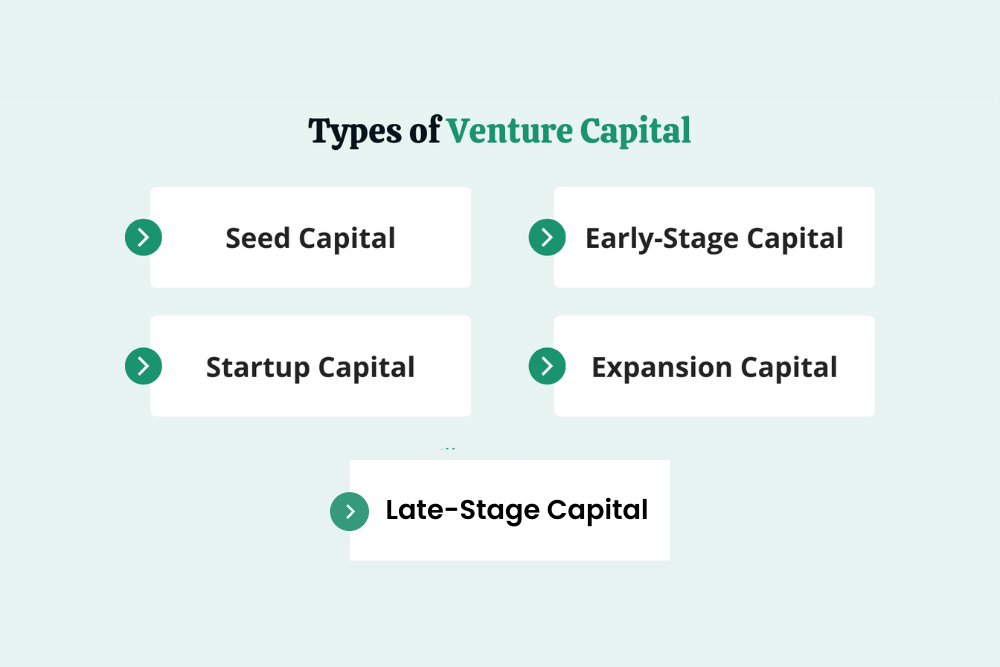
1. Seed Capital
Seed capital is the initial funding used to start a business or develop a new product. It is typically provided by angel investors or early-stage venture capital firms. This type of funding is crucial for:
- Market research to validate the business idea.
- Product development to create a prototype or minimum viable product (MVP).
- Initial operations such as hiring key personnel and setting up infrastructure.
2. Early-Stage Venture Capital
Early-stage venture capital is provided to companies that have moved beyond the seed stage and are in the process of developing their products or services. This funding is often used for:
- Scaling operations to meet growing demand.
- Marketing and sales efforts to build brand awareness and acquire customers.
- Further product development to refine and enhance the offering.
3. Expansion or Growth Capital
Expansion or growth capital is aimed at companies that have established a market presence and are looking to expand their operations. This type of funding is typically used for:
- Geographical expansion to enter new markets.
- Acquisitions to acquire competitors or complementary businesses.
- Infrastructure development to support increased production or service delivery.
4. Late-Stage Venture Capital
Late-stage venture capital is provided to companies that are well-established and are preparing for an initial public offering (IPO) or other exit strategies. This funding is often used for:
- Final scaling efforts to maximize market share.
- Strengthening the balance sheet to attract public investors.
- Pre-IPO activities such as legal and financial preparations.
5. Bridge Financing
Bridge financing is a short-term funding option used by companies to bridge the gap between major funding rounds or before an IPO. This type of funding is typically used for:
- Immediate working capital needs to sustain operations.
- Finalizing key milestones to enhance valuation before a major funding event.
- Covering unexpected expenses that arise during critical phases.
What are the different types of venture capital industries?
1. Early-Stage Venture Capital
Early-stage venture capital focuses on funding startups in their initial phases, often when they are still developing their product or service. This type of venture capital is crucial for companies that need significant resources to move from the idea stage to market entry. Key characteristics include:
- Seed funding: Provides capital for product development and market research.
- High risk: Investors take on substantial risk due to the unproven nature of the business.
- Equity stake: Investors often receive a significant equity share in return for their investment.
2. Growth-Stage Venture Capital
Growth-stage venture capital targets companies that have already established a market presence and are looking to scale their operations. This type of funding is used to accelerate growth, expand into new markets, or increase production capacity. Key aspects include:
- Scaling operations: Funds are used to hire talent, increase marketing efforts, and expand infrastructure.
- Lower risk: Compared to early-stage investments, growth-stage companies have proven business models.
- Strategic partnerships: Investors often provide mentorship and industry connections.
3. Late-Stage Venture Capital
Late-stage venture capital is aimed at companies that are well-established and preparing for an exit strategy, such as an IPO or acquisition. This type of funding helps companies optimize their operations and maximize valuation. Key features include:
- Pre-IPO funding: Prepares companies for public offerings by strengthening financials.
- Lower equity dilution: Companies at this stage often require less equity in exchange for capital.
- Focus on profitability: Investors prioritize companies with clear paths to profitability.
4. Sector-Specific Venture Capital
Sector-specific venture capital focuses on particular industries, such as technology, healthcare, or clean energy. Investors in this category have deep expertise in the chosen sector and provide not only capital but also industry-specific guidance. Key elements include:
- Industry expertise: Investors bring specialized knowledge and networks.
- Targeted investments: Funds are allocated to companies within a specific sector.
- Innovation focus: Often supports cutting-edge technologies or solutions.
5. Corporate Venture Capital
Corporate venture capital involves investments made by established corporations into startups, often to gain strategic advantages or access to new technologies. This type of venture capital is unique because it aligns with the corporation's long-term goals. Key characteristics include:
- Strategic alignment: Investments are made to support the corporation's core business or innovation goals.
- Access to resources: Startups benefit from the corporation's resources, such as distribution networks.
- Long-term partnerships: Often leads to collaborations or acquisitions.
Who are the Tier 1 VCs?
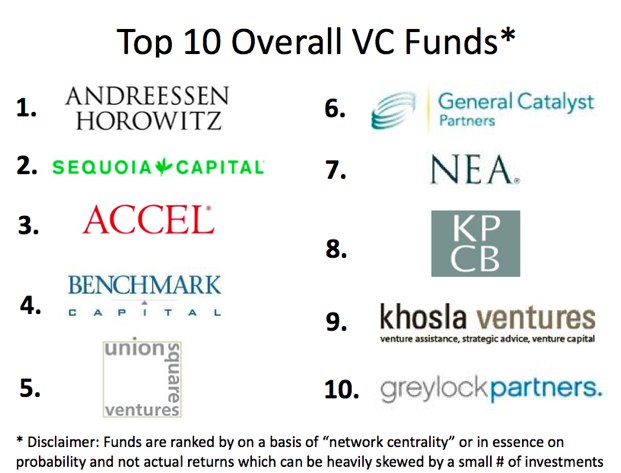
What Defines a Tier 1 VC?
Tier 1 VCs are venture capital firms that are considered the most prestigious and successful in the industry. They are characterized by their ability to consistently identify and invest in high-growth startups, often leading to significant returns. These firms typically have a strong track record, extensive networks, and substantial financial resources. Key attributes include:
- Proven Track Record: A history of successful investments in high-profile companies.
- Extensive Networks: Access to a wide range of industry experts, entrepreneurs, and other investors.
- Substantial Capital: Ability to invest large sums of money across multiple funding rounds.
Top Tier 1 VC Firms in the Industry
Some of the most well-known Tier 1 VC firms include Sequoia Capital, Andreessen Horowitz, and Accel. These firms have been instrumental in the growth of companies like Google, Facebook, and Airbnb. Their reputation and success make them highly sought after by startups. Notable firms include:
- Sequoia Capital: Known for early investments in Apple, Google, and WhatsApp.
- Andreessen Horowitz: Famous for backing Facebook, Twitter, and Airbnb.
- Accel: Early investor in Facebook, Slack, and Dropbox.
Investment Strategies of Tier 1 VCs
Tier 1 VCs employ a variety of investment strategies to maximize returns. They often focus on early-stage investments, providing not just capital but also mentorship and strategic guidance. Their strategies include:
- Early-Stage Investments: Investing in startups during seed or Series A rounds.
- Mentorship and Guidance: Offering expertise and resources to help startups scale.
- Diversification: Spreading investments across various sectors to mitigate risk.
Impact of Tier 1 VCs on Startups
The involvement of Tier 1 VCs can significantly impact a startup's trajectory. Their endorsement can attract additional investors, talent, and media attention. The impact includes:
- Increased Credibility: Startups gain credibility and trust from other investors and stakeholders.
- Access to Networks: Startups can leverage the VC's extensive network for partnerships and hiring.
- Media Attention: High-profile investments often attract significant media coverage.
Challenges Faced by Tier 1 VCs
Despite their success, Tier 1 VCs face several challenges, including intense competition and the need to continuously identify high-potential startups. Challenges include:
- Intense Competition: High demand for top-tier startups leads to fierce competition among VCs.
- Market Volatility: Economic downturns can affect investment returns and startup valuations.
- Regulatory Changes: Changes in regulations can impact investment strategies and returns.
Frequently Asked Questions (FAQs)
What are the main types of venture capital firms?
Venture capital firms can be broadly categorized into early-stage, growth-stage, and late-stage firms. Early-stage firms focus on startups in their initial phases, providing seed funding or Series A rounds to help them develop their product or service. Growth-stage firms invest in companies that have already demonstrated market traction and are looking to scale their operations. Late-stage firms target established companies that are preparing for an IPO or a major acquisition. Each type of firm plays a distinct role in the lifecycle of a startup.
How do venture capital firms differ by investment focus?
Venture capital firms often specialize in specific industries or sectors, such as technology, healthcare, fintech, or clean energy. Some firms may focus on geographic regions, investing exclusively in startups from certain countries or cities. Others may prioritize social impact or sustainability, aligning their investments with environmental or social goals. This specialization allows venture capital firms to leverage their expertise and networks to support startups effectively.
What is the difference between corporate venture capital and traditional venture capital?
Corporate venture capital (CVC) refers to investment arms of large corporations that invest in startups, often to gain strategic advantages such as access to new technologies or markets. In contrast, traditional venture capital firms are independent entities that raise funds from limited partners, such as pension funds or wealthy individuals, with the sole purpose of generating financial returns. While CVCs may prioritize strategic alignment with their parent company, traditional VCs focus primarily on maximizing returns for their investors.
What role do micro VCs and angel investors play in venture capital?
Micro VCs and angel investors are critical players in the early stages of a startup's journey. Micro VCs are smaller venture capital firms that typically invest smaller amounts, often in the range of $250,000 to $5 million, and focus on seed or pre-seed rounds. Angel investors, on the other hand, are high-net-worth individuals who invest their own money in startups, often providing not only capital but also mentorship and industry connections. Both micro VCs and angel investors help bridge the funding gap for startups before they attract larger institutional investors.
Leave a Reply
Our Recommended Articles