
As a New Business What Are the Odds of Getting Venture Capital Funding


Starting a new business is an exciting yet challenging endeavor, and securing venture capital (VC) funding can be a game-changer for many startups. However, the odds of obtaining such funding are notoriously slim. With thousands of new businesses emerging annually, only a small percentage manage to attract the attention of venture capitalists. Factors like market potential, scalability, and a strong founding team play critical roles in determining success. Understanding the competitive landscape, refining your pitch, and aligning with investor priorities are essential steps. This article explores the realities of securing VC funding as a new business and offers insights to improve your chances in this highly competitive arena.
- As a New Business, What Are the Odds of Getting Venture Capital Funding?
- What are the odds of getting VC funding?
- How difficult is it to get VC funding?
- What percentage of startups get VC funding?
- What is the 2 6 2 rule of venture capital?
-
Frequently Asked Questions (FAQs)
- What are the typical odds of securing venture capital funding as a new business?
- What factors influence a new business's chances of obtaining venture capital funding?
- How can a new business improve its chances of attracting venture capital investors?
- What are the alternatives to venture capital funding for new businesses?
As a New Business, What Are the Odds of Getting Venture Capital Funding?
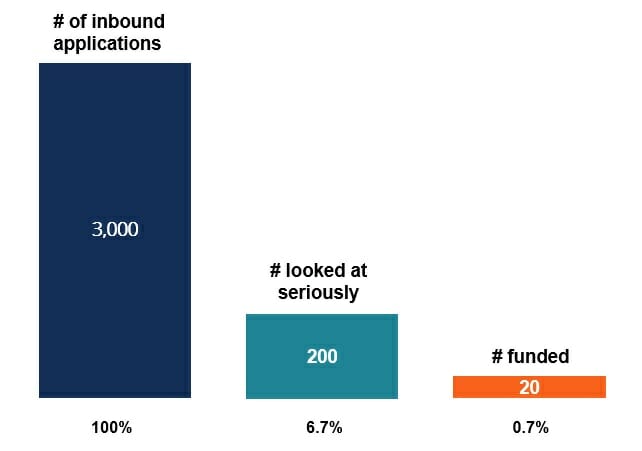
Securing venture capital funding as a new business can be a challenging yet rewarding endeavor. The odds depend on various factors, including the industry, business model, team expertise, and market potential. According to recent studies, only about 0.05% of startups successfully secure venture capital funding. This highlights the competitive nature of the process and the importance of standing out in a crowded market.
See AlsoWhat Does It Take to Get Vc Funding?Understanding the Venture Capital Landscape
The venture capital landscape is highly competitive, with investors seeking businesses that demonstrate high growth potential and scalability. Startups must align their goals with the interests of venture capitalists, who typically focus on industries like technology, biotech, and clean energy. Understanding the preferences and criteria of venture capitalists is crucial for tailoring your pitch effectively.
Key Factors That Influence Funding Success
Several factors influence the likelihood of securing venture capital funding. These include:
- A strong business plan with clear revenue projections.
- A proven track record of the founding team.
- A unique value proposition that solves a significant problem.
- A large and growing market opportunity.
- Evidence of traction, such as early sales or user growth.
 Can a 16 Year Old Get Backed by a Venture Capitalist?
Common Challenges Faced by New Businesses
New businesses often face challenges when seeking venture capital. These include:
- Lack of experience in fundraising.
- Insufficient market validation.
- Weak financial projections.
- Limited network connections to investors.
- High competition from other startups.
How to Improve Your Chances of Securing Funding
To improve your odds, focus on:
- Building a strong network of industry contacts.
- Refining your pitch deck to highlight key metrics.
- Demonstrating early traction through pilot programs or partnerships.
- Seeking mentorship from experienced entrepreneurs.
- Targeting investors who specialize in your industry.
 Why is It So Hard to Find an Angel Investor for My Startup?
Alternatives to Venture Capital Funding
If venture capital funding proves elusive, consider alternative funding options such as:
- Angel investors.
- Crowdfunding platforms.
- Small business loans.
- Grants for specific industries.
- Bootstrapping to grow your business organically.
| Factor | Impact on Funding Odds |
|---|---|
| Industry | High-growth industries like tech are favored. |
| Team Expertise | Experienced teams are more likely to secure funding. |
| Market Size | Larger markets attract more investor interest. |
| Traction | Early success increases credibility. |
| Unique Value Proposition | Innovative solutions stand out to investors. |
What are the odds of getting VC funding?
 What Are the Expectations of the Venture Capitalist While Investing in a Startup
Understanding the Basics of VC Funding
Venture Capital (VC) funding is a form of private equity financing that investors provide to early-stage, high-potential, and often high-risk startups. The odds of securing VC funding depend on several factors, including the startup's industry, growth potential, and the strength of its founding team. Here are some key points to consider:
- Industry: Startups in technology, biotech, and other high-growth sectors are more likely to attract VC interest.
- Growth Potential: VCs look for companies with the potential to scale rapidly and generate significant returns.
- Team: A strong, experienced founding team increases the chances of securing funding.
Factors That Influence VC Funding Odds
The likelihood of obtaining VC funding is influenced by a variety of factors. Understanding these can help startups better position themselves for success:
- Market Size: VCs prefer startups that target large and growing markets.
- Product Differentiation: A unique product or service that stands out in the market is more attractive to investors.
- Traction: Demonstrating early traction, such as user growth or revenue, can significantly improve your odds.
The Role of Networking in Securing VC Funding
Networking plays a crucial role in the VC funding process. Building relationships with investors and other entrepreneurs can open doors to funding opportunities:
- Warm Introductions: Getting introduced to VCs through mutual contacts can increase your chances of getting a meeting.
- Pitch Events: Participating in pitch events and competitions can help you get noticed by investors.
- Advisory Board: Having well-connected advisors can provide valuable introductions and credibility.
Common Mistakes That Reduce VC Funding Odds
Many startups make mistakes that can significantly reduce their chances of securing VC funding. Being aware of these pitfalls can help you avoid them:
- Lack of Preparation: Failing to thoroughly prepare your pitch and financial projections can deter investors.
- Overvaluation: Setting an unrealistic valuation can scare off potential investors.
- Ignoring Feedback: Not listening to or addressing investor feedback can harm your chances.
How to Improve Your Chances of Getting VC Funding
There are several strategies that startups can employ to improve their odds of securing VC funding:
- Refine Your Pitch: Ensure your pitch clearly communicates your value proposition and market opportunity.
- Build a Strong Team: Assemble a team with a track record of success and relevant experience.
- Show Traction: Demonstrate early signs of success, such as user growth, partnerships, or revenue.
How difficult is it to get VC funding?

Understanding the VC Funding Landscape
Securing VC funding is a challenging process that requires a deep understanding of the venture capital ecosystem. Venture capitalists are highly selective, investing in only a small percentage of the startups they evaluate. To increase your chances, it is crucial to:
- Research the types of startups VCs typically fund.
- Understand the investment criteria and focus areas of potential investors.
- Build a strong network within the VC community to gain insights and introductions.
Preparing a Compelling Pitch
A well-prepared pitch is essential to attract VC interest. Your pitch should clearly communicate your startup's value proposition, market potential, and growth strategy. Key elements to include are:
- A clear problem statement and how your solution addresses it.
- Demonstration of traction, such as user growth, revenue, or partnerships.
- A detailed financial plan outlining how the funding will be used to achieve milestones.
Building a Strong Team
VCs often invest in teams as much as they invest in ideas. A capable and experienced team increases the likelihood of success. To strengthen your team:
- Highlight the expertise and track record of your core team members.
- Showcase any advisors or mentors who support your startup.
- Demonstrate team cohesion and a shared vision for the company's future.
Demonstrating Market Potential
VCs look for startups that operate in large and growing markets. To prove your market potential:
- Provide market research that validates the size and growth rate of your target market.
- Showcase competitive advantages that differentiate your product or service.
- Highlight any early customer feedback or pilot programs that demonstrate demand.
Once a VC expresses interest, they will conduct a thorough due diligence process to assess your startup's viability. Be prepared to:
- Provide detailed financial statements and projections.
- Share legal documents, such as incorporation papers and intellectual property rights.
- Be transparent about potential risks and how you plan to mitigate them.
What percentage of startups get VC funding?
What Percentage of Startups Receive VC Funding?
Only a small fraction of startups secure venture capital (VC) funding. Studies suggest that approximately 0.05% to 0.07% of startups in the U.S. receive VC funding. This means that out of millions of startups, only a few thousand manage to attract venture capital investment. The competition is intense, and most startups rely on other funding sources like bootstrapping, angel investors, or crowdfunding.
Why Is VC Funding So Rare for Startups?
VC funding is rare due to several factors:
- High Risk: Venture capitalists invest in high-growth potential startups, which are inherently risky.
- Stringent Criteria: Startups must demonstrate scalability, a strong team, and a unique value proposition to attract VC interest.
- Limited Funds: VC firms have a finite amount of capital to invest, and they prioritize startups with the highest potential returns.
What Industries Are Most Likely to Receive VC Funding?
Certain industries are more likely to attract VC funding due to their growth potential and scalability:
- Technology: Software, AI, and fintech startups are highly favored by VCs.
- Biotech and Healthcare: Innovations in medicine and healthcare often secure significant funding.
- E-commerce and Consumer Goods: Startups with disruptive business models in these sectors also attract VC interest.
What Are the Stages of VC Funding for Startups?
VC funding typically occurs in stages, each with its own requirements and goals:
- Seed Stage: Early funding to validate the idea and build a prototype.
- Series A: Funding to scale the product and achieve market fit.
- Series B and Beyond: Capital for expansion, scaling operations, and entering new markets.
What Are the Alternatives to VC Funding for Startups?
Startups that don’t secure VC funding often explore other options:
- Bootstrapping: Self-funding through personal savings or revenue.
- Angel Investors: High-net-worth individuals who provide early-stage capital.
- Crowdfunding: Raising small amounts of money from a large number of people via platforms like Kickstarter.
What is the 2 6 2 rule of venture capital?
Understanding the 2 6 2 Rule in Venture Capital
The 2 6 2 rule is a heuristic used in venture capital to describe the expected distribution of outcomes in a portfolio of startup investments. According to this rule:
- 20% of the investments are expected to be high performers, generating significant returns.
- 60% of the investments are expected to be moderate performers, breaking even or providing modest returns.
- 20% of the investments are expected to fail, resulting in a total loss of capital.
Why the 2 6 2 Rule Matters for Investors
The 2 6 2 rule is crucial for venture capitalists because it helps them manage expectations and allocate resources effectively. Key points include:
- It emphasizes the importance of diversification to mitigate risks.
- It highlights the need to focus on identifying and nurturing the top 20% of high-performing startups.
- It prepares investors for the reality that not all investments will succeed, ensuring they are psychologically and financially prepared for losses.
How the 2 6 2 Rule Impacts Startup Funding
For startups, the 2 6 2 rule underscores the competitive nature of venture capital funding. Important considerations include:
- Startups must demonstrate high growth potential to attract venture capital interest.
- They need to stand out in a crowded market to be part of the top 20% that generates substantial returns.
- Understanding this rule helps startups set realistic expectations about the likelihood of securing funding and the challenges they may face.
Applying the 2 6 2 Rule to Portfolio Management
Venture capitalists use the 2 6 2 rule as a framework for managing their investment portfolios. Key strategies include:
- Conducting thorough due diligence to identify startups with the highest potential.
- Allocating more resources to support the top 20% of high-performing investments.
- Regularly reviewing and rebalancing the portfolio to ensure alignment with the rule's distribution.
Limitations of the 2 6 2 Rule in Venture Capital
While the 2 6 2 rule provides a useful framework, it has its limitations. These include:
- It is a general guideline and may not apply to every venture capital portfolio.
- Market conditions, industry trends, and other external factors can influence outcomes beyond the rule's predictions.
- Over-reliance on the rule may lead to missed opportunities or misallocation of resources.
Frequently Asked Questions (FAQs)
What are the typical odds of securing venture capital funding as a new business?
The odds of securing venture capital funding as a new business are generally low, with estimates suggesting that only about 0.05% to 0.07% of startups successfully raise venture capital. This is because venture capitalists typically look for businesses with high growth potential, a scalable business model, and a strong founding team. New businesses must demonstrate not only a unique value proposition but also the ability to generate significant returns on investment, which can be challenging for early-stage companies.
What factors influence a new business's chances of obtaining venture capital funding?
Several key factors influence a new business's chances of obtaining venture capital funding. These include the market size and growth potential of the industry, the strength and experience of the founding team, the uniqueness and scalability of the product or service, and the business's traction or early success metrics. Additionally, having a clear and compelling business plan, a well-defined go-to-market strategy, and a competitive edge in the market can significantly improve the odds. Venture capitalists also prioritize businesses that align with their investment thesis and portfolio goals.
How can a new business improve its chances of attracting venture capital investors?
To improve its chances of attracting venture capital investors, a new business should focus on building a strong minimum viable product (MVP) and demonstrating early traction, such as user growth, revenue, or partnerships. Networking with industry professionals and leveraging connections to get introductions to venture capitalists can also be crucial. Additionally, crafting a compelling pitch deck that clearly communicates the problem being solved, the solution, market opportunity, and financial projections is essential. Startups should also be prepared to show a clear path to profitability and scalability, as these are critical factors for investors.
What are the alternatives to venture capital funding for new businesses?
If securing venture capital funding proves challenging, new businesses can explore alternative funding options. These include bootstrapping, where founders use personal savings or revenue to fund the business, or seeking angel investors, who are typically more willing to invest in early-stage companies. Other options include crowdfunding platforms, small business loans, grants, or accelerator programs that provide funding and mentorship. Each alternative has its own advantages and trade-offs, and the best choice depends on the business's specific needs, goals, and stage of development.
Leave a Reply
Our Recommended Articles