
Where Can I Find Examples of Investment Deal Memos Writen by Venture Capitalists

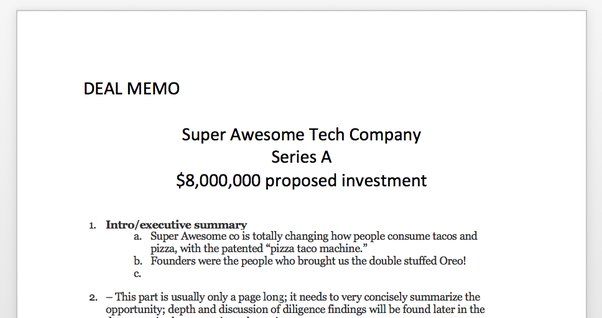
Investment deal memos are essential documents in the venture capital world, serving as a comprehensive summary of a potential investment opportunity. They outline key details such as the business model, market opportunity, competitive landscape, financial projections, and risks. For entrepreneurs and aspiring investors, understanding how these memos are structured can provide valuable insights into the decision-making process of venture capitalists. However, finding real-world examples of investment deal memos can be challenging due to their confidential nature. This article explores where and how to locate examples of these memos, offering guidance on leveraging public resources, industry networks, and educational platforms to gain access to these critical documents.
- Where Can I Find Examples of Investment Deal Memos Written by Venture Capitalists?
- What does a VC investment memo look like?
- Who writes investment memo?
- What is a VC deal memo?
- Where can I find venture capitalists?
-
Frequently Asked Questions by our Community
- Where can I find examples of investment deal memos written by venture capitalists?
- Are there any books or guides that include examples of venture capital deal memos?
- Can I request examples of investment deal memos from venture capital firms directly?
- Are there online courses or platforms that teach how to write investment deal memos?
Where Can I Find Examples of Investment Deal Memos Written by Venture Capitalists?
Investment deal memos are critical documents used by venture capitalists to evaluate potential investments. They provide a structured overview of a startup, including its business model, market opportunity, competitive landscape, financial projections, and risks. If you're looking for examples of these memos, there are several resources available, both online and offline, that can help you understand how they are structured and what information they typically include.
See Also Do Vcs Fund Nonprofits if Not How Else Could They Get Funded From Private Investors
1. Venture Capital Firm Websites
Many venture capital firms publish case studies or blog posts that include excerpts or summaries of their investment deal memos. These resources can provide valuable insights into how VCs analyze potential investments. For example, firms like Andreessen Horowitz and Sequoia Capital often share detailed analyses of their investment decisions, which can serve as practical examples.
| Resource | Description |
|---|---|
| Andreessen Horowitz Blog | Offers in-depth analyses of investments, including deal memo insights. |
| Sequoia Capital Resources | Provides case studies and investment frameworks. |
2. Online Platforms and Communities
Platforms like Medium, Substack, and LinkedIn are popular among venture capitalists and startup enthusiasts who share their experiences and insights. Some VCs publish detailed deal memos or breakdowns of their investment processes on these platforms. Additionally, communities like Reddit (e.g., r/venturecapital) or Quora can be useful for finding discussions or examples shared by industry professionals.
See Also Can Vc Firms Go Public?
| Platform | Description |
|---|---|
| Medium | Articles and posts by VCs sharing deal memo examples. |
| Reddit (r/venturecapital) | Discussions and shared resources from industry professionals. |
3. Educational Institutions and Courses
Many universities and online learning platforms offer courses on venture capital and startup investing. These courses often include sample deal memos as part of their curriculum. Platforms like Coursera, Udemy, and Stanford Online provide access to such materials, often taught by experienced VCs or professors.
| Platform | Description |
|---|---|
| Coursera | Courses on venture capital with sample deal memos. |
| Stanford Online | Advanced courses with real-world examples. |
4. Books on Venture Capital
Several books written by venture capitalists or industry experts include examples of deal memos. Titles like Venture Deals by Brad Feld and Jason Mendelson or The Business of Venture Capital by Mahendra Ramsinghani provide detailed explanations and templates for creating investment deal memos.
See Also What is an Economic Venture?
| Book | Description |
|---|---|
| Venture Deals | Includes templates and examples of deal memos. |
| The Business of Venture Capital | Provides insights into VC processes and documentation. |
5. Networking with Industry Professionals
Networking with venture capitalists or startup founders can provide access to real-world examples of deal memos. Attending industry events, conferences, or joining professional organizations like the National Venture Capital Association (NVCA) can help you connect with professionals willing to share their experiences and resources.
| Resource | Description |
|---|---|
| NVCA Events | Opportunities to network and learn from VCs. |
| Industry Conferences | Access to panels and workshops on VC practices. |
What does a VC investment memo look like?
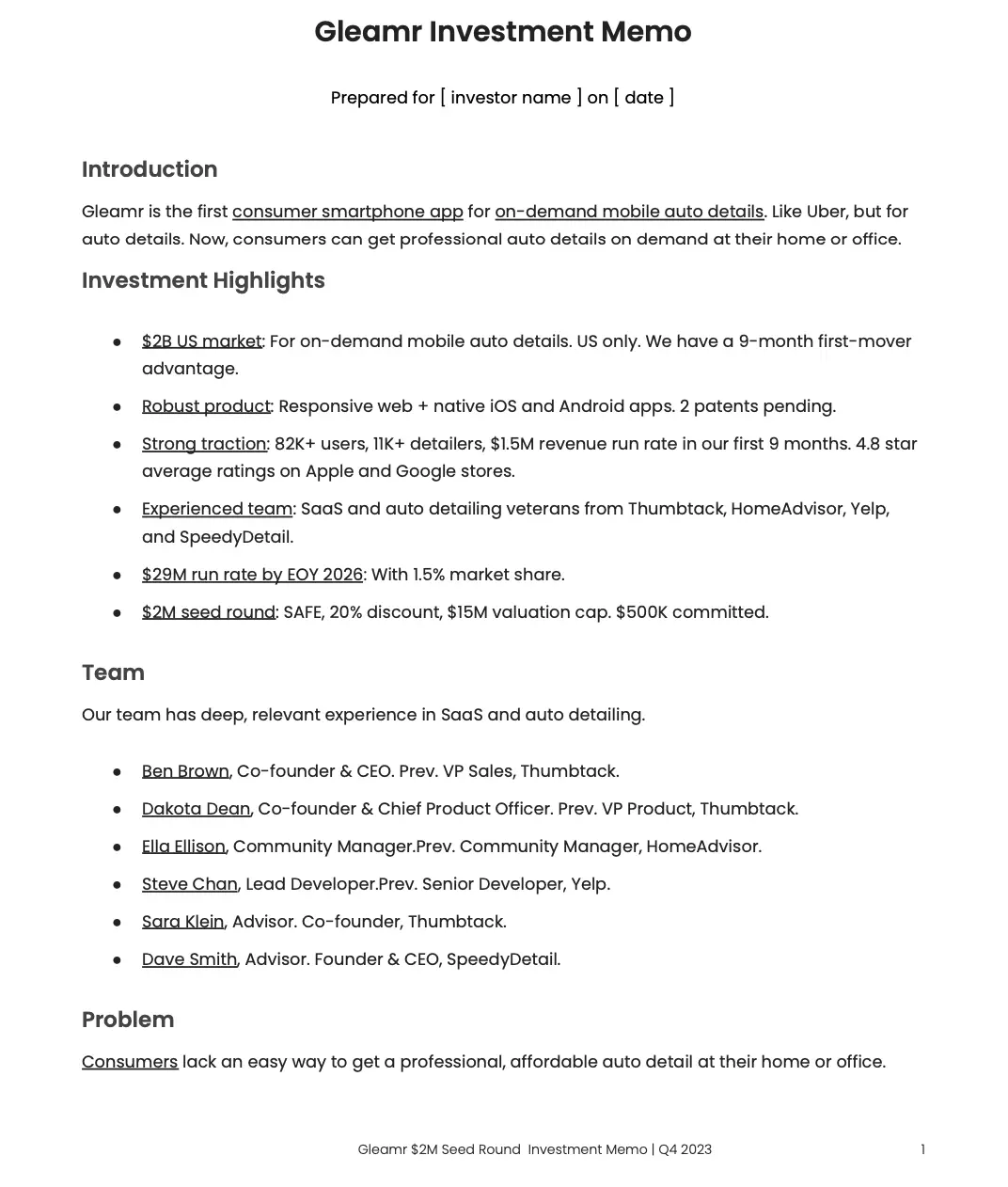
What is a VC Investment Memo?
A VC investment memo is a document prepared by venture capital firms to evaluate and justify a potential investment in a startup. It serves as an internal tool to communicate the key aspects of the opportunity to partners and decision-makers. The memo typically includes:
- Executive Summary: A concise overview of the investment opportunity.
- Market Analysis: Insights into the market size, growth potential, and competitive landscape.
- Team Evaluation: An assessment of the founding team's experience and capabilities.
Key Components of a VC Investment Memo
The structure of a VC investment memo is designed to provide a comprehensive view of the startup and its potential. Key components include:
- Investment Thesis: The rationale behind why the VC firm should invest in the startup.
- Product/Service Overview: A detailed description of the startup's offering and its unique value proposition.
- Financial Projections: Revenue, growth, and profitability forecasts.
How to Write an Effective Investment Memo
Writing an effective VC investment memo requires clarity, precision, and a focus on the most critical aspects of the opportunity. Key steps include:
- Research Thoroughly: Gather detailed data on the market, competitors, and the startup's performance.
- Highlight Risks: Clearly outline potential risks and mitigation strategies.
- Use Data-Driven Insights: Support claims with quantitative data and metrics.
Common Mistakes in VC Investment Memos
VC investment memos can sometimes fail to deliver their intended impact due to common mistakes. These include:
- Overlooking Risks: Failing to adequately address potential risks can undermine credibility.
- Lack of Clarity: Using jargon or unclear language can confuse readers.
- Ignoring Market Dynamics: Not addressing how market trends could affect the startup's growth.
Examples of Successful VC Investment Memos
Successful VC investment memos often share certain characteristics that make them compelling. These include:
- Clear Investment Thesis: A well-defined and persuasive argument for the investment.
- Strong Team Analysis: Highlighting the team's track record and expertise.
- Realistic Financial Projections: Providing achievable and well-supported financial forecasts.
Who writes investment memo?
Who Typically Writes an Investment Memo?
An investment memo is typically written by professionals involved in the investment decision-making process. These individuals are often part of the investment team within a firm, such as venture capital, private equity, or investment banking. The primary responsibility lies with:
- Investment Analysts: They gather data, conduct research, and draft the initial version of the memo.
- Associates: They refine the memo, ensuring accuracy and alignment with the firm's investment thesis.
- Senior Team Members: Such as partners or directors, who review and finalize the memo before presenting it to stakeholders.
What Skills Are Required to Write an Investment Memo?
Writing an investment memo requires a combination of analytical, financial, and communication skills. Key skills include:
- Financial Analysis: Ability to interpret financial statements and assess valuation metrics.
- Market Research: Understanding industry trends and competitive landscapes.
- Clear Communication: Presenting complex information in a concise and structured manner.
What Is the Purpose of an Investment Memo?
The purpose of an investment memo is to provide a comprehensive overview of a potential investment opportunity. It serves as a decision-making tool for stakeholders by:
- Summarizing Key Details: Such as the business model, market opportunity, and financial projections.
- Highlighting Risks: Identifying potential challenges and mitigation strategies.
- Recommending Action: Suggesting whether to proceed, reject, or further investigate the opportunity.
What Are the Key Components of an Investment Memo?
An investment memo typically includes several key components to ensure a thorough evaluation of the opportunity. These components are:
- Executive Summary: A brief overview of the investment opportunity.
- Company Overview: Details about the business, including its history and operations.
- Financial Analysis: Revenue, profitability, and valuation metrics.
How Does an Investment Memo Influence Decision-Making?
An investment memo plays a critical role in the decision-making process by providing a structured and data-driven evaluation. It influences decisions by:
- Providing Clarity: Offering a clear and concise summary of the opportunity.
- Facilitating Discussion: Serving as a reference point for team discussions and debates.
- Supporting Accountability: Documenting the rationale behind investment decisions for future reference.
What is a VC deal memo?

What is a VC Deal Memo?
A VC deal memo is a concise document that outlines the key terms and conditions of a venture capital investment. It serves as a preliminary agreement between the startup and the venture capital firm, summarizing the essential details of the deal before the formal legal documents are drafted. The deal memo is not legally binding but acts as a reference point to ensure both parties are aligned on the investment terms.
- Purpose: It provides clarity and transparency about the investment terms.
- Non-binding nature: It is not a legally enforceable contract but a summary of agreed terms.
- Efficiency: It helps streamline the negotiation process and reduces misunderstandings.
Key Components of a VC Deal Memo
A VC deal memo typically includes several critical components that outline the structure of the investment. These components ensure that both the startup and the investor are on the same page regarding the terms of the deal.
- Investment Amount: The total amount of funding being provided by the venture capital firm.
- Valuation: The pre-money and post-money valuation of the startup.
- Equity Stake: The percentage of equity the investor will receive in exchange for the investment.
Why is a VC Deal Memo Important?
The VC deal memo plays a crucial role in the investment process by acting as a foundation for the final legal agreements. It ensures that both parties have a clear understanding of the deal terms before proceeding to more detailed documentation.
- Alignment: It aligns the expectations of both the startup and the investor.
- Time-saving: It reduces the time spent on negotiating terms during the legal drafting phase.
- Transparency: It promotes transparency and trust between the parties involved.
How is a VC Deal Memo Structured?
The structure of a VC deal memo is designed to be clear and concise, focusing on the most critical aspects of the investment. It typically follows a standardized format to ensure all necessary details are covered.
- Header: Includes the names of the parties involved and the date of the memo.
- Investment Terms: Details the amount, valuation, and equity stake.
- Conditions: Lists any conditions precedent to the investment, such as due diligence or board approvals.
Differences Between a VC Deal Memo and a Term Sheet
While a VC deal memo and a term sheet serve similar purposes, there are key differences between the two documents. Understanding these differences is essential for startups and investors alike.
- Level of Detail: A deal memo is often less detailed than a term sheet.
- Formality: A term sheet is usually more formal and closer to a binding agreement.
- Usage: A deal memo is often used in earlier stages of negotiation, while a term sheet is used closer to finalizing the deal.
Where can I find venture capitalists?
:max_bytes(150000):strip_icc()/venture-capitalist-4187107-1-279ebe8e1bb9410a9f8c3cf7dc47c7cb.jpg)
Networking Events and Conferences
One of the most effective ways to find venture capitalists is by attending networking events and conferences focused on startups and investments. These events often attract a large number of investors looking for promising opportunities. Here are some key steps to take advantage of these events:
- Research and identify industry-specific conferences, such as TechCrunch Disrupt or Web Summit, where VCs are likely to attend.
- Prepare a concise and compelling pitch to present your business idea effectively.
- Engage in meaningful conversations and exchange contact information for follow-ups.
Online Platforms and Databases
There are numerous online platforms and databases designed to connect entrepreneurs with venture capitalists. These platforms provide detailed profiles of investors, making it easier to find the right match for your business. Consider the following steps:
- Use platforms like AngelList, Crunchbase, or PitchBook to search for VCs by industry, investment stage, or location.
- Create a professional profile highlighting your startup’s unique value proposition.
- Reach out to investors with personalized messages explaining why your business aligns with their investment criteria.
Startup Incubators and Accelerators
Startup incubators and accelerators are excellent resources for connecting with venture capitalists. These programs often have strong ties to the investment community and provide mentorship, funding, and networking opportunities. Here’s how to leverage them:
- Apply to reputable programs like Y Combinator, 500 Startups, or Techstars.
- Participate actively in demo days and pitch events organized by the program.
- Utilize the program’s network to get introductions to potential investors.
Professional Networks and Referrals
Leveraging your professional network can be a powerful way to find venture capitalists. Referrals from trusted contacts can significantly increase your chances of securing a meeting. Follow these steps:
- Reach out to mentors, advisors, or colleagues who have connections in the investment community.
- Attend industry-specific meetups or alumni events to expand your network.
- Ask for warm introductions to VCs who have invested in similar startups.
Social media platforms and online communities are increasingly popular for connecting with venture capitalists. Many investors actively share insights and engage with entrepreneurs on these platforms. Here’s how to use them effectively:
- Follow VCs on platforms like LinkedIn, Twitter, and Clubhouse to stay updated on their interests and activities.
- Engage with their content by commenting thoughtfully and sharing relevant insights.
- Join online communities such as Reddit’s r/startups or Indie Hackers to network with like-minded individuals and investors.
Frequently Asked Questions by our Community
Where can I find examples of investment deal memos written by venture capitalists?
Investment deal memos are often considered confidential documents, but there are several resources where you can find examples or templates. Many venture capital firms and investment blogs occasionally share anonymized or redacted versions of deal memos to educate entrepreneurs and aspiring investors. Websites like Medium, LinkedIn, and VC-specific blogs often feature posts from experienced investors who share insights and examples. Additionally, platforms like PitchBook or CB Insights may provide templates or case studies that mimic real-world deal memos.
Are there any books or guides that include examples of venture capital deal memos?
Yes, several books and guides focus on venture capital and include examples of deal memos. Books like Venture Deals by Brad Feld and Jason Mendelson provide detailed explanations of the venture capital process, including how to structure and write deal memos. Similarly, The Business of Venture Capital by Mahendra Ramsinghani offers practical insights and may include templates or examples. These resources are particularly useful for understanding the key components of a deal memo, such as market analysis, financial projections, and risk assessment.
Can I request examples of investment deal memos from venture capital firms directly?
While it is uncommon for venture capital firms to share their deal memos publicly, some may provide examples or templates if you have a professional relationship or are part of their network. If you are an entrepreneur or an aspiring investor, reaching out to VCs through networking events, LinkedIn, or mentorship programs might yield helpful insights. However, be prepared for most firms to decline due to the confidential nature of these documents. Instead, focus on building trust and demonstrating your genuine interest in learning.
Are there online courses or platforms that teach how to write investment deal memos?
Yes, several online courses and platforms specialize in teaching the art of writing investment deal memos. Platforms like Coursera, Udemy, and Skillshare offer courses on venture capital and private equity that often include modules on creating deal memos. Additionally, organizations like the National Venture Capital Association (NVCA) and Angel Capital Association (ACA) provide resources and workshops for investors. These courses typically cover the structure, content, and best practices for crafting effective deal memos.
Leave a Reply
Our Recommended Articles