
What Are the Good Ways to Calculate Percentage of Equity Giving to Venture Capital When a Startup Gets Funded

When a startup secures funding from venture capital (VC) firms, determining the percentage of equity to give away is a critical decision that can shape the company’s future. Calculating this percentage involves balancing the need for capital with maintaining control and ownership. Factors such as the startup’s valuation, funding requirements, and the investor’s expectations play a significant role in this process. Founders must also consider dilution, future funding rounds, and long-term growth potential. This article explores effective methods to calculate equity allocation, offering insights to help entrepreneurs make informed decisions while navigating the complexities of venture capital funding.
- What Are the Good Ways to Calculate Percentage of Equity Giving to Venture Capital When a Startup Gets Funded
-
Understanding the Key Factors in Calculating Equity Percentage for Venture Capital Funding
- 1. The Role of Pre-Money and Post-Money Valuation in Equity Calculation
- 2. How Dilution Affects Equity Distribution Over Multiple Funding Rounds
- 3. The Importance of Negotiating Equity Terms with Venture Capitalists
- 4. Using Equity Calculators and Financial Models to Estimate Ownership Percentages
- 5. The Impact of Vesting Schedules and Founder Equity on Overall Ownership
-
Frequently Asked Questions (FAQs)
- What factors should be considered when calculating the percentage of equity to give to venture capital investors?
- How does the pre-money and post-money valuation affect equity distribution?
- What role do term sheets play in determining equity percentages?
- How can startups minimize equity dilution while securing venture capital funding?
What Are the Good Ways to Calculate Percentage of Equity Giving to Venture Capital When a Startup Gets Funded
When a startup secures funding from venture capital (VC) firms, determining the percentage of equity to give away is a critical decision. This process involves evaluating the startup's valuation, the amount of funding required, and the potential dilution of ownership. Below, we explore effective methods to calculate equity percentages and provide insights into key considerations.
See Also How Do You Calculate the Pro Rata Entitlement for an Existing Investor in a Company as the Company Raises a New Round of Funding
1. Understanding Pre-Money and Post-Money Valuation
Pre-money valuation refers to the startup's value before receiving investment, while post-money valuation includes the investment amount. To calculate the equity percentage given to VCs, use the formula:
Equity Percentage = (Investment Amount / Post-Money Valuation) × 100.
For example, if a startup has a pre-money valuation of $5 million and receives $1 million in funding, the post-money valuation becomes $6 million. The equity given to VCs would be ($1,000,000 / $6,000,000) × 100 = 16.67%.
| Term | Definition |
|---|---|
| Pre-Money Valuation | Startup's value before investment. |
| Post-Money Valuation | Startup's value after investment. |
2. Assessing the Startup's Growth Potential
VCs often evaluate a startup's growth potential to determine the equity percentage they require. Startups with high growth prospects may negotiate for a smaller equity stake, as the potential returns are significant. Conversely, startups in early stages or with higher risks may need to offer a larger equity share to attract investors.
See Also Where Can You Find Reviews and Ratings for Angel Investors and Venture Capital Firms
3. Considering the Funding Round Stage
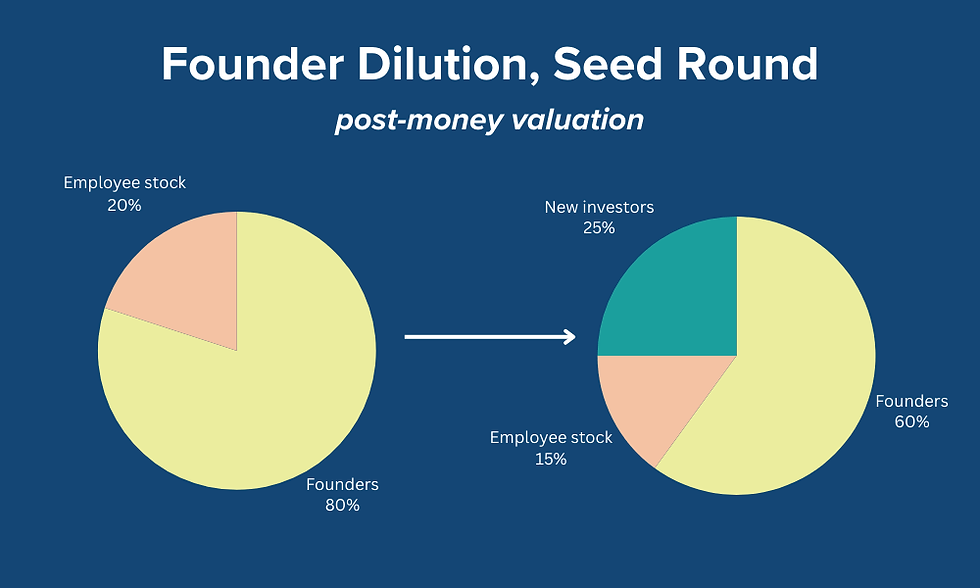
The stage of the funding round (seed, Series A, Series B, etc.) significantly impacts equity distribution. Early-stage startups typically give away more equity due to higher risks and lower valuations. For instance, seed rounds might involve giving 20-30% equity, while later rounds may involve smaller percentages as the startup's valuation increases.
4. Negotiating Equity with Venture Capitalists
Negotiation plays a crucial role in determining equity percentages. Founders should be prepared to justify their valuation and growth plans. VCs may also request additional terms, such as board seats or liquidation preferences, which can influence the equity percentage. It's essential to strike a balance between securing funding and retaining control.
See Also Whats the Difference Between a Venture Capitalist and an Entrepreneur
5. Using Equity Calculators and Tools
Several online tools and equity calculators can help founders estimate the equity percentage to offer. These tools consider factors like valuation, investment amount, and dilution. While they provide a starting point, founders should also consult with financial advisors or legal experts to ensure fair and accurate calculations.
| Tool | Purpose |
|---|---|
| Equity Dilution Calculator | Estimates equity dilution after funding. |
| Valuation Calculator | Determines startup valuation based on metrics. |
Understanding the Key Factors in Calculating Equity Percentage for Venture Capital Funding
1. The Role of Pre-Money and Post-Money Valuation in Equity Calculation
When determining the percentage of equity to give to venture capitalists, understanding the concepts of pre-money valuation and post-money valuation is crucial. Pre-money valuation refers to the value of the startup before receiving the investment, while post-money valuation includes the investment amount. For example, if a startup has a pre-money valuation of $5 million and receives $1 million in funding, the post-money valuation becomes $6 million. The equity percentage given to the investor is calculated by dividing the investment amount by the post-money valuation. In this case, the investor would receive approximately 16.67% equity ($1 million / $6 million). Startups must ensure they accurately assess their valuation to avoid giving away too much equity too early.
2. How Dilution Affects Equity Distribution Over Multiple Funding Rounds
Dilution is a critical factor to consider when calculating equity percentages for venture capital funding. As a startup goes through multiple funding rounds, the ownership percentage of existing shareholders, including founders and early investors, decreases. For instance, if a founder initially owns 50% of the company and later raises additional capital, their stake may reduce to 30% or less. To mitigate excessive dilution, startups should plan their funding strategy carefully, ensuring they raise enough capital to grow while retaining a significant portion of equity. Tools like cap tables can help track equity distribution and anticipate dilution effects over time.
3. The Importance of Negotiating Equity Terms with Venture Capitalists
Negotiating the equity terms with venture capitalists is a vital step in securing funding. Startups should aim to strike a balance between the amount of capital raised and the equity given away. Factors such as the startup's growth potential, market size, and competitive landscape play a significant role in these negotiations. Additionally, understanding the investor's expectations and aligning them with the startup's long-term goals is essential. For example, some investors may request preferred shares, which come with additional rights like liquidation preferences. Founders must carefully evaluate these terms to ensure they do not compromise their control or future profitability.
4. Using Equity Calculators and Financial Models to Estimate Ownership Percentages
To simplify the process of calculating equity percentages, startups can use equity calculators and financial models. These tools allow founders to input variables such as pre-money valuation, investment amount, and expected dilution to estimate the resulting ownership percentages. For instance, a startup raising $2 million at a $10 million pre-money valuation can use these tools to determine that the investor will receive approximately 16.67% equity. Additionally, financial models can help project future funding rounds and their impact on equity distribution, enabling startups to make informed decisions about their capital structure.
5. The Impact of Vesting Schedules and Founder Equity on Overall Ownership
Vesting schedules and founder equity allocation are essential considerations when calculating equity percentages for venture capital funding. Vesting schedules ensure that founders and key employees earn their equity over time, typically over four years with a one-year cliff. This structure protects the company's interests by incentivizing long-term commitment. Additionally, founders should allocate their equity wisely, ensuring they retain enough ownership to maintain control and motivation. For example, if a founder holds 60% equity initially, they should account for future dilution and vesting to ensure their stake remains meaningful as the company grows. Proper planning in this area can prevent conflicts and ensure alignment among stakeholders.
Frequently Asked Questions (FAQs)
What factors should be considered when calculating the percentage of equity to give to venture capital investors?
When determining the percentage of equity to allocate to venture capital investors, several factors must be considered. These include the stage of the startup, the amount of funding required, the valuation of the company, and the investor's expectations. Early-stage startups typically give up a larger percentage of equity because they are perceived as higher risk. Additionally, the startup's growth potential, market size, and competitive landscape play a role in negotiating equity stakes. It's crucial to strike a balance between securing sufficient funding and retaining enough equity to incentivize founders and future investors.
How does the pre-money and post-money valuation affect equity distribution?
The pre-money valuation refers to the company's value before receiving funding, while the post-money valuation includes the investment amount. The percentage of equity given to venture capital investors is calculated based on the post-money valuation. For example, if a startup has a pre-money valuation of $5 million and receives $1 million in funding, the post-money valuation becomes $6 million. The investor would then own approximately 16.67% of the company ($1 million / $6 million). Understanding these valuations is critical to ensure fair equity distribution and avoid over-diluting the founders' shares.
What role do term sheets play in determining equity percentages?
Term sheets are formal documents outlining the terms and conditions of an investment. They play a pivotal role in determining the percentage of equity given to venture capital investors. Key elements in a term sheet include the valuation cap, liquidation preferences, and anti-dilution provisions. These terms directly impact how much equity the investor receives and how future funding rounds might affect ownership. Founders should carefully review and negotiate term sheets to ensure they align with their long-term goals and protect their equity stake.
How can startups minimize equity dilution while securing venture capital funding?
To minimize equity dilution, startups should focus on increasing their pre-money valuation by demonstrating strong traction, a scalable business model, and a large market opportunity. Additionally, founders can explore alternative funding options, such as convertible notes or SAFE agreements, which delay equity distribution until a later funding round. Another strategy is to negotiate for pro-rata rights, allowing founders to participate in future funding rounds to maintain their ownership percentage. By carefully planning funding rounds and leveraging competitive offers, startups can secure capital while preserving equity.
Leave a Reply
Our Recommended Articles