
How to Dissolve an LLC in Utah

Dissolving a limited liability company (LLC) in Utah requires careful adherence to state-specific legal and administrative procedures to ensure compliance and avoid potential liabilities. Whether due to business closure, restructuring, or relocation, properly winding down an LLC involves several critical steps, including member approval, filing dissolution documents with the Utah Division of Corporations, settling debts, and notifying creditors. Additionally, addressing tax obligations and finalizing operational details are essential to formally terminate the entity. Understanding these requirements can streamline the process and mitigate risks of fines or legal complications. This guide outlines the key actions and considerations for efficiently dissolving an LLC in Utah while adhering to state regulations.
- How to Dissolve an LLC in Utah: A Step-by-Step Guide
- Is there a fee for dissolving an LLC in Utah?
- How do I officially close an LLC?
-
Should I dissolve my LLC or keep it?
- What Factors Should Influence My Decision to Dissolve or Keep My LLC?
- How Does Business Activity Impact the Choice to Dissolve an LLC?
- What Are the Financial Implications of Dissolving vs. Retaining an LLC?
- How Does Liability Protection Affect the Decision?
- What Are the Long-Term Strategic Benefits of Keeping an LLC?
- Frequently Asked Questions About LLCs (FAQs)
How to Dissolve an LLC in Utah: A Step-by-Step Guide
1. Understanding Voluntary vs. Administrative Dissolution
Dissolving an LLC in Utah can occur through voluntary dissolution (initiated by members) or administrative dissolution (forced by the state). Voluntary dissolution requires member approval and compliance with state procedures. Administrative dissolution typically results from failure to file annual reports, pay taxes, or maintain a registered agent. To avoid penalties, resolve outstanding issues promptly if your LLC faces administrative dissolution.
See Also What Kinds of Returns Are Limited Partners Seeking From a Vc Fund Are There Term Sheets Agreements Between Lps and Vc General Partners on What Terms
| Voluntary Dissolution | Administrative Dissolution |
|---|---|
| Initiated by LLC members | Forced by the state |
| Requires filing Articles of Dissolution | Often due to non-compliance |
| No penalties if completed properly | May incur fines or legal issues |
2. Steps to Voluntarily Dissolve an LLC in Utah
To dissolve your LLC voluntarily:
1. Vote to dissolve: Members must approve dissolution as per the operating agreement.
2. Settle debts and obligations: Pay creditors and distribute remaining assets.
3. File Articles of Dissolution: Submit to the Utah Division of Corporations with a $15 fee.
4. Notify tax agencies: Close accounts with the IRS and Utah State Tax Commission.
| Step | Description | Responsible Party |
|---|---|---|
| Member Approval | Formal vote per operating agreement | LLC Members |
| Debt Settlement | Pay creditors and finalize liabilities | LLC Manager/Attorney |
| File Documents | Submit Articles of Dissolution | Registered Agent |
3. Tax Obligations and Compliance
Before dissolving, fulfill all tax obligations:
- File a final federal tax return (Form 1065 or 1120-S) and check the final return box.
- Submit a final Utah state tax return and settle unpaid taxes.
- Cancel your EIN (Employer Identification Number) with the IRS if needed.
 How Do I Pitch an Idea to a Seed Fund or a Vc?
| Tax Type | Due Date | Responsible Party |
|---|---|---|
| Federal Taxes | By dissolution date | IRS |
| State Taxes | Before filing Articles of Dissolution | Utah Tax Commission |
| Sales Tax | Final return within 30 days | LLC Accountant |
4. Handling Debts and Liabilities
Utah requires LLCs to settle all debts before dissolution. Notify creditors in writing and publish a dissolution notice in a local newspaper if required. Retain funds for unresolved claims, and distribute remaining assets to members proportionally.
| Step | Action | Timeline |
|---|---|---|
| Creditor Notification | Send written notices | Before filing dissolution |
| Debt Settlement | Pay outstanding balances | Prior to asset distribution |
| Asset Distribution | Divide per operating agreement | After debt clearance |
5. Filing Articles of Dissolution with Utah Division
Submit the Articles of Dissolution online or by mail. Include:
- LLC name and registration number.
- Statement confirming debt settlement and tax compliance.
- Effective dissolution date (immediate or future).
 What Are the Top Vc Firms and Angel Groups in Seattle Portland Vancouver or Pac Nw Area
| Required Information | Details | Importance |
|---|---|---|
| LLC Name | Exact name on file | Mandatory for processing |
| Effective Date | Specify if delayed | Legal compliance |
| Filing Fee | $15 | Required for submission |
Is there a fee for dissolving an LLC in Utah?

Is There a Filing Fee to Dissolve an LLC in Utah?
Yes, dissolving an LLC in Utah requires a filing fee. The state mandates a $20 fee to submit the Articles of Dissolution form to the Utah Division of Corporations and Commercial Code.
See Also What Are Vc Associate Interview Case Studies Like?
- Submit the Articles of Dissolution (Form LLC 4/7) via mail, online, or in person.
- Include the $20 fee via check, credit card, or online payment.
- Ensure all LLC taxes and annual reports are up-to-date to avoid delays.
What Are the Tax Obligations Before Dissolving an LLC in Utah?
Before dissolving an LLC in Utah, you must resolve all tax obligations. This includes filing final tax returns and paying any outstanding taxes.
- File a final state tax return with the Utah State Tax Commission.
- Settle unpaid sales tax, withholding tax, or franchise tax liabilities.
- Obtain a tax clearance certificate if required for dissolution.
How to File Articles of Dissolution for a Utah LLC?
Filing Articles of Dissolution is the legal step to terminate an LLC in Utah. The process involves specific forms and compliance checks.
- Download Form LLC 4/7 from the Utah Division of Corporations website.
- Complete the form with details like LLC name, dissolution date, and member approval.
- Submit the form with the $20 fee and await confirmation from the state.
Are There Penalties for Not Officially Dissolving an LLC in Utah?
Failing to formally dissolve an LLC in Utah can lead to penalties and ongoing obligations, even if the business is inactive.
- Continued liability for annual report fees ($20) and late penalties.
- Risk of administrative dissolution by the state for non-compliance.
- Potential legal or tax liabilities for LLC members.
Can You Reinstate a Dissolved LLC in Utah?
If an LLC is dissolved accidentally or prematurely, Utah allows reinstatement under certain conditions.
- File a Application for Reinstatement (Form LLC 14/15) with the state.
- Pay a $30 reinstatement fee plus any overdue annual report fees.
- Resolve all compliance issues, such as unpaid taxes or pending filings.
How do I officially close an LLC?
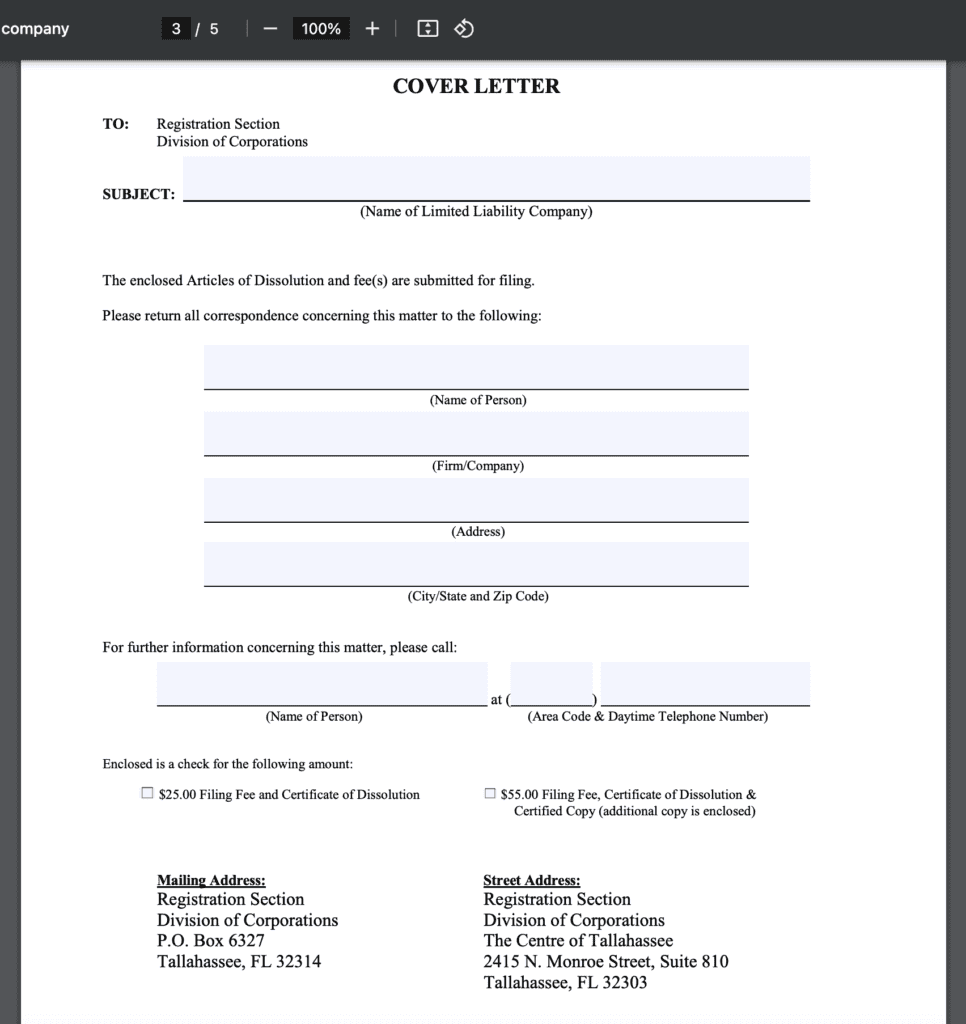
Review the LLC Operating Agreement and Member Vote
To officially close an LLC, start by reviewing the operating agreement for dissolution procedures. Most agreements require a formal member vote to dissolve the LLC.
- Check the agreement for rules on voting thresholds (e.g., majority or unanimous consent).
- Document the dissolution decision in writing via a resolution signed by all members.
- File meeting minutes or written consent records to prove compliance with internal protocols.
File Articles of Dissolution with the State
Submit Articles of Dissolution (or Certificate of Termination) to the state agency where the LLC was formed.
- Obtain the correct dissolution form from the Secretary of State website or office.
- Pay any required filing fees (varies by state).
- Include details like LLC name, dissolution date, and member approval.
Settle Outstanding Debts and Obligations
Before closing, settle all debts, taxes, and legal obligations to avoid personal liability.
- Notify creditors in writing and settle outstanding invoices or loans.
- Pay final state and federal taxes, including payroll or sales taxes.
- Resolve pending contracts or lawsuits to prevent future claims.
Notify Creditors, Tax Agencies, and Other Stakeholders
Formally notify relevant parties about the LLC’s dissolution to limit liability.
- Send dissolution notices to creditors and publish a public announcement if required by state law.
- File final tax returns with the IRS (Form 1065) and state agencies.
- Cancel business licenses, permits, and registrations.
Liquidate Assets and Distribute Remaining Funds
Liquidate the LLC’s assets and distribute remaining funds according to the operating agreement.
- Sell or transfer business assets and use proceeds to pay debts.
- Distribute residual funds to members based on their ownership percentages.
- Close business bank accounts and cancel the Employer Identification Number (EIN) with the IRS.
Should I dissolve my LLC or keep it?

What Factors Should Influence My Decision to Dissolve or Keep My LLC?
Deciding whether to dissolve or retain your LLC depends on multiple factors. Key considerations include the current profitability of your business, future growth potential, ongoing costs (e.g., state fees, taxes), and liability protection needs. If your LLC is inactive or no longer generating revenue, dissolution might reduce unnecessary expenses. Conversely, maintaining it could provide flexibility for future ventures.
- Evaluate financial health: Review revenue, expenses, and profitability trends.
- Assess future goals: Determine if the LLC aligns with long-term business plans.
- Legal obligations: Consider compliance requirements and potential penalties for inactivity.
How Does Business Activity Impact the Choice to Dissolve an LLC?
Active operations versus inactivity play a critical role in this decision. If your LLC is generating income or holds assets, dissolving it could disrupt operations or trigger tax consequences. However, if the business is dormant, retaining it might incur unnecessary administrative burdens.
- Active projects: Dissolving mid-operation may harm client relationships.
- Asset ownership: Transferring assets during dissolution requires careful planning.
- Tax filings: Inactive LLCs may still need to file annual reports or pay fees.
What Are the Financial Implications of Dissolving vs. Retaining an LLC?
Financial costs vary significantly between dissolution and retention. Dissolving an LLC may involve final tax filings, outstanding debt settlements, and state dissolution fees. Retaining it means ongoing expenses like annual report fees, registered agent costs, and potential taxes.
- Dissolution costs: Include state fees and legal/accounting support.
- Ongoing expenses: Budget for annual compliance costs.
- Tax liabilities: Address final income or sales tax obligations.
How Does Liability Protection Affect the Decision?
An LLC provides limited liability protection, shielding personal assets from business debts. Dissolving it removes this protection, potentially exposing you to claims related to past business activities. Retaining the LLC ensures continued legal separation between personal and business finances.
- Active liabilities: Dissolution may not absolve existing legal claims.
- Future ventures: Keeping the LLC safeguards against unforeseen risks.
- Compliance: Proper dissolution requires settling debts to avoid personal liability.
What Are the Long-Term Strategic Benefits of Keeping an LLC?
Maintaining an LLC offers strategic flexibility for future opportunities. It preserves business credit history, brand identity, and contractual relationships. If you plan to relaunch or pivot the business, retaining the LLC avoids the hassle of re-registration.
- Brand continuity: Retain trademarks, licenses, and client trust.
- Business credit: Sustain credit scores for future financing needs.
- Operational readiness: Quickly resume activities without administrative delays.
Frequently Asked Questions About LLCs (FAQs)
What Are the Steps to Dissolve an LLC in Utah?
To dissolve an LLC in Utah, you must follow a formal process. First, review your LLC’s Operating Agreement for dissolution procedures, as some require member approval. Next, file Articles of Dissolution (Form LLC-DS) with the Utah Division of Corporations, paying the required fee. Ensure all state taxes and fees are settled by obtaining a Tax Clearance Certificate from the Utah State Tax Commission. Notify creditors, settle debts, and distribute remaining assets to members according to ownership percentages. Finally, file final federal and state tax returns, marking them as “final” to avoid future liabilities.
Is There a Deadline for Dissolving an LLC in Utah?
There is no specific deadline for dissolution, but delaying the process can lead to ongoing fees and tax obligations. If your LLC is inactive, file dissolution promptly to avoid penalties for unpaid annual renewal fees or late tax filings. For LLCs with outstanding debts, prioritize settling liabilities to prevent legal complications. The Utah Division of Corporations may administratively dissolve an LLC if it fails to file annual reports or maintain a registered agent, which can harm your business’s legal standing.
Do I Need to Notify Creditors When Dissolving an LLC in Utah?
Yes, notifying creditors is a critical step. Utah law requires LLCs to formally inform known creditors of the dissolution via written notice. This notice should include a deadline (typically 120 days) for submitting claims. For unknown creditors, publish a public notice of dissolution in a local newspaper approved by the county clerk. Failure to properly notify creditors may expose members to personal liability for unresolved claims, even after dissolution.
Can a Dissolved LLC in Utah Be Reinstated?
A dissolved LLC can be reinstated in Utah under certain conditions. If the LLC was administratively dissolved, file Articles of Reinstatement with the Utah Division of Corporations, along with overdue annual reports and fees. For voluntary dissolutions, reinstatement typically requires unanimous member consent and re-filing formation documents. Note that reinstatement does not revive pending legal actions or liabilities dismissed during dissolution. Consult an attorney to navigate complex reinstatement scenarios.
Leave a Reply
Our Recommended Articles