
How to Dissolve an LLC in Virginia

Dissolving a limited liability company (LLC) in Virginia involves a structured legal process to ensure compliance with state regulations and avoid potential liabilities. Whether closing due to business restructuring, financial challenges, or a shift in entrepreneurial goals, properly winding down an LLC is critical to protect members’ interests. Virginia requires specific steps, including obtaining member approval, settling debts, filing dissolution documents, and addressing tax obligations. Failure to follow statutory guidelines may result in penalties or prolonged legal responsibilities. This article outlines the essential procedures for dissolving an LLC in Virginia, providing clarity on timelines, paperwork, and post-dissolution considerations to help business owners navigate this transition efficiently and lawfully.
How to Dissolve an LLC in Virginia: A Step-by-Step Guide
1. Understanding the Legal Requirements for Dissolving an LLC in Virginia
To dissolve an LLC in Virginia, you must comply with state laws outlined in the Virginia Code § 13.1-1047. This includes obtaining member approval (as specified in your LLC operating agreement), settling debts, and filing formal paperwork. The LLC must be in good standing with the Virginia State Corporation Commission (SCC) to avoid penalties.
See AlsoVirginia LLC Filing Fee| Key Requirement | Details |
| Member Approval | Follow voting rules in the LLC operating agreement. |
| Debt Settlement | Notify creditors and resolve outstanding liabilities. |
| State Compliance | Ensure no pending fines or fees with the SCC. |
2. Filing Articles of Dissolution with the Virginia SCC
Submit Articles of Dissolution (Form LLC101) to the Virginia SCC, either online, by mail, or in person. The form requires details like the LLC’s name, dissolution date, and a statement confirming debt settlement. A $10 filing fee applies. Once approved, the LLC is officially dissolved.
| Step | Action |
| Complete Form LLC101 | Include LLC name and dissolution details. |
| Pay Fee | $10 via check, credit card, or online payment. |
| Submit to SCC | Mail to SCC Clerk’s Office or file online. |
3. Notifying Creditors and Settling Outstanding Debts
Virginia law requires LLCs to notify creditors in writing about the dissolution and provide a deadline (typically 120 days) to submit claims. Use remaining assets to pay debts, prioritizing secured creditors first. Keep records of all communications and payments.
See AlsoHow to Dissolve an LLC in Minnesota| Creditor Type | Priority |
| Secured Creditors | Paid first from asset sales. |
| Unsecured Creditors | Paid next, if funds remain. |
| Members | Receive remaining assets last. |
4. Canceling Business Licenses, Permits, and Tax Accounts
Contact the Virginia Department of Taxation to close your LLC’s tax accounts, including sales tax and payroll tax. Cancel local business licenses and notify federal agencies (e.g., the IRS) to terminate your Employer Identification Number (EIN).
| Agency | Action Required |
| Virginia Department of Taxation | File final tax returns. |
| IRS | Submit Form 966 for corporate dissolution. |
| Local Government | Cancel business licenses. |
5. Distributing Remaining Assets to LLC Members
After settling debts, distribute leftover assets to members based on ownership percentages or terms in the operating agreement. Document distributions to avoid disputes. Virginia law prohibits distributions if the LLC cannot pay its debts.
See AlsoHow to Dissolve an LLC in New York| Consideration | Guidance |
| Ownership Percentage | Align distributions with member stakes. |
| Documentation | Record distributions in meeting minutes. |
| Legal Compliance | Ensure no debts remain before distributing. |
How much does it cost to dissolve an LLC in Virginia?

State Filing Fees for Dissolving an LLC in Virginia
The primary cost to dissolve an LLC in Virginia is the state filing fee. Virginia requires a $10 fee to file the Articles of Cancellation (Form LLC-6) with the State Corporation Commission (SCC). This form officially terminates the LLC’s legal existence. Additional costs may apply if you request certified copies or expedited processing.
See AlsoVA LLC Filing Fee- $10 filing fee for submitting Form LLC-6.
- $6 per page for certified copies of dissolution documents.
- $100+ for expedited processing (optional, based on urgency).
Outstanding Taxes and Debts
Before dissolving, an LLC must settle outstanding taxes, fees, or debts. Failure to do so may result in penalties or legal complications. Virginia requires LLCs to file final tax returns and resolve any liabilities with the Department of Taxation.
- Unpaid state taxes: Settle income, sales, or payroll taxes.
- Annual registration fees: Pay any overdue $50 annual fees.
- Creditors: Notify and repay outstanding debts to avoid lawsuits.
Professional Services and Legal Costs
Hiring professionals like attorneys or accountants can increase dissolution costs but ensures compliance. Legal fees vary based on complexity, while online services offer budget-friendly options.
- Attorney fees: $500–$2,000+ for legal guidance.
- Online filing services: $50–$300 for document preparation.
- Accounting fees: $200–$1,000 for final tax filings.
Annual Report and Compliance Obligations
Virginia LLCs must file an annual report and pay a $50 fee until dissolution. Even if dissolving mid-year, the LLC must fulfill this obligation for the current registration year.
- $50 annual report fee: Due by the last day of the LLC’s registration month.
- Late fees: $25 penalty if the report is overdue.
- Compliance checks: Confirm no pending violations with state agencies.
Reinstatement Fees for Improper Dissolution
If an LLC fails to dissolve properly, it may face reinstatement fees and penalties. Virginia charges $100 to reinstate an administratively dissolved LLC, plus any overdue fees.
- $100 reinstatement fee to reactivate the LLC.
- Backed annual fees: Pay all missed $50 reports.
- Tax penalties: Additional fines for unresolved tax liabilities.
How to terminate LLC in Virginia?
Steps to Officially Terminate an LLC in Virginia
To terminate an LLC in Virginia, you must follow a structured legal process. First, ensure all members agree to dissolve the LLC by reviewing the operating agreement for dissolution procedures. Next, settle outstanding debts, notify creditors, and distribute remaining assets. Finally, file the Articles of Cancellation with the Virginia State Corporation Commission (SCC).
- Vote to dissolve according to the LLC operating agreement or member consensus.
- File Articles of Cancellation (Form LLC-1108) with the SCC, paying the $10 fee.
- Obtain tax clearance from the Virginia Department of Taxation to confirm no taxes are owed.
Filing Articles of Cancellation with the Virginia SCC
The Articles of Cancellation formally notify the state of the LLC’s termination. This document requires details like the LLC’s name, date of dissolution, and confirmation that debts and obligations are settled.
- Download Form LLC-1108 from the Virginia SCC website.
- Complete the form with accurate dissolution details and member signatures.
- Submit by mail, online, or in person with the $10 filing fee.
Tax and Regulatory Obligations Before Dissolution
Before terminating an LLC in Virginia, ensure compliance with all tax requirements. This includes filing final tax returns and settling any outstanding liabilities.
- File a final income tax return with the IRS and Virginia Department of Taxation.
- Pay any unemployment taxes or sales taxes owed.
- Request a tax clearance certificate to confirm no pending liabilities.
Notifying Creditors and Settling Debts
Legally, an LLC must notify creditors of its dissolution and settle debts before distributing remaining assets to members.
- Send written notices to all known creditors.
- Publish a dissolution notice in a local newspaper if required by the operating agreement.
- Use LLC assets to pay outstanding debts before member distributions.
Closing Business Accounts and Licenses
After dissolution, close all business-related accounts and cancel licenses to avoid future liabilities.
- Terminate business bank accounts and credit lines.
- Cancel local business licenses and permits.
- Notify vendors, clients, and service providers of the LLC’s closure.
How do I officially close an LLC?
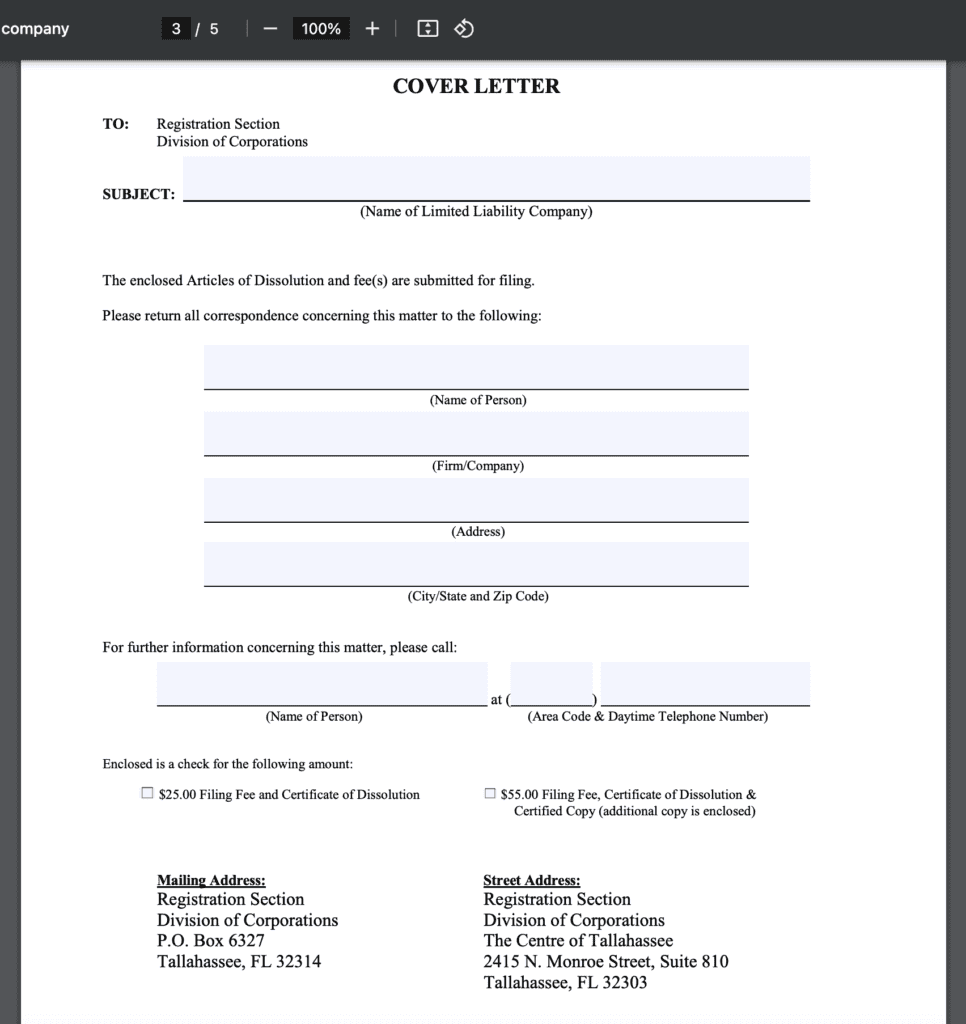
Steps to Dissolve an LLC Legally
To officially close an LLC, follow a structured process to ensure compliance with state laws and avoid liabilities. Begin by voting to dissolve the LLC as per the operating agreement. Next, file Articles of Dissolution (or similar forms) with your state’s business division. Pay any outstanding fees or taxes, notify creditors, and settle debts. Finally, distribute remaining assets to members and file final tax returns.
- Vote to dissolve the LLC according to membership rules.
- File Articles of Dissolution with the state agency.
- Address tax obligations and debts before closure.
Filing Final Tax Returns and Settling Debts
Before dissolving an LLC, resolve all financial obligations. File a final federal, state, and local tax return, marking it as “final.” Notify the IRS using Form 966 if applicable. Settle outstanding debts, including loans, vendor payments, and employee wages. Failure to do so may result in personal liability for members.
- Submit final tax returns with appropriate “final” designations.
- Use IRS Form 966 for corporate LLCs to report dissolution.
- Pay or negotiate outstanding debts to avoid legal risks.
Notifying Creditors and Handling Claims
Formally notify creditors, clients, and service providers about the LLC’s dissolution. Publish a public notice of dissolution in a local newspaper if required by state law. Provide a deadline for creditors to submit claims and resolve valid ones before distributing remaining assets.
- Send written notices to known creditors and claimants.
- Publish a dissolution notice in approved publications if mandated.
- Address all valid claims before closing the LLC.
Distributing Remaining Assets to Members
After settling debts, distribute remaining assets to LLC members according to the operating agreement or state default rules. Ensure distributions align with ownership percentages and comply with tax guidelines. Document all transactions for legal and tax purposes.
- Follow the operating agreement for asset distribution rules.
- Adhere to state laws if no operating agreement exists.
- Report asset distributions on final tax filings.
Closing Business Accounts and Licenses
Cancel all business-related accounts, permits, and licenses. Close business bank accounts, terminate leases, and cancel insurance policies. Notify state agencies to revoke your LLC’s EIN (Employer Identification Number) and business licenses to prevent future liabilities.
- Close bank accounts and credit lines linked to the LLC.
- Cancel business licenses, permits, and registrations.
- Inform the IRS and state agencies to retire the EIN.
Maintaining Records Post-Dissolution
Keep all dissolution-related documents, such as tax returns, dissolution filings, and creditor notices, for at least 3–7 years as required by law. This ensures compliance with potential audits or legal disputes. Store records digitally or physically in an organized manner.
- Retain tax records and dissolution paperwork for compliance.
- Store member distribution agreements and creditor settlements.
- Keep proof of public notices and debt resolutions.
Should I dissolve my LLC or keep it?
Factors to Consider Before Dissolving Your LLC
When deciding whether to dissolve your LLC or keep it, evaluate factors like financial health, business goals, and legal obligations. Analyze if the LLC still aligns with your long-term objectives or if maintaining it incurs unnecessary costs.
- Assess ongoing expenses (e.g., state fees, taxes, compliance costs).
- Review active contracts or liabilities that require the LLC’s existence.
- Consider future ventures where retaining the LLC could be advantageous.
Financial Implications of Dissolving vs. Maintaining an LLC
Dissolving an LLC may save costs in the short term, but keeping it could offer tax benefits or asset protection. Compare annual fees, potential penalties, and tax deductions.
- Calculate dissolution fees (e.g., state filing fees, final tax returns).
- Evaluate tax advantages like pass-through taxation or deductible expenses.
- Weigh liability protection if the LLC shields personal assets.
Legal and Compliance Obligations for Active vs. Dissolved LLCs
Active LLCs require ongoing compliance, such as annual reports and registered agent fees, while dissolved LLCs must settle debts and notify stakeholders.
- File necessary paperwork to avoid penalties for non-compliance.
- Settle outstanding debts to prevent legal disputes during dissolution.
- Notify creditors, clients, and partners about the LLC’s status change.
Future Opportunities and Risks of Keeping Your LLC
Retaining the LLC preserves branding, licenses, and relationships but may involve idle costs. Consider potential pivots or passive income streams.
- Leverage existing contracts or intellectual property.
- Explore dormant status in some states to reduce fees.
- Assess revival costs if restarting the business later.
Tax Consequences of Dissolving an LLC
Dissolution triggers final tax filings and potential tax liabilities on remaining assets. Consult a tax professional to minimize impacts.
- File a final federal and state tax return for the LLC.
- Address asset distribution (e.g., taxes on appreciated property).
- Cancel EIN and business licenses to avoid future obligations.
Frequently Asked Questions About LLCs (FAQs)
What are the steps to dissolve an LLC in Virginia?
To dissolve an LLC in Virginia, you must follow a formal process outlined by the state. First, members or managers must vote to dissolve the LLC as required by the operating agreement. Next, file Articles of Dissolution (Form LLC-1013) with the Virginia State Corporation Commission (SCC) and pay the $10 filing fee. Before filing, ensure all state taxes and annual report fees are paid, and settle or provide for outstanding debts. Notify creditors, liquidate remaining assets, and distribute funds to members according to ownership percentages. Finally, maintain records for at least five years post-dissolution.
Do I need to file any documents with the state to dissolve an LLC in Virginia?
Yes, dissolving an LLC in Virginia legally requires filing Articles of Dissolution with the Virginia SCC. This form officially terminates the LLC’s existence and includes details like the LLC’s name, dissolution approval date, and a statement confirming debt settlement or provisions for payment. Failure to file this document may result in the LLC remaining active and liable for taxes or fees. Additionally, ensure all annual reports and taxes are up to date before submitting the dissolution form.
Are there tax obligations that must be resolved before dissolving an LLC in Virginia?
Before dissolving an LLC in Virginia, you must settle all outstanding state taxes. File a final income tax return with the Virginia Department of Taxation and pay any owed taxes, including sales, payroll, or franchise taxes. Obtain a tax clearance or certificate of good standing if required, though Virginia does not mandate this for dissolution. Failure to resolve tax obligations may delay dissolution or result in penalties. Also, cancel the LLC’s Employer Identification Number (EIN) with the IRS after settling federal taxes.
What happens to remaining debts or liabilities after dissolving an LLC in Virginia?
Dissolving an LLC in Virginia does not automatically erase outstanding debts or liabilities. Members must notify known creditors in writing and publish a dissolution notice in a local newspaper to address unknown claims. Settle debts using the LLC’s remaining assets, and if assets are insufficient, follow state laws for prioritizing payments. Once dissolved, members are generally shielded from personal liability for unresolved debts if dissolution procedures were followed correctly. However, failing to properly notify creditors or distribute assets may expose members to legal risks.
Leave a Reply
Our Recommended Articles