
New Jersey LLC Operating Agreement

A New Jersey LLC Operating Agreement is a critical legal document that outlines the structure, governance, and operational procedures of a limited liability company (LLC) within the state. While New Jersey law does not legally require LLCs to adopt an operating agreement, drafting one is highly advisable to establish clear guidelines for member roles, profit distribution, decision-making processes, and dispute resolution. This agreement not only reinforces the LLC’s limited liability protections but also ensures compliance with state regulations and minimizes potential conflicts among members. Customizable to meet specific business needs, a well-crafted operating agreement serves as a foundational tool for maintaining organizational clarity and operational stability.
-
Key Components of a New Jersey LLC Operating Agreement
- Understanding the Formation Requirements for a New Jersey LLC Operating Agreement
- Roles and Responsibilities of Members in a New Jersey LLC
- Profit and Loss Distribution in a New Jersey LLC Operating Agreement
- Dissolving a New Jersey LLC: Procedures Outlined in the Operating Agreement
- Amending a New Jersey LLC Operating Agreement: Best Practices
-
Can I write my own operating agreement for my LLC?
- Can I Legally Write My Own Operating Agreement for My LLC?
- What Are the Benefits of Drafting Your Own Operating Agreement?
- What Risks Are Involved in Writing Your Own Operating Agreement?
- What Should Be Included in a Self-Drafted Operating Agreement?
- How to Ensure Your Self-Created Operating Agreement Is Valid?
- When Should You Consult a Lawyer Instead of Writing It Yourself?
- Does an LLC always have an operating agreement?
- Does an LLC operating agreement need to be notarized?
- Frequently Asked Questions About LLCs (FAQs)
Key Components of a New Jersey LLC Operating Agreement
A New Jersey LLC Operating Agreement is a critical document that outlines the structure, management, and operational rules for a limited liability company (LLC) in the state. While New Jersey does not legally require LLCs to have an Operating Agreement, creating one ensures clarity among members, protects liability status, and governs internal processes. It typically addresses ownership percentages, profit distribution, voting rights, and procedures for adding/removing members or dissolving the business. Customizing this agreement helps avoid disputes and ensures compliance with state laws.
See AlsoLLC Operating Agreement: ColoradoUnderstanding the Formation Requirements for a New Jersey LLC Operating Agreement
To form an LLC in New Jersey, members must draft an Operating Agreement that aligns with state statutes (NJ Rev Stat § 42:2C). Although not filed with the state, the agreement should include:
- The LLC’s name and principal address.
- Member contributions (capital, property, or services).
- Management structure (member-managed or manager-managed).
- Dissolution terms and amendment procedures.
| Requirement | Description |
| Member Consent | All members must agree to the terms. |
| Filing Certificate | Submit a Public Records Filing (not the Operating Agreement). |
| Governing Law | Must comply with New Jersey’s Revised Uniform LLC Act. |
Roles and Responsibilities of Members in a New Jersey LLC
The Operating Agreement defines whether the LLC is member-managed (all owners participate in decisions) or manager-managed (appointed managers handle operations). Key responsibilities include:
- Voting rights tied to ownership percentages.
- Fiduciary duties (acting in the LLC’s best interest).
- Meeting schedules and record-keeping obligations.
 What is It Like to Be an Analyst at a Venture Capital Firm?
| Role | Key Duties |
| Member | Vote on major decisions, contribute capital. |
| Manager | Handle daily operations, financial reporting. |
| Registered Agent | Receive legal documents on behalf of the LLC. |
Profit and Loss Distribution in a New Jersey LLC Operating Agreement
New Jersey allows flexibility in allocating profits and losses. The Operating Agreement can specify distributions based on ownership percentages or another agreed-upon formula. Key considerations:
- Tax implications (pass-through taxation).
- Timing of distributions (monthly, quarterly, annually).
- Reinvestment clauses for business growth.
| Distribution Type | Description |
| Pro Rata | Divided according to ownership stakes. |
| Special Allocations | Custom splits for tax optimization. |
| Retained Earnings | Profits reinvested into the business. |
Dissolving a New Jersey LLC: Procedures Outlined in the Operating Agreement
The Operating Agreement should define triggers for dissolution, such as:
- Unanimous member vote.
- Bankruptcy or insolvency.
- Expulsion/withdrawal of a member (if specified).
Post-dissolution steps include settling debts, liquidating assets, and filing Articles of Dissolution with the state.
| Step | Action Required |
| Vote to Dissolve | Members approve dissolution per agreement terms. |
| Liquidation | Sell assets, pay creditors, distribute remaining funds. |
| State Notification | File dissolution documents with NJ Division of Revenue. |
Amending a New Jersey LLC Operating Agreement: Best Practices
Amendments require adherence to procedures in the original agreement, often including:
- Member approval thresholds (e.g., majority or unanimous vote).
- Documentation of changes.
- Updating state records if amendments affect the LLC’s public filings.
| Consideration | Guidance |
| Review Frequency | Update the agreement during major business changes. |
| Legal Compliance | Ensure amendments follow NJ state laws. |
| Member Communication | Notify all members of proposed changes. |
Can I write my own operating agreement for my LLC?
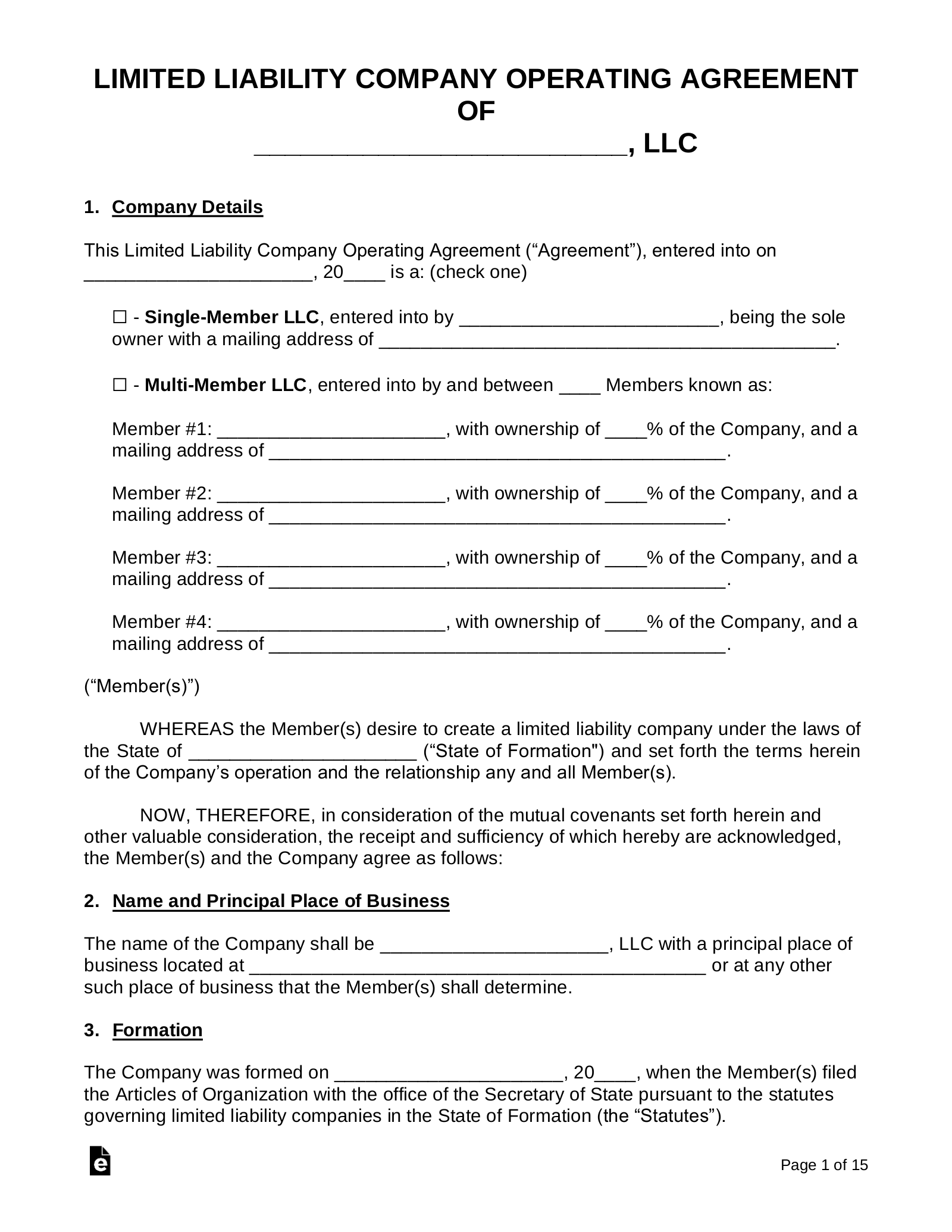
Can I Legally Write My Own Operating Agreement for My LLC?
Yes, you can legally write your own operating agreement for your LLC. Most states do not require operating agreements to be filed with the government, though they are strongly recommended for legal and operational clarity. However, the agreement must comply with your state’s LLC laws and clearly outline the rights, responsibilities, and ownership structures of members.
- Check your state-specific rules to ensure compliance.
- Include mandatory provisions like management structure, profit distribution, and dissolution terms.
- Customize clauses to reflect your LLC’s unique needs and goals.
What Are the Benefits of Drafting Your Own Operating Agreement?
Creating your own operating agreement allows full customization to suit your business’s specific operations. It can save costs compared to hiring an attorney and ensures you understand every detail of your LLC’s governance.
- Cost savings from avoiding legal fees.
- Flexibility to address unique member roles or voting rights.
- Control over decision-making processes and dispute resolution mechanisms.
What Risks Are Involved in Writing Your Own Operating Agreement?
While drafting your own agreement is permissible, oversights or ambiguities can lead to legal disputes or unenforceable terms. Missing critical clauses might default your LLC to state laws, which may not align with your intentions.
- Unclear language creating member disagreements.
- Failure to address tax allocations or liability protections.
- Non-compliance with state-mandated requirements invalidating parts of the agreement.
What Should Be Included in a Self-Drafted Operating Agreement?
A comprehensive operating agreement must cover key operational and legal aspects of the LLC. Prioritize clarity and specificity to avoid future conflicts.
- Member roles, contributions, and ownership percentages.
- Procedures for admitting new members or handling departures.
- Rules for profit/loss distribution, meetings, and voting.
How to Ensure Your Self-Created Operating Agreement Is Valid?
To ensure enforceability, your agreement must align with state laws and be formally adopted by all members.
- Review state statutes for LLC requirements.
- Sign and date the document with all members.
- Update the agreement regularly as the business evolves.
When Should You Consult a Lawyer Instead of Writing It Yourself?
While a DIY approach works for simple LLCs, complex situations warrant professional legal advice.
- If your LLC has multiple classes of membership or unusual profit-sharing terms.
- When operating in multiple states with conflicting laws.
- If you need tax optimization strategies or liability safeguards.
Does an LLC always have an operating agreement?
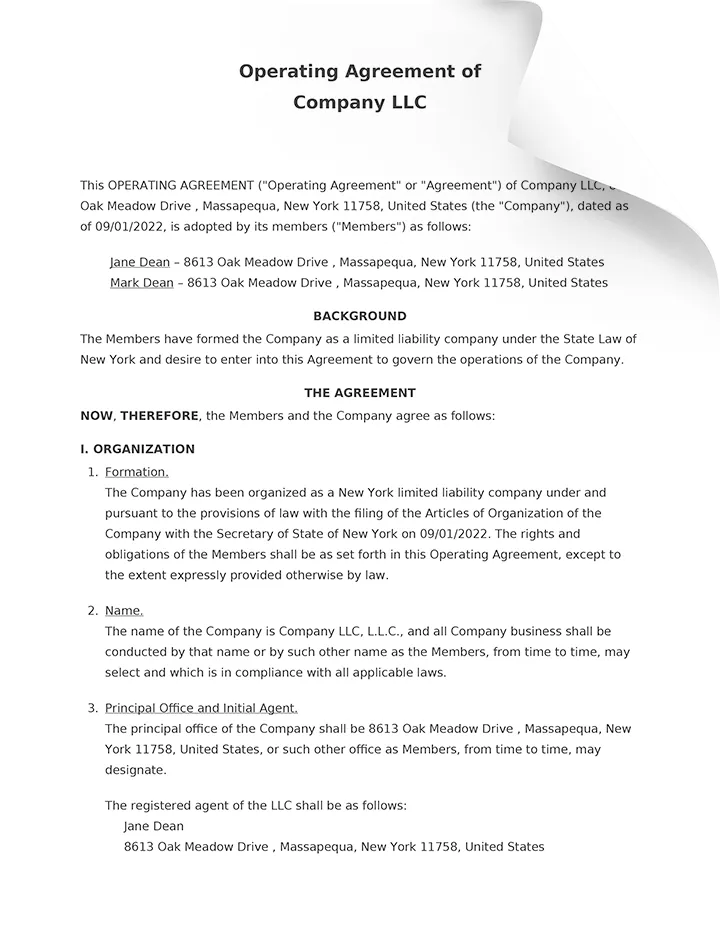
No, an LLC does not always require an operating agreement by law. While some states, such as California, New York, Missouri, and Delaware, mandate LLCs to have one, most states do not legally require it. However, even in states where it is optional, drafting an operating agreement is strongly recommended to avoid relying on default state laws, clarify member roles, and prevent disputes.
Is an Operating Agreement Legally Required for an LLC?
An operating agreement is not universally legally required for LLCs. Its necessity depends on the state where the LLC is formed. For example:
- Mandatory states: California, New York, Missouri, and Delaware require LLCs to have an operating agreement.
- Optional states: Most states, like Texas and Florida, do not legally require one but still recommend it.
- Single-member LLCs: Even if not required, an operating agreement helps legitimize the business structure and protect personal assets.
Why Should an LLC Have an Operating Agreement?
An operating agreement provides clarity and legal protection for LLC members. Key benefits include:
- Asset protection: Shields personal assets by reinforcing the LLC’s separation from owners.
- Management structure: Defines roles, voting rights, and profit-sharing ratios.
- Custom rules: Overrides default state laws, which may not align with the members’ intentions.
What Happens If an LLC Lacks an Operating Agreement?
Without an operating agreement, the LLC is governed by default state laws, which can lead to complications:
- State control: Disputes are resolved using generic statutes, which may disadvantage members.
- Member conflicts: Unclear profit distribution or decision-making processes can cause disagreements.
- Banking issues: Some banks require an operating agreement to open a business account.
When Is an Operating Agreement Mandatory for an LLC?
An operating agreement becomes mandatory in specific scenarios:
- State laws: Required in states like California and New York, regardless of LLC size.
- Multi-member LLCs: Highly advisable to outline member contributions and responsibilities.
- Foreign qualification: Some states require it when operating outside the LLC’s home state.
How to Create an Operating Agreement for an LLC?
Drafting an operating agreement involves several steps:
- Outline terms: Include management structure, profit distribution, and dissolution rules.
- Customize provisions: Tailor clauses to meet the LLC’s specific needs.
- Legal review: Consult an attorney to ensure compliance with state laws and enforceability.
Does an LLC operating agreement need to be notarized?
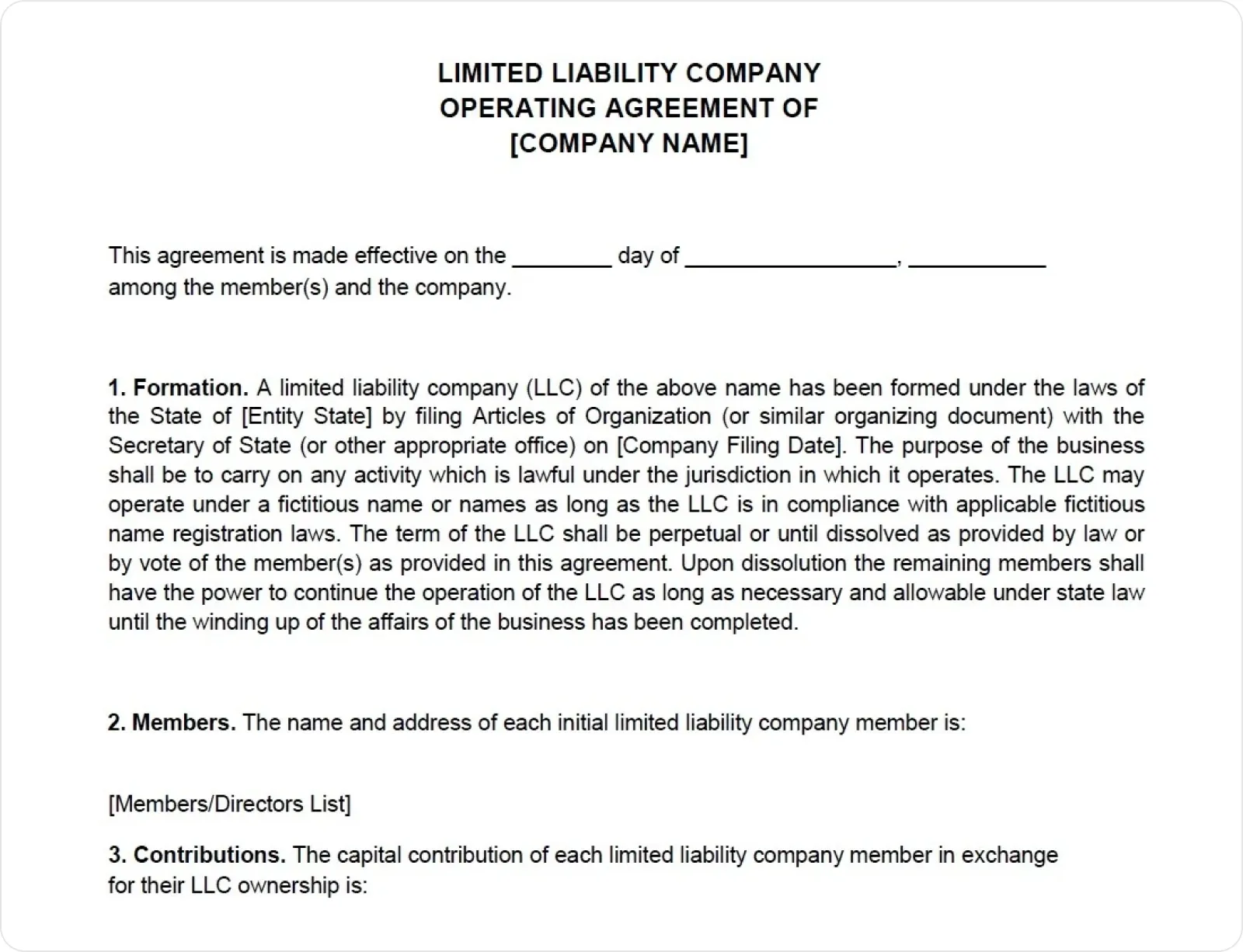
Is Notarization Legally Required for an LLC Operating Agreement?
An LLC operating agreement does not typically require notarization to be legally valid. Most states recognize the agreement as binding once it is signed by all members, even without a notary’s seal. However, requirements can vary slightly depending on state laws.
- State laws generally prioritize member signatures over notarization for enforceability.
- Notarization may be optional but adds an extra layer of authenticity in disputes.
- Some states, like Louisiana, may require notarization for certain LLC documents, but this is rare for operating agreements.
Why Consider Notarizing an LLC Operating Agreement?
While not mandatory, notarizing an LLC operating agreement can provide legal and practical benefits. A notary public verifies the identities of signing members, reducing the risk of fraud.
- Notarization helps prevent disputes over signature authenticity.
- It may strengthen the document’s credibility in court proceedings.
- Banks or institutions might request a notarized agreement for financial transactions.
State-Specific Rules for LLC Operating Agreements
State laws govern LLCs, and while most do not mandate notarization, exceptions exist. Always verify local regulations to ensure compliance.
- Louisiana and North Carolina sometimes require notarization for legal documents, though rarely for operating agreements.
- States like California and New York focus more on proper drafting and member consent.
- Check your state’s Secretary of State website for precise requirements.
How to Properly Execute an LLC Operating Agreement
Proper execution involves clear terms, member signatures, and adherence to state guidelines. Notarization is an optional step.
- Draft the agreement with clear roles, profit-sharing, and management structure.
- Ensure all members sign and date the document.
- If desired, visit a notary public to witness signatures and apply a seal.
Common Misconceptions About Notarizing LLC Agreements
Many assume notarization is required or provides absolute legal protection, which is inaccurate.
- Myth: Notarization is legally required—reality: It’s optional in most states.
- Myth: A notarized agreement is unchallengeable—reality: Courts review content, not just formality.
- Myth: Notarization replaces the need for legal review—reality: Always consult an attorney for compliance.
Frequently Asked Questions About LLCs (FAQs)
Is an Operating Agreement required for a New Jersey LLC?
New Jersey does not legally require LLCs to have an Operating Agreement. However, creating one is highly recommended to establish clear rules for ownership, management, and operations. Without it, your LLC defaults to New Jersey’s default LLC laws under the New Jersey Revised Uniform Limited Liability Company Act (NJ Rev Stat § 42:2C-1 et seq.), which may not align with your business’s specific needs or member expectations.
What happens if my New Jersey LLC doesn’t have an Operating Agreement?
Without an Operating Agreement, your LLC will be governed solely by New Jersey’s default statutory rules. This can lead to uncertainties in decision-making, profit distribution, and dispute resolution. For example, members may have equal voting rights regardless of ownership percentage, and dissolution procedures could become complicated. An agreement ensures members define their own terms, reducing legal and operational risks.
What key provisions should a New Jersey LLC Operating Agreement include?
A comprehensive New Jersey LLC Operating Agreement should outline member roles, profit/loss allocation, voting rights, management structure (member-managed vs. manager-managed), and procedures for adding/removing members. It should also include dissolution terms, dispute resolution methods, and rules for amending the agreement. Including clauses for financial and tax obligations ensures compliance and avoids conflicts.
Can a New Jersey LLC Operating Agreement be amended after formation?
Yes, an Operating Agreement can be amended if the existing agreement allows for changes. Typically, amendments require approval by a majority or supermajority of members, as specified in the original document. All changes should be documented in writing and signed by members. Regular updates are advisable to reflect shifts in business goals, membership, or state law requirements.
Leave a Reply
Our Recommended Articles