
How Do Venture Capitalists Make Money?

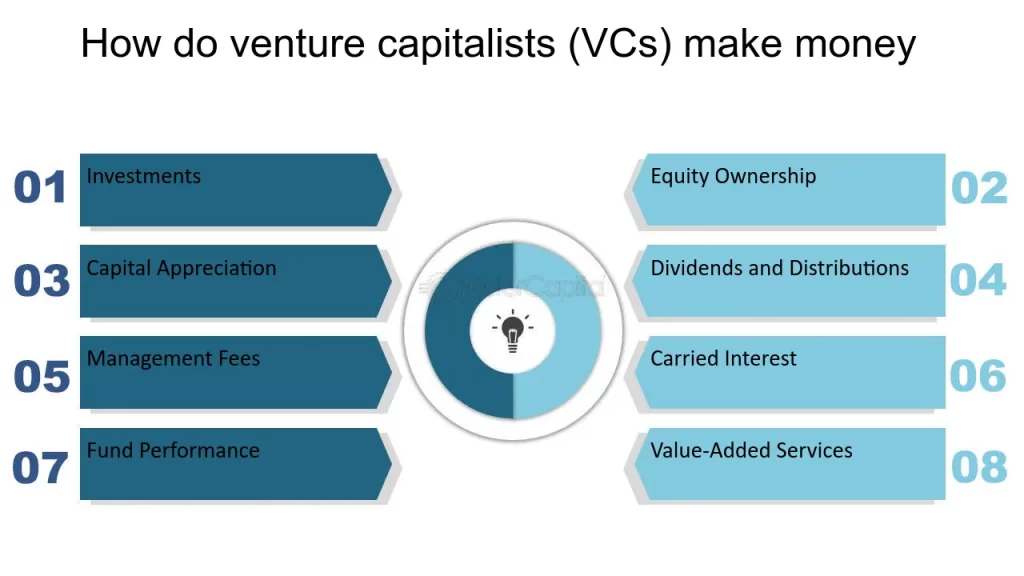
Venture capitalists (VCs) play a pivotal role in the startup ecosystem, providing essential funding to innovative companies in exchange for equity. But how do these investors generate returns on their high-risk bets? The process involves identifying promising startups, nurturing their growth, and ultimately exiting their investments at a profit. VCs typically make money through successful exits, such as initial public offerings (IPOs) or acquisitions, where the value of their equity stakes appreciates significantly. Additionally, they may earn management fees and carried interest from their funds. This article explores the strategies and mechanisms venture capitalists use to turn early-stage investments into lucrative returns.
How Do Venture Capitalists Make Money?
Venture capitalists (VCs) make money primarily through investment returns generated by funding high-potential startups. Their goal is to identify early-stage companies with significant growth potential, invest in them, and eventually exit their investments at a much higher valuation. The process involves several strategies and mechanisms, which we will explore in detail below.
See Also How Do Venture Capital Firms Work?
1. Equity Ownership in Startups
Venture capitalists earn money by acquiring equity stakes in startups. When a VC firm invests in a company, it typically receives shares in exchange for its capital. If the startup succeeds and grows in value, the VC's equity becomes more valuable. The ultimate goal is to sell these shares at a higher price during an exit event, such as an IPO (Initial Public Offering) or an acquisition.
2. Management Fees
VC firms charge management fees to cover operational costs. These fees are usually a percentage (commonly 2%) of the total fund size under management. For example, if a VC firm manages a $100 million fund, it may charge $2 million annually as a management fee. This ensures the firm can pay salaries, conduct due diligence, and cover other expenses while managing investments.
See AlsoHow Do Venture Capitalists Actually Work?3. Carried Interest
Carried interest is the primary way VCs generate significant profits. It represents a share (typically 20%) of the profits earned from successful investments. For instance, if a VC fund generates $50 million in profits, the firm keeps $10 million as carried interest, while the remaining $40 million is distributed to the fund's investors (limited partners).
4. Exit Strategies
VCs rely on exit strategies to realize returns on their investments. Common exit routes include:
- IPOs: Selling shares when the startup goes public.
- Acquisitions: Selling the startup to a larger company.
- Secondary Sales: Selling shares to other investors or private equity firms.
 What Kind of Venture Capital Firms Invest in Entertainment Companies or Properties
5. Portfolio Diversification
To mitigate risks, VCs invest in a diversified portfolio of startups. While many startups may fail, a few high-performing ones can generate substantial returns, compensating for the losses. This strategy ensures that the overall fund performance remains profitable.
| Key Mechanism | Description |
|---|---|
| Equity Ownership | VCs acquire shares in startups, aiming to sell them at a higher valuation. |
| Management Fees | A percentage of the fund size charged annually to cover operational costs. |
| Carried Interest | A share (usually 20%) of the profits earned from successful investments. |
| Exit Strategies | Methods like IPOs, acquisitions, or secondary sales to realize returns. |
| Portfolio Diversification | Investing in multiple startups to balance risks and rewards. |
How does venture capital make profit?

 Can Startups Raise Capital From Both Vcs and Crowdfunding?
How Venture Capital Firms Invest in Startups
Venture capital firms make profits by investing in early-stage startups with high growth potential. They provide funding in exchange for equity stakes, allowing them to own a portion of the company. The process involves:
- Identifying promising startups in industries like technology, healthcare, or fintech.
- Conducting due diligence to assess the startup's business model, team, and market potential.
- Negotiating equity terms and providing capital to help the startup scale.
Equity Ownership and Capital Gains
Venture capitalists profit primarily through capital gains when the startup they invest in grows significantly. This involves:
- Holding equity shares in the startup until it achieves a liquidity event.
- Benefiting from the increase in the company's valuation over time.
- Selling their shares at a higher price during an IPO or acquisition.
Exit Strategies for Venture Capital
Venture capitalists rely on exit strategies to realize profits. These strategies include:
- Initial Public Offerings (IPOs), where the startup goes public, and shares are sold on the stock market.
- Acquisitions, where larger companies buy the startup, providing a return on investment.
- Secondary market sales, where shares are sold to other investors or private equity firms.
Management Fees and Carried Interest
Venture capital firms also generate income through management fees and carried interest. This includes:
- Charging an annual management fee (typically 2% of the fund's assets) to cover operational costs.
- Earning carried interest (usually 20% of the profits) after returning the initial capital to investors.
- Aligning incentives between the firm and its investors by sharing in the profits.
Portfolio Diversification and Risk Management
Venture capitalists mitigate risks by diversifying their portfolio across multiple startups. This involves:
- Investing in a mix of high-risk, high-reward startups and more stable ventures.
- Spreading investments across different industries and stages of growth.
- Monitoring and supporting portfolio companies to increase their chances of success.
Where do venture capitalists get money from?
1. Institutional Investors
Venture capitalists often receive funds from institutional investors, which include entities like pension funds, insurance companies, and endowments. These institutions allocate a portion of their capital to venture capital as part of their diversified investment strategy. The process typically involves:
- Pension funds investing a small percentage of their assets in high-risk, high-reward ventures.
- Insurance companies seeking higher returns to offset their long-term liabilities.
- Endowments from universities or foundations aiming to grow their funds over time.
2. High-Net-Worth Individuals
High-net-worth individuals (HNWIs) are another significant source of capital for venture capitalists. These individuals often have substantial disposable income and seek to invest in startups or emerging companies to achieve significant returns. Key aspects include:
- Angel investors who provide early-stage funding to startups.
- Family offices managing the wealth of affluent families and allocating funds to venture capital.
- Entrepreneurs reinvesting their wealth into new ventures.
3. Corporate Investors
Many venture capitalists secure funding from corporate investors, which are large companies looking to invest in innovative startups. These corporations often seek strategic partnerships or access to new technologies. The process involves:
- Corporate venture arms established by companies to invest in startups.
- Strategic investments aimed at gaining a competitive edge or entering new markets.
- Joint ventures where corporations collaborate with venture capitalists to fund startups.
4. Government and Public Funds
In some cases, venture capitalists receive funding from government entities or public funds. These sources aim to stimulate economic growth, innovation, and job creation. Key points include:
- Government grants provided to support specific industries or technologies.
- Public investment funds managed by government agencies to promote entrepreneurship.
- Tax incentives offered to encourage private investment in startups.
5. Venture Capital Funds of Funds
Another source of capital for venture capitalists is funds of funds, which are investment vehicles that pool money from various investors to invest in multiple venture capital funds. This approach provides diversification and reduces risk. The process includes:
- Diversification by investing in a portfolio of venture capital funds.
- Access to top-tier funds that may be otherwise inaccessible to individual investors.
- Professional management of the fund of funds to optimize returns.
How is venture capital paid back?
How is Venture Capital Typically Repaid?
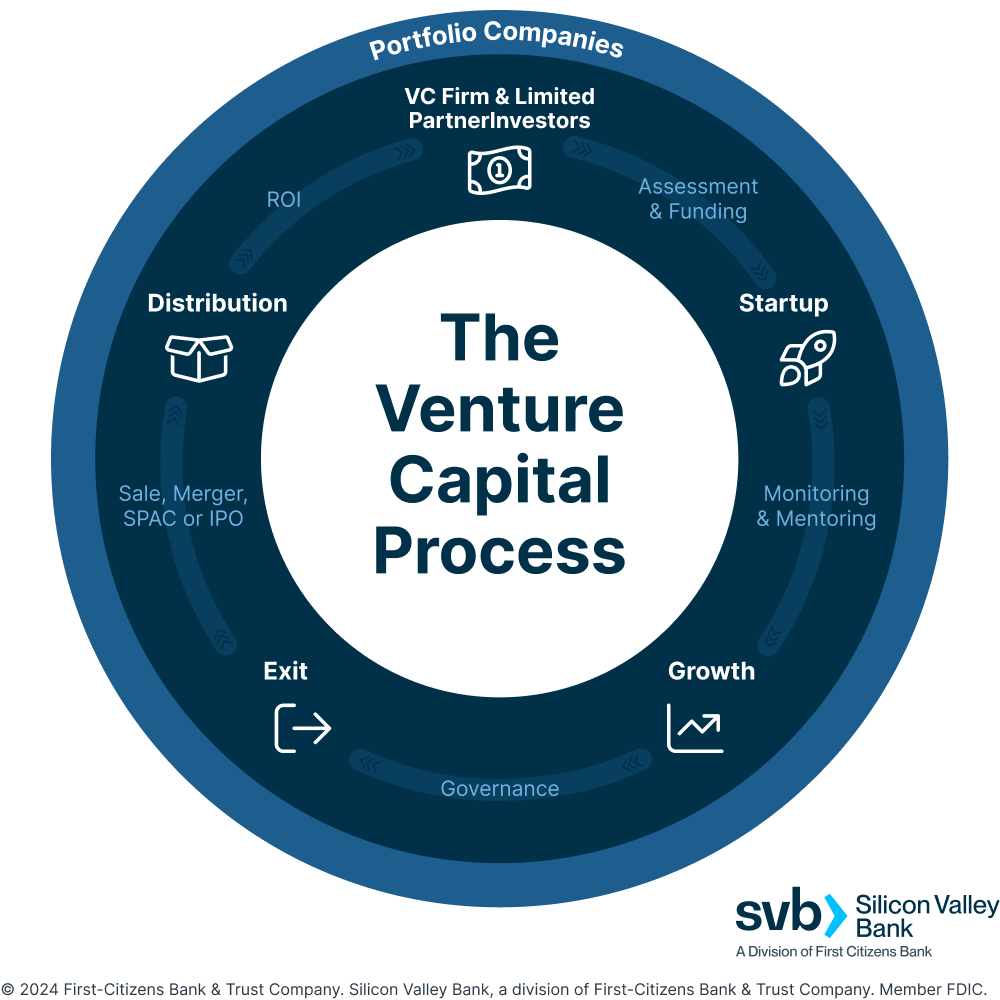
Venture capital is repaid through specific mechanisms that align with the growth and success of the startup. The repayment process is not immediate and often depends on the company's ability to generate returns. Below are the primary ways venture capital is repaid:
- Equity Sale: Investors often exit their investment by selling their equity stake during a liquidity event, such as an IPO (Initial Public Offering) or acquisition by another company.
- Dividends: In some cases, startups may agree to pay dividends to investors once they become profitable, though this is less common in early-stage companies.
- Buyback Agreements: The startup may agree to buy back the investor's shares at a predetermined price after a certain period or upon achieving specific milestones.
What is an IPO and How Does It Repay Venture Capital?
An IPO (Initial Public Offering) is one of the most common ways venture capitalists are repaid. When a startup goes public, its shares are sold to the general public, allowing investors to sell their equity stakes at a potentially higher valuation. Key points include:
- Liquidity Event: An IPO provides liquidity, enabling investors to convert their equity into cash.
- Market Valuation: The company's valuation during the IPO determines the return on investment for venture capitalists.
- Lock-Up Period: Investors may have to wait for a lock-up period to expire before selling their shares.
How Do Acquisitions Repay Venture Capital?
Acquisitions are another common exit strategy for venture capitalists. When a larger company acquires the startup, investors are repaid through the sale of their equity. Important aspects include:
- Cash or Stock Deals: Acquisitions can be structured as cash transactions, stock swaps, or a combination of both.
- Earn-Outs: Some deals include earn-out clauses, where additional payments are made based on the startup's future performance.
- Return Multiples: The acquisition price often determines the multiple of the initial investment that venture capitalists receive.
What Role Do Dividends Play in Repaying Venture Capital?
Dividends are less common in venture capital but can be part of the repayment structure, especially in later-stage companies. Key points include:
- Profit Sharing: Dividends are typically paid out of the company's profits, providing a steady return to investors.
- Preference Shares: Venture capitalists may hold preference shares that entitle them to dividends before common shareholders.
- Reinvestment: In some cases, dividends may be reinvested into the company to fuel further growth.
What Are Buyback Agreements in Venture Capital?
Buyback agreements allow startups to repurchase shares from investors under specific conditions. This method is less common but can be beneficial for both parties. Key aspects include:
- Predefined Terms: The buyback price and timing are agreed upon in advance, often tied to milestones or a specific timeframe.
- Flexibility: Buybacks provide flexibility for startups to regain control of their equity without waiting for an IPO or acquisition.
- Risk Mitigation: Investors may use buyback agreements to mitigate risk, ensuring a guaranteed exit strategy.
Frequently Asked Questions (FAQs)
How do venture capitalists generate returns on their investments?
Venture capitalists (VCs) generate returns primarily through capital gains when the companies they invest in are sold or go public. They typically invest in early-stage startups with high growth potential, aiming to sell their equity stakes at a significantly higher valuation. For example, if a VC invests $1 million in a startup for a 20% stake and the company later gets acquired for $50 million, the VC's stake would be worth $10 million, resulting in a substantial profit. This process is often referred to as an exit strategy.
What is the role of carried interest in venture capital profits?
Carried interest is a key component of how venture capitalists make money. It represents a share of the profits (typically 20%) that VCs earn from successful investments, after returning the initial capital to their investors (limited partners). For instance, if a VC fund generates $100 million in profits, the venture capitalists might take $20 million as carried interest, while the remaining $80 million goes back to the investors. This aligns the interests of VCs and their investors, as VCs only earn carried interest if they deliver strong returns.
Do venture capitalists earn money through management fees?
Yes, venture capitalists also earn money through management fees, which are typically around 2% of the total fund size annually. These fees cover operational costs, such as salaries, office expenses, and due diligence activities. For example, a $100 million fund would generate $2 million per year in management fees. While these fees are not the primary source of profit, they provide a steady income stream for VC firms, regardless of the performance of their investments.
How do venture capitalists mitigate risks while seeking high returns?
Venture capitalists mitigate risks by diversifying their portfolio across multiple startups and industries. They also conduct thorough due diligence before investing, evaluating factors like the founding team, market potential, and product viability. Additionally, VCs often take board seats or advisory roles to actively guide the companies they invest in, increasing the likelihood of success. While many startups fail, a few high-performing investments can generate outsized returns, compensating for losses and delivering overall profitability.
Leave a Reply
Our Recommended Articles