
Was the Moon Landing Actually a Waste of Money?


The Apollo Moon landing in 1969 stands as one of humanity’s most remarkable achievements, a testament to human ingenuity and determination. However, decades later, debates persist about whether the monumental investment was justified. Critics argue that the billions spent on the lunar program could have been directed toward pressing issues on Earth, such as poverty, healthcare, or education. Proponents, on the other hand, highlight the technological advancements, scientific discoveries, and global inspiration it generated. This article explores the multifaceted question: Was the Moon landing a waste of money, or did it pave the way for progress that transcends its initial cost?
Was the Moon Landing Actually a Waste of Money?
The moon landing, achieved by NASA's Apollo 11 mission in 1969, is often debated in terms of its financial and societal value. While some argue that the billions spent could have been used to address pressing issues on Earth, others highlight the technological advancements and global unity it inspired. Below, we explore this topic in detail.
See Also Whats the Difference Between a Venture Capitalist and an Entrepreneur
The Economic Impact of the Moon Landing
The moon landing cost approximately $25.4 billion (equivalent to over $150 billion today). Critics argue that this money could have been allocated to poverty alleviation, healthcare, or education. However, proponents emphasize that the investment spurred technological innovation, created jobs, and boosted industries like aerospace and computing. The economic ripple effect of the Apollo program is undeniable, as it laid the groundwork for modern technologies such as satellites, GPS, and medical imaging.
Technological Advancements from the Apollo Program
The Apollo program accelerated advancements in materials science, computing, and telecommunications. For instance, the development of integrated circuits was crucial for the mission and later became the foundation of modern electronics. Additionally, innovations in thermal protection systems and life-support technologies have had lasting impacts on industries beyond space exploration.
See Also Whats a Better Way to Structure a Vc Fund Evergreen or Regular Vc
Scientific Discoveries and Knowledge Gained
The moon landing provided invaluable scientific data, including lunar rock samples that helped scientists understand the moon's origin and composition. This research contributed to theories about the formation of the solar system and Earth's history. The mission also demonstrated the feasibility of human space exploration, paving the way for future missions to Mars and beyond.
Global Influence and National Pride
The moon landing was a symbol of human achievement and a victory in the Space Race against the Soviet Union. It showcased the United States' technological prowess and inspired generations to pursue careers in science, technology, engineering, and mathematics (STEM). The event also fostered a sense of global unity, as people worldwide watched the historic moment together.
See AlsoWhat is the Difference Between Kickstarter and Vc Funding?Criticism and Alternative Perspectives
Despite its achievements, the moon landing faced criticism for its high cost and perceived lack of immediate benefits. Some argue that the funds could have been used to address climate change, hunger, or disease. Others question the prioritization of space exploration over urgent terrestrial issues. However, supporters counter that the mission's long-term benefits outweigh its costs.
| Aspect | Pros | Cons |
|---|---|---|
| Economic Impact | Boosted industries, created jobs, and spurred innovation. | High cost could have been used for other priorities. |
| Technological Advancements | Pioneered technologies like integrated circuits and life-support systems. | Some innovations took years to benefit the public. |
| Scientific Discoveries | Provided insights into the moon and solar system. | Limited immediate practical applications. |
| Global Influence | Inspired global unity and national pride. | Perceived as a political stunt during the Cold War. |
| Criticism | Long-term benefits outweigh costs. | Funds could have addressed urgent Earth-based issues. |
Was the money spent on the space race worth it?

 What Are the Key Differences Between Private Equity and Venture Capital
Was the Space Race a Justifiable Investment?
The money spent on the Space Race was a significant investment, but it yielded numerous benefits that extended beyond space exploration. The competition between the United States and the Soviet Union during the Cold War era drove technological advancements that revolutionized various industries. For example:
- Satellite technology enabled global communication, weather forecasting, and navigation systems.
- Medical innovations, such as imaging technologies and portable medical devices, were developed from space research.
- Materials science advancements led to the creation of lightweight, durable materials used in everyday products.
How Did the Space Race Impact Scientific Knowledge?
The Space Race significantly expanded humanity's understanding of the universe and our place within it. Key contributions include:
- The discovery of the Van Allen radiation belts, which deepened our knowledge of Earth's magnetosphere.
- The development of space telescopes, such as Hubble, which provided unprecedented views of distant galaxies.
- Insights into microgravity and its effects on human physiology, paving the way for long-term space missions.
What Were the Economic Benefits of the Space Race?
The Space Race spurred economic growth by creating new industries and jobs. Its impact can be summarized as follows:
- The rise of the aerospace industry, which became a major contributor to national economies.
- The development of spin-off technologies, such as GPS and memory foam, which generated billions in revenue.
- Increased funding for STEM education, leading to a more skilled workforce.
Did the Space Race Have Geopolitical Significance?
The Space Race was a critical component of the Cold War rivalry, with both superpowers using space achievements to demonstrate their technological and ideological superiority. Key points include:
- The launch of Sputnik by the Soviet Union in 1957 marked the beginning of the Space Race and heightened tensions.
- The United States' Apollo 11 moon landing in 1969 was a symbolic victory in the Cold War.
- Space exploration became a tool for soft power diplomacy, fostering international collaboration in later years.
What Were the Long-Term Cultural Impacts of the Space Race?
The Space Race left a lasting cultural legacy that continues to inspire generations. Its influence includes:
- Inspiring a sense of global unity through iconic moments like the Earthrise photo taken during Apollo 8.
- Encouraging a renewed focus on science fiction and space exploration in literature, film, and art.
- Promoting the idea of humanity's potential to explore and colonize other worlds.
Did Apollo astronauts leave human waste on the Moon?

Yes, during the Apollo missions, astronauts left behind various items, including human waste, on the Moon. This was primarily due to the limitations of spacecraft storage and the need to reduce weight for the return journey. The waste was contained in special bags and left on the lunar surface.
- Human waste was collected in bags designed for containment.
- These bags were left behind to minimize the weight of the spacecraft during the return trip.
- The waste included both solid and liquid waste from the astronauts.
What types of human waste were left on the Moon?
The human waste left on the Moon by Apollo astronauts included both solid waste and liquid waste. The solid waste was collected in fecal containment bags, while the liquid waste was stored in urine collection devices. Both types of waste were left on the lunar surface as part of the mission's waste management strategy.
- Solid waste was stored in fecal containment bags.
- Liquid waste was collected in urine bags.
- Both types of waste were left on the Moon to reduce spacecraft weight.
Why did astronauts leave human waste on the Moon?
The primary reason for leaving human waste on the Moon was to conserve resources and reduce the weight of the spacecraft for the return journey. Every additional kilogram of weight required more fuel, and eliminating unnecessary weight was crucial for the mission's success. Additionally, there were no facilities on the Moon to process or store waste.
- Reducing spacecraft weight was essential for fuel efficiency.
- There were no waste processing facilities on the Moon.
- Leaving waste behind was a practical solution for mission constraints.
How was human waste managed during the Apollo missions?
During the Apollo missions, human waste was managed using specialized equipment designed for containment and disposal. Fecal containment bags were used for solid waste, and urine collection devices were used for liquid waste. These were sealed and stored temporarily before being left on the lunar surface.
- Fecal containment bags were used for solid waste.
- Urine collection devices were used for liquid waste.
- Waste was sealed and stored temporarily before being left on the Moon.
What is the environmental impact of human waste on the Moon?
The environmental impact of human waste left on the Moon is minimal due to the Moon's lack of atmosphere and microbial life. The waste is contained in bags and poses no immediate threat to the lunar environment. However, it remains a topic of discussion for future lunar missions and the ethical considerations of leaving waste on celestial bodies.
- The Moon's lack of atmosphere and microbial life minimizes environmental impact.
- Waste is contained and poses no immediate threat.
- Ethical considerations for future missions are being discussed.
How much did the Moon landing cost in today's money?
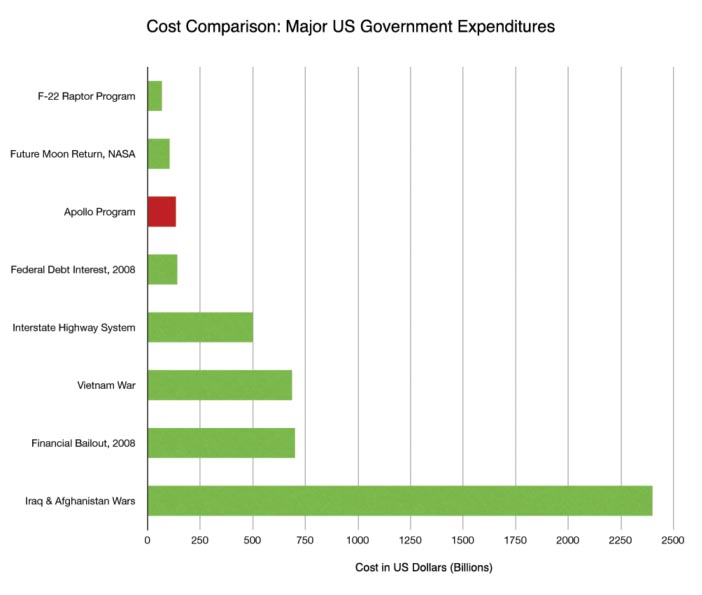
The Total Cost of the Apollo Program
The Apollo program, which culminated in the Moon landing, had a total cost of approximately $25.4 billion in the 1960s. Adjusted for inflation to today's money, this amount would be roughly $150 billion. This figure includes all the research, development, testing, and operations conducted over the decade-long program.
- Research and Development: A significant portion of the budget was allocated to developing the technology required for space travel, including the Saturn V rocket and the Lunar Module.
- Testing and Safety: Extensive testing was conducted to ensure the safety and reliability of the spacecraft and equipment, which added to the overall cost.
- Operational Costs: The missions themselves, including Apollo 11, required substantial funding for astronaut training, mission control, and logistics.
Breakdown of Apollo 11 Costs
The Apollo 11 mission, which successfully landed humans on the Moon, cost approximately $355 million in 1969. In today's money, this would be around $2.5 billion. This mission was the culmination of years of effort and investment.
- Spacecraft Development: The Command Module and Lunar Module were specifically designed for this mission, with costs covering design, construction, and testing.
- Launch Operations: The launch of the Saturn V rocket and associated ground operations were a major expense.
- Post-Mission Analysis: After the mission, extensive analysis of the data and materials collected added to the overall cost.
Comparison to Modern Space Programs
When compared to modern space programs, the Apollo program was significantly more expensive relative to its time. For example, NASA's Artemis program, which aims to return humans to the Moon, has an estimated cost of $93 billion over a decade.
- Technological Advancements: Modern technology has reduced some costs, but new challenges and safety requirements have increased others.
- Inflation and Economic Factors: The value of money has changed, making direct comparisons complex.
- Scope and Goals: The Artemis program includes plans for sustainable lunar exploration, which adds to its budget.
Economic Impact of the Moon Landing
The Moon landing had a profound economic impact, not just in terms of cost but also in driving technological innovation and inspiring industries.
- Technological Spin-offs: Many technologies developed for the Apollo program, such as computer systems and materials, found applications in other industries.
- Job Creation: The program created thousands of jobs, from engineers to factory workers, boosting the economy.
- Global Influence: The success of the Moon landing positioned the United States as a leader in space exploration, influencing global politics and economics.
Public Perception and Funding
Public perception played a crucial role in securing funding for the Apollo program. The Cold War context and the desire to demonstrate technological superiority over the Soviet Union were key factors.
- Political Support: The program received strong backing from the U.S. government, particularly from President John F. Kennedy.
- Public Enthusiasm: The American public was captivated by the idea of space exploration, which helped justify the enormous cost.
- Media Coverage: Extensive media coverage of the missions kept the public engaged and supportive of the program.
Why is space exploration not a waste of money?

Space exploration is not a waste of money because it drives technological advancements, fosters international collaboration, and expands our understanding of the universe. It also has practical applications on Earth, such as improving communication technologies, medical innovations, and environmental monitoring. Additionally, it inspires future generations to pursue careers in science, technology, engineering, and mathematics (STEM).
How does space exploration drive technological innovation?
Space exploration has led to numerous technological breakthroughs that benefit everyday life. For example:
- Satellite technology has revolutionized communication, weather forecasting, and navigation systems.
- Developments in materials science have resulted in lighter, stronger, and more durable materials used in various industries.
- Advances in robotics and automation have improved manufacturing and medical procedures.
What are the economic benefits of space exploration?
Space exploration contributes significantly to the economy by:
- Creating high-paying jobs in engineering, research, and manufacturing sectors.
- Stimulating private sector investments through companies like SpaceX and Blue Origin.
- Generating new industries, such as space tourism and asteroid mining, which have the potential to become multi-billion-dollar markets.
How does space exploration benefit Earth's environment?
Space exploration plays a crucial role in understanding and protecting Earth's environment by:
- Providing satellite data for monitoring climate change, deforestation, and natural disasters.
- Developing clean energy technologies, such as solar panels, which originated from space research.
- Enhancing disaster response through improved communication and mapping systems.
What role does space exploration play in scientific discovery?
Space exploration expands our knowledge of the universe and our place within it by:
- Discovering exoplanets and studying their potential to support life.
- Investigating the origins of the universe through missions like the James Webb Space Telescope.
- Advancing our understanding of fundamental physics, such as gravity and black holes.
How does space exploration inspire future generations?
Space exploration serves as a powerful motivator for young people by:
- Encouraging interest in STEM fields, which are critical for future innovation.
- Showcasing the importance of curiosity and problem-solving in overcoming challenges.
- Highlighting the potential for international cooperation in achieving common goals.
Frequently Asked Questions (FAQs)
Was the Moon Landing Worth the Financial Investment?
The Moon landing, achieved by NASA's Apollo 11 mission in 1969, was a monumental achievement that cost approximately $25.4 billion (equivalent to over $150 billion today). While some argue it was a waste of money, others highlight its long-term benefits. The mission spurred advancements in technology, including innovations in computing, materials science, and telecommunications. Additionally, it inspired generations to pursue careers in STEM fields, fostering scientific progress. The Moon landing also demonstrated the United States' technological superiority during the Cold War, which had significant geopolitical implications.
What Were the Economic Benefits of the Moon Landing?
Contrary to the belief that the Moon landing was a financial drain, it generated substantial economic returns. The investment in the Apollo program created thousands of jobs and stimulated growth in industries such as aerospace, electronics, and manufacturing. Many technologies developed for the mission, such as satellite communications and miniaturized electronics, found commercial applications, boosting the economy. Furthermore, the Moon landing enhanced the U.S.'s global reputation, attracting international partnerships and investments in science and technology.
Did the Moon Landing Have Any Scientific Value?
Absolutely. The Moon landing provided invaluable scientific data that transformed our understanding of the Moon and the solar system. The samples collected during the Apollo missions revealed insights into the Moon's geological history, including its formation and evolution. This information has helped scientists study Earth's early history and the processes that shaped our planet. Additionally, the Moon landing laid the groundwork for future space exploration, including missions to Mars and beyond, by testing technologies and human endurance in space.
Could the Money Spent on the Moon Landing Have Been Used Elsewhere?
Critics often argue that the funds allocated to the Moon landing could have been used to address social issues like poverty, education, or healthcare. While these are valid concerns, it's important to recognize that the Apollo program was not just a scientific endeavor but also a strategic investment in national security and global influence. The technological advancements and economic growth it spurred indirectly benefited society. Moreover, the Moon landing symbolized human achievement and inspired a sense of unity and ambition, which are intangible but significant contributions to humanity.
Leave a Reply
Our Recommended Articles