
What is the Difference Between a Private Equity Firm and a Venture Capital Firm

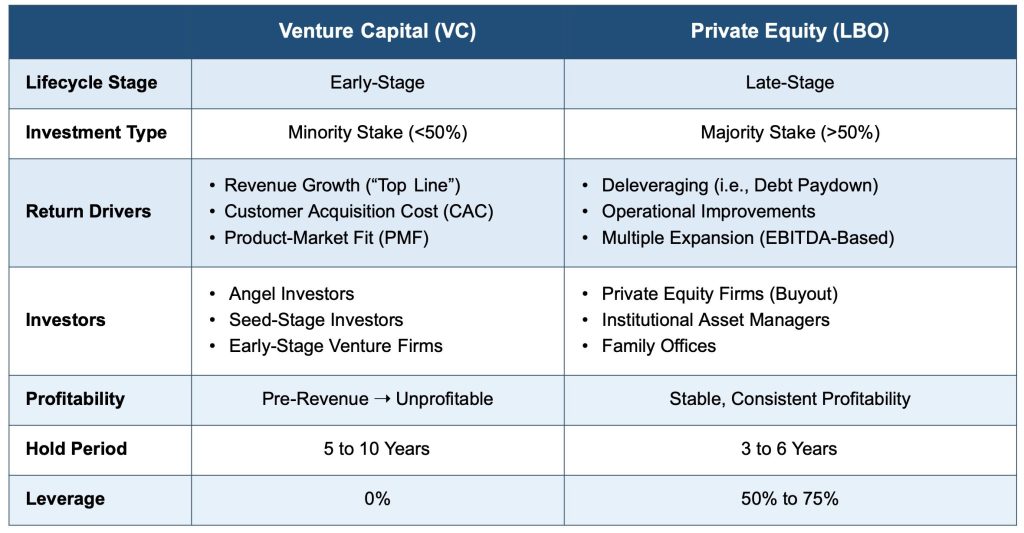
Private equity firms and venture capital firms are both integral players in the investment world, yet they operate in distinct ways and target different types of businesses. While both aim to generate returns for their investors, their approaches, investment stages, and risk profiles vary significantly. Private equity firms typically invest in established companies, often taking controlling stakes to drive operational improvements or facilitate growth. In contrast, venture capital firms focus on early-stage or high-growth startups, providing capital and mentorship to help them scale. Understanding the differences between these two investment models is crucial for entrepreneurs and investors navigating the complex landscape of business financing.
- What is the Difference Between a Private Equity Firm and a Venture Capital Firm?
- Is it harder to get into VC or PE?
- Is Shark Tank VC or PE?
- Which is an uncommon feature of private equity and venture capital?
- Who makes more money, private equity or venture capital?
-
Frequently Asked Questions (FAQs)
- What is the primary focus of private equity firms versus venture capital firms?
- How do the investment stages differ between private equity and venture capital?
- What is the typical size of investments made by private equity versus venture capital firms?
- How do private equity and venture capital firms differ in their involvement with portfolio companies?
What is the Difference Between a Private Equity Firm and a Venture Capital Firm?
Private equity firms and venture capital firms are both involved in investing in companies, but they differ significantly in their focus, investment strategies, and the types of companies they target. Understanding these differences is crucial for entrepreneurs and investors alike.
See Also Whats the Difference Between Venture Capital and Corporate Development
1. Investment Stage
Private equity firms typically invest in mature companies that are already established and generating revenue. These firms often seek to acquire a controlling stake in the company, with the goal of improving operations and eventually selling the company for a profit. On the other hand, venture capital firms focus on early-stage companies or startups that have high growth potential but may not yet be profitable. Venture capitalists usually take a minority stake and provide not only funding but also mentorship and strategic guidance.
2. Size of Investment
Private equity investments are generally larger in size compared to venture capital investments. Private equity firms often invest hundreds of millions or even billions of dollars in a single deal. In contrast, venture capital investments are typically smaller, ranging from a few hundred thousand dollars to tens of millions, depending on the stage of the company.
See Also What Career is More Lucrative; Private Equity or Venture Capital?
3. Risk and Return Profile
Venture capital investments are considered higher risk due to the early stage of the companies they invest in. However, they also offer the potential for higher returns if the startup succeeds and grows significantly. Private equity investments, while still risky, are generally considered less volatile because they involve more established companies with proven business models.
4. Industry Focus
Private equity firms often invest in a wide range of industries, including manufacturing, healthcare, and retail. They look for companies that can benefit from operational improvements or restructuring. Venture capital firms, however, tend to focus on technology-driven industries such as software, biotechnology, and clean energy, where rapid innovation and scalability are key factors.
See Also What Are the Exit Opportunities After Working as an Analyst at a Vc Firm
5. Exit Strategies
The exit strategies for private equity and venture capital firms also differ. Private equity firms typically aim for an exit through a sale to another company or an initial public offering (IPO). Venture capital firms, on the other hand, often exit through an IPO or by selling their stake to another investor, usually after the startup has achieved significant growth.
| Aspect | Private Equity | Venture Capital |
|---|---|---|
| Investment Stage | Mature companies | Early-stage startups |
| Size of Investment | Large (hundreds of millions to billions) | Smaller (thousands to tens of millions) |
| Risk and Return | Lower risk, moderate return | Higher risk, potential for higher return |
| Industry Focus | Diverse industries | Tech-driven industries |
| Exit Strategy | Sale or IPO | IPO or stake sale |
Is it harder to get into VC or PE?

 Should I Quit Venture Capital to Join Real Estate Private Equity =37253896
Understanding the Differences Between VC and PE
Venture Capital (VC) and Private Equity (PE) are both investment fields, but they differ significantly in their focus and operations. VC typically involves investing in early-stage startups with high growth potential, while PE focuses on acquiring and improving established companies. The entry barriers for each field vary due to these differences.
- VC firms often seek individuals with a strong background in entrepreneurship, technology, or innovation.
- PE firms usually prefer candidates with experience in finance, consulting, or investment banking.
- The networking requirements for VC are often more intense due to the need to identify promising startups early.
Educational and Professional Requirements
Both VC and PE require a strong educational foundation, but the emphasis varies. VC roles may prioritize technical expertise or industry-specific knowledge, while PE roles often demand advanced financial modeling and deal execution skills.
See Also What Are the Different Types of Venture Capital Firms?
- VC roles may favor candidates with MBAs or advanced degrees in technical fields like engineering or computer science.
- PE roles typically require a strong background in finance, often with certifications like CFA or prior experience in investment banking.
- Internships or prior experience in startups can be a significant advantage for VC positions.
Competition and Entry-Level Opportunities
The competition for entry-level roles in both VC and PE is fierce, but the nature of the competition differs. VC roles are fewer in number and often require a unique blend of skills, while PE roles are more structured but demand exceptional financial acumen.
- VC roles are often limited to smaller teams, making them harder to secure.
- PE roles are more abundant but require candidates to stand out through top-tier academic and professional achievements.
- Networking and personal connections play a critical role in securing opportunities in both fields.
Skill Sets Required for Success
Success in VC and PE demands distinct skill sets. VC professionals need to excel in identifying disruptive technologies and trends, while PE professionals must be adept at financial analysis and operational improvements.
- VC professionals require strong analytical skills, creativity, and a deep understanding of emerging markets.
- PE professionals need expertise in financial modeling, due diligence, and strategic planning.
- Both fields value leadership and the ability to work under pressure.
Long-Term Career Prospects
The long-term career prospects in VC and PE differ based on the nature of the work and the industries they serve. VC offers the potential for high rewards through successful exits, while PE provides stability and consistent returns through portfolio management.
- VC careers often involve higher risk but can yield significant rewards if investments succeed.
- PE careers tend to offer more predictable career progression and financial stability.
- Both fields provide opportunities for entrepreneurial growth and leadership roles over time.
Is Shark Tank VC or PE?

What is Shark Tank?
Shark Tank is a popular television show where entrepreneurs pitch their business ideas to a panel of wealthy investors, known as sharks. The show provides a platform for startups and small businesses to secure funding in exchange for equity or other forms of financial agreements. The sharks evaluate the pitches and decide whether to invest their own money into the businesses.
- Entrepreneurs present their ideas to the sharks.
- The sharks negotiate terms, often involving equity stakes.
- Deals are made on the spot, but final agreements are formalized off-air.
Is Shark Tank Venture Capital (VC)?
Shark Tank is often associated with venture capital (VC) because the sharks invest in early-stage companies with high growth potential. However, the show operates differently from traditional VC firms. The sharks use their personal funds rather than pooled investment funds, and the deals are typically smaller in scale compared to institutional VC investments.
- Sharks invest personal capital rather than institutional funds.
- Focus is on early-stage startups with high growth potential.
- Deals are often smaller than traditional VC investments.
Is Shark Tank Private Equity (PE)?
Shark Tank is not considered private equity (PE) because private equity typically involves investing in mature companies, often with the goal of restructuring or improving operations. The sharks on Shark Tank usually invest in startups or small businesses, which is more aligned with venture capital than private equity.
- Private equity focuses on mature companies.
- Shark Tank deals with startups and small businesses.
- PE investments often involve restructuring or operational improvements.
Key Differences Between VC and PE in Shark Tank
While Shark Tank shares some similarities with both venture capital and private equity, there are key differences. VC typically involves higher risk and focuses on early-stage companies, whereas PE targets established companies. Shark Tank leans more towards the VC model, as the sharks invest in startups and small businesses with high growth potential.
- VC focuses on early-stage companies.
- PE targets established companies.
- Shark Tank aligns more with the VC model.
How Shark Tank Deals Are Structured
Deals on Shark Tank are structured in various ways, often involving equity stakes, royalties, or loans. The sharks negotiate terms directly with the entrepreneurs, and the agreements are tailored to the specific needs of the business. This flexibility is a hallmark of the show and sets it apart from traditional VC or PE investments.
- Deals may involve equity stakes.
- Some deals include royalties or loans.
- Terms are negotiated directly with entrepreneurs.
Which is an uncommon feature of private equity and venture capital?

Limited Liquidity
One uncommon feature of private equity and venture capital is the limited liquidity of investments. Unlike publicly traded stocks, these investments are not easily bought or sold on an open market. This means investors often face significant challenges in accessing their funds until the investment matures or is sold.
- Long-term commitment: Investors must be prepared to lock up their capital for several years.
- Illiquid assets: The lack of a secondary market makes it difficult to exit investments prematurely.
- Exit strategies: Liquidity is typically achieved through IPOs, acquisitions, or secondary sales, which can take time.
High Minimum Investment Thresholds
Private equity and venture capital often require high minimum investment thresholds, making them inaccessible to average investors. These funds are typically reserved for institutional investors or high-net-worth individuals.
- Exclusive access: Only accredited investors or institutions can participate.
- Capital requirements: Minimum investments can range from hundreds of thousands to millions of dollars.
- Barrier to entry: This exclusivity limits participation to a small group of investors.
Active Involvement in Portfolio Companies
Another uncommon feature is the active involvement of private equity and venture capital firms in the management of their portfolio companies. Unlike passive investments, these firms often take a hands-on approach to drive growth and profitability.
- Strategic guidance: Firms provide expertise and resources to help companies scale.
- Operational changes: They may implement new processes or replace management teams.
- Value creation: The goal is to enhance the company's value before exiting the investment.
High Risk and High Reward
Private equity and venture capital are characterized by their high-risk, high-reward nature. These investments often target startups or underperforming companies, which carry significant uncertainty but also the potential for substantial returns.
- Startup investments: Venture capital focuses on early-stage companies with unproven business models.
- Turnaround opportunities: Private equity may invest in distressed companies to revive them.
- Potential for outsized returns: Successful investments can yield multiples of the initial capital.
Complex Fee Structures
The complex fee structures of private equity and venture capital funds are another uncommon feature. These fees often include management fees, performance fees, and other expenses, which can significantly impact overall returns.
- Management fees: Typically 1-2% of assets under management annually.
- Carried interest: A performance fee, usually 20% of profits, paid to fund managers.
- Additional costs: Investors may also bear expenses related to due diligence, legal fees, and other operational costs.
Who makes more money, private equity or venture capital?
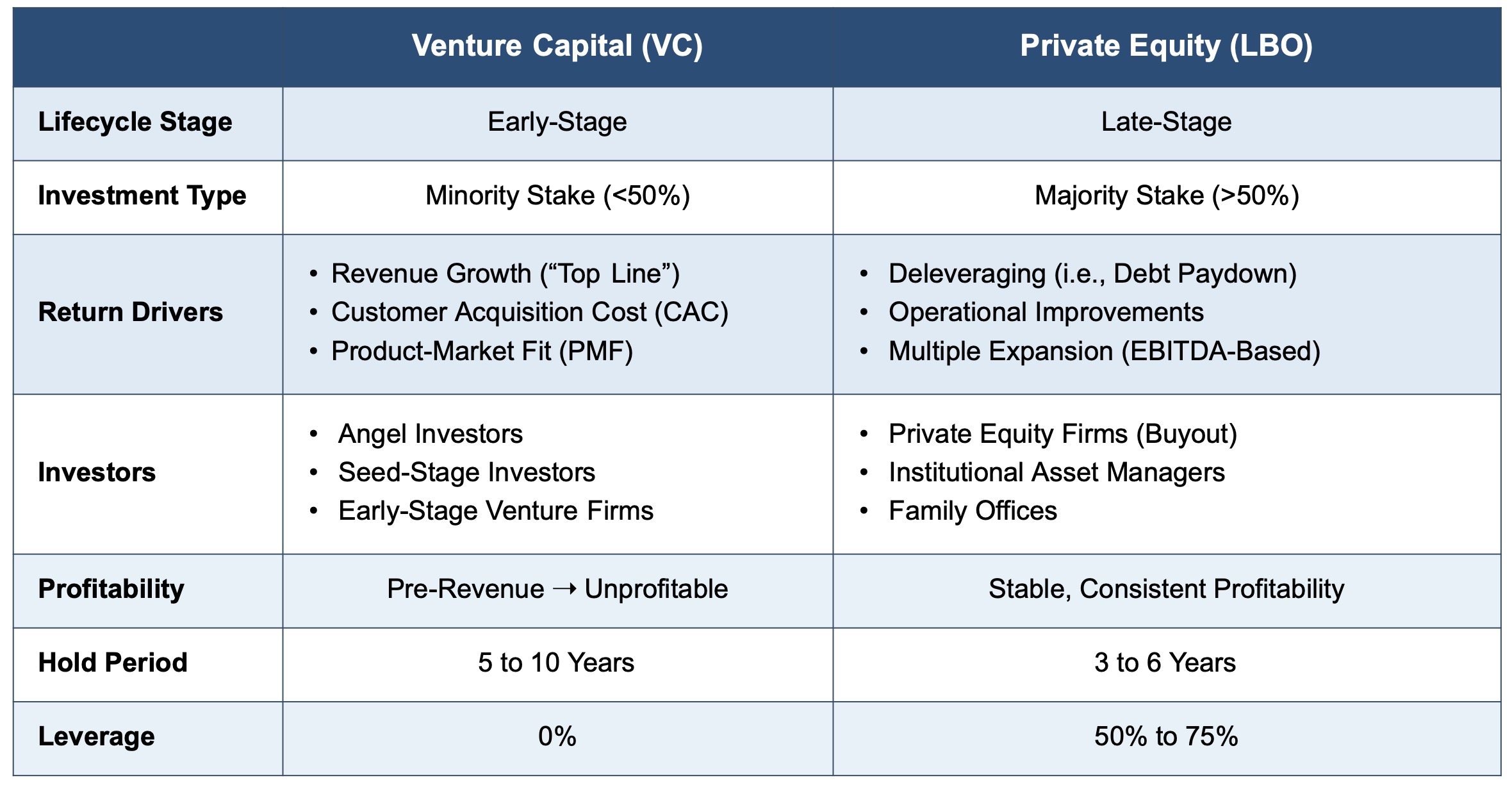
Earnings Comparison: Private Equity vs. Venture Capital
When comparing earnings between private equity and venture capital, private equity professionals generally tend to make more money. This is due to the larger deal sizes, higher management fees, and performance-based incentives (carried interest) associated with private equity. Venture capital, on the other hand, often deals with smaller, high-risk investments in startups, which can yield significant returns but are less predictable.
- Private equity deals typically involve mature companies with established cash flows, allowing for higher fees and returns.
- Venture capital focuses on early-stage companies, which carry higher risk and lower immediate returns.
- Carried interest in private equity is often higher due to the larger fund sizes and longer investment horizons.
Management Fees in Private Equity and Venture Capital
Management fees are a significant source of income for both private equity and venture capital firms. However, private equity firms usually charge higher fees due to the larger capital they manage. These fees are typically a percentage of the total assets under management (AUM).
- Private equity firms often charge 1.5% to 2% of AUM as management fees.
- Venture capital firms usually charge 2% to 2.5% of AUM, but the total fee amount is lower due to smaller fund sizes.
- Higher management fees in private equity contribute to greater overall earnings for professionals in this field.
Carried Interest: A Key Driver of Earnings
Carried interest, or the share of profits earned by fund managers, is a major component of earnings in both private equity and venture capital. However, private equity tends to offer higher carried interest due to the larger profits generated from successful exits.
- Private equity carried interest is typically 20% of profits, often from multi-billion-dollar deals.
- Venture capital also offers 20% carried interest, but the absolute amount is smaller due to lower deal sizes.
- The potential for higher carried interest in private equity makes it more lucrative for professionals.
Deal Sizes and Their Impact on Earnings
The size of deals in private equity and venture capital plays a crucial role in determining earnings. Private equity deals are generally much larger, involving billions of dollars, while venture capital deals are smaller, often in the millions.
- Private equity deals involve mature companies, requiring substantial capital and generating higher fees.
- Venture capital deals focus on startups, which require less capital but carry higher risk.
- Larger deal sizes in private equity translate to higher earnings for professionals in this sector.
Risk and Reward: A Comparative Analysis
The risk-reward profile of private equity and venture capital significantly impacts earnings. Private equity investments are generally less risky due to the focus on established companies, while venture capital investments are high-risk but can yield substantial rewards if successful.
- Private equity offers steady returns with lower risk, making it more attractive for consistent earnings.
- Venture capital involves high-risk investments in startups, with the potential for outsized returns but also higher failure rates.
- The lower risk in private equity contributes to its reputation as a more lucrative field compared to venture capital.
Frequently Asked Questions (FAQs)
What is the primary focus of private equity firms versus venture capital firms?
Private equity firms primarily focus on investing in established companies that are often mature and generate steady cash flows. These firms typically acquire a significant or controlling stake in the company, aiming to improve operations, increase profitability, and eventually sell the company at a higher valuation. On the other hand, venture capital firms focus on early-stage or startup companies with high growth potential. They provide funding to help these startups scale, often in exchange for equity, and are more involved in nurturing innovation and rapid growth.
How do the investment stages differ between private equity and venture capital?
Private equity firms usually invest in companies that are already established and may be underperforming or in need of restructuring. Their investments often occur during later stages of a company's lifecycle, such as during buyouts or recapitalizations. In contrast, venture capital firms invest in the early stages of a company's development, such as seed funding, Series A, or Series B rounds. These investments are riskier but offer the potential for higher returns if the startup succeeds.
What is the typical size of investments made by private equity versus venture capital firms?
Private equity firms generally make larger investments, often ranging from tens of millions to billions of dollars, as they target established companies with significant valuations. These investments are often used to acquire entire companies or large stakes. Conversely, venture capital firms typically make smaller investments, ranging from a few hundred thousand dollars to several million, depending on the startup's stage and potential. These smaller investments reflect the higher risk associated with early-stage companies.
How do private equity and venture capital firms differ in their involvement with portfolio companies?
Private equity firms often take a hands-on approach with their portfolio companies, actively participating in management decisions, restructuring operations, and implementing strategies to increase profitability. They may replace management teams or bring in industry experts to drive change. In contrast, venture capital firms tend to take a more advisory role, providing guidance and mentorship to startup founders. They focus on helping startups grow and scale, often leveraging their networks and expertise to support the company's development.
Leave a Reply
Our Recommended Articles