
What is the Difference Between Venture and Non Venture Capital or in Other Words What is the Definition of Non Venture Capital


Venture capital and non-venture capital are two distinct forms of financing that cater to different stages and types of businesses. Venture capital typically refers to investments made in early-stage or high-growth companies with significant potential for exponential returns, often in innovative or technology-driven sectors. In contrast, non-venture capital encompasses a broader range of funding sources, including traditional loans, private equity, and other financial instruments, aimed at more established or stable businesses. Understanding the differences between these two forms of capital is crucial for entrepreneurs and investors alike, as it influences decision-making, risk assessment, and long-term business strategies. This article explores the key distinctions and definitions of non-venture capital in detail.
- What is the Difference Between Venture and Non-Venture Capital?
- What is the difference between venture and non venture?
- What is the simple definition of venture capital?
- What is the difference between capital and venture capital?
- What is venture capital in one word?
- Frequently Asked Questions (FAQs)
What is the Difference Between Venture and Non-Venture Capital?
Venture capital and non-venture capital are two distinct forms of financing that cater to different stages and types of businesses. Venture capital is typically invested in early-stage startups or high-growth companies with significant potential for exponential growth. These investments are often high-risk but offer the possibility of substantial returns. On the other hand, non-venture capital refers to funding provided to established businesses or companies that are not in the high-growth or startup phase. This type of capital is generally less risky and focuses on steady, predictable returns.
See Also How Do You Go About Switching From Hedge Fund Investing Into Venture Capital
What is Venture Capital?
Venture capital (VC) is a form of private equity financing that investors provide to startups and small businesses with high growth potential. These investments are often made in exchange for equity stakes in the company. Venture capitalists typically seek innovative ideas or disruptive technologies that can scale rapidly. The goal is to achieve a significant return on investment (ROI) through an exit strategy, such as an IPO (Initial Public Offering) or acquisition.
What is Non-Venture Capital?
Non-venture capital refers to funding provided to mature businesses or companies that are not in the startup phase. This type of capital is often used for expansion, working capital, or acquisitions. Unlike venture capital, non-venture capital is less focused on high-risk, high-reward scenarios and more on stable, predictable growth. Examples include bank loans, private equity for established firms, and mezzanine financing.
See Also What is the Difference Between Fundraising Venture Capital and Private Investments
Key Differences Between Venture and Non-Venture Capital
The primary differences between venture and non-venture capital lie in the stage of the business, risk level, and investment goals. Venture capital targets early-stage companies with high growth potential, while non-venture capital is directed toward established businesses seeking steady growth. Additionally, venture capital often involves equity stakes, whereas non-venture capital may include debt financing or hybrid instruments.
Types of Non-Venture Capital
Non-venture capital encompasses various forms of financing, including:
- Bank Loans: Traditional loans provided by financial institutions.
- Private Equity: Investments in mature companies for expansion or restructuring.
- Mezzanine Financing: A hybrid of debt and equity financing.
- Angel Investing: Early-stage funding, but not as high-risk as venture capital.
- Corporate Financing: Funds provided by large corporations for strategic partnerships.
 How Much Does It Cost to Set Up and Launch a $20m Vc Fund?
When to Choose Venture Capital vs. Non-Venture Capital
The choice between venture and non-venture capital depends on the stage of your business and your growth objectives. If you are a startup with a high-growth potential and are willing to give up equity, venture capital may be the right choice. However, if your business is established and you need funds for steady growth or operational expenses, non-venture capital is more suitable.
| Aspect | Venture Capital | Non-Venture Capital |
|---|---|---|
| Target Companies | Startups, high-growth firms | Established, mature businesses |
| Risk Level | High | Low to Moderate |
| Investment Goal | Exponential growth, high ROI | Steady growth, predictable returns |
| Funding Type | Equity-based | Debt or hybrid instruments |
| Exit Strategy | IPO, Acquisition | Repayment, steady dividends |
What is the difference between venture and non venture?

Definition of Venture and Non-Venture
The primary difference between venture and non-venture lies in their nature and purpose. A venture typically refers to a business or project that involves significant risk, innovation, and potential for high returns. It often involves startups or entrepreneurial activities aimed at disrupting markets. On the other hand, non-venture refers to established businesses or projects that operate within traditional frameworks, focusing on steady growth and lower risk.
- Venture involves high-risk, high-reward scenarios.
- Non-venture focuses on stability and predictable outcomes.
- Venture often targets new markets or innovative solutions.
Funding Sources for Venture and Non-Venture
Funding for venture projects typically comes from venture capitalists, angel investors, or crowdfunding, as these sources are willing to take risks for potentially high returns. In contrast, non-venture projects are usually funded through traditional means such as bank loans, personal savings, or revenue from existing operations.
- Venture funding relies on external investors seeking high returns.
- Non-venture funding is often self-sustained or debt-based.
- Venture funding is more speculative and growth-oriented.
Risk and Reward Profiles
The risk and reward profiles of venture and non-venture differ significantly. Venture projects are characterized by high uncertainty but offer the potential for substantial rewards if successful. Non-venture projects, however, prioritize stability and lower risk, resulting in more predictable but modest returns.
- Venture involves higher risk with the possibility of exponential growth.
- Non-venture emphasizes steady, incremental progress.
- Venture success often depends on market disruption.
Target Markets and Innovation
Venture projects often target emerging or underserved markets, leveraging innovation to create new demand. Non-venture projects, however, typically operate in established markets, focusing on improving existing products or services rather than creating entirely new ones.
- Venture aims to disrupt or create new markets.
- Non-venture focuses on refining existing offerings.
- Venture thrives on innovation and scalability.
Growth and Scalability
Venture projects are designed for rapid growth and scalability, often requiring significant upfront investment to achieve market dominance. Non-venture projects, in contrast, grow at a slower, more controlled pace, focusing on sustainability and long-term profitability.
- Venture prioritizes rapid expansion and market penetration.
- Non-venture emphasizes gradual, sustainable growth.
- Venture scalability often depends on external funding.
What is the simple definition of venture capital?
:max_bytes(150000):strip_icc()/Venturecapital-2f7ba3a27d0545f682a6238ea6b16cb9.png)
What is Venture Capital?
Venture capital is a form of private equity financing that investors provide to early-stage, high-potential, and often high-risk startups or small businesses. These investors, known as venture capitalists, offer funding in exchange for equity or ownership stakes in the company. The goal is to support the growth of the business and eventually achieve a significant return on investment through events like an IPO or acquisition.
How Does Venture Capital Work?
Venture capital works through a structured process where investors evaluate and fund promising startups. Here’s how it typically operates:
- Identification: Venture capitalists identify startups with high growth potential.
- Due Diligence: They conduct thorough research and analysis to assess the viability of the business.
- Investment: Funds are provided in exchange for equity or ownership stakes.
- Support: Venture capitalists often provide mentorship, strategic guidance, and networking opportunities.
- Exit Strategy: They aim to exit the investment through an IPO, acquisition, or merger to realize profits.
Who Provides Venture Capital?
Venture capital is typically provided by:
- Venture Capital Firms: Professional firms that pool money from institutional investors and high-net-worth individuals.
- Angel Investors: Wealthy individuals who invest their personal funds in startups.
- Corporate Venture Capital: Investment arms of large corporations seeking strategic opportunities.
- Government Funds: Public funds aimed at fostering innovation and economic growth.
What Are the Stages of Venture Capital Funding?
Venture capital funding is divided into several stages, each catering to different growth phases of a startup:
- Seed Stage: Initial funding to develop an idea or prototype.
- Early Stage: Funding for product development, market research, and initial operations.
- Growth Stage: Capital to scale operations, expand markets, and increase revenue.
- Late Stage: Funding for mature companies preparing for an IPO or acquisition.
What Are the Benefits of Venture Capital?
Venture capital offers several advantages to startups and investors alike:
- Access to Capital: Startups gain significant funding to fuel growth.
- Expertise and Guidance: Investors provide valuable mentorship and industry connections.
- Credibility: Securing venture capital can enhance a startup’s reputation.
- Risk Sharing: Investors share the financial risk of the startup’s success or failure.
What Are the Risks of Venture Capital?
While venture capital can be highly rewarding, it also comes with risks:
- High Failure Rate: Many startups fail, leading to potential loss of investment.
- Equity Dilution: Founders may lose significant ownership stakes.
- Pressure to Perform: Investors often expect rapid growth and high returns.
- Market Uncertainty: Economic or industry changes can impact success.
What is the difference between capital and venture capital?
Definition of Capital
Capital refers to the financial resources that businesses use to fund their operations, growth, and investments. It can come from various sources, including personal savings, loans, or investments from shareholders. Capital is a broad term that encompasses all forms of financial assets used to generate value.
- Equity Capital: Funds raised by selling ownership stakes in the company.
- Debt Capital: Funds borrowed from external sources, such as banks or bondholders.
- Working Capital: The difference between a company's current assets and liabilities, used for day-to-day operations.
Definition of Venture Capital
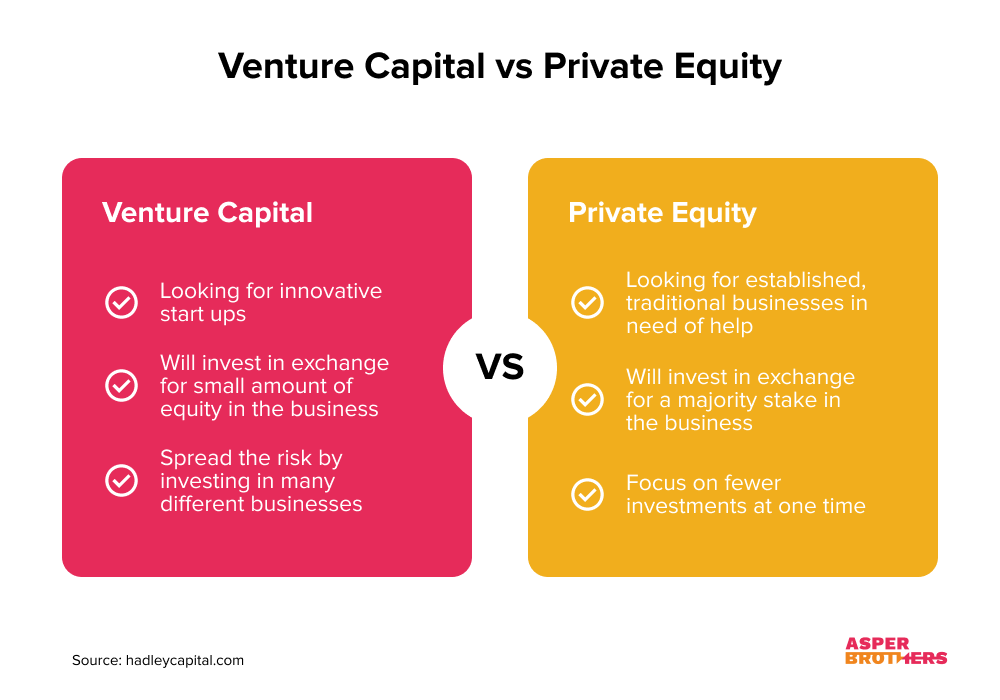
Venture capital is a subset of private equity that focuses on investing in early-stage or high-growth companies with significant potential for success. Venture capitalists provide funding in exchange for equity, often taking an active role in guiding the company's strategy and growth.
- High-Risk Investments: Targets startups with high growth potential but also high risk.
- Equity Stake: Investors receive ownership shares in the company.
- Active Involvement: Venture capitalists often provide mentorship and strategic advice.
Sources of Funding
While capital can come from a variety of sources, including personal savings, loans, or public markets, venture capital is typically provided by specialized firms or individual investors who focus on high-growth startups.
- Capital Sources: Banks, personal savings, public markets, and private investors.
- Venture Capital Sources: Venture capital firms, angel investors, and corporate venture arms.
- Funding Stages: Venture capital is often used during seed, early, or growth stages.
Risk and Return Profile
Capital investments generally have a lower risk profile compared to venture capital, which is inherently riskier due to its focus on unproven, high-growth companies. However, venture capital also offers the potential for higher returns if the startup succeeds.
- Capital Risk: Lower risk, with steady returns over time.
- Venture Capital Risk: High risk, with the potential for significant returns or total loss.
- Diversification: Venture capital portfolios are diversified to mitigate risk.
Investment Time Horizon
Capital investments often have a shorter time horizon, focusing on immediate or medium-term returns. In contrast, venture capital investments are typically long-term, as startups may take years to mature and generate returns.
- Capital Timeframe: Short to medium-term, often aligned with business cycles.
- Venture Capital Timeframe: Long-term, usually 5-10 years or more.
- Exit Strategies: Venture capitalists often exit through IPOs or acquisitions.
What is venture capital in one word?
Investment
What is Venture Capital in Simple Terms?
Venture capital is a form of private equity financing provided to early-stage, high-potential startups with the aim of fostering growth and innovation. It is typically provided by venture capital firms or individual investors who take an equity stake in the company in exchange for their investment. This type of funding is crucial for businesses that may not have access to traditional financing methods like bank loans.
- It focuses on high-growth potential companies.
- Investors often provide mentorship and strategic guidance.
- It involves higher risk compared to traditional investments.
How Does Venture Capital Work?
Venture capital works by investing in startups that demonstrate significant growth potential but lack the necessary funds to scale. Investors evaluate the business model, market opportunity, and team before committing funds. In return, they receive equity ownership and often play an active role in the company’s development.
- Startups pitch their ideas to venture capitalists.
- Investors conduct due diligence to assess viability.
- Funding is provided in stages (seed, Series A, B, etc.).
Why is Venture Capital Important?
Venture capital is vital because it fuels innovation and economic growth by supporting startups that disrupt industries and create new markets. It provides not only financial resources but also expertise and networks that help startups succeed.
- It enables job creation and technological advancements.
- It supports risk-taking and entrepreneurial spirit.
- It helps bridge the gap between idea and execution.
Who Benefits from Venture Capital?
Both startups and investors benefit from venture capital. Startups gain access to funds, expertise, and networks, while investors have the opportunity to earn significant returns if the company succeeds. Additionally, the economy benefits from the innovation and competition that these startups bring.
- Entrepreneurs receive the resources to grow their businesses.
- Investors gain equity in potentially high-value companies.
- Consumers benefit from new products and services.
What Are the Risks of Venture Capital?
Venture capital is inherently high-risk because it involves investing in unproven businesses with uncertain futures. Many startups fail, leading to losses for investors. However, the potential for high rewards makes it an attractive option for those willing to take the risk.
- High failure rate of startups.
- Illiquidity of investments until an exit event.
- Market volatility can impact returns.
Frequently Asked Questions (FAQs)
What is the difference between venture capital and non-venture capital?
Venture capital refers to funds invested in early-stage, high-growth potential startups or companies, often in exchange for equity. These investments are typically high-risk but offer the possibility of significant returns. On the other hand, non-venture capital includes investments in more established, stable companies or industries that do not require high-risk funding. Non-venture capital is often used for expansion, acquisitions, or other growth strategies in mature businesses.
What is the definition of non-venture capital?
Non-venture capital refers to funding provided to companies that are not in the early stages of development or do not operate in high-growth industries. This type of capital is often used by established businesses to support operations, fund expansions, or improve infrastructure. Unlike venture capital, non-venture capital investments are generally lower risk and focus on steady, predictable returns rather than explosive growth.
How does venture capital differ from traditional financing?
Venture capital is a form of equity financing where investors provide capital to startups or high-growth companies in exchange for ownership stakes. It is characterized by high risk and the potential for high rewards. In contrast, traditional financing, such as bank loans or non-venture capital, involves lending money to established businesses with a proven track record. Traditional financing is typically less risky and focuses on steady returns through interest payments or dividends.
Why would a company choose non-venture capital over venture capital?
A company might choose non-venture capital over venture capital if it is already established and does not require the high-risk, high-reward funding associated with venture capital. Non-venture capital is often more suitable for businesses looking to expand operations, acquire assets, or improve infrastructure without diluting ownership. Additionally, non-venture capital provides more predictable and stable financing options, which are ideal for companies with steady cash flows and lower growth potential.
Leave a Reply
Our Recommended Articles