
How Much Does It Cost to Set Up and Launch a $20m Vc Fund?

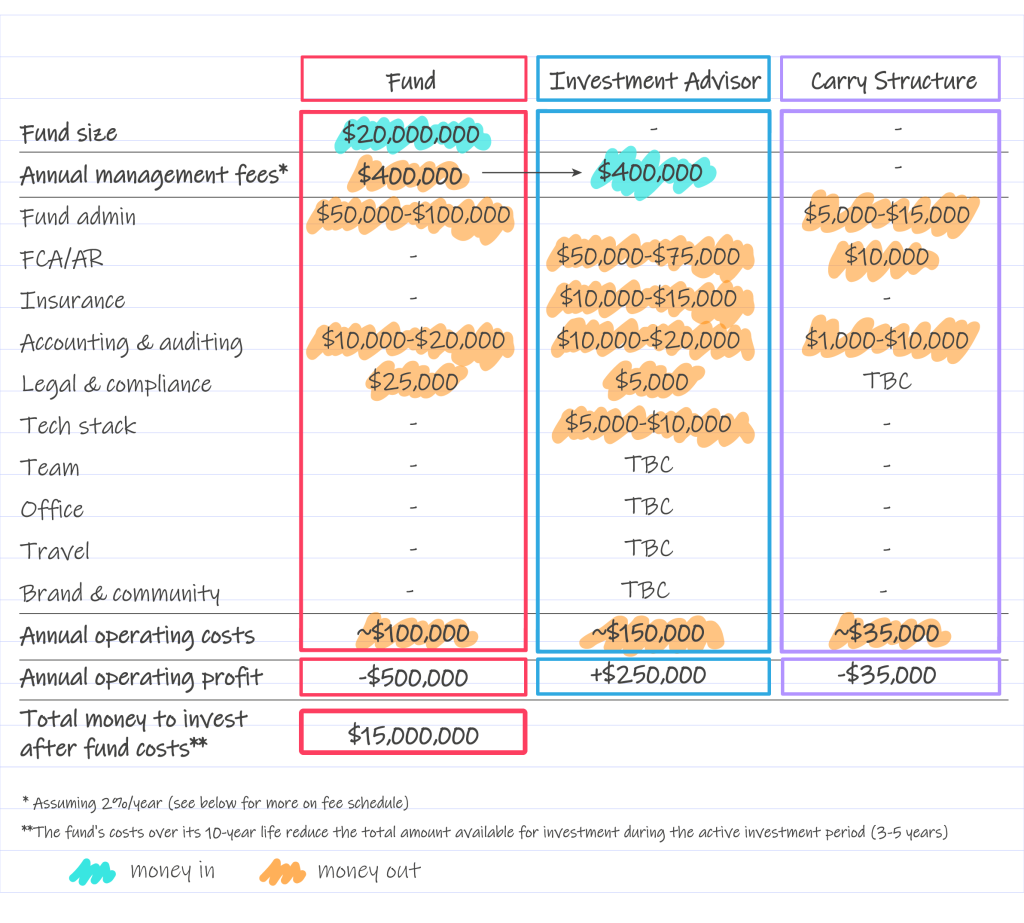
Setting up and launching a $20 million venture capital (VC) fund is a complex and resource-intensive process that requires careful planning and significant financial commitment. From legal and administrative expenses to operational costs and team salaries, the initial outlay can vary widely depending on the fund's structure, location, and strategy. Understanding these costs is crucial for aspiring fund managers to ensure they allocate resources effectively and set realistic expectations for investors. This article explores the key expenses involved in establishing a VC fund of this size, providing insights into the financial and logistical considerations that come with launching a successful venture capital operation.
How Much Does It Cost to Set Up and Launch a $20m VC Fund?
Setting up and launching a $20 million venture capital (VC) fund involves several costs, including legal fees, operational expenses, and compliance requirements. The total cost can vary significantly depending on the jurisdiction, the complexity of the fund structure, and the services required. Below, we break down the key expenses and considerations.
See Also Which Venture Capital Firms Have Well Designed Websites?
1. Legal and Structuring Costs
Establishing a VC fund requires legal expertise to draft partnership agreements, set up the fund structure, and ensure compliance with regulations. Legal fees can range from $50,000 to $150,000, depending on the complexity of the fund and the jurisdiction. This includes costs for forming a Limited Partnership (LP) or Limited Liability Company (LLC), drafting offering documents, and registering with regulatory bodies.
2. Operational Expenses
Operational costs include office space, salaries for fund managers, and administrative support. For a $20 million fund, annual operational expenses can range from $200,000 to $500,000. This covers salaries, technology infrastructure, and other day-to-day expenses necessary to run the fund efficiently.
See Also How to Best Educate Myself About the Venture Capital Industry
3. Compliance and Regulatory Fees
Compliance with securities laws and regulations is critical. This includes registration fees, annual reporting, and potential audits. Compliance costs can range from $20,000 to $50,000 annually, depending on the jurisdiction and the size of the fund.
4. Fundraising and Marketing Costs
Raising capital for a VC fund requires marketing efforts, including creating pitch decks, hosting investor meetings, and travel expenses. Fundraising costs can range from $30,000 to $100,000, depending on the scale of the campaign and the number of investors targeted.
See AlsoWhat Types of Insurance Should a Saas Startup Have at Various Revenue Levels?5. Management Fees and Carry
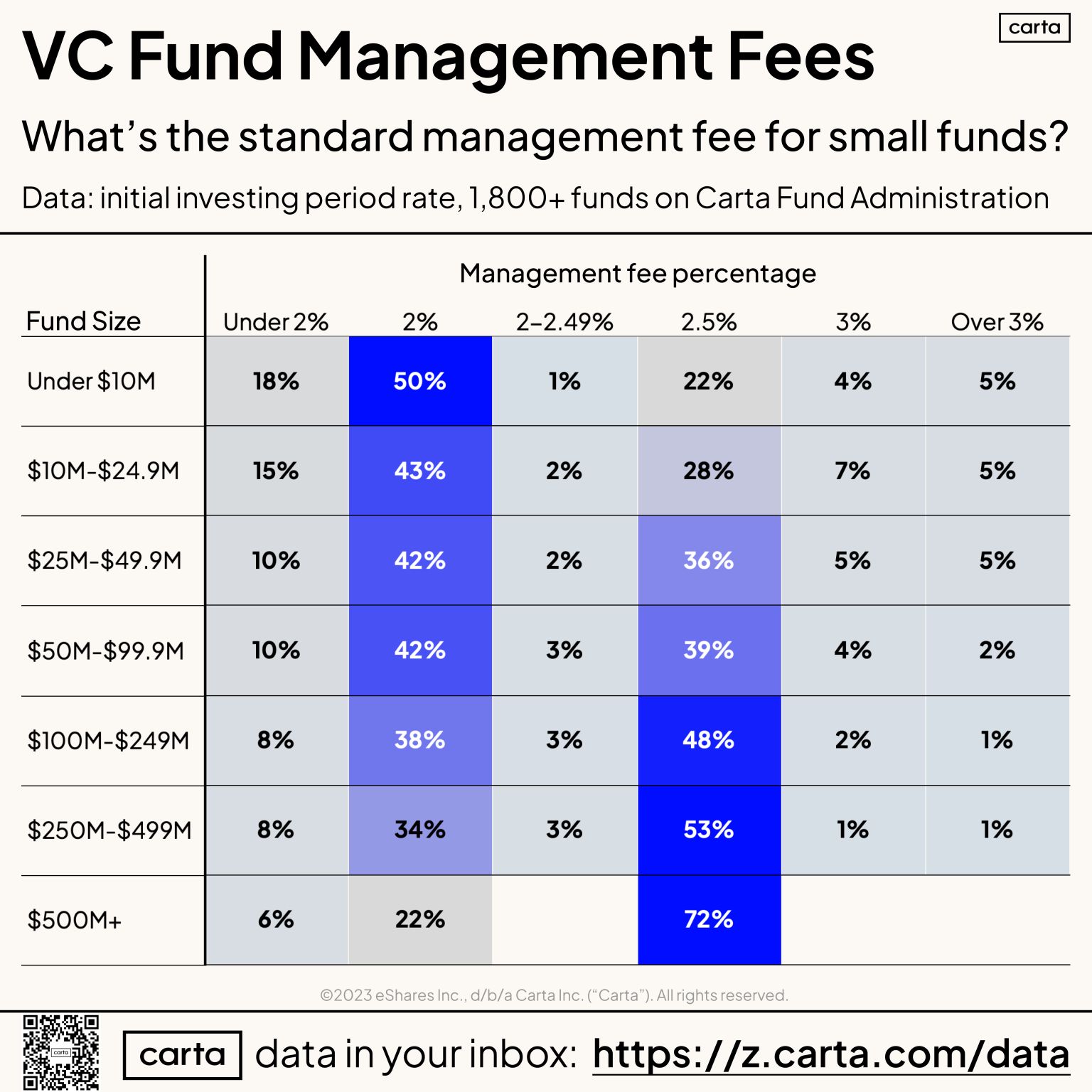
VC funds typically charge a 2% management fee and a 20% carried interest (profit share). For a $20 million fund, this translates to $400,000 annually in management fees, which helps cover operational costs. The carried interest is only realized after the fund achieves returns above a specified hurdle rate.
| Expense Category | Estimated Cost |
|---|---|
| Legal and Structuring Costs | $50,000 - $150,000 |
| Operational Expenses | $200,000 - $500,000 annually |
| Compliance and Regulatory Fees | $20,000 - $50,000 annually |
| Fundraising and Marketing Costs | $30,000 - $100,000 |
| Management Fees | $400,000 annually (2% of $20m) |
How much does it cost to start a VC fund?
 How Are Advisors to a Vc Firm Compensated?
Initial Capital Requirements for a VC Fund
Starting a venture capital (VC) fund requires a significant amount of initial capital. The amount varies depending on the size and scope of the fund, but typically ranges from $10 million to $100 million or more. This capital is used to:
- Invest in startups: The primary purpose of the fund.
- Cover operational costs: Including salaries, office space, and legal fees.
- Build a reserve: For follow-on investments in portfolio companies.
Legal and Administrative Costs
Establishing a VC fund involves substantial legal and administrative expenses. These costs can range from $50,000 to $200,000 or more, depending on the complexity of the fund structure. Key expenses include:
- Legal fees: For drafting partnership agreements and regulatory compliance.
- Administrative setup: Including entity formation and tax structuring.
- Compliance costs: For adhering to securities laws and regulations.
Operational Expenses
Running a VC fund incurs ongoing operational expenses. These costs can amount to 2% to 3% of the total fund size annually. Major operational expenses include:
- Salaries and bonuses: For the investment team and support staff.
- Office space and utilities: If a physical office is maintained.
- Technology and software: For deal flow management and portfolio tracking.
Fundraising Costs
Raising capital for a VC fund also involves fundraising costs. These can include marketing expenses, travel, and fees for placement agents. Typical fundraising costs are around 1% to 2% of the total capital raised. Key components include:
- Marketing materials: Pitch decks, due diligence documents, and presentations.
- Travel expenses: For meeting with potential limited partners (LPs).
- Placement agent fees: If third-party agents are used to raise capital.
Carry and Management Fees
VC funds typically charge management fees and take a share of the profits, known as carry. Management fees are usually 2% of the committed capital annually, while carry is typically 20% of the profits. These fees cover:
- Management fees: For ongoing fund operations and overhead.
- Carried interest: As an incentive for the fund managers.
- Performance-based compensation: Aligning the interests of the fund managers with the LPs.
What is the 2 6 2 rule of venture capital?
Understanding the 2 6 2 Rule in Venture Capital
The 2 6 2 rule is a principle used in venture capital to describe the expected outcomes of a portfolio of investments. It suggests that out of every 10 investments:
- 2 investments will yield significant returns, often referred to as home runs.
- 6 investments will either break even or result in moderate returns, often called base hits.
- 2 investments will fail completely, resulting in a total loss of capital.
Why the 2 6 2 Rule is Important for Venture Capitalists
The 2 6 2 rule is crucial for venture capitalists because it helps them manage expectations and risk. By understanding that only a small percentage of investments will yield high returns, VCs can:
- Diversify their portfolio to spread risk across multiple startups.
- Focus on high-potential startups that have the potential to become home runs.
- Prepare for losses by allocating funds to cover potential failures.
How the 2 6 2 Rule Influences Investment Strategies
The 2 6 2 rule shapes how venture capitalists approach their investment strategies. It encourages them to:
- Conduct thorough due diligence to identify startups with the highest potential for success.
- Invest in a mix of industries to reduce sector-specific risks.
- Monitor and support portfolio companies to maximize the chances of success.
Real-World Applications of the 2 6 2 Rule
In practice, the 2 6 2 rule is evident in the portfolios of many successful venture capital firms. For example:
- Sequoia Capital has seen significant returns from companies like Google and Airbnb, which align with the 2 home runs.
- Andreessen Horowitz has a mix of moderate successes and failures, reflecting the 6 base hits and 2 losses.
- Accel Partners has experienced both high-profile successes and failures, adhering to the rule.
Challenges and Criticisms of the 2 6 2 Rule
While the 2 6 2 rule is widely accepted, it is not without its challenges and criticisms. Some argue that:
- It oversimplifies the complexities of venture capital investing.
- It may lead to overemphasis on high-risk investments in search of home runs.
- It doesn't account for the varying stages of startup development and their impact on outcomes.
How do I start a small VC?

Understanding the Basics of Venture Capital
Starting a small venture capital (VC) firm requires a solid understanding of how the industry operates. Venture capital involves investing in early-stage or high-growth companies with the potential for significant returns. To begin:
- Research the VC ecosystem: Learn about the roles of limited partners (LPs), general partners (GPs), and portfolio companies.
- Understand the investment lifecycle: Familiarize yourself with stages like seed funding, Series A, B, and C rounds, and exit strategies such as IPOs or acquisitions.
- Study successful VC firms: Analyze their strategies, investment criteria, and portfolio management techniques.
Defining Your Investment Thesis
An investment thesis is the foundation of your VC firm. It outlines your focus areas, target industries, and criteria for selecting startups. To develop a strong thesis:
- Identify your niche: Choose industries or sectors where you have expertise or see high growth potential, such as tech, healthcare, or green energy.
- Set clear goals: Determine whether you aim for high-risk, high-reward investments or prefer steady, long-term growth.
- Align with market trends: Stay updated on emerging technologies and market demands to refine your focus.
Building a Network and Team
A strong network and skilled team are crucial for sourcing deals and supporting portfolio companies. To build your network and team:
- Attend industry events: Participate in startup pitch events, conferences, and networking sessions to connect with entrepreneurs and investors.
- Hire experienced professionals: Recruit team members with expertise in finance, legal, and your target industries.
- Leverage advisors: Engage seasoned investors or industry experts to provide guidance and credibility.
Raising Capital for Your VC Fund
Raising capital is a critical step in starting a VC firm. You need to attract limited partners (LPs) who will invest in your fund. To raise capital effectively:
- Prepare a compelling pitch: Highlight your investment thesis, track record, and potential returns to attract LPs.
- Target the right LPs: Focus on institutional investors, family offices, or high-net-worth individuals interested in venture capital.
- Offer transparency: Provide clear terms, fee structures, and reporting mechanisms to build trust with investors.
Managing and Growing Your Portfolio
Once your fund is operational, managing and growing your portfolio is key to achieving success. To effectively manage your investments:
- Conduct thorough due diligence: Evaluate startups based on their team, market potential, and financials before investing.
- Provide value beyond capital: Offer mentorship, strategic guidance, and access to your network to help portfolio companies succeed.
- Monitor performance: Regularly review the progress of your investments and adjust strategies as needed to maximize returns.
What is the 2 20 rule in VC?

What is the 2 20 Rule in Venture Capital?
The 2 20 rule in venture capital refers to the standard fee structure that venture capital (VC) firms charge their investors. It consists of two components:
- 2% Management Fee: This is an annual fee charged by the VC firm to cover operational costs, such as salaries, office expenses, and due diligence activities. It is typically calculated as 2% of the total assets under management (AUM).
- 20% Carry (Performance Fee): This is a share of the profits earned by the VC firm from successful investments. The firm takes 20% of the profits after returning the initial capital to the investors, also known as the carried interest.
How Does the 2 20 Rule Work in Practice?
The 2 20 rule is applied throughout the lifecycle of a venture capital fund. Here’s how it works:
- Management Fee Calculation: The 2% fee is charged annually on the total committed capital during the investment period, usually the first 5-7 years. After this period, it may decrease or be applied only to invested capital.
- Carry Distribution: The 20% carry is distributed only after the fund has returned the initial capital to its investors, ensuring alignment of interests between the VC firm and its limited partners (LPs).
- Hurdle Rate: Some funds include a hurdle rate, which is a minimum return threshold that must be met before the carry is applied.
Why is the 2 20 Rule Important in VC?
The 2 20 rule is a cornerstone of venture capital because:
- Aligns Interests: It ensures that VC firms are incentivized to generate high returns, as their profits depend on the success of their investments.
- Covers Operational Costs: The 2% management fee provides the necessary resources for the VC firm to operate effectively and conduct thorough due diligence.
- Encourages Long-Term Focus: The carry structure rewards long-term success, aligning the VC firm’s goals with those of its investors.
What Are the Criticisms of the 2 20 Rule?
While widely adopted, the 2 20 rule has faced criticism for several reasons:
- High Fees: Critics argue that the 2% management fee can be excessive, especially for larger funds, as it may not correlate with the actual costs of managing the fund.
- Misaligned Incentives: Some believe that the 20% carry can encourage excessive risk-taking, as VC firms may prioritize high-risk, high-reward investments to maximize their share of profits.
- Lack of Flexibility: The rigid structure of the 2 20 rule may not suit all types of funds or investors, leading to calls for more customized fee arrangements.
How Do VC Firms Justify the 2 20 Rule?
VC firms defend the 2 20 rule by highlighting its benefits:
- Value Creation: The rule incentivizes VC firms to actively support portfolio companies, driving innovation and growth.
- Risk Mitigation: The management fee ensures that the firm can operate sustainably, even during periods of low returns.
- Proven Success: The 2 20 rule has been a key factor in the success of many top-performing VC funds, demonstrating its effectiveness in aligning interests and driving returns.
Frequently Asked Questions (FAQs)
What are the initial costs involved in setting up a $20M VC fund?
Setting up a $20 million venture capital (VC) fund involves several initial costs, including legal fees, administrative expenses, and compliance costs. Legal fees can range from $50,000 to $100,000, depending on the complexity of the fund structure and jurisdiction. Administrative expenses, such as setting up an office, hiring staff, and purchasing software, can add another $100,000 to $200,000. Compliance costs, including registration with regulatory bodies and ongoing reporting, can also be significant, often ranging from $20,000 to $50,000.
How much should be allocated for operational expenses in the first year?
Operational expenses for the first year of a $20M VC fund typically include salaries, marketing, and due diligence costs. Allocating around 10-15% of the fund's total capital, or $2M to $3M, is common. Salaries for the management team and support staff can consume a large portion, often between $1M and $1.5M. Marketing efforts to attract investors and startups may require $200,000 to $500,000. Due diligence on potential investments can also be costly, with expenses ranging from $100,000 to $300,000.
What are the typical management fees for a $20M VC fund?
Management fees for a $20M VC fund are usually calculated as a percentage of the total fund size, typically ranging from 2% to 2.5% annually. For a $20M fund, this translates to $400,000 to $500,000 per year. These fees are intended to cover the fund's ongoing operational costs, including salaries, office rent, and other administrative expenses. It's important to note that management fees are generally charged for the life of the fund, which is usually around 10 years.
What are the potential costs of launching and marketing the fund to investors?
Launching and marketing a $20M VC fund to potential investors can incur significant costs. These may include travel expenses, event hosting, and digital marketing. Travel expenses for meeting with investors can range from $50,000 to $100,000 annually. Hosting events, such as investor conferences or networking dinners, can cost between $50,000 and $150,000. Digital marketing efforts, including website development, content creation, and online advertising, may require an additional $50,000 to $100,000. These costs are crucial for building a strong investor base and ensuring the fund's success.
Leave a Reply
Our Recommended Articles