
Should I Quit Venture Capital to Join Real Estate Private Equity?

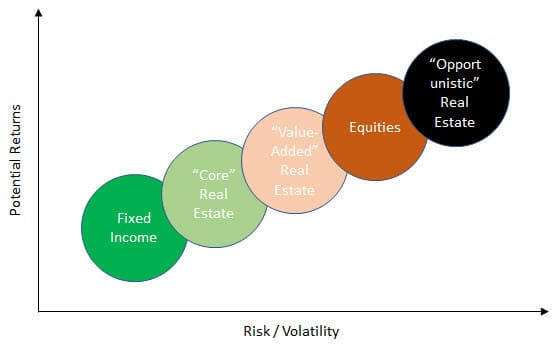
Transitioning from venture capital to real estate private equity is a significant career decision that requires careful consideration of your goals, skills, and market dynamics. While venture capital thrives on high-risk, high-reward investments in startups, real estate private equity focuses on tangible assets, cash flow, and long-term value creation. This shift can offer stability, diversification, and exposure to a different investment landscape. However, it also demands a new skill set and mindset. This article explores the pros and cons of such a move, helping you evaluate whether real estate private equity aligns with your professional aspirations and financial objectives.
-
Should I Quit Venture Capital to Join Real Estate Private Equity?
- 1. What Are the Key Differences Between Venture Capital and Real Estate Private Equity?
- 2. What Are the Potential Career Growth Opportunities in Each Field?
- 3. How Do Compensation Structures Compare Between VC and REPE?
- 4. What Are the Risks and Rewards in Each Industry?
- 5. How Do Skill Sets and Daily Responsibilities Differ?
-
Can you go from venture capital to private equity?
- Understanding the Transition from Venture Capital to Private Equity
- Key Skills Needed to Move from Venture Capital to Private Equity
- Challenges of Transitioning from Venture Capital to Private Equity
- Steps to Transition from Venture Capital to Private Equity
- How Venture Capital Experience Benefits Private Equity Roles
- Should I work in private equity or venture capital?
- Is real estate private equity worth it?
- What is the dark side of private equity?
-
Frequently Asked Questions (FAQs)
- What are the key differences between Venture Capital and Real Estate Private Equity?
- What factors should I consider before transitioning from Venture Capital to Real Estate Private Equity?
- How does the compensation structure compare between Venture Capital and Real Estate Private Equity?
- What are the long-term career prospects in Real Estate Private Equity compared to Venture Capital?
Should I Quit Venture Capital to Join Real Estate Private Equity?
1. What Are the Key Differences Between Venture Capital and Real Estate Private Equity?
Venture Capital (VC) and Real Estate Private Equity (REPE) are both investment fields, but they differ significantly in focus and strategy. Venture Capital primarily invests in early-stage or high-growth companies, often in technology or innovative sectors, aiming for high returns through equity stakes. On the other hand, Real Estate Private Equity focuses on acquiring, developing, or managing real estate assets, such as commercial properties, residential complexes, or land. The risk profiles, investment horizons, and required skill sets also vary. VC is more about scaling businesses, while REPE revolves around asset management and market trends.
See Also Which Venture Capital Firm Invests in Real Estate Space?
2. What Are the Potential Career Growth Opportunities in Each Field?
In Venture Capital, career growth often involves moving from an analyst or associate role to a partner position, where you can influence investment decisions and fund strategies. The field rewards networking, industry expertise, and deal-making skills. In Real Estate Private Equity, career progression might lead to roles like asset manager, portfolio manager, or fund manager, with a focus on property valuation, market analysis, and financial modeling. Both fields offer lucrative opportunities, but the paths and required expertise differ.
3. How Do Compensation Structures Compare Between VC and REPE?
Compensation in both fields typically includes a base salary, bonuses, and carried interest (a share of the profits). However, the structures differ. In Venture Capital, compensation is often tied to the success of portfolio companies and exits (e.g., IPOs or acquisitions). In Real Estate Private Equity, earnings are more closely linked to the performance of real estate assets and funds. Below is a comparison table:
See Also What Degree is Most Useful to Get Into Venture Capital or Investment Banking
| Aspect | Venture Capital | Real Estate Private Equity |
|---|---|---|
| Base Salary | $100,000 - $150,000 | $120,000 - $180,000 |
| Bonus Potential | High (based on exits) | Moderate (based on fund performance) |
| Carried Interest | 10-20% of fund profits | 10-15% of fund profits |
4. What Are the Risks and Rewards in Each Industry?
Venture Capital is inherently high-risk due to the uncertainty of startup success. However, the rewards can be substantial if a portfolio company achieves a significant exit. In contrast, Real Estate Private Equity offers more predictable cash flows and lower volatility, as real estate assets tend to appreciate over time. However, REPE is sensitive to economic cycles, interest rates, and market demand. Both fields require a strong understanding of risk management but in different contexts.
5. How Do Skill Sets and Daily Responsibilities Differ?
In Venture Capital, professionals spend much of their time evaluating startups, conducting due diligence, and networking with entrepreneurs. Skills like financial modeling, market analysis, and pitching are crucial. In Real Estate Private Equity, the focus shifts to property valuation, leasing strategies, and construction management. Daily responsibilities might include analyzing market trends, negotiating property deals, and overseeing asset performance. The table below highlights key differences:
See Also Was the Moon Landing Actually a Waste of Money?
| Skill/Responsibility | Venture Capital | Real Estate Private Equity |
|---|---|---|
| Primary Focus | Startups and innovation | Real estate assets |
| Key Skills | Deal sourcing, pitching, scaling businesses | Property valuation, market analysis, asset management |
| Daily Tasks | Meeting founders, evaluating pitches, portfolio management | Analyzing property deals, managing assets, financial modeling |
Can you go from venture capital to private equity?
Understanding the Transition from Venture Capital to Private Equity
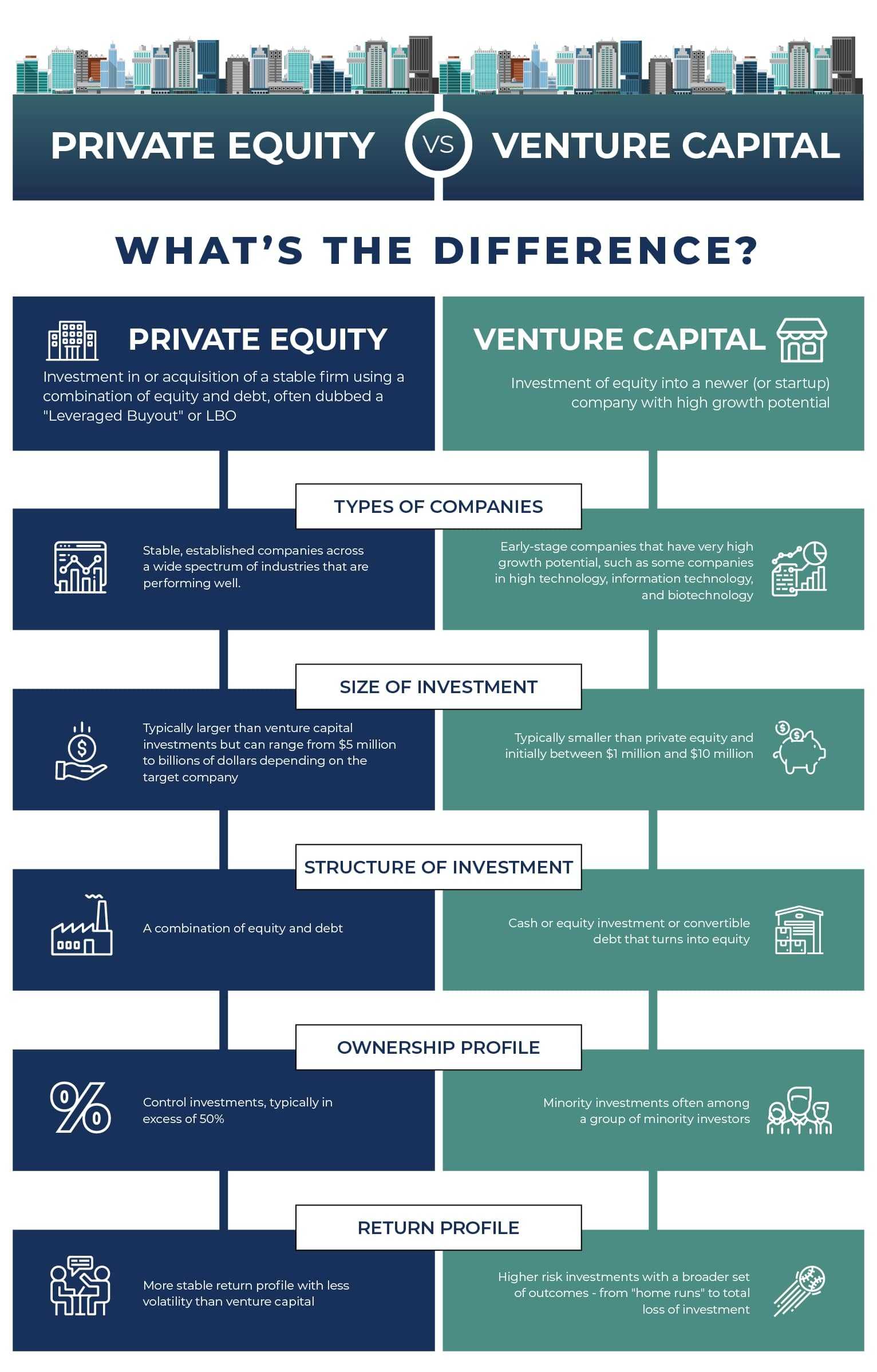
Transitioning from venture capital (VC) to private equity (PE) is possible, but it requires a clear understanding of the differences between the two fields. While both involve investing in companies, VC focuses on early-stage startups with high growth potential, whereas PE typically deals with more mature companies. To make this shift, professionals need to adapt their skills and knowledge to align with the demands of private equity.
See Also Which Venture Capitalists Tend to Like Investing in Music Related Startups
- Skill Adaptation: VC professionals must refine their expertise in financial modeling, due diligence, and operational improvements, which are more critical in PE.
- Networking: Building relationships with PE firms and understanding their investment strategies is essential for a successful transition.
- Mindset Shift: Moving from high-risk, high-reward VC investments to more stable, cash-flow-focused PE deals requires a change in perspective.
Key Skills Needed to Move from Venture Capital to Private Equity
To successfully transition from venture capital to private equity, certain skills are crucial. These skills bridge the gap between the two industries and ensure a smooth career shift.
- Financial Acumen: PE deals often involve complex financial structures, requiring strong analytical and valuation skills.
- Operational Expertise: Unlike VC, PE firms often take an active role in managing portfolio companies, so operational knowledge is vital.
- Deal Structuring: Understanding leveraged buyouts (LBOs) and other PE-specific deal structures is essential.
Challenges of Transitioning from Venture Capital to Private Equity
While the transition is feasible, it comes with its own set of challenges. These obstacles can make the shift from venture capital to private equity more complex than it initially appears.
See Also Can Startups Raise Capital From Both Vcs and Crowdfunding?
- Cultural Differences: PE firms often have a more conservative and structured approach compared to the fast-paced, risk-tolerant VC environment.
- Deal Size and Complexity: PE deals are typically larger and involve more intricate negotiations and due diligence processes.
- Expectation Mismatch: PE firms may expect candidates to have prior experience in managing mature companies, which VC professionals might lack.
Steps to Transition from Venture Capital to Private Equity
Making the move from venture capital to private equity requires a strategic approach. Following these steps can help professionals navigate the transition effectively.
- Upskill: Take courses or certifications in areas like financial modeling, LBOs, and corporate finance to bridge knowledge gaps.
- Leverage Networks: Use existing connections in the investment community to explore opportunities in PE firms.
- Target Smaller PE Firms: Starting with mid-market or smaller PE firms can provide a smoother entry point due to their relatively less stringent requirements.
How Venture Capital Experience Benefits Private Equity Roles
Despite the differences, experience in venture capital can be highly valuable when transitioning to private equity. This background provides unique advantages that can set candidates apart.
- Deal Sourcing: VC professionals often have strong networks in the startup ecosystem, which can be useful for sourcing deals in PE.
- Growth Mindset: The ability to identify high-growth opportunities is a transferable skill that PE firms value.
- Innovation Insight: Exposure to cutting-edge technologies and business models in VC can provide a competitive edge in PE investments.
Should I work in private equity or venture capital?
Understanding the Core Differences Between Private Equity and Venture Capital
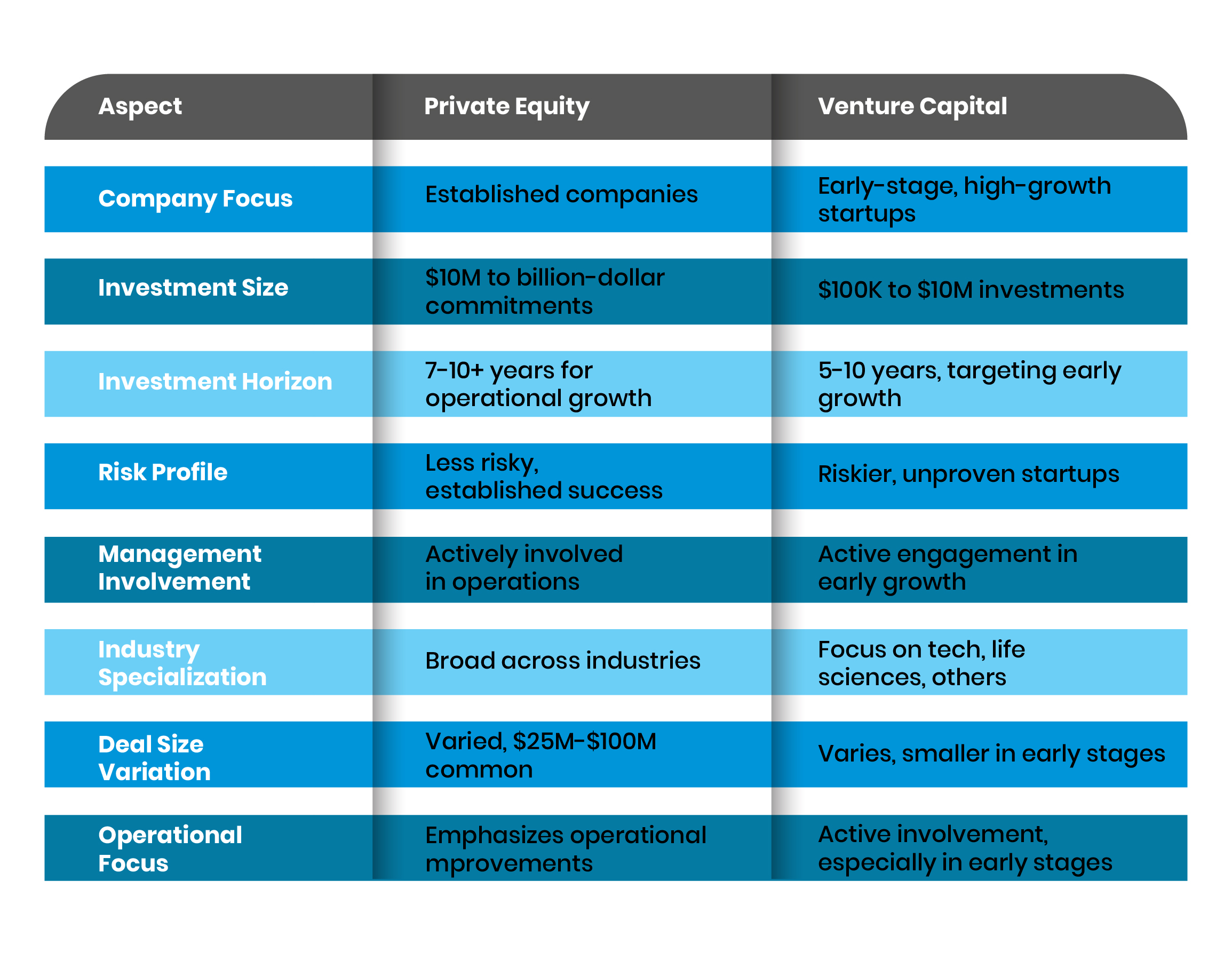
Private equity (PE) and venture capital (VC) are both investment strategies, but they differ significantly in their focus and approach. Here are the key distinctions:
- Investment Stage: Private equity typically invests in mature companies, while venture capital focuses on early-stage or startup companies.
- Risk Level: VC investments are generally riskier due to the unproven nature of startups, whereas PE deals involve more established businesses with predictable cash flows.
- Investment Size: PE deals often involve larger sums of money compared to VC investments, which are usually smaller but more numerous.
Assessing Your Career Goals and Interests
Choosing between private equity and venture capital depends on your personal career aspirations and interests. Consider the following:
- Industry Preference: If you are passionate about technology and innovation, venture capital might be more appealing. If you prefer working with established industries, private equity could be a better fit.
- Risk Tolerance: Are you comfortable with high-risk, high-reward scenarios? Venture capital often involves more uncertainty compared to the relatively stable environment of private equity.
- Career Growth: Private equity often offers a more structured career path, while venture capital can provide faster growth opportunities if you succeed in identifying promising startups.
Evaluating the Skill Sets Required
Both private equity and venture capital require specific skill sets, but there are notable differences:
- Analytical Skills: PE professionals need strong financial modeling and valuation skills, while VC professionals require a keen eye for market trends and potential.
- Networking: VC roles often demand extensive networking to source deals and connect with entrepreneurs, whereas PE roles may focus more on due diligence and operational improvements.
- Entrepreneurial Mindset: Venture capital often values an entrepreneurial spirit, as you’ll be working closely with startups. Private equity may prioritize operational expertise and strategic thinking.
Considering the Work Environment and Culture
The work environment in private equity and venture capital can vary significantly:
- Work Hours: Both fields are demanding, but venture capital can involve more irregular hours due to the fast-paced nature of startups.
- Team Dynamics: PE firms often have larger teams and more hierarchical structures, while VC firms tend to be smaller and more collaborative.
- Deal Flow: In venture capital, you may work on multiple smaller deals simultaneously, whereas private equity typically involves fewer, larger deals with longer timelines.
Analyzing Compensation and Long-Term Prospects
Compensation and career prospects are important factors to consider when choosing between private equity and venture capital:
- Base Salary: Private equity roles often offer higher base salaries compared to venture capital, where compensation may be more variable.
- Carried Interest: Both fields offer carried interest, but the potential upside in venture capital can be significant if you invest in a successful startup.
- Long-Term Growth: Private equity may provide more stable long-term growth, while venture capital offers the potential for exponential returns if you back a unicorn company.
Is real estate private equity worth it?
What is Real Estate Private Equity?
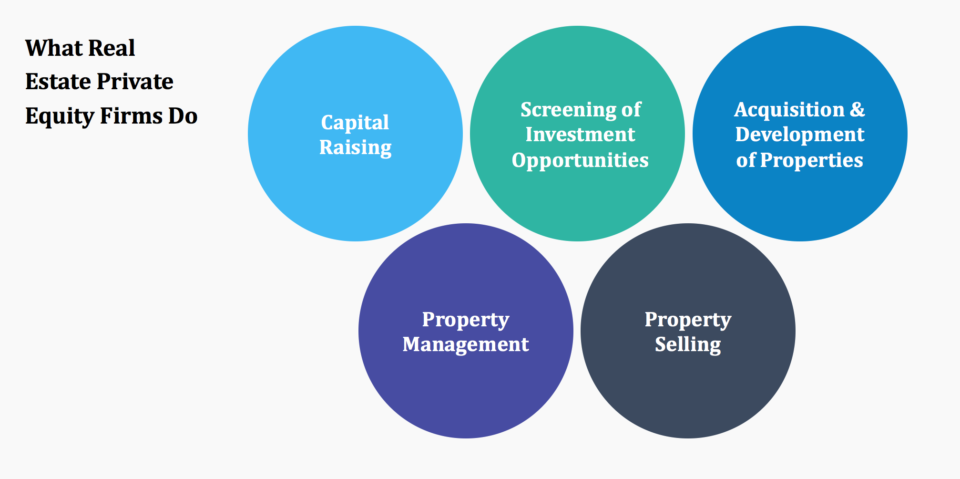
Real estate private equity (REPE) refers to a type of investment fund that pools capital from institutional and accredited investors to acquire, develop, or manage real estate assets. These funds are typically managed by professional firms that specialize in real estate investments. The goal is to generate high returns through strategic property acquisitions, value-add improvements, and timely exits.
- Capital Pooling: Investors contribute funds to a collective pool managed by a private equity firm.
- Diverse Assets: Investments can include residential, commercial, industrial, or mixed-use properties.
- Active Management: REPE firms actively manage properties to enhance their value before selling or refinancing.
What Are the Potential Returns in Real Estate Private Equity?
Real estate private equity can offer attractive returns, often outperforming traditional real estate investments. However, these returns come with higher risks and longer investment horizons. The performance of REPE funds depends on market conditions, the expertise of the management team, and the specific strategies employed.
- High Returns: REPE funds aim for annualized returns of 15-20% or more.
- Risk Factors: Market volatility, economic downturns, and poor management can impact returns.
- Long-Term Horizon: Investments typically require a holding period of 5-10 years.
What Are the Risks Associated with Real Estate Private Equity?
While real estate private equity can be lucrative, it is not without risks. Investors must be prepared for potential challenges, including market fluctuations, illiquidity, and operational complexities. Understanding these risks is crucial before committing capital.
- Market Risk: Real estate markets can be cyclical, affecting property values and rental income.
- Illiquidity: REPE investments are not easily liquidated, requiring a long-term commitment.
- Operational Risks: Poor property management or unforeseen expenses can erode returns.
Who Should Invest in Real Estate Private Equity?
Real estate private equity is best suited for sophisticated investors who can tolerate higher risks and have a long-term investment horizon. Accredited investors, institutional investors, and high-net-worth individuals are the primary participants in this asset class.
- Accredited Investors: Individuals or entities meeting specific income or net worth criteria.
- Institutional Investors: Pension funds, endowments, and insurance companies often allocate capital to REPE.
- High-Net-Worth Individuals: Those with significant capital to invest and a higher risk tolerance.
How Does Real Estate Private Equity Compare to Other Investments?
Real estate private equity differs from traditional real estate investments, such as REITs or direct property ownership, in terms of structure, risk, and potential returns. Understanding these differences can help investors make informed decisions.
- Higher Returns: REPE often outperforms REITs and direct property investments due to active management.
- Greater Risk: The illiquid nature and higher leverage used in REPE increase risk compared to REITs.
- Active Involvement: REPE requires more hands-on management compared to passive investments like REITs.
What is the dark side of private equity?

1. Job Losses and Workforce Reduction
One of the most criticized aspects of private equity is the tendency to cut jobs to improve profitability. Private equity firms often acquire companies with the goal of restructuring them, which frequently involves reducing the workforce. This can lead to:
- Mass layoffs to cut operational costs.
- Replacement of experienced employees with cheaper labor.
- Increased pressure on remaining employees, leading to burnout.
2. Excessive Debt Loads
Private equity firms often use significant amounts of debt to finance their acquisitions, a practice known as leveraged buyouts. This can burden the acquired companies with heavy debt, leading to:
- Financial instability for the acquired company.
- Reduced ability to invest in growth or innovation.
- Increased risk of bankruptcy if the company cannot service its debt.
3. Short-Term Focus Over Long-Term Growth
Private equity firms typically aim for quick returns on their investments, which can result in a focus on short-term gains rather than sustainable growth. This often leads to:
- Neglect of long-term strategies that could benefit the company in the future.
- Cost-cutting measures that may harm the company's long-term prospects.
- Pressure to sell the company or go public within a few years, regardless of market conditions.
4. Lack of Transparency
Private equity firms are known for their lack of transparency, which can create issues for stakeholders, including employees, customers, and even regulators. Key concerns include:
- Limited disclosure of financial information and business practices.
- Difficulty in assessing the true health and performance of acquired companies.
- Potential for unethical practices to go unnoticed due to the opaque nature of operations.
5. Impact on Communities and Local Economies
The actions of private equity firms can have far-reaching consequences for the communities where their acquired companies operate. Negative impacts may include:
- Closure of local businesses that are deemed unprofitable.
- Reduced economic activity in areas where layoffs or business closures occur.
- Loss of community services and support that were previously provided by the acquired companies.
Frequently Asked Questions (FAQs)
What are the key differences between Venture Capital and Real Estate Private Equity?
Venture Capital (VC) and Real Estate Private Equity (REPE) are distinct investment fields with unique characteristics. Venture Capital focuses on investing in early-stage or high-growth companies, often in technology or innovative sectors, with the goal of achieving high returns through equity appreciation. In contrast, Real Estate Private Equity involves investing in physical properties or real estate projects, such as commercial buildings, residential developments, or infrastructure. REPE typically generates returns through rental income, property appreciation, and strategic exits like sales or refinancing. The risk profiles also differ: VC investments are often high-risk, high-reward, while REPE tends to offer more stable, predictable cash flows with lower volatility.
What factors should I consider before transitioning from Venture Capital to Real Estate Private Equity?
Transitioning from Venture Capital to Real Estate Private Equity requires careful consideration of several factors. First, assess your skill set and whether it aligns with the demands of REPE, such as financial modeling, property valuation, and market analysis. Second, evaluate your risk tolerance and career goals. If you prefer working with tangible assets and steady cash flows, REPE might be a better fit. Third, consider the industry dynamics: REPE often involves longer investment horizons and more hands-on asset management compared to VC. Lastly, research the market opportunities and growth potential in both fields to determine where your expertise and interests align best.
How does the compensation structure compare between Venture Capital and Real Estate Private Equity?
The compensation structure in Venture Capital and Real Estate Private Equity can vary significantly. In VC, compensation typically includes a base salary, bonuses, and carried interest (a share of the profits from successful investments). The carried interest in VC can be substantial if the fund performs well, but it often takes years to materialize. In REPE, compensation also includes a base salary and bonuses, but the carried interest is tied to the performance of real estate assets, which may offer more predictable returns. Additionally, REPE professionals may benefit from fee income generated through property management or development activities. Overall, both fields offer lucrative opportunities, but the timing and structure of rewards differ.
What are the long-term career prospects in Real Estate Private Equity compared to Venture Capital?
The long-term career prospects in Real Estate Private Equity and Venture Capital depend on your interests and the evolving market landscape. In REPE, career growth often involves progressing from analyst roles to senior positions like asset manager, fund manager, or partner. The industry offers opportunities to specialize in specific property types (e.g., residential, commercial, or industrial) or geographic markets. In VC, career progression typically involves moving from associate to principal or partner roles, with a focus on sourcing and managing high-growth startups. While VC offers the potential for significant financial rewards through successful exits, REPE provides more stability and opportunities to build expertise in a tangible asset class. Both fields offer strong career trajectories, but your choice should align with your professional aspirations and risk appetite.
Leave a Reply
Our Recommended Articles