
What's the Best Database to Find Venture Capital Deals?

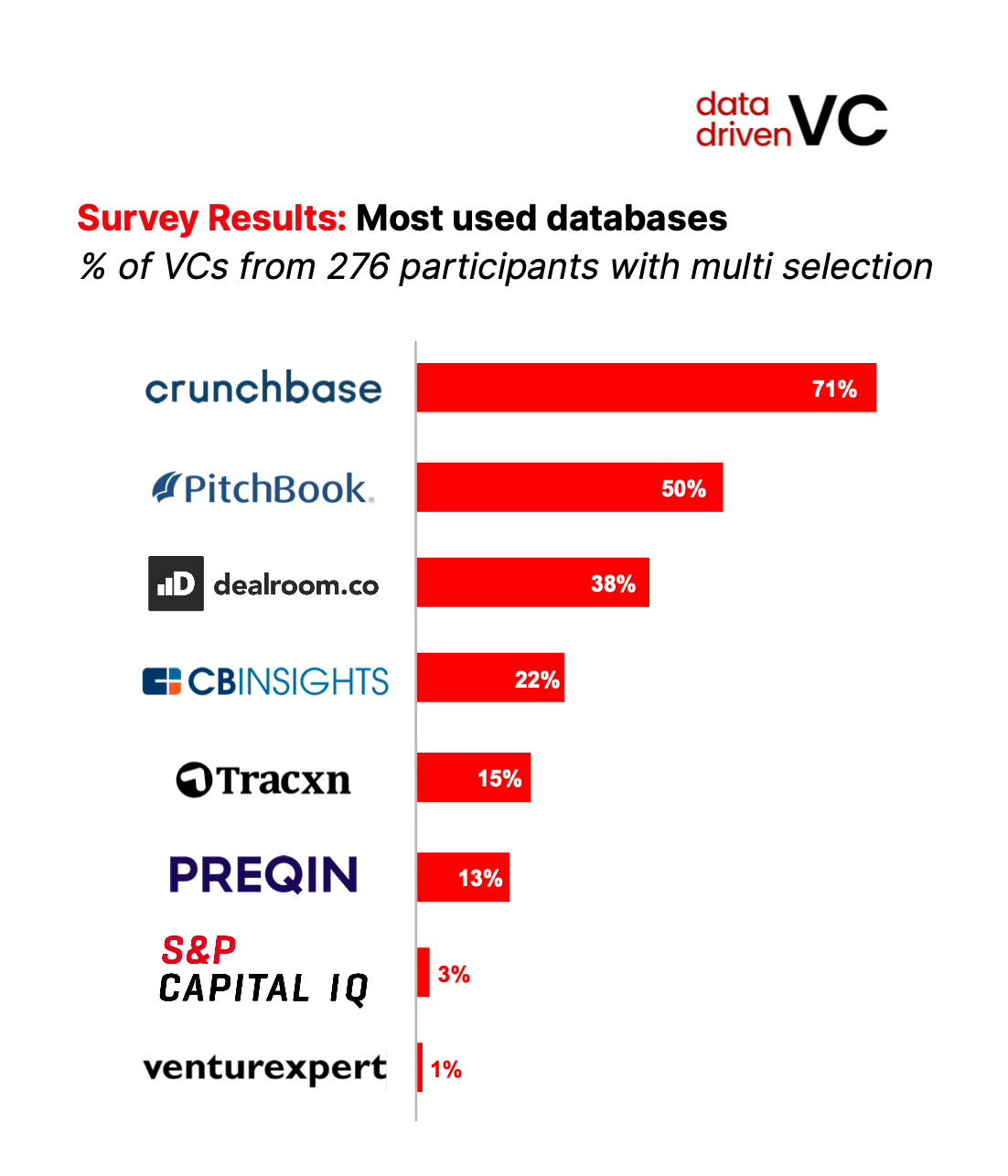
Finding the right database to identify venture capital deals can be a game-changer for entrepreneurs, investors, and startups. With countless platforms available, each offering unique features and data sets, determining the best option requires careful consideration. Factors such as the depth of investment data, ease of use, industry focus, and cost play a crucial role in making an informed decision. Whether you're seeking early-stage funding or tracking high-growth opportunities, the ideal database should align with your specific needs and goals. This article explores the top databases for venture capital deals, helping you navigate the options and choose the most effective tool for your investment strategy.
What's the Best Database to Find Venture Capital Deals?
When it comes to finding venture capital deals, having access to the right database can make all the difference. A good database not only provides comprehensive information on startups and investors but also offers tools to analyze trends, track funding rounds, and identify potential opportunities. Below, we explore the key aspects of choosing the best database for venture capital deals, along with detailed insights into the top options available.
See Also What is the Best Crm for Venture/seed Capital Firms to Manage Deal Flow
1. Key Features to Look for in a Venture Capital Database
A reliable venture capital database should offer a range of features to help users make informed decisions. Look for databases that provide real-time data, comprehensive investor profiles, startup funding history, and analytical tools. Additionally, user-friendly interfaces and customizable search filters are essential for efficient navigation. Some databases also offer market trend analysis and deal flow tracking, which can be invaluable for investors and entrepreneurs alike.
2. Top Venture Capital Databases in the Market
Several databases stand out in the venture capital space due to their extensive coverage and advanced features. Some of the most popular options include Crunchbase, PitchBook, CB Insights, AngelList, and Dealroom. Each of these platforms offers unique strengths, such as Crunchbase's vast startup directory or PitchBook's in-depth private market data. Choosing the right one depends on your specific needs, such as deal sourcing, market research, or competitive analysis.
See AlsoWhat Are the Best Web Platforms for Venture Capitalists Private Equity Professionals Investment Bankers and Angel Investors for Seeking Deal Investment3. How to Evaluate the Accuracy of a Venture Capital Database
Accuracy is critical when selecting a venture capital database. To evaluate a database's reliability, consider factors like data sources, update frequency, and user reviews. Databases that pull information from primary sources (e.g., regulatory filings, press releases) tend to be more accurate. Additionally, platforms that update their data daily or weekly are preferable. User feedback can also provide insights into the database's consistency and error rates.
4. Pricing Models of Venture Capital Databases
Venture capital databases typically offer various pricing tiers based on the features and level of access required. Some platforms provide free basic plans with limited functionality, while others charge subscription fees ranging from $50 to $1,000+ per month. Enterprise-level plans often include advanced analytics, API access, and dedicated support. It's important to assess whether the cost aligns with the value provided, especially if you're a small investor or early-stage startup.
See Also What Are the Best Mba Programs to Learn About Venture Capital
5. How to Use a Venture Capital Database for Deal Sourcing
Deal sourcing is one of the primary uses of a venture capital database. To maximize its potential, start by defining your investment criteria, such as industry focus, geographic location, and funding stage. Use the database's search filters to narrow down potential opportunities. Additionally, leverage analytical tools to assess a startup's growth potential and competitive landscape. Regularly monitoring funding rounds and investor activity can also help you stay ahead of emerging trends.
| Database | Key Features | Pricing |
|---|---|---|
| Crunchbase | Startup directory, funding history, investor profiles | $49 - $999/month |
| PitchBook | Private market data, M&A insights, valuation tools | $600 - $1,500/month |
| CB Insights | Market trends, tech scouting, predictive analytics | $500 - $1,200/month |
| AngelList | Startup job board, syndicate investments, fundraising tools | Free - $500/month |
| Dealroom | European startup data, ecosystem mapping, deal flow tracking | $200 - $800/month |
How do venture capital firms find deals?
.png)
 Why Should I Choose Equity Crowdfunding Instead of Venture Capital
Networking and Referrals
Venture capital firms often rely on their extensive networks to find promising deals. These networks include entrepreneurs, other investors, and industry experts who can refer potential investment opportunities. Building and maintaining these relationships is crucial for deal flow.
- Entrepreneurs: Founders who have previously worked with the VC firm may refer new startups.
- Other Investors: Co-investors or angel investors often share deals that align with the VC's investment thesis.
- Industry Experts: Advisors or consultants in specific sectors can provide insights into emerging companies.
Cold Outreach and Proactive Sourcing
Some venture capital firms take a proactive approach by reaching out directly to startups that fit their investment criteria. This method involves identifying high-potential companies through research and initiating contact.
See Also What Are Alternatives to Venture Capital?
- Market Research: Analyzing industry trends to identify growing sectors and companies.
- Startup Databases: Using platforms like Crunchbase or PitchBook to find startups.
- Direct Outreach: Contacting founders via email or LinkedIn to express interest.
Accelerators and Incubators
Venture capital firms frequently collaborate with accelerators and incubators to access early-stage startups. These programs often culminate in demo days, where startups pitch to investors.
- Demo Days: Attending events where startups present their ideas to potential investors.
- Partnerships: Forming alliances with accelerators to gain early access to their cohorts.
- Mentorship: Providing guidance to startups in exchange for early investment opportunities.
Industry Events and Conferences
Attending industry events and conferences is another way venture capital firms discover deals. These gatherings provide opportunities to meet founders and learn about new innovations.
- Tech Conferences: Events like TechCrunch Disrupt or Web Summit attract startups and investors.
- Networking Sessions: Informal meetings during conferences can lead to deal discussions.
- Panel Participation: VCs often speak at events, increasing their visibility to startups.
Online Platforms and Deal Flow Tools
Many venture capital firms use online platforms and specialized deal flow tools to streamline the process of finding and evaluating startups.
- Deal Flow Platforms: Tools like AngelList or Gust help VCs discover and track startups.
- Data Analytics: Leveraging data to identify startups with high growth potential.
- Automated Alerts: Setting up notifications for new startups that meet specific criteria.
What is the best database for startups?
What Factors Should Startups Consider When Choosing a Database?
When selecting a database, startups should evaluate several key factors to ensure it aligns with their needs:
- Scalability: The database should handle growth as the startup expands.
- Cost: Startups often have limited budgets, so cost-effectiveness is crucial.
- Ease of Use: A user-friendly database reduces the learning curve for developers.
- Community Support: A strong community can provide valuable resources and troubleshooting.
- Integration: The database should integrate seamlessly with existing tools and technologies.
What Are the Most Popular Databases for Startups?
Several databases are widely favored by startups due to their flexibility and performance:
- PostgreSQL: Known for its reliability and advanced features.
- MySQL: A cost-effective and widely-used relational database.
- MongoDB: Ideal for startups needing a NoSQL solution for unstructured data.
- Firebase: A real-time database that simplifies backend development.
- SQLite: A lightweight option for smaller projects or prototypes.
Why is PostgreSQL a Strong Choice for Startups?
PostgreSQL is a robust option for startups due to its versatility and advanced capabilities:
- Open Source: It is free to use, reducing initial costs.
- Extensibility: Supports custom functions and extensions.
- ACID Compliance: Ensures data integrity and reliability.
- Scalability: Handles large datasets and high traffic efficiently.
- Community: A large, active community provides support and resources.
When Should Startups Consider NoSQL Databases?
NoSQL databases are suitable for startups with specific data requirements:
- Unstructured Data: Ideal for handling JSON, XML, or other non-tabular data.
- Real-Time Applications: NoSQL databases like MongoDB excel in real-time data processing.
- High Scalability: They can scale horizontally to accommodate growing data needs.
- Flexibility: Schema-less designs allow for rapid iteration and changes.
- Performance: Optimized for high-speed read/write operations.
How Does Firebase Benefit Startups?
Firebase offers unique advantages for startups, particularly in app development:
- Real-Time Database: Enables instant data synchronization across devices.
- Backend as a Service (BaaS): Reduces the need for backend infrastructure.
- Authentication: Simplifies user authentication with built-in solutions.
- Analytics: Provides insights into user behavior and app performance.
- Hosting: Offers secure and scalable hosting for web applications.
What is the 2 6 2 rule of venture capital?
Understanding the 2 6 2 Rule in Venture Capital
The 2 6 2 rule is a framework used in venture capital to evaluate the potential success of a startup portfolio. It suggests that out of every 10 investments:
- 2 investments will yield significant returns, often referred to as home runs.
- 6 investments will either break even or result in moderate returns.
- 2 investments will fail entirely, resulting in a total loss.
Why the 2 6 2 Rule Matters for Investors
This rule highlights the inherent risk and reward nature of venture capital. Investors rely on the high returns from the 2 successful investments to offset the losses from the 2 failures and the mediocre performance of the 6 others. Key reasons it matters include:
- It helps investors manage expectations about portfolio performance.
- It emphasizes the importance of diversification in venture capital.
- It underscores the need for due diligence to identify potential high performers.
How the 2 6 2 Rule Impacts Startup Funding
For startups, the 2 6 2 rule means that securing venture capital is highly competitive. Investors are looking for startups with the potential to become one of the 2 high-performing investments. This impacts startups in the following ways:
- Startups must demonstrate scalability and a clear path to profitability.
- They need to present a compelling value proposition to stand out.
- Founders should be prepared for rigorous evaluation by investors.
Applying the 2 6 2 Rule to Portfolio Management
Venture capitalists use the 2 6 2 rule to guide their portfolio management strategies. This involves:
- Focusing on high-growth sectors to increase the chances of finding home runs.
- Balancing investments across early-stage and late-stage startups.
- Continuously monitoring and supporting portfolio companies to maximize returns.
Limitations of the 2 6 2 Rule in Venture Capital
While the 2 6 2 rule provides a useful framework, it has its limitations. These include:
- It assumes a fixed distribution of outcomes, which may not always hold true.
- It doesn't account for market fluctuations or external economic factors.
- It may lead to overemphasis on finding home runs, potentially neglecting other viable opportunities.
What is the 10x rule for venture capital?

Understanding the 10x Rule in Venture Capital
The 10x rule in venture capital refers to the expectation that a startup should have the potential to return at least 10 times the initial investment to the venture capital firm. This rule is based on the high-risk nature of venture capital investments, where many startups fail, and only a few achieve significant success. To compensate for the high failure rate, venture capitalists seek investments that can deliver outsized returns.
- High-risk, high-reward: Venture capitalists invest in startups with the understanding that most will fail, but a few will succeed massively.
- Portfolio strategy: By investing in multiple startups, venture capitalists spread their risk and increase the chances of hitting a 10x return on at least one investment.
- Focus on scalability: Startups with the potential to scale rapidly and dominate large markets are more likely to achieve 10x returns.
Why the 10x Rule is Critical for Venture Capitalists
The 10x rule is critical for venture capitalists because it ensures that the overall portfolio generates sufficient returns despite the high failure rate of individual investments. Without the possibility of achieving 10x returns, venture capital as an asset class would not be viable.
- Compensates for losses: The 10x return from successful investments offsets the losses from failed ones.
- Attracts limited partners: High potential returns make venture capital an attractive investment for limited partners, such as pension funds and endowments.
- Drives innovation: The pursuit of 10x returns encourages venture capitalists to fund innovative and disruptive startups.
How Startups Can Position Themselves for 10x Returns
Startups aiming to attract venture capital must demonstrate the potential for 10x returns by showcasing a combination of a large addressable market, a scalable business model, and a strong competitive advantage.
- Large market opportunity: Startups must target markets with significant growth potential to justify the 10x return expectation.
- Scalable business model: The business should be able to grow rapidly without proportional increases in costs.
- Strong team: A capable and experienced team increases the likelihood of executing the vision and achieving 10x returns.
Challenges in Achieving the 10x Rule
While the 10x rule is a guiding principle, achieving it is challenging due to market uncertainties, competition, and execution risks.
- Market risks: Changes in market conditions can derail even the most promising startups.
- Execution risks: Poor execution can prevent a startup from realizing its full potential.
- Competition: Intense competition can limit a startup's ability to capture market share and achieve 10x returns.
Examples of Startups That Achieved 10x Returns
Several well-known startups have achieved 10x returns for their venture capital investors, demonstrating the potential of the 10x rule.
- Facebook: Early investors in Facebook saw returns far exceeding 10x as the company grew into a global social media giant.
- Uber: Uber's rapid expansion and dominance in the ride-hailing market delivered massive returns for its early backers.
- Airbnb: Airbnb's innovative business model and global reach resulted in significant returns for its venture capital investors.
Frequently Asked Questions (FAQs)
What are the most popular databases for finding venture capital deals?
There are several popular databases that investors and entrepreneurs use to find venture capital deals. Some of the most widely recognized platforms include Crunchbase, PitchBook, and CB Insights. These platforms provide comprehensive data on startups, funding rounds, and investor activity. Crunchbase, for example, is known for its user-friendly interface and extensive database of companies. PitchBook, on the other hand, is favored for its in-depth financial analysis and private market data. CB Insights offers a mix of data and analytics, making it a valuable tool for identifying emerging trends and investment opportunities.
How do I choose the best database for my needs?
Choosing the best database depends on your specific needs and goals. If you are looking for real-time updates and a broad overview of the startup ecosystem, Crunchbase might be the best option. For those who require detailed financial data and advanced analytics, PitchBook could be more suitable. CB Insights is ideal for users who want to combine data with trend analysis and market insights. Consider factors such as the type of data you need, your budget, and the level of detail required when making your decision.
Yes, there are free alternatives to premium venture capital databases, although they may not offer the same level of detail or comprehensive data. Platforms like AngelList and Startup Grind provide access to startup and investor information without the high costs associated with premium databases. Additionally, some premium platforms offer free trials or limited access to their data, which can be useful for initial research. However, for in-depth analysis and access to exclusive data, investing in a premium database is often necessary.
What features should I look for in a venture capital database?
When selecting a venture capital database, look for features that align with your research and investment goals. Key features to consider include comprehensive data coverage, real-time updates, and advanced search capabilities. The ability to filter and sort data by industry, funding stage, and geographic location is also important. Additionally, consider whether the platform offers analytics and reporting tools that can help you identify trends and make informed decisions. User support and training resources are also valuable, especially if you are new to using such databases.
Leave a Reply
Our Recommended Articles