
What Are Alternatives to Venture Capital?


Venture capital (VC) has long been a popular funding option for startups and growing businesses, offering significant financial resources and strategic support. However, securing VC funding can be highly competitive, and it often comes with trade-offs such as equity dilution and loss of control. For entrepreneurs seeking alternative paths to fuel their ventures, a variety of options exist beyond traditional VC. From bootstrapping and crowdfunding to revenue-based financing and angel investors, these alternatives provide flexibility and align with different business models and goals. Exploring these options can help founders find the right funding strategy to grow their businesses while maintaining autonomy and financial stability.
- What Are Alternatives to Venture Capital?
- What is better than venture capital?
- What are alternative assets in venture capital?
- Is VC funding drying up?
-
Frequently Asked Questions (FAQs)
- What are some common alternatives to venture capital for startups?
- How does revenue-based financing work as an alternative to venture capital?
- Can startups use strategic partnerships as an alternative to venture capital?
- What role do accelerators and incubators play as alternatives to venture capital?
What Are Alternatives to Venture Capital?
Venture capital (VC) is a popular funding option for startups, but it’s not the only one. Many entrepreneurs seek alternatives to venture capital due to the high equity stakes, loss of control, and rigorous demands that come with VC funding. Fortunately, there are several other financing options available that can help businesses grow without relying on traditional venture capital. Below, we explore five key alternatives to venture capital.
See Also Why is It So Hard to Find an Angel Investor for My Startup?
1. Bootstrapping: Self-Funding Your Business
Bootstrapping involves funding your business using personal savings, revenue generated from the business, or contributions from friends and family. This approach allows entrepreneurs to maintain full control over their company and avoid diluting equity. While bootstrapping can be challenging, it encourages financial discipline and forces businesses to focus on profitability early on.
2. Angel Investors: Individual Backers with Expertise
Angel investors are affluent individuals who provide capital to startups in exchange for equity or convertible debt. Unlike venture capitalists, angel investors often bring valuable industry experience and mentorship to the table. They typically invest smaller amounts than VCs, making them a good option for early-stage startups.
See AlsoWhat Documents Do I Need When I Pitch Venture Capitalists or Angel Investors3. Crowdfunding: Raising Funds from the Public
Crowdfunding platforms like Kickstarter, Indiegogo, and GoFundMe allow businesses to raise small amounts of money from a large number of people. This method not only provides funding but also helps validate the market demand for a product or service. Rewards-based crowdfunding offers backers incentives, while equity crowdfunding allows investors to own a stake in the company.
4. Revenue-Based Financing: Flexible Repayment Terms
Revenue-based financing (RBF) is a funding model where investors provide capital in exchange for a percentage of the company’s future revenue until a predetermined amount is repaid. This option is ideal for businesses with consistent revenue streams but limited collateral. RBF allows companies to avoid giving up equity and offers flexible repayment terms tied to performance.
See Also What Motivates You to Work as a Venture Capitalist or an Angel Investor
5. Small Business Loans: Traditional Financing Options
Small business loans from banks, credit unions, or online lenders are a reliable alternative to venture capital. These loans provide a lump sum of money that must be repaid with interest over time. While they require a strong credit history and collateral, they allow businesses to retain full ownership and control.
| Alternative | Key Features | Best For |
|---|---|---|
| Bootstrapping | Self-funding, no equity loss | Early-stage startups |
| Angel Investors | Individual backers, mentorship | Early-stage startups |
| Crowdfunding | Public funding, market validation | Product-based businesses |
| Revenue-Based Financing | Flexible repayment, no equity loss | Revenue-generating businesses |
| Small Business Loans | Lump sum, interest repayment | Established businesses |
What is better than venture capital?
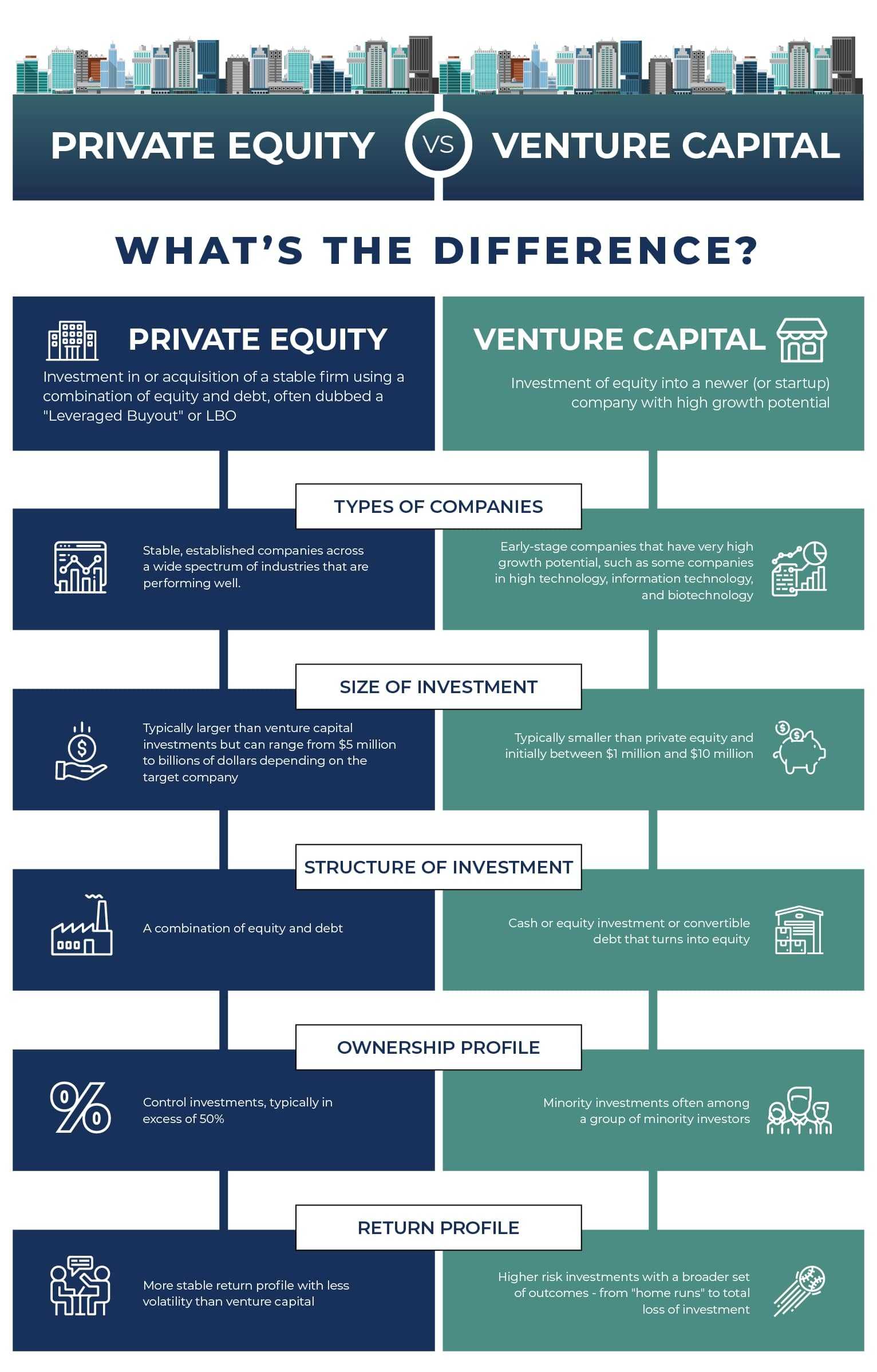
 What is Equity Financing and What Are Its Major Sources?
Bootstrapping: Building a Business Without External Funding
Bootstrapping is a method where entrepreneurs start and grow their businesses using personal savings or revenue generated by the business itself. This approach offers several advantages:
- Full Control: Entrepreneurs retain complete ownership and decision-making power without external interference.
- No Debt or Equity Loss: Avoiding venture capital means no dilution of equity or repayment obligations.
- Focus on Profitability: Bootstrapping forces businesses to prioritize sustainable growth and profitability from the start.
Angel Investors: A More Personalized Funding Option
Angel investors are individuals who provide capital to startups in exchange for equity or convertible debt. This option can be better than venture capital for several reasons:
See Also Do Vcs Fund Nonprofits if Not How Else Could They Get Funded From Private Investors
- Flexible Terms: Angel investors often offer more flexible and founder-friendly terms compared to venture capital firms.
- Mentorship and Expertise: Many angel investors bring valuable industry experience and connections to the table.
- Lower Pressure: Unlike venture capitalists, angel investors may not demand rapid scaling or aggressive growth targets.
Crowdfunding: Engaging the Community for Support
Crowdfunding allows businesses to raise funds from a large number of people, often through online platforms. This method has distinct benefits:
- Market Validation: A successful crowdfunding campaign can demonstrate market demand for a product or service.
- No Equity Loss: Depending on the model, businesses can raise funds without giving up ownership stakes.
- Community Building: Crowdfunding helps create a loyal customer base and brand advocates.
Revenue-Based Financing: Aligning Repayments with Income
Revenue-based financing (RBF) is a funding model where investors provide capital in exchange for a percentage of future revenue. This approach has unique advantages:
- Flexible Repayments: Repayments are tied to revenue, making it easier to manage during slower business periods.
- No Equity Dilution: Entrepreneurs maintain full ownership of their business.
- Scalable Funding: As revenue grows, the amount repaid increases, aligning investor and business interests.
Grants and Government Programs: Non-Dilutive Funding Sources
Grants and government programs provide funding without requiring repayment or equity. These options are particularly beneficial for certain types of businesses:
- Non-Dilutive: Grants do not require giving up equity or taking on debt.
- Support for Innovation: Many grants are aimed at supporting research, development, and innovation.
- Access to Resources: Government programs often come with additional resources, such as mentorship or networking opportunities.
What are alternative assets in venture capital?
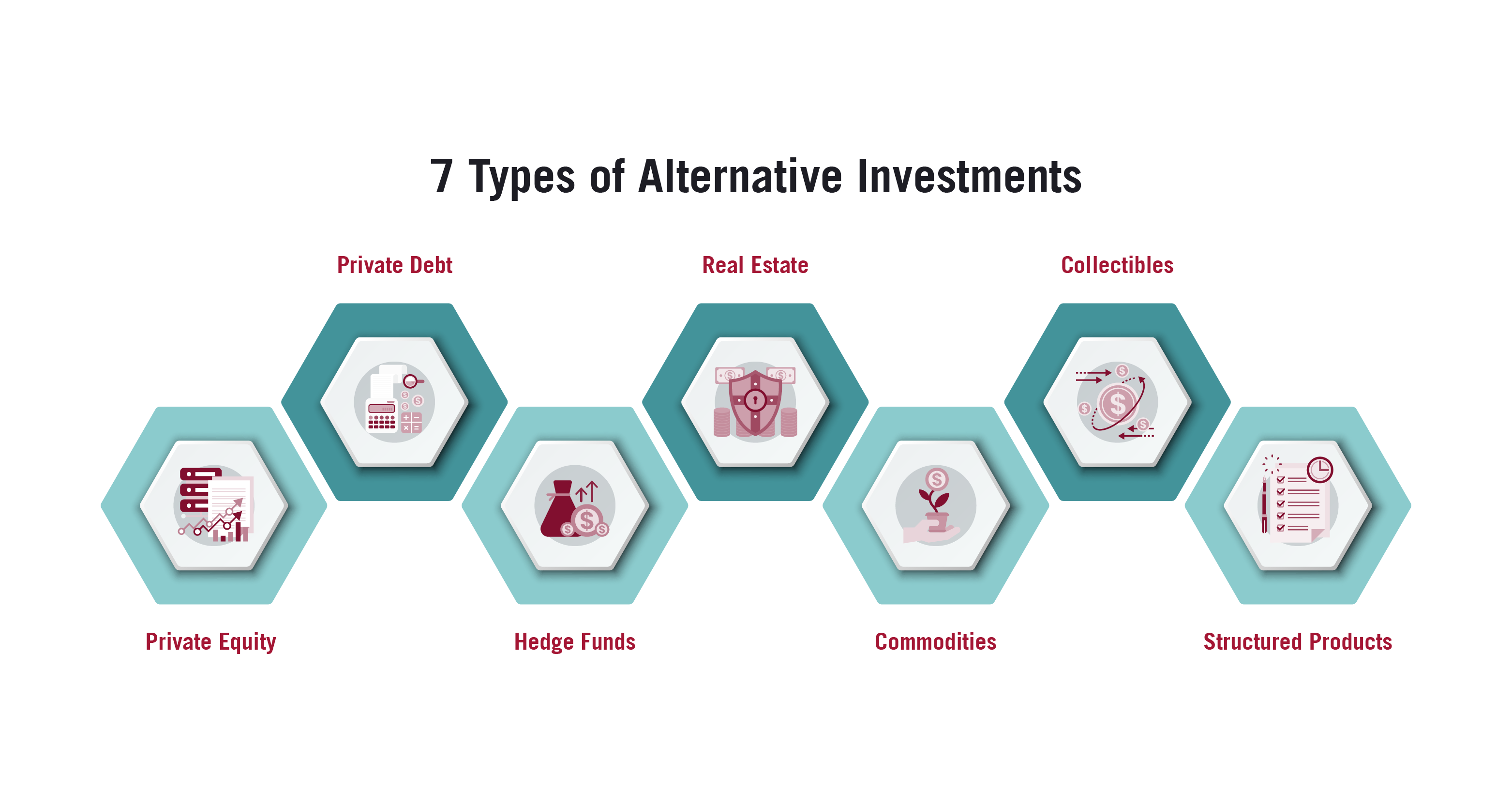
What Are Alternative Assets in Venture Capital?
Alternative assets in venture capital refer to investments that fall outside the traditional categories of stocks, bonds, and cash. These assets are typically less liquid and often involve higher risk but can offer higher returns. They are used by investors to diversify their portfolios and gain exposure to innovative and high-growth opportunities.
- Private Equity: Investments in private companies or buyouts of public companies to take them private.
- Real Estate: Investments in property, including commercial, residential, and industrial real estate.
- Hedge Funds: Pooled funds that employ diverse strategies to generate returns for investors.
- Commodities: Investments in physical goods like gold, oil, or agricultural products.
- Collectibles: Investments in art, wine, antiques, or other tangible assets.
Why Are Alternative Assets Important in Venture Capital?
Alternative assets play a crucial role in venture capital by providing diversification and the potential for higher returns. They allow investors to tap into unique opportunities that are not available through traditional markets.
- Diversification: Reduces risk by spreading investments across different asset classes.
- High Growth Potential: Offers access to startups and innovative companies with significant growth prospects.
- Inflation Hedge: Certain alternative assets, like real estate and commodities, can protect against inflation.
Types of Alternative Assets in Venture Capital
Venture capital alternative assets encompass a wide range of investment types, each with its own risk and return profile. These assets are often illiquid but can yield substantial rewards.
- Startup Equity: Investments in early-stage companies with high growth potential.
- Venture Debt: Loans provided to startups in exchange for equity or interest payments.
- Cryptocurrencies: Digital assets like Bitcoin and Ethereum that are gaining traction in venture capital.
- Royalties: Investments in intellectual property, such as patents or music rights.
- Infrastructure: Investments in large-scale projects like renewable energy or transportation.
Risks Associated with Alternative Assets in Venture Capital
While alternative assets can offer high returns, they also come with significant risks that investors must carefully consider.
- Liquidity Risk: Many alternative assets are difficult to sell quickly without a loss in value.
- Market Risk: The value of these assets can be highly volatile and influenced by market conditions.
- Regulatory Risk: Changes in laws or regulations can impact the viability of certain investments.
How to Invest in Alternative Assets in Venture Capital
Investing in alternative assets requires a strategic approach and a deep understanding of the market. Here are some key steps to consider.
- Research: Thoroughly analyze the asset class and its potential risks and rewards.
- Diversify: Spread investments across multiple alternative assets to mitigate risk.
- Partner with Experts: Work with experienced venture capital firms or advisors to navigate complex investments.
Is VC funding drying up?
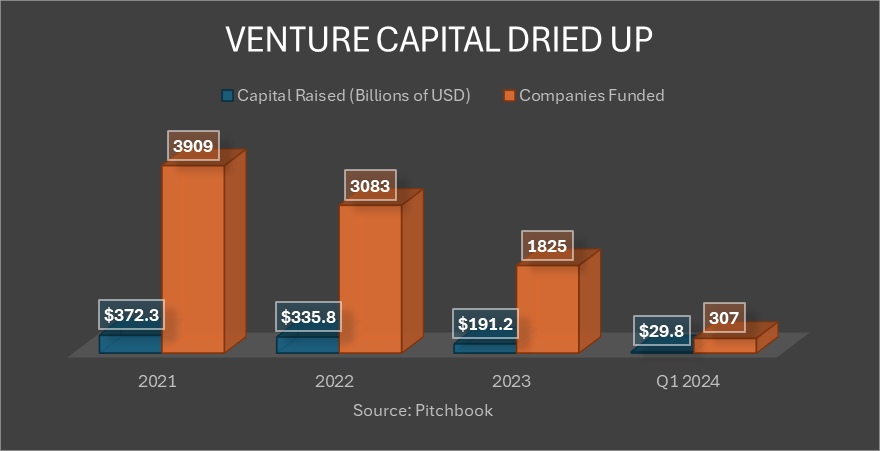
Is VC Funding Experiencing a Decline?
Venture capital (VC) funding has shown signs of slowing down in recent quarters. This trend is attributed to several factors, including economic uncertainty, rising interest rates, and a more cautious approach from investors. While the total amount of funding has decreased compared to the record highs of 2021, it is important to note that the market is adjusting rather than collapsing. Key points to consider:
- Economic uncertainty has led investors to be more selective, focusing on startups with proven business models.
- Rising interest rates have increased the cost of capital, making investors more risk-averse.
- Valuation corrections are occurring, with many startups receiving lower valuations than in previous years.
How Are Startups Adapting to the Changing VC Landscape?
Startups are adjusting their strategies to align with the current funding environment. Many are focusing on profitability and sustainability rather than rapid growth at all costs. This shift is driven by the need to attract investors who are now prioritizing financial discipline. Key adaptations include:
- Cost-cutting measures to extend runway and reduce burn rates.
- Focus on revenue generation to demonstrate viability to potential investors.
- Exploring alternative funding sources, such as debt financing or strategic partnerships.
What Sectors Are Still Attracting VC Funding?
Despite the overall slowdown, certain sectors continue to attract significant VC interest. Industries such as artificial intelligence, clean energy, and healthcare remain resilient due to their long-term growth potential. Key sectors include:
- Artificial intelligence, particularly generative AI, is seeing substantial investments.
- Clean energy and sustainability startups are benefiting from global climate initiatives.
- Healthcare and biotech remain attractive due to ongoing innovation and demand.
How Are Global Markets Affecting VC Funding?
Global economic conditions are playing a significant role in the current state of VC funding. Geopolitical tensions, inflation, and currency fluctuations are influencing investor behavior. Key global factors include:
- Geopolitical tensions are causing investors to reassess risks in certain regions.
- Inflationary pressures are reducing the purchasing power of capital, impacting deal sizes.
- Currency fluctuations are affecting cross-border investments and valuations.
What Does the Future Hold for VC Funding?
The future of VC funding will likely depend on broader economic recovery and investor confidence. While the current environment is challenging, it may also present opportunities for disciplined startups and investors. Key considerations for the future include:
- Economic recovery could lead to a resurgence in funding activity.
- Investor confidence will play a crucial role in determining the pace of recovery.
- Emerging technologies may drive new waves of investment in the coming years.
Frequently Asked Questions (FAQs)
What are some common alternatives to venture capital for startups?
Startups have several alternatives to venture capital, depending on their stage and needs. One popular option is bootstrapping, where founders use personal savings or revenue generated by the business to fund growth. Another alternative is angel investors, who provide capital in exchange for equity but typically invest smaller amounts than venture capital firms. Additionally, crowdfunding platforms like Kickstarter or Indiegogo allow startups to raise funds directly from the public. Lastly, small business loans or grants from government programs can provide non-dilutive funding options for early-stage companies.
How does revenue-based financing work as an alternative to venture capital?
Revenue-based financing (RBF) is a flexible funding option where investors provide capital in exchange for a percentage of the company's future revenue until a predetermined amount is repaid. Unlike venture capital, RBF does not require giving up equity, making it an attractive option for founders who want to retain control of their business. This model is particularly beneficial for scalable businesses with consistent revenue streams, such as SaaS companies. Repayments are tied to revenue, meaning slower months result in lower payments, reducing financial pressure on the startup.
Can startups use strategic partnerships as an alternative to venture capital?
Yes, strategic partnerships can serve as a viable alternative to venture capital. By collaborating with established companies, startups can gain access to resources, expertise, and even funding without diluting equity. For example, a tech startup might partner with a larger corporation to co-develop a product, sharing costs and profits. These partnerships can also open doors to new markets and customer bases. However, it's crucial to ensure that the partnership aligns with the startup's long-term goals and doesn't compromise its independence or vision.
What role do accelerators and incubators play as alternatives to venture capital?
Accelerators and incubators are programs designed to support early-stage startups by providing mentorship, resources, and sometimes funding in exchange for equity. While they may not offer the same level of capital as venture capital firms, they provide invaluable guidance and networking opportunities. Accelerators, such as Y Combinator or Techstars, often culminate in a demo day where startups pitch to investors. Incubators, on the other hand, focus on nurturing businesses over a longer period. Both options can help startups refine their business models and attract future investment without relying solely on venture capital.
Leave a Reply
Our Recommended Articles