
New York Single Member LLC Operating Agreement

Forming a Single Member Limited Liability Company (LLC) in New York offers entrepreneurs flexibility and personal liability protection, but establishing a solid legal foundation is critical. A New York Single Member LLC Operating Agreement serves as the cornerstone document outlining the structure, management, and operational guidelines for the business. Though not legally mandated by the state, this internal contract clarifies the owner’s rights, profit distribution, and procedures for handling disputes or dissolution. It also reinforces the LLC’s separation between personal and business assets, a key factor in maintaining liability protection. Tailoring this agreement to the unique needs of the business ensures compliance with state laws while safeguarding the owner’s interests in both routine operations and unforeseen circumstances.
- Understanding the New York Single Member LLC Operating Agreement
-
Does New York require an operating agreement for a single-member LLC?
- Is an Operating Agreement Mandatory for Single-Member LLCs in New York?
- Benefits of Drafting an Operating Agreement for a Single-Member LLC
- Consequences of Not Having an Operating Agreement in New York
- How to Create an Operating Agreement for a Single-Member LLC
- Key Provisions to Include in a Single-Member LLC Operating Agreement
- How to create an operating agreement for a single-member LLC?
- Does New York recognize single-member LLC?
- How much does it cost to file for a single-member LLC in NY?
-
Frequently Asked Questions About LLCs (FAQs)
- What is a Single Member LLC Operating Agreement in New York?
- Is an Operating Agreement legally required for a Single Member LLC in New York?
- Can a Single Member LLC Operating Agreement be amended after it's created?
- What happens if a Single Member LLC in New York does not have an Operating Agreement?
Understanding the New York Single Member LLC Operating Agreement
Key Components of a New York Single Member LLC Operating Agreement
A New York Single Member LLC Operating Agreement outlines the structure and rules governing the LLC, even with one owner. Key elements include:
- Ownership structure: Clarifies the sole member’s rights and responsibilities.
- Management provisions: Specifies whether the LLC is member-managed or manager-managed.
- Capital contributions: Details the initial investment and future funding requirements.
- Profit and loss allocation: Explains how finances are distributed.
- Dissolution clauses: Defines conditions for closing the business.
| Component | Description |
|---|---|
| Ownership | Sole member retains full control and decision-making authority |
| Management | Member-managed by default unless stated otherwise |
| Capital | Initial contributions documented for liability protection |
Legal Requirements for a Single Member LLC in New York
New York law mandates that Single Member LLCs adhere to specific requirements:
- Publication requirement: New LLCs must publish formation notices in two newspapers.
- Registered agent: A local agent must be designated for legal correspondence.
- EIN: An Employer Identification Number is required for tax purposes.
- Operating Agreement: While not filed with the state, it is legally recommended.
| Requirement | Description |
|---|---|
| Publication | Costs vary by county; failure may suspend LLC rights |
| Registered Agent | Must have a physical New York address |
| EIN | IRS requirement for banking and tax filings |
Importance of Customizing Your Operating Agreement
A customized Operating Agreement protects the sole member’s interests by:
- Preserving limited liability: Reinforces separation between personal and business assets.
- Defining operational rules: Prevents disputes with third parties or future members.
- Enhancing credibility: Demonstrates professionalism to banks and partners.
| Benefit | Impact |
|---|---|
| Liability Protection | Courts may uphold LLC status if terms are clear |
| Clarity | Avoids default state rules governing LLCs |
Tax Implications for New York Single Member LLCs
The tax structure of a Single Member LLC typically involves:
- Pass-through taxation: Profits/losses reported on the owner’s personal tax return.
- Self-employment taxes: The member pays Social Security and Medicare taxes.
- New York State taxes: Includes annual filing fees and potential franchise taxes.
| Tax Type | Details |
|---|---|
| Federal | Form 1040 Schedule C for income reporting |
| State | $25 biennial fee and possible $500 publication fee |
Amending a Single Member LLC Operating Agreement in New York
To amend the Operating Agreement, the sole member must:
1. Review the original agreement for amendment procedures.
2. Draft changes with legal precision.
3. Sign and date the updated document.
4. Store it with business records.
| Step | Action |
|---|---|
| Review | Ensure compliance with existing terms |
| Documentation | Written amendments prevent future disputes |
Does New York require an operating agreement for a single-member LLC?
Is an Operating Agreement Mandatory for Single-Member LLCs in New York?
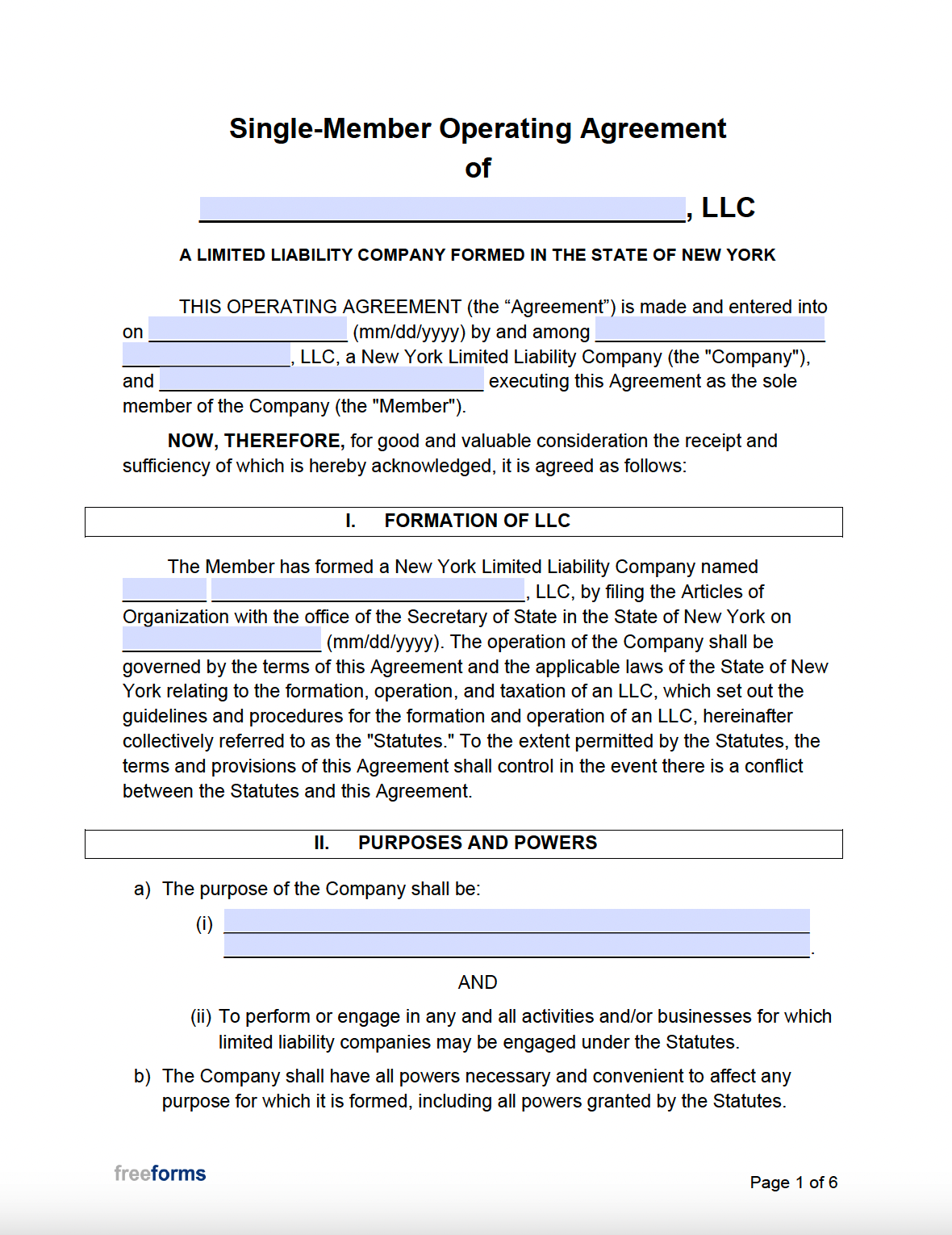
While New York law does not explicitly require single-member LLCs to file an operating agreement with the state, Section 417 of the New York Limited Liability Company Law states that all LLCs must adopt an operating agreement. This applies even to single-member LLCs. Although the agreement does not need to be submitted to authorities, having one is strongly advised for legal and operational clarity.
See AlsoWyoming Single Member LLC Operating Agreement- Legal requirement: New York LLC Act mandates an operating agreement, though it can be oral or written.
- No filing obligation: The agreement remains an internal document.
- Enforceability: A written agreement helps avoid disputes and ensures compliance with state laws.
Benefits of Drafting an Operating Agreement for a Single-Member LLC
Creating an operating agreement for a single-member LLC in New York provides structure and legal safeguards. It clarifies business operations, reinforces the LLC’s legitimacy, and helps protect the owner’s limited liability status.
- Asset protection: Separates personal and business assets, reducing liability risks.
- Operational clarity: Defines management roles, profit distribution, and dissolution procedures.
- Credibility: Enhances professionalism when dealing with banks, investors, or partners.
Consequences of Not Having an Operating Agreement in New York
Failing to create an operating agreement for a single-member LLC in New York may expose the owner to legal and financial risks. Courts could disregard the LLC’s liability protections, treating it as a sole proprietorship.
- Loss of liability protection: Personal assets may become vulnerable in lawsuits.
- Default state rules: New York’s default LLC statutes govern the business, which may not align with the owner’s goals.
- Banking challenges: Financial institutions may require an operating agreement to open business accounts.
How to Create an Operating Agreement for a Single-Member LLC
Drafting an operating agreement involves outlining the LLC’s structure, management, and procedures. While templates are available, customization ensures alignment with the owner’s needs.
- Use templates: Online tools or legal platforms offer customizable drafts.
- Define key terms: Include ownership details, management authority, and dissolution terms.
- Legal review: Consult an attorney to ensure compliance with New York laws.
Key Provisions to Include in a Single-Member LLC Operating Agreement
A well-structured operating agreement for a single-member LLC should address critical aspects of the business. Essential provisions safeguard the owner’s interests and clarify operational expectations.
- Ownership structure: Clearly state the member’s ownership percentage.
- Management authority: Specify decision-making powers and responsibilities.
- Dissolution process: Outline steps for winding down the LLC if necessary.
How to create an operating agreement for a single-member LLC?
Understanding the Purpose of a Single-Member LLC Operating Agreement
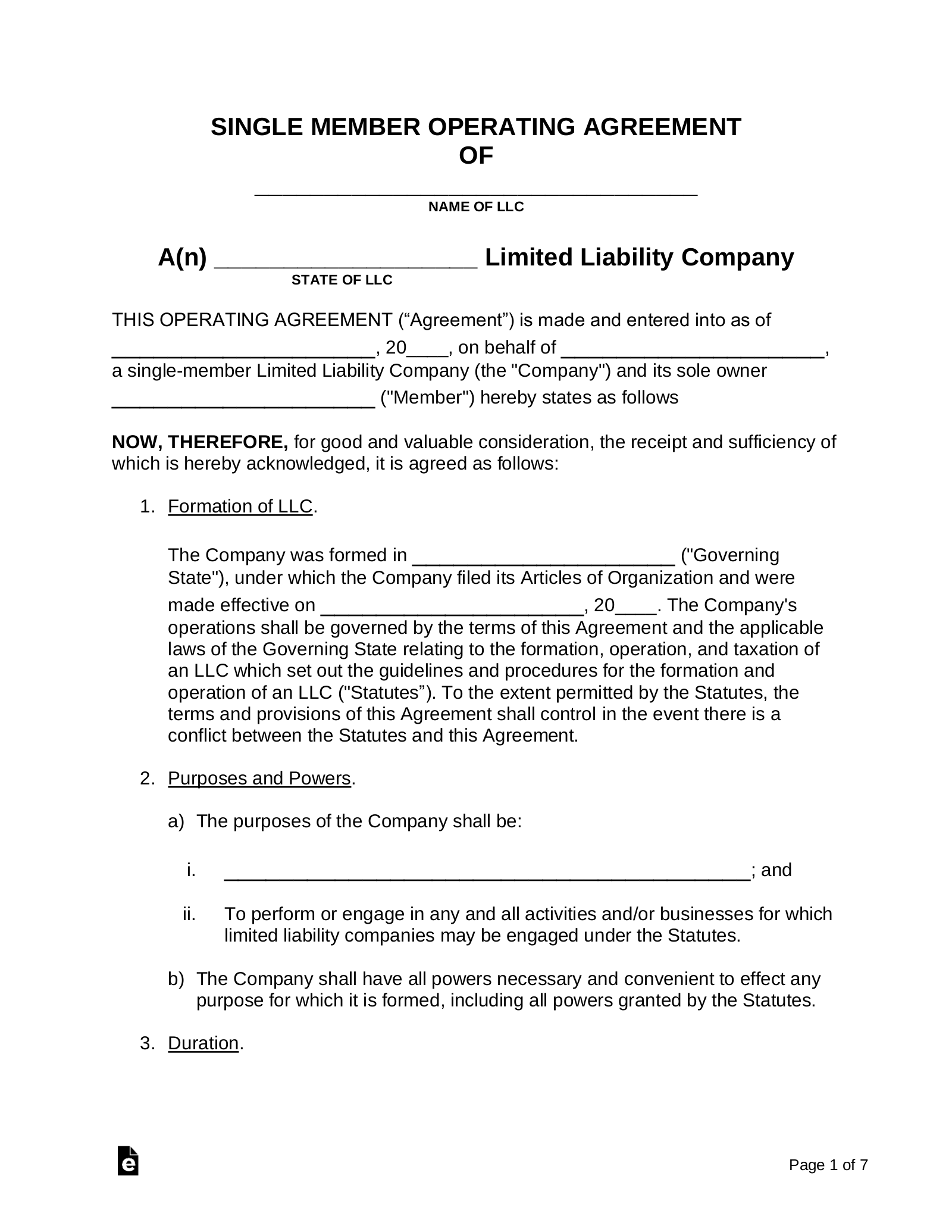
An operating agreement for a single-member LLC outlines the structure, rules, and ownership details of the business. Even though state laws may not legally require it, this document provides legal protection, clarifies financial arrangements, and helps maintain corporate separateness. Key elements include:
- Defining ownership and management roles to avoid personal liability disputes.
- Establishing profit distribution and tax treatment.
- Detailing procedures for dissolution or transfer of ownership.
Drafting Basic Information and Ownership Details
Start by including foundational details about the LLC and its sole member. This section ensures clarity and compliance with state regulations. Focus on:
- Business name, registered address, and formation date.
- Member identification, including name, contribution (cash, property, or services), and ownership percentage.
- Purpose of the LLC, outlining the scope of business activities.
Outlining Management Structure and Voting Rights
Even in a single-member LLC, defining the management structure is critical for operational clarity. Specify:
- Whether the LLC is member-managed or appoints an external manager.
- Decision-making authority for daily operations and major business decisions.
- Procedures for succession if the member becomes incapacitated or passes away.
Addressing Financial and Tax Provisions
This section clarifies financial responsibilities and tax obligations. Highlight:
- Profit and loss allocation (default is 100% to the sole member).
- Tax election status (e.g., disregarded entity or S-Corp election).
- Record-keeping requirements for banking, expenses, and income.
Including Dissolution and Amendment Procedures
Define how the LLC can be dissolved or its agreement modified. Ensure compliance by covering:
- Triggers for dissolution, such as member decision or bankruptcy.
- Asset distribution protocols upon closure.
- Amendment processes, requiring written documentation for changes.
Does New York recognize single-member LLC?
Yes, New York does recognize single-member LLCs. The state allows individuals to form and operate a single-member limited liability company (LLC), which provides the same liability protection and flexibility as multi-member LLCs. New York’s LLC Law does not restrict ownership to multiple members, and the formation process is nearly identical, with minor differences in documentation and compliance.
Formation Requirements for Single-Member LLCs in New York
To establish a single-member LLC in New York, you must follow specific steps:
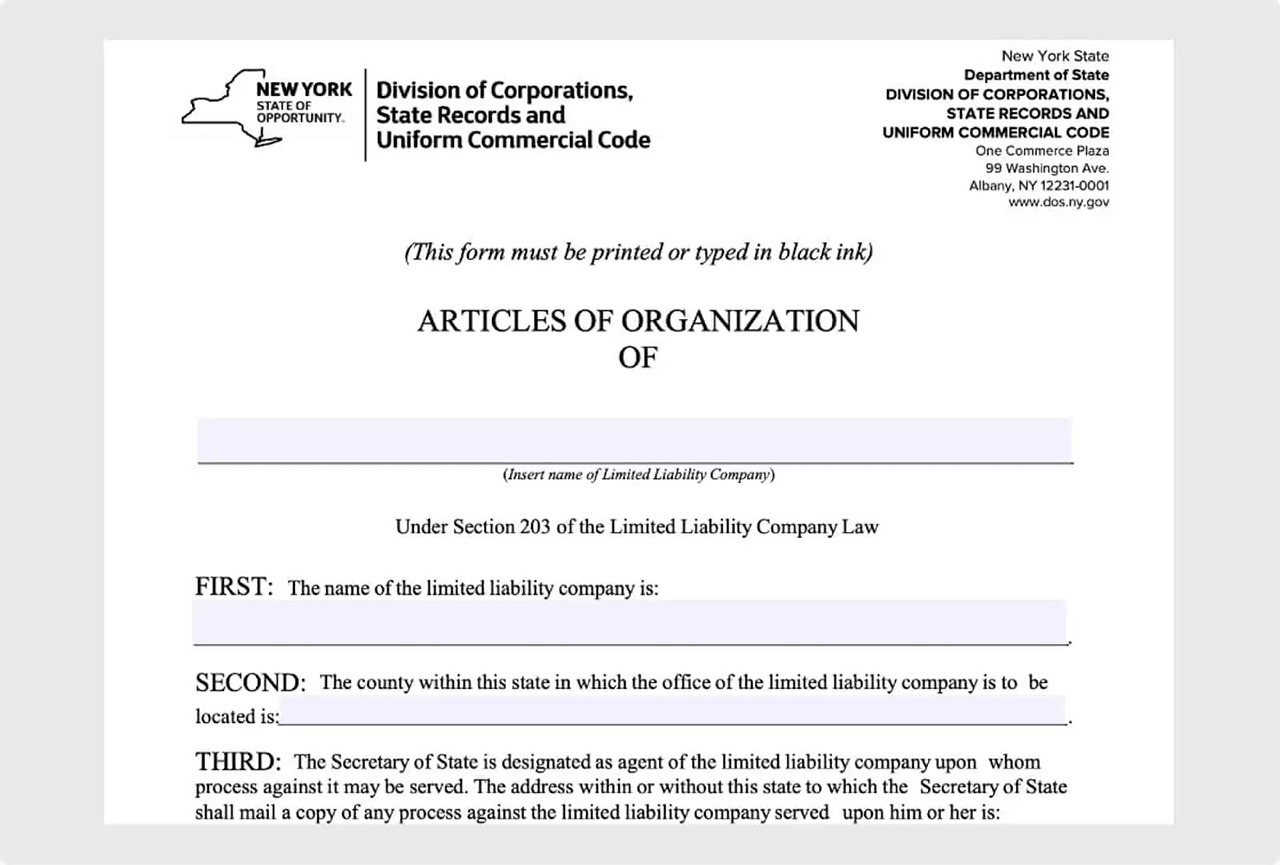
- File Articles of Organization with the New York Department of State, including the LLC’s name, purpose, and registered agent details.
- Pay the mandatory $200 filing fee (as of 2023).
- Publish a notice of formation in two newspapers for six consecutive weeks within 120 days of filing, followed by submitting a Certificate of Publication ($50 fee).
Liability Protection for Single-Member LLC Owners
A single-member LLC in New York offers limited liability protection, separating personal and business assets:
- Owners are generally not personally liable for business debts or lawsuits.
- Exceptions include cases of fraud or failure to maintain corporate formalities (e.g., mixing personal and business finances).
- Creditors typically cannot seize the owner’s personal property to satisfy business obligations.
Taxation of Single-Member LLCs in New York
New York treats single-member LLCs as disregarded entities for tax purposes by default:
- Profits and losses are reported on the owner’s personal tax return (Schedule C).
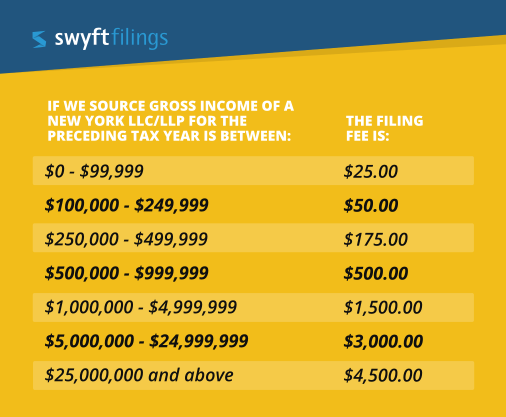
- LLCs must file an annual state filing fee based on gross income, ranging from $25 to $4,500.
- Owners can elect corporate taxation (e.g., S-Corp or C-Corp) by filing Form 8832 or Form 2553 with the IRS.
Compliance Obligations for Single-Member LLCs
New York requires ongoing compliance for single-member LLCs:
- File a biennial statement every two years ($9 fee starting 2024) to update business details.
- Maintain an operating agreement (not filed with the state but legally recommended).
- Adhere to federal and state tax deadlines, including estimated tax payments.
Single-Member LLC vs. Sole Proprietorship in New York
Choosing between a single-member LLC and a sole proprietorship involves key differences:
- An LLC provides liability protection, while a sole proprietorship does not.
- LLCs require formal registration and fees, whereas sole proprietorships have no setup costs.
- Tax flexibility (e.g., electing corporate status) is exclusive to LLCs.
How much does it cost to file for a single-member LLC in NY?
Filing Fees for a Single-Member LLC in New York
The initial filing fee to form a single-member LLC in New York is $200, paid to the New York Department of State when submitting the Articles of Organization. This fee is mandatory and non-refundable. Additional costs may apply depending on processing methods:
- Standard processing: $200 (typically takes 7 business days).
- Expedited processing: An extra $25–$75 for faster turnaround (e.g., 24-hour service).
- Online filing: No extra fees beyond the $200, but third-party platforms may charge service fees.
Publication Requirements and Associated Costs
New York requires LLCs to publish a notice of formation in two newspapers (one weekly, one daily) for six consecutive weeks. Costs vary by county:
- New York City: $1,000–$1,500 total due to higher advertising rates.
- Other counties: $200–$800, depending on local newspaper pricing.
- Affidavit of Publication: After publishing, submit proof to the state with a $50 filing fee.
Biennial Statement Fees
All LLCs in New York must file a Biennial Statement every two years, which costs $9. Key details include:
- Due date: Every two years by the end of the LLC’s formation month.
- Late fees: No penalty for late filing, but non-compliance risks LLC dissolution.
- Online filing: The $9 fee is paid through the NY Department of State’s website.
Additional Costs for Legal and Professional Services
Optional expenses may include legal or professional assistance:
- Attorney fees: $500–$2,000+ for drafting operating agreements or compliance guidance.
- Registered agent service: $100–$300 annually if using a third-party agent.
- Business licenses/permits: Varies by industry and location (e.g., NYC may require additional permits).
Total Estimated Cost Range
Forming a single-member LLC in New York typically costs $500–$2,500+, depending on compliance steps and optional services:
- Minimum baseline: $200 (filing) + $50 (affidavit) + $9 (biennial) = $259+.
- With publication: Add $200–$1,500+ based on county requirements.
- With professional help: Adds $500–$2,000+ for legal or registered agent services.
Frequently Asked Questions About LLCs (FAQs)
What is a Single Member LLC Operating Agreement in New York?
A Single Member LLC Operating Agreement in New York is a legal document that outlines the structure, management, and operational rules for a limited liability company (LLC) with a single owner. It defines the member's rights, responsibilities, and procedures for decision-making, profit distribution, and dissolution. While New York State does not legally require single-member LLCs to file this agreement, creating one is strongly recommended to maintain liability protection, clarify business operations, and avoid default state rules that may not align with the owner's preferences.
Is an Operating Agreement legally required for a Single Member LLC in New York?
New York State law does not legally require a single-member LLC to have an Operating Agreement. However, drafting one is highly advisable for several reasons. First, it reinforces the separation between the owner's personal and business assets, strengthening liability protection. Second, it provides clarity on business processes, which can be critical in disputes or legal challenges. Third, banks and third parties may request this document to verify the LLC's legitimacy before opening accounts or entering contracts.
Can a Single Member LLC Operating Agreement be amended after it's created?
Yes, a Single Member LLC Operating Agreement can be amended at any time, provided the sole member follows the amendment procedures outlined in the original document. Typically, amendments require a written agreement signed by the member. It is crucial to update the Operating Agreement when significant changes occur, such as shifts in business structure, management roles, or profit distribution methods. Keeping the agreement current ensures compliance with New York laws and reflects the LLC's evolving operational needs.
What happens if a Single Member LLC in New York does not have an Operating Agreement?
If a single-member LLC in New York operates without an Operating Agreement, it will default to the state's default LLC rules under the New York Limited Liability Company Law. This lack of customization can lead to ambiguity in management, profit allocation, and dispute resolution. Additionally, courts may be more likely to pierce the corporate veil in liability cases if no formal agreement exists, potentially exposing the owner's personal assets. An Operating Agreement acts as evidence that the LLC operates as a distinct legal entity, safeguarding the owner's interests.
Leave a Reply
Our Recommended Articles