
Single Member LLC: Colorado

A Single Member Limited Liability Company (LLC) in Colorado offers entrepreneurs a flexible and straightforward business structure that combines personal asset protection with simplified management. As a popular choice for solo business owners, this entity type separates personal and business liabilities, shielding personal assets from company debts or legal issues. Colorado’s streamlined registration process, minimal ongoing requirements, and pass-through taxation make it an attractive option for those seeking both legal protection and operational ease. However, understanding state-specific regulations, such as filing deadlines, annual reporting, and compliance obligations, is critical for maintaining good standing. This article explores the benefits, formation steps, and key considerations for establishing a Single Member LLC in Colorado.
- Forming a Single Member LLC in Colorado: Key Steps and Requirements
- Does Colorado recognize single members LLC?
- Is a single-member LLC a good idea?
-
Does a single-member LLC need an operating agreement in Colorado?
- Is an Operating Agreement Legally Required for a Single-Member LLC in Colorado?
- Benefits of Having an Operating Agreement for a Single-Member LLC
- Key Provisions to Include in a Single-Member LLC Operating Agreement
- Risks of Not Having an Operating Agreement for a Single-Member LLC
- Steps to Create an Operating Agreement for a Colorado Single-Member LLC
-
Does a single-member LLC need to file a Colorado tax return?
- Does a Single-Member LLC Need to File a Colorado State Tax Return?
- What Are Colorado’s Tax Filing Requirements for Single-Member LLCs?
- When Is a Single-Member LLC Exempt from Filing a Colorado Tax Return?
- How to File a Colorado Tax Return for a Single-Member LLC?
- What Penalties Apply for Not Filing a Colorado Tax Return?
- Frequently Asked Questions About LLCs (FAQs)
Forming a Single Member LLC in Colorado: Key Steps and Requirements
A Single Member LLC (SMLLC) in Colorado is a business structure that offers limited liability protection to a sole owner while maintaining flexibility in management and taxation. To form an SMLLC in Colorado, you must follow state-specific procedures, including registering with the Colorado Secretary of State, adhering to naming rules, and filing required documents. Colorado does not require an operating agreement for SMLLCs, but drafting one is recommended to clarify business operations and protect personal assets. Additionally, obtaining an Employer Identification Number (EIN) from the IRS and complying with state tax obligations are critical steps.
See AlsoLLC Operating Agreement: MontanaBenefits of a Single Member LLC in Colorado
A Single Member LLC in Colorado provides several advantages, such as:
- Limited liability protection: Shields personal assets from business debts.
- Pass-through taxation: Profits/losses are reported on the owner’s personal tax return.
- Management flexibility: No requirement for a board or annual meetings.
- Minimal formalities: Fewer compliance requirements compared to corporations.
- Credibility: Enhances professionalism with clients and partners.
| Benefit | Description |
| Asset Protection | Personal assets are separate from business liabilities. |
| Tax Flexibility | Choose between sole proprietorship or corporate taxation. |
| Simplified Compliance | No need for complex corporate governance. |
How to Register a Single Member LLC in Colorado
To register an SMLLC in Colorado:
1. Choose a unique name complying with state guidelines (include LLC or Limited Liability Company).
2. File Articles of Organization online with the Colorado Secretary of State ($50 fee).
3. Appoint a registered agent with a physical address in Colorado.
4. Create an operating agreement (optional but recommended).
5. Obtain an EIN from the IRS for tax and banking purposes.
| Step | Requirement |
| Name Reservation | Ensure name availability via the Secretary of State’s website. |
| Filing Fee | $50 for Articles of Organization. |
| Registered Agent | Must be available during business hours. |
Tax Advantages for Colorado Single Member LLCs
Colorado SMLLCs enjoy pass-through taxation by default, meaning profits are taxed only on the owner’s personal return. Owners can also elect S-Corp taxation to reduce self-employment taxes. Colorado imposes a 4.55% state income tax, and SMLLCs may need to pay sales tax or employment taxes depending on business activities.
| Tax Type | Details |
| Federal Taxes | File Schedule C with Form 1040. |
| State Taxes | 4.55% income tax; no franchise tax. |
| Sales Tax | Required if selling taxable goods/services. |
Compliance Requirements for Colorado Single Member LLCs
Colorado SMLLCs must:
- File a Periodic Report annually ($10 fee) to keep the LLC active.
- Renew business licenses or permits as required by local jurisdictions.
- Maintain separation between personal and business finances.
- Update the Secretary of State about major changes (e.g., address or registered agent).
| Requirement | Deadline |
| Annual Report | Due by the end of the LLC’s formation anniversary month. |
| Tax Filings | Federal and state deadlines apply. |
Operating Agreement for a Colorado Single Member LLC
Though not mandatory, an operating agreement is highly recommended for Colorado SMLLCs. It outlines:
- Ownership structure and profit distribution.
- Management roles and decision-making processes.
- Dissolution procedures and contingency plans.
This document strengthens liability protection and avoids disputes if the LLC adds members later.
| Section | Purpose |
| Membership | Defines the sole member’s rights. |
| Management | Clarifies operational control. |
| Amendments | Specifies how changes are made. |
Does Colorado recognize single members LLC?

Does Colorado Recognize Single-Member LLCs?
Yes, Colorado explicitly recognizes single-member LLCs (SMLLCs) under state law. A single-member LLC functions similarly to a multi-member LLC but is owned by one individual or entity. Colorado’s statutes treat SMLLCs as separate legal entities, providing limited liability protection and operational flexibility.
Legal Requirements for Forming a Single-Member LLC in Colorado
To establish a single-member LLC in Colorado, you must:
- File Articles of Organization with the Colorado Secretary of State, including the LLC’s name, registered agent, and purpose.
- Create an Operating Agreement (not legally required but highly recommended) to outline management and operational rules.
- Obtain an Employer Identification Number (EIN) from the IRS, even if the LLC has no employees.
Colorado does not require residency for the owner, making it accessible to out-of-state individuals.
Tax Treatment of Single-Member LLCs in Colorado
Single-member LLCs in Colorado are typically treated as disregarded entities for tax purposes by default. However, owners can elect alternative tax classifications:
- Pass-through taxation: Profits/losses reported on the owner’s personal tax return.
- Electing S Corporation or C Corporation status for potential tax savings.
- State-specific taxes, such as Colorado’s 4.4% flat income tax and sales tax obligations, if applicable.
Liability Protection for Single-Member LLC Owners in Colorado
Colorado law grants limited liability protection to SMLLC owners, shielding personal assets from business debts and lawsuits. Key considerations include:
- Maintaining a clear separation between personal and business finances.
- Avoiding personal guarantees for business loans unless necessary.
- Ensuring compliance with state regulations to prevent piercing the corporate veil.
Compliance Obligations for Colorado Single-Member LLCs
To remain in good standing, Colorado SMLLCs must adhere to ongoing requirements:
- File an Annual Report with the Secretary of State, due by the end of the formation anniversary month.
- Keep updated business records, including financial statements and meeting minutes (if applicable).
- Update the state regarding changes to the registered agent, business address, or ownership structure.
Is a single-member LLC a good idea?
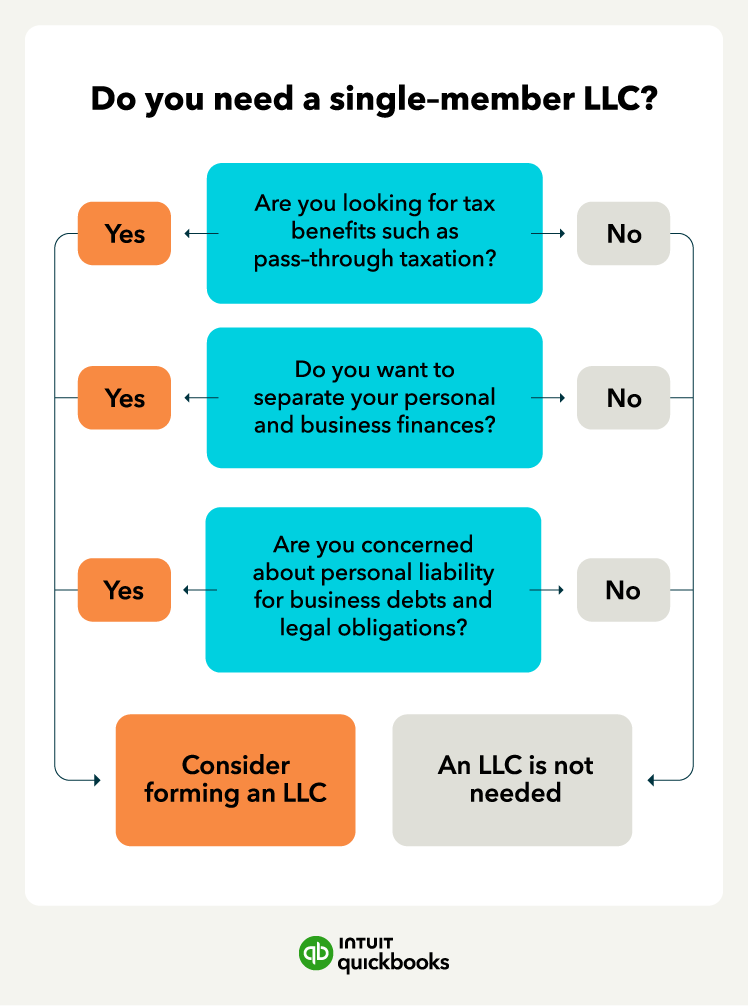
Advantages of a Single-Member LLC
A single-member LLC offers several benefits, including limited liability protection, which separates personal and business assets. It also provides tax flexibility, allowing owners to choose between pass-through taxation or corporate tax structures. Additionally, it requires less administrative work compared to corporations.
- Limited liability: Shields personal assets from business debts or lawsuits.
- Tax options: File taxes as a sole proprietorship, S-corp, or C-corp.
- Simplified management: No need for a board of directors or complex governance.
Disadvantages of a Single-Member LLC
While advantageous, a single-member LLC has drawbacks, such as self-employment taxes on all profits and potential difficulty securing business loans without a credit history. Some states also impose annual fees or franchise taxes.
- Self-employment taxes: Owners pay Medicare and Social Security taxes on net earnings.
- Funding challenges: Lenders may view single-member LLCs as riskier.
- State-specific costs: Fees vary widely, impacting overall affordability.
How a Single-Member LLC Compares to Other Business Structures
A single-member LLC differs from sole proprietorships (no liability protection) and multi-member LLCs (shared ownership). Corporations offer stronger liability shields but require stricter compliance.
- Sole proprietorship vs. LLC: LLCs provide liability protection; proprietorships do not.
- Multi-member LLC flexibility: Adding members later may require restructuring.
- Corporate formalities: Corporations need shareholder meetings and detailed records.
Tax Considerations for a Single-Member LLC
Single-member LLCs default to pass-through taxation, but owners can elect S-corp status to reduce self-employment tax. Deductions for business expenses and home office use are also available.
- Pass-through taxation: Profits/losses reported on personal tax returns.
- S-corp election: Potential savings by splitting salary and dividends.
- Deductible expenses: Write-offs for travel, equipment, and utilities.
Steps to Form a Single-Member LLC
Creating a single-member LLC involves registering with the state, drafting an operating agreement, and obtaining licenses. Compliance with local regulations is critical.
- Choose a business name: Ensure it’s unique and meets state guidelines.
- File formation documents: Submit Articles of Organization and fees.
- Obtain an EIN: Required for taxes, banking, and hiring employees.
Does a single-member LLC need an operating agreement in Colorado?
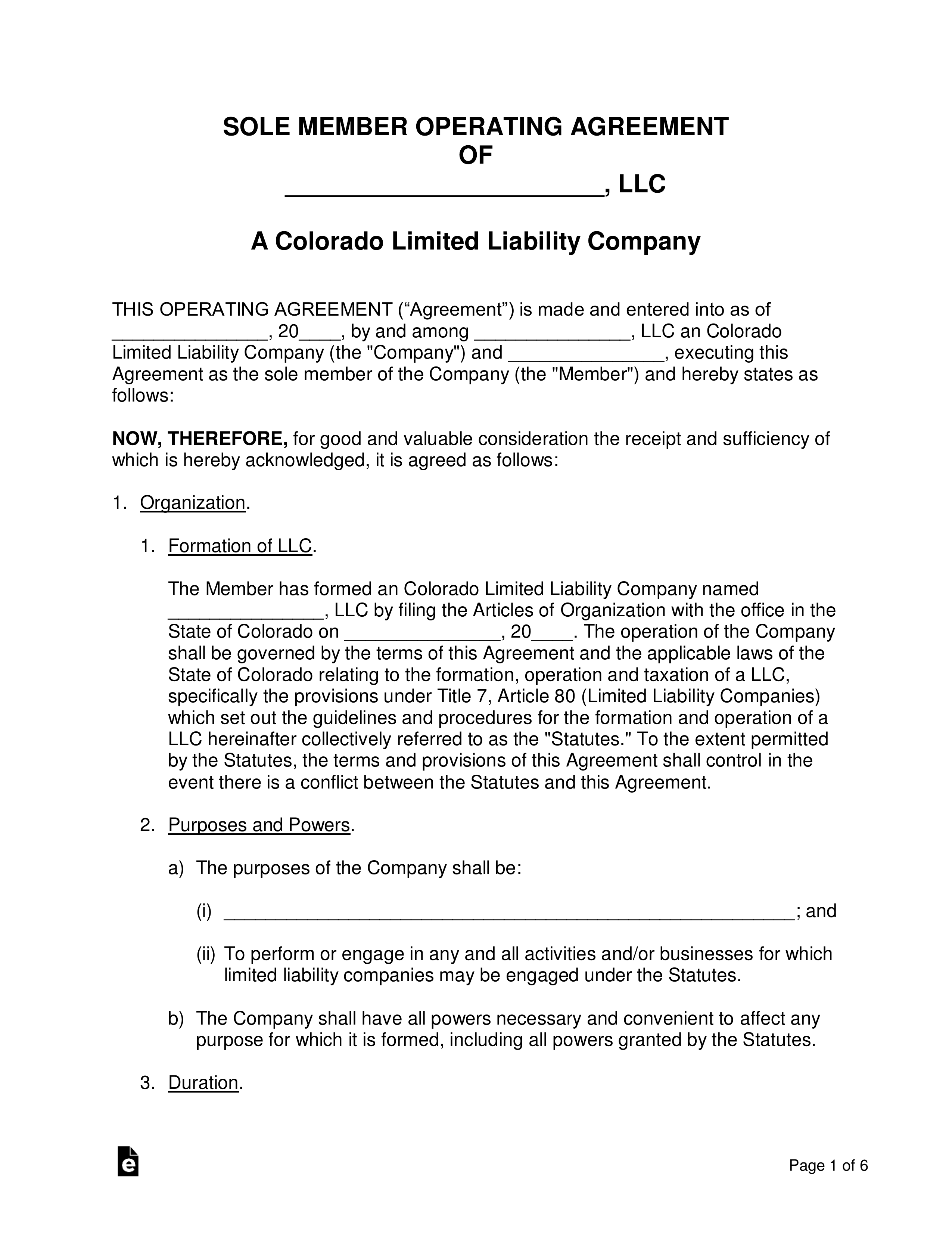
Is an Operating Agreement Legally Required for a Single-Member LLC in Colorado?
Colorado law does not legally require a single-member LLC to have an operating agreement. However, it is strongly recommended for several reasons:
- Clarifies business structure: Defines ownership, management roles, and operational procedures.
- Strengthens liability protection: Helps maintain the corporate veil by showing the LLC operates as a separate entity.
- Prepares for disputes or audits: Provides written evidence of business formalities to courts or the IRS.
Benefits of Having an Operating Agreement for a Single-Member LLC
An operating agreement offers critical advantages even for solo-owned LLCs:
- Personal liability protection: Reinforces separation between personal and business assets.
- Customizable management rules: Allows the owner to outline decision-making processes and succession plans.
- Enhanced business credibility: Demonstrates professionalism to banks, investors, or partners.
Key Provisions to Include in a Single-Member LLC Operating Agreement
A well-drafted operating agreement should address essential elements tailored to the owner’s needs:
- Ownership details: Clearly state the member’s ownership percentage and contributions.
- Management structure: Specify whether the owner manages the LLC or appoints a manager.
- Dissolution procedures: Outline steps for winding down the business if necessary.
Risks of Not Having an Operating Agreement for a Single-Member LLC
Operating without an agreement exposes the LLC to potential risks:
- State default rules apply: Colorado’s default LLC statutes govern the business, which may not align with the owner’s intentions.
- Weakened liability protection: Courts may disregard the corporate veil if formalities are neglected.
- Complications during disputes: Lack of documentation can lead to ambiguity in legal or financial matters.
Steps to Create an Operating Agreement for a Colorado Single-Member LLC
Drafting an operating agreement involves practical steps:
- Outline business objectives: Define the LLC’s purpose, capital contributions, and profit distribution.
- Consult legal templates or professionals: Use state-specific templates or hire an attorney for customization.
- Formalize and update regularly: Sign the document and revise it as the business evolves.
Does a single-member LLC need to file a Colorado tax return?

Does a Single-Member LLC Need to File a Colorado State Tax Return?
A single-member LLC in Colorado is typically treated as a disregarded entity for federal tax purposes. However, Colorado requires the LLC or its owner to file a state tax return if it meets specific criteria. If the LLC has Colorado-source income or conducts business in the state, it must file a Colorado Individual Income Tax Return (Form 104). Even if the LLC operates at a loss or has no taxable income, filing may still be required if gross income exceeds the state’s filing threshold.
- Federal vs. State Rules: While the IRS does not require a separate federal return for a single-member LLC, Colorado may mandate a state filing.
- Income Threshold: If the LLC’s federal taxable income exceeds $600 (after deductions), Colorado requires a state return.
- Non-Resident Owners: Owners living outside Colorado must file if the LLC generates income within the state.
What Are Colorado’s Tax Filing Requirements for Single-Member LLCs?
Colorado imposes income tax obligations on single-member LLCs based on their activity and revenue. The owner must report the LLC’s income on their personal tax return (Form 104). Additionally, if the LLC employs staff or collects sales tax, separate filings for employment taxes or sales tax returns may apply.
- Pass-Through Taxation: Profits/losses flow to the owner’s personal return, but Colorado still requires a state-level filing.
- Estimated Taxes: Owners may need to pay quarterly estimated taxes if expected liability exceeds $1,000.
- Local Taxes: Certain cities in Colorado impose additional taxes, requiring separate filings.
When Is a Single-Member LLC Exempt from Filing a Colorado Tax Return?
A single-member LLC may be exempt if it has no Colorado-source income or operates exclusively outside the state. If the LLC’s annual gross income is below $600 (after deductions), filing may not be required. However, exemptions depend on the LLC’s structure and activity.
- Out-of-State Operations: LLCs without physical or economic presence in Colorado may avoid filing.
- Loss Reporting: Even with losses, filing is required if gross income exceeds the threshold.
- Non-Business Income: Passive income (e.g., investments) may not trigger a filing requirement.
How to File a Colorado Tax Return for a Single-Member LLC?
Owners must report the LLC’s income on Form 104 alongside their personal income. Use Schedule C (Federal) to calculate business profits/losses, then transfer the figures to the Colorado return. Electronic filing via the Colorado Department of Revenue’s website is recommended.
- Form 104: Attach federal Schedule C to report business income.
- Deductions: Claim eligible business expenses to reduce taxable income.
- Payment Options: Pay taxes owed online or by mail with Form 104-V.
What Penalties Apply for Not Filing a Colorado Tax Return?
Failure to file a required Colorado tax return may result in late fees, interest charges, and penalties up to 5% of unpaid taxes per month. The state may also revoke the LLC’s good standing or impose liens on assets.
- Late Filing Penalty: 5% of unpaid taxes per month (max 25%).
- Interest Rate: Currently 11% annually on unpaid balances.
- Compliance Actions: Colorado may suspend the LLC’s right to operate in the state.
Frequently Asked Questions About LLCs (FAQs)
What are the steps to form a Single Member LLC in Colorado?
Forming a Single Member LLC in Colorado involves several key steps. First, choose a unique business name that complies with state naming rules and includes LLC or a similar designation. Next, file Articles of Organization with the Colorado Secretary of State, either online or by mail, and pay the $50 filing fee. You’ll also need to appoint a registered agent with a physical address in Colorado to receive legal documents. While not mandatory, drafting an Operating Agreement is recommended to outline business structure and operational rules. Finally, obtain an Employer Identification Number (EIN) from the IRS, even if you don’t have employees, to open a business bank account or handle taxes.
What are the advantages of a Single Member LLC in Colorado?
A Single Member LLC in Colorado offers multiple benefits, including limited liability protection, which separates personal assets from business debts and legal claims. It also provides tax flexibility, allowing owners to report income on their personal tax returns (pass-through taxation) or elect corporate tax treatment. Colorado’s simple filing process and minimal ongoing compliance requirements make it easy to manage. Additionally, an LLC enhances credibility with clients and lenders compared to operating as a sole proprietorship.
Are there annual reporting requirements for a Colorado Single Member LLC?
Yes, Colorado requires all LLCs, including Single Member LLCs, to file a Periodic Report annually. This report updates the state with your business’s current information, such as registered agent details and principal office address. The filing fee is $10, and deadlines vary based on your LLC’s formation date. Failure to submit the report can result in administrative dissolution of your LLC. Additionally, maintain internal records like an Operating Agreement and ensure proper separation of personal and business finances to uphold liability protection.
Can a Single Member LLC in Colorado protect personal assets?
A Single Member LLC in Colorado generally shields personal assets like homes, savings, and vehicles from business-related liabilities, such as lawsuits or debts. However, this protection isn’t absolute. If you personally guarantee a loan, engage in fraudulent activities, or fail to maintain a clear separation between personal and business finances (commingling funds), creditors might pierce the corporate veil and pursue personal assets. Regularly updating compliance documents and adhering to formalities helps reinforce liability protection.
Leave a Reply
Our Recommended Articles