
How to Dissolve an LLC in Michigan

Dissolving a limited liability company (LLC) in Michigan involves a structured process to ensure compliance with state regulations and avoid potential legal or financial repercussions. Whether due to retirement, restructuring, or business closure, properly winding down an LLC requires careful attention to statutory requirements. Michigan mandates specific steps, including obtaining member approval, settling debts, filing final tax returns, and submitting dissolution documents to the Department of Licensing and Regulatory Affairs (LARA). Failing to follow these procedures may result in ongoing fees, tax liabilities, or personal liability for members. This guide outlines the essential steps to dissolve an LLC in Michigan efficiently, safeguarding stakeholders and ensuring a legally sound conclusion.
Steps to Dissolve an LLC in Michigan
1. Member Approval for Dissolution
To dissolve an LLC in Michigan, member approval is typically required. Review the LLC’s operating agreement for specific voting rules. If no agreement exists, Michigan law mandates approval by a majority of members by voting interest. Document the decision via a formal resolution and retain it for records.
See AlsoHow to Dissolve an LLC in Kentucky| Key Step | Requirement |
|---|---|
| Voting Process | Follow rules in operating agreement or state law |
| Documentation | Prepare a dissolution resolution |
2. Filing Articles of Dissolution
Submit Articles of Dissolution to the Michigan Department of Licensing and Regulatory Affairs (LARA). This form officially terminates the LLC’s legal existence. Include the LLC name, dissolution date, and member approval details. A $10 filing fee applies.
| Form | Fee | Processing Time |
|---|---|---|
| Certificate of Dissolution (Form CSCL/DIV-50) | $10 | 7-10 business days |
3. Settling Debts and Liabilities
Before dissolving, settle all outstanding debts. Michigan requires LLCs to notify creditors and pay obligations or set aside funds for unresolved claims. Failure to do so may result in personal liability for members.
See AlsoHow to Dissolve an LLC in Iowa| Action | Detail |
|---|---|
| Debt Payment | Use LLC assets to clear liabilities |
| Asset Distribution | Distribute remaining assets to members after debts |
4. Notifying State and Federal Agencies
Inform the Michigan Department of Treasury and IRS to close tax accounts. File final state tax returns and federal Form 1065 (if applicable). Cancel business licenses and permits to avoid future fees.
| Agency | Requirement |
|---|---|
| Michigan Treasury | File final Annual Return |
| IRS | Submit final federal tax return |
5. Maintaining Records Post-Dissolution
Michigan law requires retaining business records for at least three years after dissolution. This includes tax documents, dissolution paperwork, and financial statements. Members may need these for audits or legal disputes.
See AlsoHow to Dissolve an LLC in Indiana| Document Type | Retention Period |
|---|---|
| Tax Records | 7 years (recommended) |
| Dissolution Paperwork | Permanently |
How much does it cost to close an LLC in Michigan?

State Filing Fees for Dissolving an LLC in Michigan
To formally close an LLC in Michigan, you must file Articles of Dissolution with the Michigan Department of Licensing and Regulatory Affairs (LARA). The filing fee is $10. Additional costs may apply if expedited processing is requested.
See AlsoHow to Dissolve an LLC in North Carolina- Base filing fee: $10 for standard processing.
- Expedited fees: $50 for 24-hour processing or $500 for same-day service (if eligible).
- Online vs. mail: Filing online via Michigan’s business portal may reduce processing time.
Tax Obligations When Closing a Michigan LLC
Before dissolving, ensure all state tax obligations are settled. The Michigan Department of Treasury requires final tax returns and payment of any owed taxes.
- Annual report fee: Submit the final annual report ($25) if due.
- Tax clearance: Request a tax clearance certificate to confirm no outstanding liabilities.
- Sales tax or payroll tax: Settle unpaid sales tax, unemployment insurance, or employee withholding taxes.
Third-Party Costs Associated with LLC Dissolution
Additional expenses may arise from professional services or contractual obligations.
See AlsoHow to Dissolve an LLC in New Jersey- Legal fees: Hiring an attorney to review dissolution paperwork ($200–$500+).
- Accounting services: Final bookkeeping or tax filing assistance ($100–$300).
- Outstanding contracts: Penalties for terminating leases, licenses, or vendor agreements early.
Handling Debts and Liabilities During Closure
Michigan requires LLCs to resolve debts before dissolution to avoid personal liability for members.
- Creditor notifications: Formally notify creditors in writing about the dissolution.
- Asset distribution: Liquidate assets to pay debts; remaining funds go to members.
- Legal disputes: Budget for potential costs if unresolved liabilities lead to lawsuits.
Additional Considerations for Terminating an LLC
Beyond state requirements, other steps may incur indirect costs.
- Business licenses: Cancel local permits or licenses (fees vary by municipality).
- Bank accounts: Close business accounts; some banks charge closure fees.
- Public notices: Publishing dissolution notices in newspapers (if required by law).
How do I officially close an LLC?
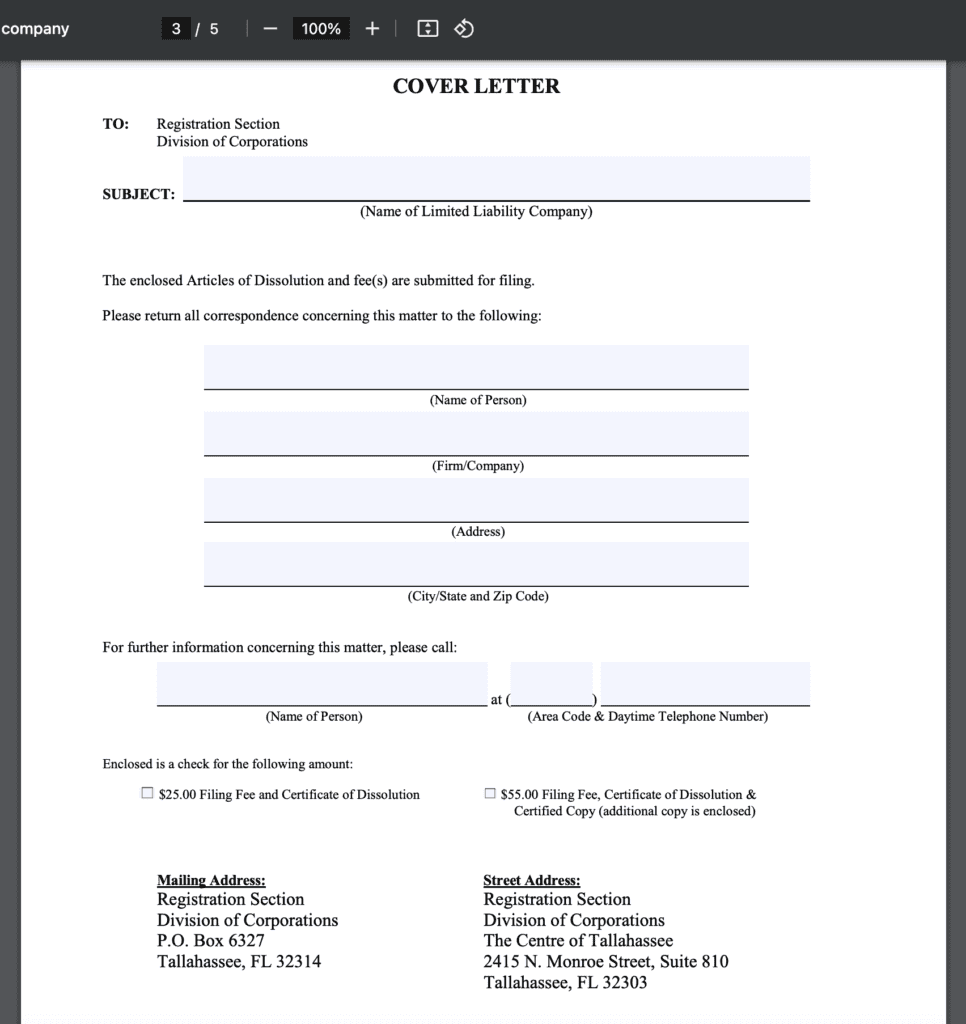
Steps to Dissolve an LLC Legally
To officially close an LLC, you must follow state-specific legal procedures. Begin by reviewing your operating agreement for dissolution guidelines. Most states require formal approval from LLC members, followed by filing articles of dissolution or a similar document with the state agency.
- Hold a member vote to approve dissolution, as outlined in the operating agreement.
- File Articles of Dissolution (or Certificate of Termination) with the state, often through the Secretary of State’s office.
- Pay any required filing fees associated with dissolution paperwork.
Handling Tax Obligations
Closing an LLC requires settling all federal, state, and local tax responsibilities. File final tax returns and ensure all outstanding taxes are paid to avoid penalties.
- Submit a final federal tax return to the IRS, marking it as “Final” and including necessary schedules.
- File state tax returns and settle any sales, payroll, or franchise taxes.
- Cancel the LLC’s Employer Identification Number (EIN) with the IRS and close state tax accounts.
Settling Debts and Liabilities
Before dissolving, notify creditors and settle all outstanding debts to prevent legal disputes.
- Issue a formal notice to creditors via mail or publication, as required by state law.
- Use remaining LLC assets to pay off debts, prioritizing secured creditors.
- Distribute leftover assets to members according to ownership percentages or the operating agreement.
Closing Business Accounts and Licenses
Terminate all business-related accounts, licenses, and permits to avoid ongoing fees or compliance issues.
- Cancel business licenses, permits, and registrations with local authorities.
- Close bank accounts and credit lines under the LLC’s name.
- Terminate leases, contracts, or subscriptions tied to the business.
State-Specific Requirements
Dissolution processes vary by state, so research local regulations to ensure compliance.
- Check for state-specific forms (e.g., Certificate of Cancellation in California).
- Publish a dissolution notice in a local newspaper if required by your state.
- Obtain a tax clearance certificate or similar document to confirm all obligations are met.
Is dissolving an LLC hard?

Dissolving an LLC is not inherently difficult, but it requires careful adherence to legal and administrative steps to ensure compliance. The complexity depends on the state where the LLC was formed, the company’s outstanding obligations, and whether all members agree to dissolution. Below are key considerations and processes involved.
What Are the Steps to Dissolve an LLC?
Dissolving an LLC involves a structured process to avoid legal or financial repercussions. Member approval is typically the first step, followed by state-specific paperwork and settling debts. Here’s a breakdown:
- Vote to dissolve: Members must formally agree to dissolve the LLC, as outlined in the operating agreement.
- File Articles of Dissolution: Submit the required form to the state, often with a filing fee.
- Settle debts and obligations: Pay creditors, distribute remaining assets, and resolve tax liabilities.
What Legal Requirements Must Be Met for LLC Dissolution?
Each state imposes specific legal requirements for dissolving an LLC. Failure to comply may result in penalties or continued liability.
- State-specific forms: Many states require formal dissolution documents, like Articles of Dissolution.
- Tax clearance: Obtain a certificate confirming all state taxes are paid.
- Cancel licenses and permits: Terminate business licenses to avoid ongoing fees or legal issues.
How Do Tax Obligations Affect LLC Dissolution?
Tax compliance is critical during dissolution. Unresolved tax liabilities can lead to audits or personal liability for members.
- File final tax returns: Submit federal, state, and local tax returns, marking them as final.
- Pay outstanding taxes: Settle income, sales, and payroll taxes owed.
- Address franchise taxes: Some states require annual franchise tax payments even during dissolution.
What Are Common Challenges When Dissolving an LLC?
Dissolution can face hurdles like unresolved debts or disputes among members, complicating the process.
- Outstanding liabilities: Creditors may pursue claims if debts aren’t settled transparently.
- Member disagreements: Lack of consensus can delay dissolution or lead to legal disputes.
- State compliance issues: Missing deadlines or forms may result in automatic penalties.
How to Notify Stakeholders During LLC Dissolution?
Proper communication with stakeholders ensures a smooth dissolution and minimizes liability risks.
- Inform creditors and claimants: Provide written notice and settle valid claims.
- Notify customers and vendors: Update contacts to avoid future contractual obligations.
- Publish dissolution notices: Some states require public announcements in newspapers.
Frequently Asked Questions About LLCs (FAQs)
What are the steps to dissolve an LLC in Michigan?
To dissolve an LLC in Michigan, you must follow a formal process. First, the LLC members must vote to dissolve the business, as outlined in the operating agreement. Next, file Articles of Dissolution with the Michigan Department of Licensing and Regulatory Affairs (LARA). Ensure all state taxes and fees are paid, including submitting a final tax return to the Michigan Department of Treasury. Additionally, notify creditors, settle debts, and distribute remaining assets to members according to ownership percentages.
Is a tax clearance required to dissolve an LLC in Michigan?
Yes, Michigan requires LLCs to obtain a tax clearance certificate before dissolution. This confirms that all state taxes, including sales tax, payroll tax, and annual filings, are paid in full. Submit a request to the Michigan Department of Treasury and include the certificate when filing your Articles of Dissolution. Failure to resolve tax obligations may delay or invalidate the dissolution process.
Can an LLC be dissolved if members disagree in Michigan?
Dissolving an LLC without member consensus depends on the terms of the operating agreement. If the agreement specifies dissolution procedures, those rules must be followed. If no agreement exists, Michigan law requires approval by a majority vote of the LLC’s membership interests. If disputes persist, members may need to pursue legal action or mediation to resolve the matter before proceeding with dissolution.
How long does it take to dissolve an LLC in Michigan?
The timeline varies based on compliance and processing speed. Filing Articles of Dissolution with LARA typically takes 7–10 business days if submitted online or by mail. However, delays may occur if tax clearance is pending or paperwork is incomplete. Finalizing creditor notifications and asset distribution can add weeks or months, depending on the LLC’s complexity. Always confirm dissolution completion by obtaining a Certificate of Dissolution from LARA.
Leave a Reply
Our Recommended Articles