
LLC Operating Agreement: Washington State

An LLC operating agreement is a foundational document that outlines the structure, management, and operational procedures of a limited liability company in Washington State. While Washington law does not legally require LLCs to adopt an operating agreement, drafting one is strongly recommended to clarify member roles, profit-sharing arrangements, and decision-making processes. This agreement serves as a critical tool for preventing disputes, protecting limited liability status, and ensuring compliance with state regulations. For Washington-based LLCs, tailoring the document to address state-specific statutes, tax obligations, and dissolution protocols is essential. This article explores the key components, legal considerations, and practical steps for creating an effective operating agreement in Washington.
-
Understanding the Importance of an LLC Operating Agreement in Washington State
- Key Components of a Washington State LLC Operating Agreement
- Legal Requirements for LLC Operating Agreements in Washington
- Tax Implications and an LLC Operating Agreement in Washington
- Amending an LLC Operating Agreement in Washington State
- Dissolving an LLC in Washington State: Operating Agreement Guidelines
- Is an LLC operating agreement required in Washington state?
-
Is an LLC operating agreement the same as an LLC agreement?
- Is an LLC Operating Agreement the Same as an LLC Agreement?
- Understanding the Terminology: LLC Operating Agreement vs. LLC Agreement
- Key Components of an LLC Operating Agreement
- Common Misconceptions About LLC Agreements
- State Requirements for LLC Operating Agreements
- Amending an LLC Operating Agreement
- How much does it cost to draft an LLC operating agreement?
- Frequently Asked Questions About LLCs (FAQs)
Understanding the Importance of an LLC Operating Agreement in Washington State
Key Components of a Washington State LLC Operating Agreement
A Washington State LLC Operating Agreement outlines the structure and rules governing a limited liability company. While not legally required, it is critical for defining member roles, profit distribution, management structure, and dispute resolution. Key components include:
- Membership interests and capital contributions.
- Voting rights and decision-making processes.
- Dissolution procedures.
- Liability protection clauses.
| Component | Description |
|---|---|
| Management Structure | Specifies if the LLC is member-managed or manager-managed. |
| Profit Distribution | Details how profits/losses are allocated among members. |
| Member Roles | Defines responsibilities and authority of each member. |
| Dispute Resolution | Outlines processes for resolving conflicts (e.g., mediation). |
Legal Requirements for LLC Operating Agreements in Washington
Washington State does not mandate filing an Operating Agreement, but certain legal standards apply:
- Single-member LLCs should still draft one to reinforce liability protection.
- Must align with RCW 25.15 (Washington LLC Act).
- Cannot override state laws (e.g., tax obligations).
| Requirement | Description |
|---|---|
| Unanimous Consent | Required for amendments affecting membership rights. |
| Registered Agent | Must designate a Washington-based agent. |
| Annual Reports | Separate from the Operating Agreement, filed with the Secretary of State. |
| Signatures | All initial members must sign the agreement. |
Tax Implications and an LLC Operating Agreement in Washington
The Operating Agreement affects tax classification with the IRS. Washington LLCs default as pass-through entities, but the agreement can specify:
- Federal tax status (e.g., partnership, S-corp).
- State Business & Occupation (B&O) Tax responsibilities.
- Deductions and allocations of taxable income.
| Tax Factor | Impact |
|---|---|
| Federal Taxation | Default: Partnership. Can elect S-corp status via IRS Form 2553. |
| B&O Tax | Washington imposes gross receipts tax; agreement clarifies reporting. |
| Deductions | Expenses allocated per the Operating Agreement. |
| Franchise Tax | Washington does not levy franchise tax on LLCs. |
Amending an LLC Operating Agreement in Washington State
Amendments require adherence to procedures outlined in the original agreement. Common steps:
- Proposal of changes by a member or manager.
- Member voting (majority or unanimous consent).
- Updating and redistributing the revised agreement.
- Filing amendments with the state if structural changes occur.
| Step | Description |
|---|---|
| Proposal | Formal submission of amendment details. |
| Member Voting | Approval threshold depends on the original agreement. |
| Documentation | Revised agreement must be dated and signed. |
| State Filing | Required for changes impacting public records (e.g., registered agent). |
Dissolving an LLC in Washington State: Operating Agreement Guidelines
The Operating Agreement should outline dissolution triggers, such as:
- Unanimous member vote.
- Expiration of the LLC’s term.
- Court order.
Post-dissolution steps include asset liquidation, debt repayment, and filing Certificate of Dissolution with the state.
| Step | Description |
|---|---|
| Member Vote | Majority or unanimous consent per the agreement. |
| Asset Liquidation | Sale of assets to settle debts. |
| Creditor Notification | State law requires informing creditors. |
| Certificate of Dissolution | Filed with the Secretary of State to formally terminate the LLC. |
Is an LLC operating agreement required in Washington state?
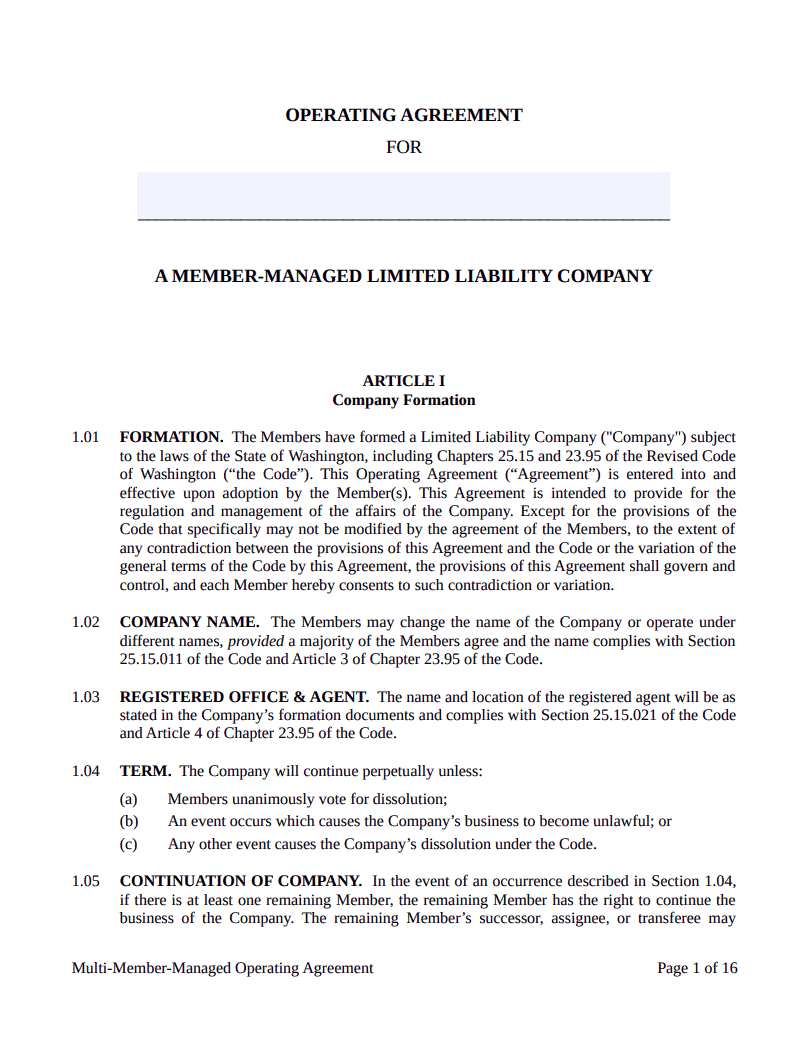
Is an LLC Operating Agreement Legally Required in Washington State?
While Washington State does not legally require LLCs to have an operating agreement, it is strongly recommended. The Washington State Legislature (RCW 25.15.006) allows LLCs to govern their internal affairs by agreement, but failure to create one means default state laws will apply.
- No statutory mandate for an operating agreement.
- Default rules under the Washington Limited Liability Company Act apply without one.
- Custom agreements override state defaults, offering flexibility.
Why Should Washington LLCs Create an Operating Agreement?
An operating agreement provides legal clarity and operational structure, even if not required. It helps prevent disputes and ensures members align on critical business decisions.
- Defines member roles, profit-sharing, and voting rights.
- Strengthens liability protection by separating personal and business assets.
- Provides a framework for resolving conflicts or dissolving the LLC.
What Happens Without an Operating Agreement in Washington?
Without an operating agreement, Washington LLCs default to state-mandated rules, which may not align with members’ intentions. This can lead to unintended outcomes during disputes or management changes.
- Membership changes or exits may follow rigid statutory procedures.
- Profit/loss distribution defaults to equal shares, regardless of contributions.
- Management authority defaults to all members, complicating decision-making.
Key Components of a Washington LLC Operating Agreement
A well-drafted agreement should address management structure, financial arrangements, and dispute resolution. Tailoring it to the LLC’s needs is critical.
- Specify whether the LLC is member-managed or manager-managed.
- Outline capital contributions and distribution schedules.
- Include procedures for adding/removing members or dissolving the LLC.
How to Draft or Update an Operating Agreement in Washington
While templates exist, consulting a business attorney ensures compliance and customization. Amendments require member consensus unless otherwise stated.
- Use state-specific templates as a starting point.
- Review and update the agreement during major business changes.
- Formalize amendments in writing with member signatures.
Is an LLC operating agreement the same as an LLC agreement?
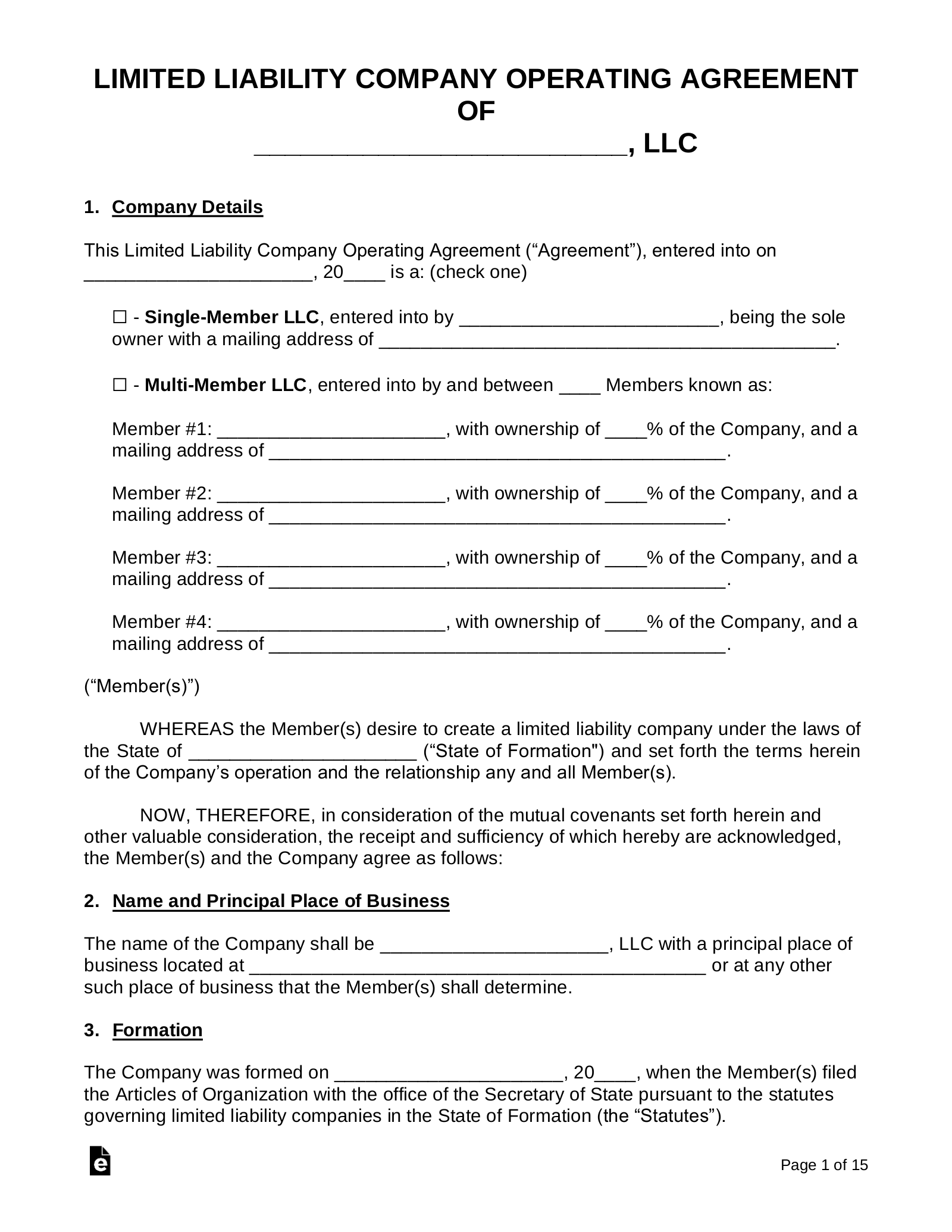
Is an LLC Operating Agreement the Same as an LLC Agreement?
An LLC Operating Agreement and an LLC Agreement are typically the same document. The terminology varies by region or legal preference, but both refer to the internal governing contract outlining the rights, responsibilities, and operational rules for an LLC's members. Key aspects include:
- Ownership structure: Defines member ownership percentages and capital contributions.
- Management roles: Clarifies whether the LLC is member-managed or manager-managed.
- Profit distribution: Establishes how profits and losses are allocated among members.
Understanding the Terminology: LLC Operating Agreement vs. LLC Agreement
The terms are often used interchangeably, but subtle differences in phrasing may arise depending on jurisdiction or drafting conventions. For example:
- Legal terminology: Some states or legal professionals prefer one term over the other.
- Purpose: Both documents serve the same core function of governing the LLC’s operations.
- State statutes: Certain states explicitly reference operating agreements in their LLC laws.
Key Components of an LLC Operating Agreement
An effective LLC Operating Agreement includes critical provisions to prevent disputes and ensure smooth operations. Essential elements are:
- Membership details: Names, contact information, and ownership stakes of all members.
- Voting rights: Rules for decision-making processes and member voting power.
- Dissolution clauses: Procedures for winding down the LLC if necessary.
Common Misconceptions About LLC Agreements
Misunderstandings about LLC agreements can lead to legal gaps. Clarifications include:
- Not always required by law: Some states don’t mandate an operating agreement, but it’s highly advisable.
- Oral agreements are insufficient: Written documentation is legally enforceable and reduces ambiguity.
- Customization matters: Templates may not address unique business needs or state-specific rules.
State Requirements for LLC Operating Agreements
While not universally required, many states strongly recommend having an LLC Operating Agreement. Key considerations:
- Mandatory states: A few states, like New York and Missouri, require an operating agreement at formation.
- Legal protection: Without one, default state LLC laws govern operations, which may not align with member intentions.
- Banking and compliance: Banks often request the agreement to open business accounts or secure loans.
Amending an LLC Operating Agreement
Changes to the agreement require formal processes to maintain legal validity. Steps include:
- Member approval: Amendments typically require a majority or unanimous member vote.
- Documentation: Revisions must be in writing and signed by all members.
- Filing updates: Notify relevant institutions (e.g., banks) of material changes.
How much does it cost to draft an LLC operating agreement?
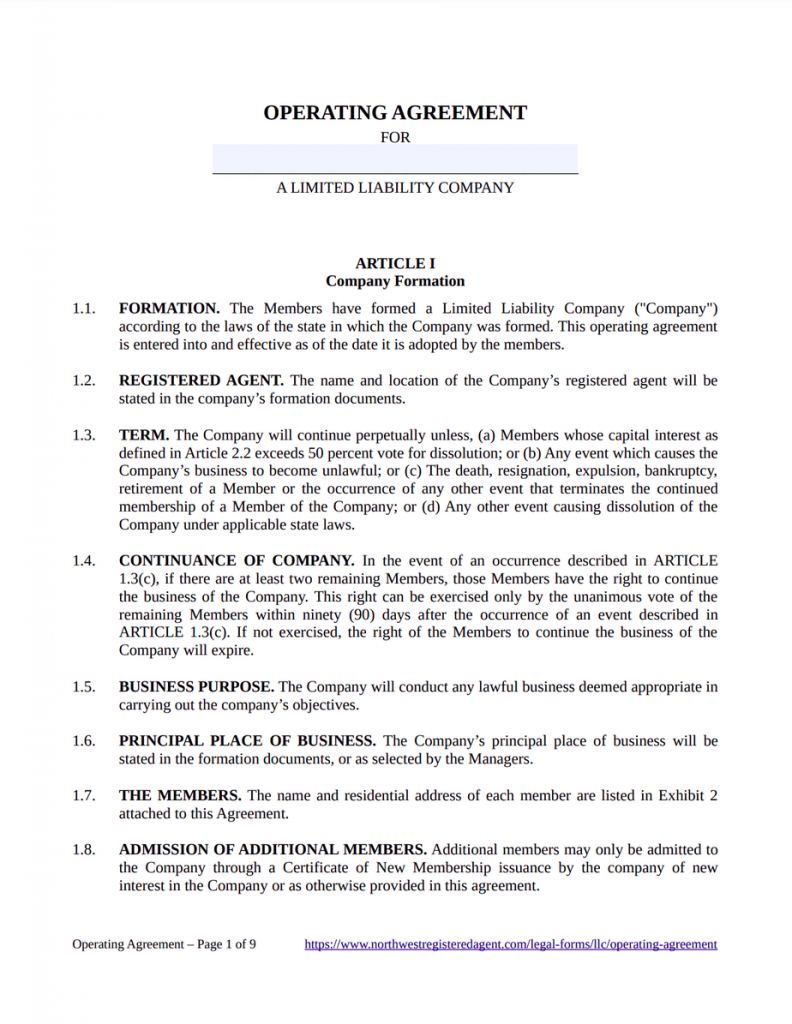
Factors Influencing the Cost of Drafting an LLC Operating Agreement
The cost to draft an LLC operating agreement varies based on factors like complexity, state requirements, and professional assistance. Agreements with custom clauses, multi-member provisions, or specialized industry rules typically cost more.
- Business complexity: Multi-member LLCs or those with unique profit-sharing structures require more detailed drafting.
- Legal expertise: Hiring an attorney increases costs but ensures compliance and customization.
- Template vs. custom: Online templates are cheaper but may lack state-specific or nuanced provisions.
Average Costs for Drafting an LLC Operating Agreement
The average cost ranges from $100 to $1,500+, depending on the drafting method.
- Online templates: $0–$100 (limited customization).
- Legal software: $50–$300 (pre-built, state-specific options).
- Attorney-drafted: $500–$1,500+ (tailored to complex needs).
Attorney Fees vs. Online Services for LLC Operating Agreements
Choosing between an attorney and an online service impacts both cost and quality.
- Attorney advantages: Personalized advice, legal compliance, and dispute prevention.
- Online service advantages: Affordability, speed, and basic legal frameworks.
- Hybrid approach: Some attorneys offer fixed-fee packages for simple LLCs.
Beyond the initial fee, hidden costs may arise from revisions, state filing fees, or future disputes.
- Amendments: Changing terms later may incur additional legal fees.
- Compliance updates: State law changes might require agreement updates.
- Dispute resolution: Poorly drafted agreements can lead to costly litigation.
How to Reduce Costs for an LLC Operating Agreement
Minimize expenses by prioritizing clarity, research, and strategic outsourcing.
- Use templates wisely: Customize reputable templates for basic needs.
- Consult attorneys selectively: Pay for legal reviews only for critical sections.
- Leverage free resources: State government websites often provide guidelines.
Frequently Asked Questions About LLCs (FAQs)
Is an LLC Operating Agreement required for Washington State LLCs?
Washington State does not legally require LLCs to have an Operating Agreement. However, drafting one is strongly recommended to establish clear rules for governance, profit distribution, member roles, and dispute resolution. Without an Operating Agreement, your LLC defaults to Washington’s default LLC statutes under the Revised Code of Washington (RCW 25.15), which may not align with your business’s specific needs. An agreement also reinforces your LLC’s limited liability protection by demonstrating a separation between personal and business affairs.
What key provisions should a Washington LLC Operating Agreement include?
A comprehensive Operating Agreement for a Washington LLC should outline member ownership percentages, voting rights, profit/loss allocations, management structure (member-managed vs. manager-managed), and procedures for adding/removing members. It should also address dissolution processes, buyout rules, and meeting protocols. Include clauses for resolving disputes, such as mediation or arbitration. Washington-specific requirements, like maintaining a registered agent and adhering to annual reporting, should also be referenced to ensure compliance.
Can a Washington LLC Operating Agreement be amended after formation?
Yes, a Washington LLC Operating Agreement can be amended if all members unanimously consent to the changes, unless the original agreement specifies a different amendment process (e.g., majority vote). Amendments should be documented in writing, signed by members, and kept with the LLC’s records. For significant changes, such as altering ownership structures, consider filing an updated Certificate of Formation with the Washington Secretary of State if required. Regularly updating the agreement ensures it stays aligned with the LLC’s evolving needs.
What happens if a Washington LLC operates without an Operating Agreement?
Without an Operating Agreement, a Washington LLC is governed solely by the default state laws in RCW 25.15. This can lead to uncertainty in decision-making, profit-sharing disputes, and difficulties resolving member conflicts. For example, the state defaults to equal profit distribution regardless of individual contributions, which may not reflect member intentions. Additionally, courts may disregard the LLC’s liability protection if there’s no formal agreement proving the business’s operational separateness from its owners. An Operating Agreement mitigates these risks by providing clear, customized guidelines.
Leave a Reply
Our Recommended Articles