
Indiana LLC Operating Agreement

An Indiana LLC Operating Agreement is a foundational document that outlines the structure, management, and operational guidelines for a limited liability company (LLC) within the state. While Indiana law does not legally require LLCs to adopt an operating agreement, creating one is highly recommended to establish clear expectations among members, define roles and responsibilities, and protect the company’s limited liability status. This customizable agreement addresses critical aspects such as profit-sharing, decision-making processes, dispute resolution, and procedures for adding or removing members. By formalizing these terms, an operating agreement helps prevent misunderstandings, ensures compliance with state regulations, and provides a legal framework tailored to the unique needs of the business.
- Understanding the Indiana LLC Operating Agreement: Key Components and Legal Requirements
- Does Indiana require an LLC operating agreement?
-
Can I write my own operating agreement for my LLC?
- Is It Legally Permissible to Draft Your Own LLC Operating Agreement?
- What Are the Benefits of Writing Your Own Operating Agreement?
- What Key Elements Should a Self-Drafted Operating Agreement Include?
- What Risks Are Involved in Drafting Your Own Operating Agreement?
- When Should You Consult an Attorney for an Operating Agreement?
- Should an LLC have an operating agreement?
- What are the pitfalls of an LLC operating agreement?
- Frequently Asked Questions About LLCs (FAQs)
Understanding the Indiana LLC Operating Agreement: Key Components and Legal Requirements
Key Components of an Indiana LLC Operating Agreement
The Indiana LLC Operating Agreement outlines the management structure, profit distribution, and member roles within the business. It serves as a foundational document to govern operations, resolve disputes, and ensure compliance with state laws. Key elements include membership provisions, voting rights, dissolution procedures, and rules for adding or removing members.
See AlsoTennessee LLC Operating Agreement| Component | Description |
|---|---|
| Management Structure | Specifies if the LLC is member-managed or manager-managed. |
| Membership Interests | Defines ownership percentages and capital contributions. |
| Voting Rights | Outlines decision-making processes and voting thresholds. |
| Profit/Loss Allocation | Details how profits and losses are distributed among members. |
| Dissolution Terms | Explains conditions for dissolving the LLC. |
Legal Requirements for an Indiana LLC Operating Agreement
Indiana law does not mandate LLCs to file their Operating Agreement, but having one is strongly recommended. The agreement must align with the Indiana Code Title 23, Article 18 (Indiana Uniform Limited Liability Company Act). Key legal requirements include adherence to state statutes, clarity on member liability, and proper documentation of amendments.
| Requirement | Details |
|---|---|
| State Compliance | Must follow Indiana LLC laws, even if not filed with the state. |
| Member Liability | Clarifies that members are not personally liable for LLC debts. |
| Amendment Process | Requires member consent and formal documentation. |
| Registered Agent | Must list a registered agent with an Indiana address. |
Customizing Your Indiana LLC Operating Agreement
An Indiana LLC Operating Agreement can be tailored to meet the unique needs of the business. Custom clauses may include non-compete agreements, confidentiality terms, or specialized profit-sharing formulas. Flexibility in drafting allows members to address scenarios like member exit strategies or dispute resolution methods.
See AlsoLLC Operating Agreement: Ohio| Customization | Purpose |
|---|---|
| Non-Compete Clauses | Prevents members from starting competing businesses. |
| Dispute Resolution | Specifies mediation or arbitration processes. |
| Transfer Restrictions | Limits selling or transferring membership interests. |
| Special Allocations | Allocates profits/losses differently than ownership percentages. |
Filing and Compliance Considerations
While Indiana does not require filing the Operating Agreement, businesses must still comply with annual reporting and tax obligations. The agreement should reference the LLC’s EIN, state registration number, and registered agent details to ensure alignment with public records.
| Consideration | Details |
|---|---|
| Annual Report | Due every two years with the Indiana Secretary of State. |
| State Fees | Includes $50 biennial report fee and initial formation fees. |
| Tax Filings | Federal and state tax IDs must be updated in the agreement. |
| Recordkeeping | Maintain the agreement at the LLC’s principal office. |
Amending an Indiana LLC Operating Agreement
Amendments require member approval as outlined in the original agreement. Common reasons for amendments include adding members, changing management structures, or updating financial terms. All changes must be documented in writing and signed by authorized members.
See AlsoLLC Operating Agreement: Montana| Step | Process |
|---|---|
| Proposal | A member proposes changes during a formal meeting. |
| Voting | Members vote per the agreement’s specified majority. |
| Documentation | Revised agreement is drafted and signed. |
| Distribution | Copies are shared with all members and stored securely. |
Does Indiana require an LLC operating agreement?
Is an LLC Operating Agreement Legally Required in Indiana?
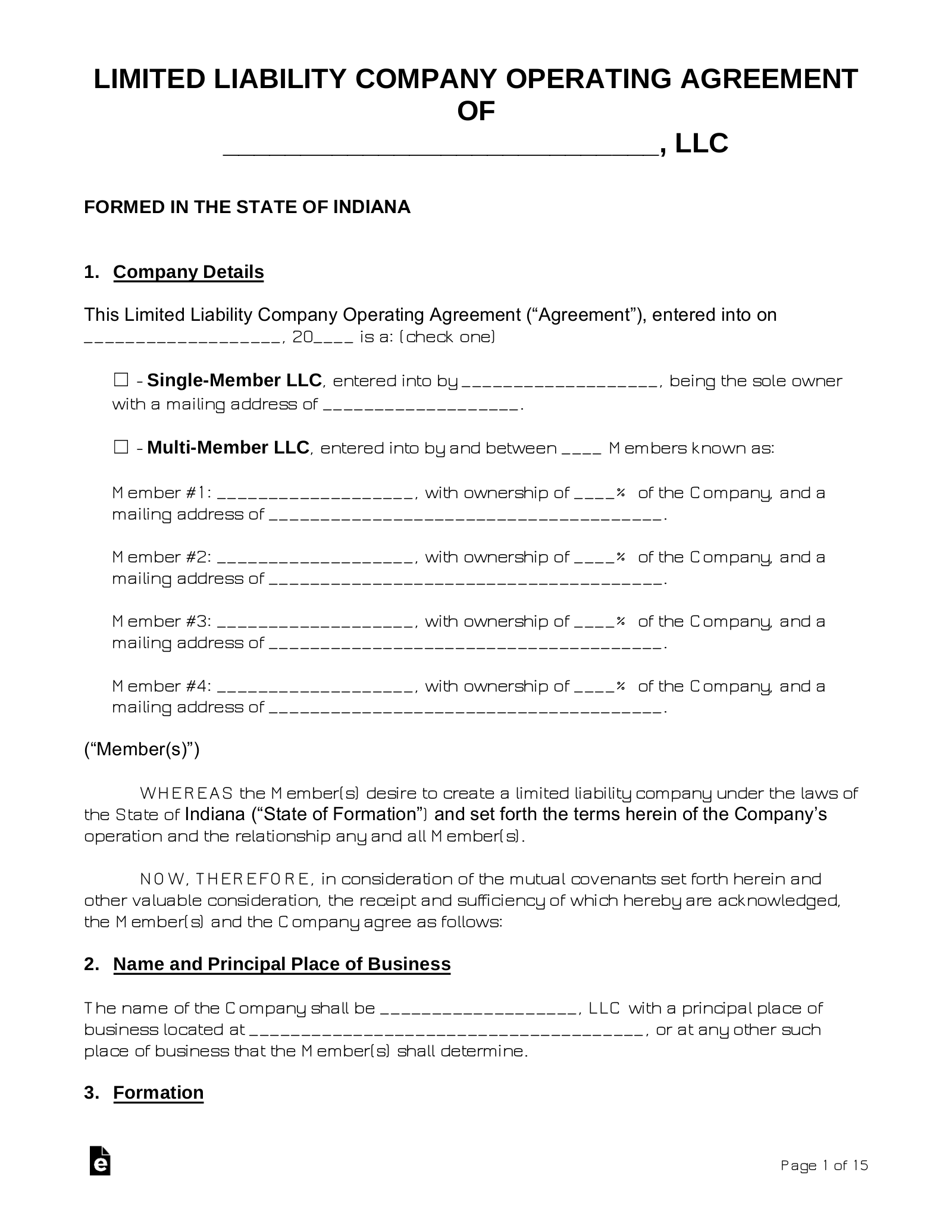
Indiana does not legally require LLCs to have an operating agreement. Unlike some states, Indiana’s LLC statutes do not mandate the creation or filing of this document. However, while it is optional, having one is strongly advised to clarify member roles, profit distribution, and dispute resolution processes.
See AlsoLLC Operating Agreement: ColoradoKey Benefits of Drafting an Operating Agreement for Indiana LLCs
An operating agreement provides legal and operational clarity for LLCs, even in Indiana where it is not required. Benefits include:
- Defining member roles: Establishes management structure and responsibilities.
- Protecting limited liability status: Helps prevent courts from disregarding the LLC’s separate legal entity.
- Customizing rules: Overrides default state laws, allowing tailored governance.
What Should an Indiana LLC Operating Agreement Include?
A well-drafted operating agreement for an Indiana LLC should cover:
See AlsoIowa LLC Operating Agreement- Ownership percentages: Specifies each member’s stake in the LLC.
- Voting rights and procedures: Outlines decision-making processes.
- Dissolution terms: Details conditions for winding down the business.
Risks of Not Having an Operating Agreement in Indiana
Operating without an agreement exposes the LLC to risks such as:
- Default state rules: Indiana’s generic LLC laws will govern disputes.
- Member conflicts: Unclear profit-sharing or management roles may lead to litigation.
- Loss of liability protection: Courts may pierce the corporate veil without clear operational guidelines.
How to Create an Operating Agreement for an Indiana LLC
To draft an operating agreement in Indiana:
- Consult an attorney: Ensure compliance with state laws and address unique business needs.
- Use templates cautiously: Customize generic templates to reflect the LLC’s structure.
- Review and update: Revise periodically as the business evolves or membership changes.
Can I write my own operating agreement for my LLC?
Is It Legally Permissible to Draft Your Own LLC Operating Agreement?
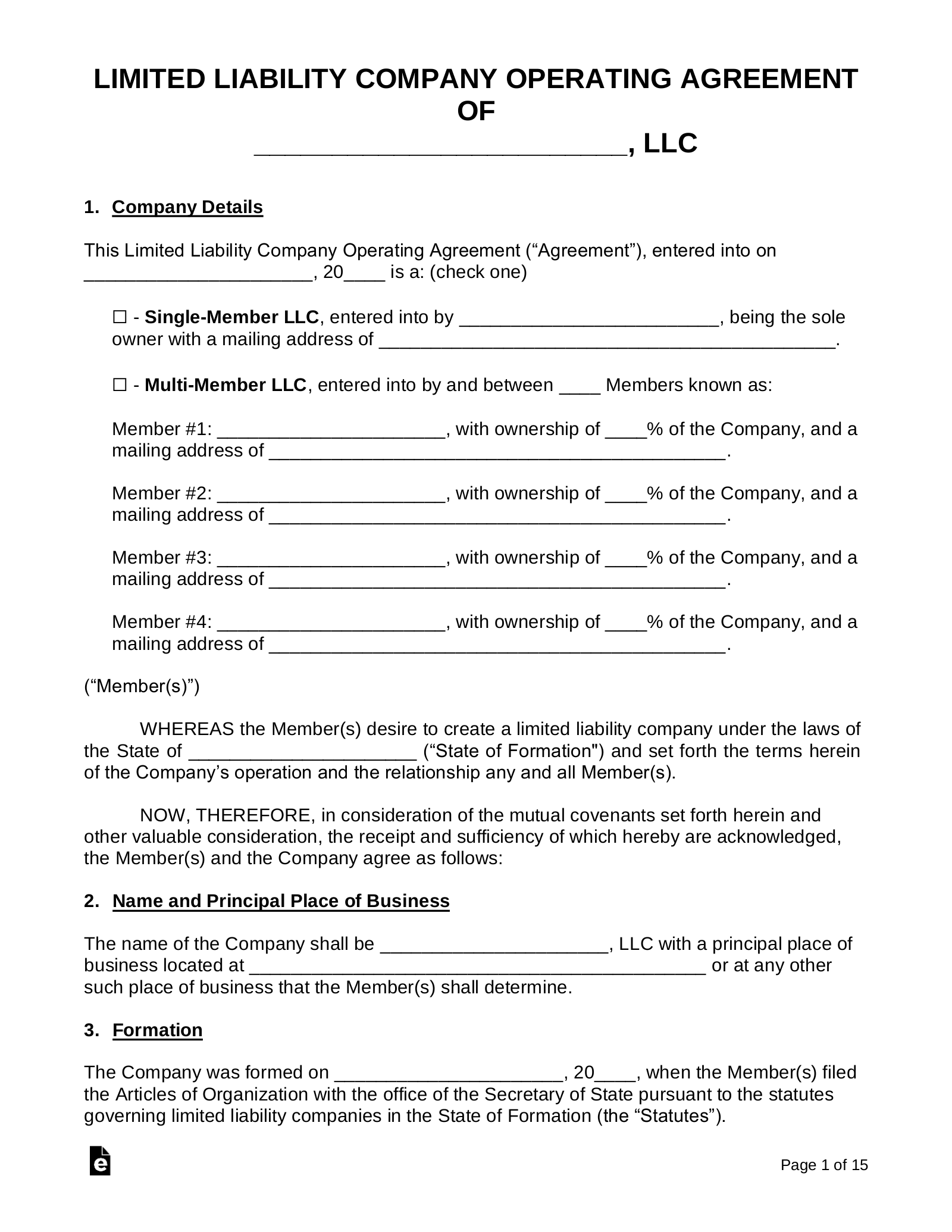
Yes, you can legally draft your own operating agreement for your LLC in most U.S. states. While some states do not explicitly require an operating agreement, having one is highly recommended to define member roles, profit distribution, and dispute resolution. However, ensure it complies with your state-specific LLC laws and covers mandatory clauses.
- Check your state’s LLC statutes for required provisions.
- Use templates or guides tailored to your state’s regulations.
- Avoid generic language that may conflict with local laws.
What Are the Benefits of Writing Your Own Operating Agreement?
Creating a custom operating agreement allows you to tailor rules to your LLC’s unique needs. It provides clarity on management structure, voting rights, and financial processes while reducing reliance on default state rules.
- Flexibility to outline member responsibilities.
- Cost savings compared to hiring an attorney.
- Clear guidelines for resolving internal conflicts.
What Key Elements Should a Self-Drafted Operating Agreement Include?
A comprehensive operating agreement must address management structure, profit distribution, and dissolution procedures. Missing critical clauses could lead to legal vulnerabilities.
- Member ownership percentages and capital contributions.
- Voting rights and decision-making processes.
- Procedures for adding/removing members or dissolving the LLC.
What Risks Are Involved in Drafting Your Own Operating Agreement?
Self-drafted agreements risk oversights or ambiguous language, which may lead to disputes or non-compliance with state laws. Without legal expertise, you might miss nuanced requirements.
- Unenforceable clauses due to non-compliance.
- Gaps in dispute resolution mechanisms.
- Potential tax implications from improper structuring.
When Should You Consult an Attorney for an Operating Agreement?
Seek legal advice if your LLC has complex ownership structures, multi-state operations, or unique profit-sharing arrangements. An attorney ensures compliance and minimizes risks.
- Multi-member LLCs with unequal contributions.
- Plans for future fundraising or mergers.
- Unfamiliarity with state-specific legal jargon.
Should an LLC have an operating agreement?
Yes, an LLC should have an operating agreement even if not legally required in all states. It establishes clear rules, roles, and procedures, minimizes disputes, and strengthens the company’s legal standing. Without one, default state laws may govern the LLC, which might not align with members’ intentions.
Why Is an Operating Agreement Legally Advisable for an LLC?
An operating agreement provides a legally recognized framework for managing the LLC. While some states don’t mandate it, courts often rely on such agreements to resolve internal disputes. Key reasons include:
- Clarifies ownership structure: Defines member percentages, profit-sharing, and voting rights.
- Overrides default state laws: Tailors governance to the LLC’s needs instead of generic statutes.
- Enhances credibility: Banks or investors may require it to verify the LLC’s legitimacy.
How Does an Operating Agreement Protect LLC Members?
It safeguards members’ personal assets and ensures fair treatment by formalizing expectations. For example:
- Limits liability: Reinforces the separation between personal and business assets.
- Defines roles: Outlines management responsibilities and decision-making authority.
- Prevents misunderstandings: Addresses scenarios like member exit or dissolution upfront.
What Financial Benefits Come with an Operating Agreement?
A well-drafted agreement ensures financial transparency and compliance. Benefits include:
- Tax flexibility: Allows members to choose how the LLC is taxed (e.g., as a partnership or corporation).
- Clear profit distribution: Specifies how and when profits/losses are allocated.
- Funding access: Lenders often review operating agreements before approving loans.
Can an LLC Operate Without an Operating Agreement?
While possible, operating without one risks legal and operational vulnerabilities. Consequences may involve:
- State default rules: Courts may impose generic guidelines that don’t suit the LLC.
- Member disputes: Unclear processes can lead to conflicts over management or profits.
- Loss of liability protection: Courts might pierce the corporate veil if the LLC appears informal.
How to Customize an Operating Agreement for Specific Needs?
Tailoring the agreement ensures it aligns with the LLC’s unique goals. Consider including:
- Management structure: Member-managed vs. manager-managed provisions.
- Dispute resolution: Processes for mediation, voting thresholds, or buyout terms.
- Amendment procedures: Rules for modifying the agreement as the business evolves.
What are the pitfalls of an LLC operating agreement?
1. Ambiguity in Roles and Responsibilities
A poorly drafted LLC operating agreement often fails to clearly define member roles, decision-making authority, and operational responsibilities. This can lead to confusion, disputes, and inefficiencies. For example:
- Unclear management structure may result in overlapping responsibilities or power struggles.
- Lack of voting procedures can stall critical decisions during member disagreements.
- Undefined duties for managers or members may create accountability gaps.
2. Inadequate Profit and Loss Allocation Terms
Without precise language on profit distribution and loss allocation, members may face unexpected financial liabilities or inequitable outcomes. Common issues include:
- Silence on distribution schedules, leading to disputes over timing and amounts.
- Failure to align allocations with tax obligations, causing IRS compliance risks.
- Unclear formulas for dividing profits, which may favor certain members unfairly.
3. Poorly Defined Dissolution or Exit Clauses
Many LLC agreements neglect to outline exit strategies or dissolution processes, complicating member departures or business closures. Key pitfalls include:
- No buy-sell provisions for member exits, resulting in valuation disputes.
- Missing death/disability clauses, forcing heirs into legal battles.
- Vague dissolution steps, delaying asset distribution or debt resolution.
4. Overlooking State-Specific Compliance Requirements
LLC operating agreements must align with state laws, but generic templates often ignore jurisdictional nuances. Risks involve:
- Non-compliant filing requirements, invalidating the LLC’s legal standing.
- Ignoring mandatory clauses (e.g., registered agent details), exposing the LLC to penalties.
- Conflicting provisions with state default rules, creating unenforceable terms.
5. Failure to Address Dispute Resolution Mechanisms
The absence of dispute resolution protocols can escalate conflicts into costly litigation. Critical omissions include:
- No mediation/arbitration clauses, forcing members into court.
- Unclear jurisdiction rules for legal proceedings, prolonging disputes.
- Lack of deadlock-breaking procedures, paralyzing decision-making during stalemates.
Frequently Asked Questions About LLCs (FAQs)
Is an Indiana LLC Operating Agreement legally required?
Indiana does not legally require LLCs to have an Operating Agreement. However, creating one is strongly recommended to define the rights, responsibilities, and relationships between members, as well as establish clear rules for governance, profit distribution, and dispute resolution. Without this document, your LLC will default to Indiana’s default state statutes, which may not align with your business’s specific needs.
What should be included in an Indiana LLC Operating Agreement?
A comprehensive Indiana LLC Operating Agreement should outline the membership structure (single-member or multi-member), capital contributions, profit-sharing ratios, management roles (member-managed vs. manager-managed), voting procedures, and dissolution processes. It should also address procedures for adding/removing members, dispute resolution, and how amendments to the agreement will be handled.
Can an Indiana LLC Operating Agreement be amended?
Yes, an Indiana LLC Operating Agreement can be amended if the members agree to the changes. The original agreement should specify the process for amendments, such as requiring a majority or unanimous vote. Any revisions should be documented in writing, signed by all members, and kept with the LLC’s official records to ensure legal enforceability.
Do I need to file my Indiana LLC Operating Agreement with the state?
No, Indiana does not require LLCs to file their Operating Agreement with the Secretary of State or any other government agency. The document is an internal record that should be retained by the LLC and its members. However, ensure it is properly signed, dated, and stored securely to validate its enforceability in legal or financial disputes.
Leave a Reply
Our Recommended Articles