
Single Member LLC: Wyoming

A Single Member Limited Liability Company (SMLLC) in Wyoming combines the simplicity of a sole proprietorship with robust liability protection, making it a preferred choice for entrepreneurs. Renowned for its business-friendly environment, Wyoming offers significant advantages such as no state income tax, minimal annual fees, and stringent privacy safeguards that shield member identities. The state’s flexible management structure allows owners to operate with minimal formalities, while asset protection laws ensure personal and business assets remain separate. Additionally, Wyoming’s reputation as a corporate haven attracts both domestic and international investors. For those seeking a streamlined, secure business entity, the Wyoming SMLLC stands out as an optimal solution.
Benefits and Requirements of Forming a Single Member LLC in Wyoming
Wyoming is a popular state for forming a Single Member LLC due to its business-friendly laws, tax advantages, and privacy protections. A Wyoming Single Member LLC combines the flexibility of a sole proprietorship with the liability protection of a corporation. Owners enjoy no state income tax, minimal reporting requirements, and the ability to keep their identity private. Additionally, Wyoming does not require operating agreements to be filed with the state, though drafting one is recommended for legal clarity.
See AlsoSingle Member LLC: MassachusettsPrivacy Advantages for Wyoming Single Member LLCs
Wyoming offers exceptional privacy protections for LLC owners. The state does not require members’ or managers’ names to be listed in public filings, allowing for anonymity. A registered agent is the only contact disclosed publicly. Wyoming also permits the use of nominee services, where a third party can act as the LLC’s representative, further shielding the owner’s identity.
| Privacy Feature | Details |
| Anonymous Ownership | No member names in public records |
| Nominee Services | Third-party representation allowed |
| Registered Agent Privacy | Agent’s address replaces owner’s in filings |
Tax Benefits of a Wyoming Single Member LLC
Wyoming’s tax structure is highly advantageous for LLCs. The state imposes no corporate income tax, no personal income tax, and no franchise tax. Owners report profits on their federal tax returns via pass-through taxation, avoiding double taxation. Wyoming also exempts LLCs from state-level capital gains taxes, making it ideal for asset holders.
See AlsoSingle Member LLC: Colorado| Tax Type | Wyoming Policy |
| State Income Tax | None |
| Franchise Tax | None |
| Capital Gains Tax | Exempt at state level |
Steps to Form a Single Member LLC in Wyoming
Forming a Single Member LLC in Wyoming involves:
1. Choosing a unique business name compliant with state rules.
2. Appointing a registered agent with a Wyoming address.
3. Filing Articles of Organization with the Secretary of State.
4. Paying the $100 filing fee.
5. Creating an operating agreement (optional but recommended).
6. Obtaining an EIN from the IRS for tax purposes.
| Step | Requirement |
| Name Reservation | Must include LLC or Limited Liability Company |
| Registered Agent | Mandatory for legal compliance |
| Filing Fee | $100 (online or mail) |
Asset Protection in Wyoming Single Member LLCs
Wyoming law provides robust asset protection for LLC owners. Creditors cannot seize an owner’s LLC interest to satisfy personal debts; they are limited to a charging order, which grants only a claim to future profits. Additionally, Wyoming’s charging order protection applies to both multi-member and single-member LLCs, unlike many states.
See AlsoWyoming Single Member LLC Operating Agreement| Protection Type | Description |
| Charging Order Limitation | Creditors cannot force asset liquidation |
| Separation of Assets | Personal and business assets remain distinct |
| Liability Shield | Owner not personally liable for LLC debts |
Ongoing Compliance for Wyoming Single Member LLCs
Wyoming has minimal ongoing compliance requirements. LLCs must file an annual report with a $60 fee and maintain a registered agent. There are no requirements for annual meetings or residency. Failure to file the report may result in administrative dissolution.
| Requirement | Details |
| Annual Report | Due by January 1 each year ($60 fee) |
| Registered Agent | Must remain active |
| State Taxes | None beyond federal obligations |
Does Wyoming allow single-member LLC?
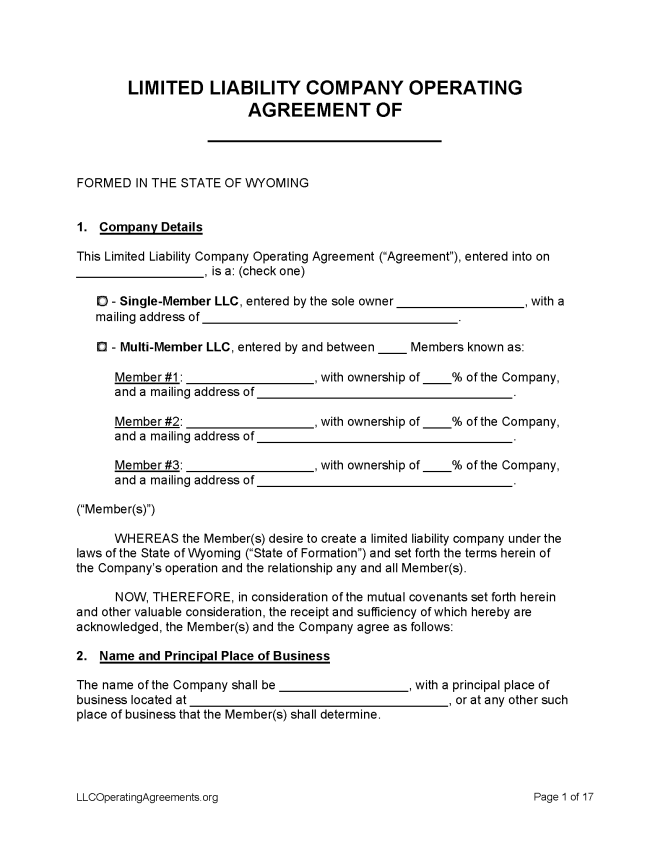
Does Wyoming Allow Single-Member LLC?
Yes, Wyoming allows single-member LLCs (Limited Liability Companies). The state’s business-friendly laws explicitly permit a single individual to form and operate an LLC. Wyoming’s Wyoming Limited Liability Company Act (Title 17, Chapter 29 of Wyoming Statutes) provides clear guidelines for formation, management, and compliance, regardless of the number of members. Key advantages include asset protection, flexibility in management, and pass-through taxation benefits.
Formation Requirements for a Single-Member LLC in Wyoming
To establish a single-member LLC in Wyoming, you must follow specific steps:
- File Articles of Organization with the Wyoming Secretary of State, including the LLC’s name, registered agent, and business purpose.
- Pay the $100 filing fee (as of 2023).
- Create an Operating Agreement, though not legally required, to outline ownership and operational rules.
Wyoming does not require members to disclose ownership publicly, enhancing privacy for business owners.
Benefits of a Wyoming Single-Member LLC
Wyoming offers unique advantages for single-member LLCs:
- No state income tax: Wyoming does not levy corporate or personal income taxes on LLC profits.
- Strong asset protection: Charging order protection shields personal assets from business debts.
- Minimal compliance requirements: No annual meetings or complex reporting obligations.
This structure is ideal for entrepreneurs seeking simplicity and legal safeguards.
Legal Protections for Single-Member LLC Owners in Wyoming
Wyoming law ensures robust protections for single-member LLC owners:
- Limited liability: Owners are not personally liable for business debts or lawsuits.
- Charging order protection: Creditors cannot seize LLC assets; they can only claim distributions.
- Privacy: Members’ names are not required in public filings.
These provisions make Wyoming a top choice for asset protection strategies.
Tax Advantages of a Wyoming Single-Member LLC
Wyoming’s tax framework benefits single-member LLCs significantly:
- No franchise tax: Unlike many states, Wyoming imposes no annual franchise tax.
- Pass-through taxation: Profits are taxed only at the federal level via the owner’s personal return.
- No sales tax: Wyoming has no state sales tax, reducing operational costs.
These tax perks enhance profitability for small businesses.
Compliance and Maintenance for Wyoming Single-Member LLCs
Maintaining a Wyoming single-member LLC involves minimal obligations:
- File an Annual Report with a $60 fee to keep the LLC active.
- Renew the Registered Agent service annually (required for legal compliance).
- Keep business and personal finances separate to preserve liability protection.
Failure to comply may result in penalties or loss of LLC status.
Is a single-member LLC a good idea?
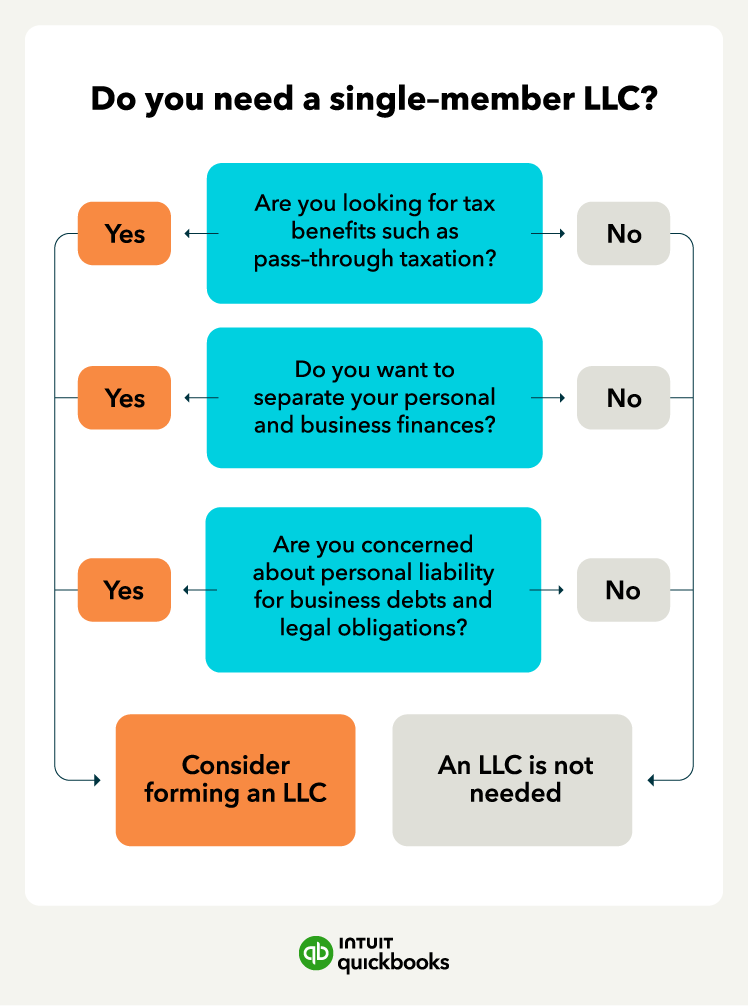
Pros and Cons of a Single-Member LLC
A single-member LLC offers limited liability protection, separating personal and business assets, which is ideal for solo entrepreneurs. However, it may lack the tax flexibility of multi-member LLCs and could face higher self-employment taxes.
- Limited liability: Shields personal assets from business debts or lawsuits.
- Simplified management: No need for complex governance structures or partner agreements.
- Tax drawbacks: Profits are subject to self-employment tax unless taxed as an S corporation.
Liability Protection for Solo Entrepreneurs
A single-member LLC provides legal separation between the owner’s personal finances and business liabilities. This structure is critical for minimizing risks in case of lawsuits or bankruptcy.
- Asset protection: Creditors cannot pursue personal homes, cars, or savings.
- Legal credibility: Enhances professionalism when dealing with clients or investors.
- Exceptions: Personal guarantees or negligence may still expose the owner to liability.
Tax Flexibility and Implications
By default, single-member LLCs are disregarded entities for tax purposes, meaning profits pass through to the owner’s personal tax return. However, owners can opt for S corporation taxation to reduce self-employment taxes.
- Pass-through taxation: Avoids double taxation seen in C corporations.
- S corporation election: Allows splitting income into salary and dividends, lowering tax burdens.
- Self-employment tax: Owners pay 15.3% on all profits unless structured as an S corp.
Ease of Formation and Management
Establishing a single-member LLC involves minimal paperwork compared to corporations, making it accessible for solopreneurs. Ongoing compliance is also simpler.
- Low startup costs: Filing fees range from $50 to $500, depending on the state.
- No board requirements: No mandatory meetings or complex record-keeping.
- Flexible profit distribution: Owners retain full control over finances.
Potential Drawbacks to Consider
While advantageous, single-member LLCs may face funding challenges and perceived instability compared to corporations or partnerships.
- Investor skepticism: Venture capitalists often prefer corporations.
- State-specific fees: Annual reporting costs vary and can add up.
- Limited growth structure: Adding members requires restructuring the LLC.
Is a Single-Member LLC Right for Your Business?
This structure suits solopreneurs prioritizing liability protection and simplicity, such as freelancers or consultants. However, businesses seeking rapid scaling or external funding may need alternatives.
- Ideal for: Freelancers, small service providers, and low-risk ventures.
- Not ideal for: High-growth startups or businesses requiring significant capital.
- Hybrid options: Pair with an S corp election for tax efficiency.
What are the disadvantages of a Wyoming LLC?
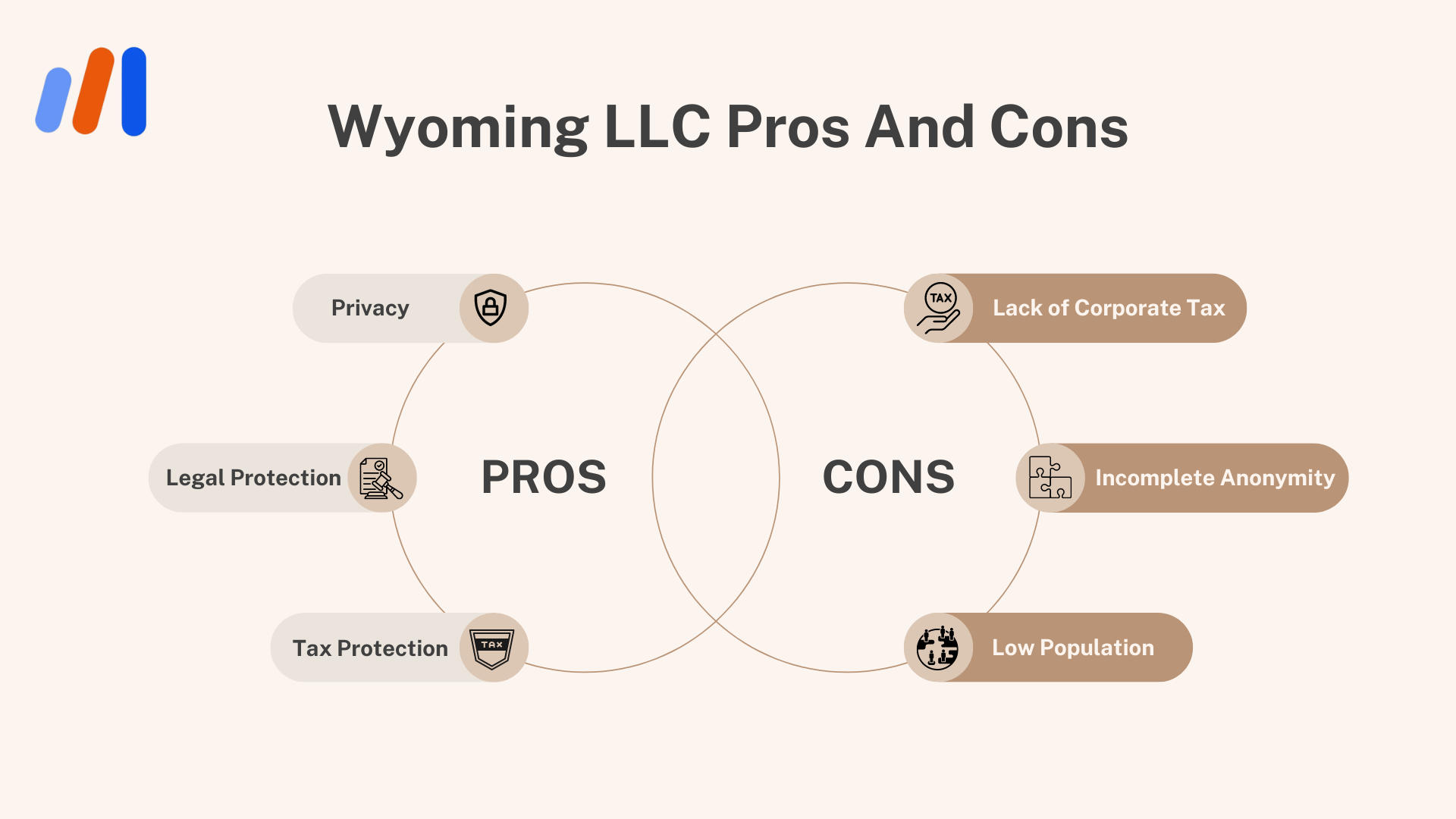
Annual Reporting and Fee Obligations
While Wyoming LLCs benefit from low fees compared to other states, annual reporting requirements and associated costs can still pose challenges. LLCs must file an annual report and pay a $60 fee to maintain good standing. Failure to comply may result in penalties or administrative dissolution.
- Annual reports require updating key business details, which can be time-sensitive.
- Additional fees for registered agent services (required in Wyoming) increase operational costs.
- Late filings incur $50 penalties, risking business continuity.
Limited Local Banking and Physical Presence
Wyoming’s small population and remote geography may complicate access to local banking services or physical business infrastructure.
- Fewer physical bank branches compared to larger states, complicating in-person transactions.
- Remote operations may necessitate reliance on online banking, which some businesses find less secure.
- No local office requirements reduce oversight but may hinder local credibility with clients.
Compliance Challenges in Other States
Wyoming LLCs operating outside the state face multi-state compliance risks, including foreign qualification requirements.
- Conducting business in other states may trigger additional taxes, fees, or reporting obligations.
- Failure to register as a foreign LLC in another state risks fines or legal penalties.
- Complexity increases for businesses with multi-state operations, requiring legal or professional guidance.
Banking Anonymity Isn’t Absolute
While Wyoming allows anonymous LLC ownership, federal banking regulations undermine full privacy.
- Banks often require beneficial ownership disclosure under federal anti-money laundering laws.
- Privacy benefits are limited to state-level records, not financial institutions.
- Non-compliance with federal disclosure rules can lead to account freezes or closures.
Complexity for Non-Resident Owners
Non-U.S. residents or businesses outside Wyoming may face administrative hurdles in managing their LLC.
- Mandatory Wyoming-registered agent adds costs for international owners.
- Time zone differences and language barriers complicate communication with state agencies.
- Tax implications in home jurisdictions may negate Wyoming’s tax advantages.
How does a single-member LLC pay himself?

How Does a Single-Member LLC Owner Compensate Themselves?
A single-member LLC owner typically pays themselves through owner’s draws, which are withdrawals of business profits. Unlike salaries, these draws are not subject to payroll taxes at the time of withdrawal. However, the owner must still report income and pay self-employment taxes and income taxes on the LLC’s net earnings.
- Owner’s draws: Transfer funds from the business account to a personal account as needed.
- No payroll setup: Single-member LLCs do not require formal payroll systems unless the owner elects S corporation status.
- Tax responsibility: Report profits on Schedule C (Form 1040) and pay estimated quarterly taxes.
What Are Owner’s Draws in a Single-Member LLC?
An owner’s draw is the primary method for a single-member LLC owner to access business profits. It is not classified as a salary but rather a distribution of earnings.
- Flexibility: Draw amounts and frequency can vary based on business performance.
- No tax withholding: Unlike salaries, draws do not have income or payroll taxes withheld upfront.
- Documentation: Maintain clear records of all draws to track business equity and tax liabilities.
Can a Single-Member LLC Owner Pay Themselves a Salary?
By default, a single-member LLC owner cannot pay themselves a traditional salary because the IRS views the LLC as a disregarded entity. However, if the LLC elects S corporation status, the owner can receive a reasonable salary alongside distributions.
- S corporation election: Requires filing Form 2553 with the IRS.
- Payroll requirements: Must run payroll, withhold taxes, and issue a W-2.
- Tax savings: Potential reduction in self-employment taxes on non-salary distributions.
How Are Taxes Handled for Single-Member LLC Owner Compensation?
All profits from a single-member LLC are subject to self-employment tax (15.3%) and federal/state income taxes, regardless of whether funds are withdrawn.
- Schedule C reporting: Profits are reported on the owner’s personal tax return.
- Estimated quarterly taxes: Owners must pay taxes quarterly to avoid penalties.
- Deductions: Business expenses reduce taxable income, lowering overall tax liability.
What Are Best Practices for Managing Owner Compensation?
To ensure compliance and financial stability, single-member LLC owners should follow structured practices when paying themselves.
- Separate accounts: Maintain distinct business and personal bank accounts.
- Regular draws: Schedule consistent withdrawals to mimic a salary for budgeting.
- Consult professionals: Work with a CPA or tax advisor to optimize tax strategy and compliance.
Frequently Asked Questions About LLCs (FAQs)
What Are the Benefits of Forming a Single Member LLC in Wyoming?
Forming a Single Member LLC in Wyoming offers several advantages, including asset protection, tax flexibility, and privacy. Wyoming does not impose state income taxes on LLCs, meaning profits are only taxed federally. The state also provides strong liability protection, separating personal and business assets to shield owners from business-related debts. Additionally, Wyoming allows anonymous LLC formation, as member names are not required to be publicly disclosed in the Articles of Organization. This makes it a popular choice for entrepreneurs prioritizing confidentiality and legal safeguards.
How Do I Form a Single Member LLC in Wyoming?
To establish a Single Member LLC in Wyoming, follow these steps: First, choose a unique business name compliant with state guidelines. Next, appoint a registered agent with a physical Wyoming address. Then, file the Articles of Organization with the Wyoming Secretary of State, paying the required filing fee. Draft an Operating Agreement to outline business operations (not mandatory but recommended). Finally, obtain an Employer Identification Number (EIN) from the IRS for tax purposes. Compliance with state regulations ensures your LLC remains in good standing.
What Are the Tax Implications for a Wyoming Single Member LLC?
A Wyoming Single Member LLC is typically treated as a disregarded entity by the IRS, meaning profits and losses pass through to the owner’s personal tax return. Wyoming does not levy corporate income tax, personal income tax, or franchise tax, reducing the overall tax burden. However, owners must still pay federal self-employment taxes and report income on their federal returns. Additionally, businesses with employees or sales tax obligations must comply with relevant state sales tax or employment tax requirements. Always consult a tax professional for tailored advice.
What Ongoing Requirements Apply to a Wyoming Single Member LLC?
Wyoming imposes minimal ongoing requirements for Single Member LLCs. Owners must file an Annual Report and pay a $60 fee to the Secretary of State each year. Failure to do so may result in penalties or dissolution. While Wyoming does not require operating agreements or member meetings, maintaining clear separation between personal and business finances is critical for preserving liability protection. Additionally, businesses must update the state about changes to the registered agent or business address. Staying compliant ensures long-term legal and financial benefits.
Leave a Reply
Our Recommended Articles