
As a Vc or Business Angel What is Your Checklist When You Invest in a Startup

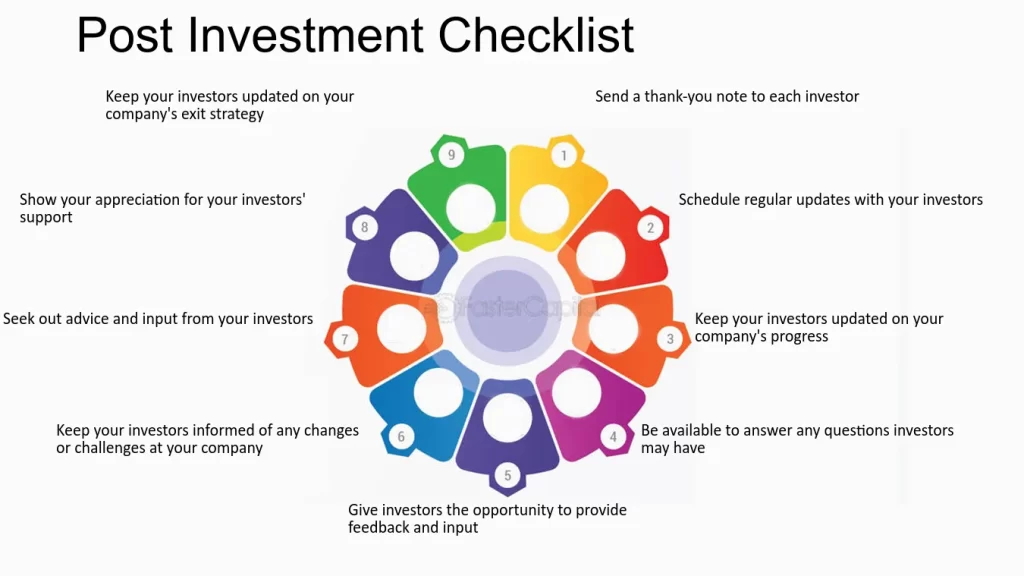
Investing in a startup as a venture capitalist (VC) or business angel is both an exciting and high-stakes endeavor. With countless opportunities and risks involved, having a clear checklist is essential to make informed decisions. This article explores the key factors that investors should consider before committing capital to a startup. From evaluating the founding team’s expertise and market potential to assessing scalability, financial projections, and exit strategies, each element plays a critical role in determining the likelihood of success. By following a structured approach, investors can minimize risks, identify promising ventures, and maximize their chances of achieving significant returns in the dynamic world of startup investments.
As a VC or Business Angel: What is Your Checklist When You Invest in a Startup?
1. Team Composition and Expertise
When investing in a startup, the team is often considered the most critical factor. A strong, cohesive team with complementary skills increases the likelihood of success. Look for founders with relevant industry experience, a clear vision, and the ability to execute their plans. Assess their track record, leadership qualities, and how well they work together. A team that demonstrates resilience and adaptability is more likely to navigate challenges effectively.
See Also I Have an Interview in Venture Capital What Are All the Things I Should Know for Modeling
| Key Aspect | Description |
|---|---|
| Experience | Founders should have a proven track record in the industry or a related field. |
| Leadership | Strong leadership skills are essential for guiding the startup through growth phases. |
| Cohesion | The team should work well together and have complementary skill sets. |
2. Market Opportunity and Scalability
The market opportunity is another crucial factor. Evaluate whether the startup is targeting a large and growing market. A scalable business model is essential for long-term success. Consider the total addressable market (TAM), serviceable available market (SAM), and serviceable obtainable market (SOM). A startup with a clear path to scaling its operations and capturing market share is more attractive to investors.
| Key Aspect | Description |
|---|---|
| TAM | Total Addressable Market: The overall revenue opportunity for the product or service. |
| SAM | Serviceable Available Market: The portion of TAM targeted by the startup. |
| SOM | Serviceable Obtainable Market: The realistic market share the startup can capture. |
3. Product or Service Differentiation
A startup's product or service must offer a unique value proposition that sets it apart from competitors. Assess the innovation, usability, and customer demand for the product. A strong competitive advantage, such as proprietary technology or intellectual property, can significantly enhance the startup's potential for success. Additionally, consider whether the product solves a real problem for its target audience.
See Also What's the Best Course on Venture Capital?
| Key Aspect | Description |
|---|---|
| Innovation | The product should offer something new or significantly better than existing solutions. |
| Usability | Ease of use and customer satisfaction are critical for adoption. |
| Competitive Advantage | Proprietary technology or unique features can create barriers to entry for competitors. |
4. Financial Health and Projections
Analyze the startup's financial health and projections to ensure it has a viable path to profitability. Review revenue streams, burn rate, and cash flow. A clear understanding of the startup's financials helps assess its ability to sustain operations and achieve growth milestones. Look for realistic and well-supported financial projections that align with the business model.
| Key Aspect | Description |
|---|---|
| Revenue Streams | Multiple sources of income can reduce risk and increase stability. |
| Burn Rate | The rate at which the startup spends its capital before generating positive cash flow. |
| Cash Flow | Positive cash flow is essential for sustaining operations and funding growth. |
5. Exit Strategy and ROI Potential
An exit strategy is a critical consideration for investors. Evaluate the startup's potential for acquisition, IPO, or other exit opportunities. Assess the return on investment (ROI) potential and the timeline for achieving it. A clear exit strategy provides confidence that the investment will yield significant returns. Additionally, consider the startup's alignment with industry trends and potential acquirers.
See Also How Does Equity Dilution Work When a Start Up Goes Through Several Rounds of Funding From Seed to Vc Etc
| Key Aspect | Description |
|---|---|
| Acquisition Potential | The likelihood of the startup being acquired by a larger company. |
| IPO Potential | The possibility of the startup going public through an initial public offering. |
| ROI | Return on Investment: The expected financial return relative to the investment amount. |
What do angel investors look for?

Strong Founding Team
Angel investors prioritize a strong founding team with a clear vision and complementary skill sets. They look for:
- Experience: Founders with a proven track record in the industry or relevant expertise.
- Passion: A genuine commitment to the business idea and the drive to overcome challenges.
- Leadership: The ability to inspire and manage a team effectively.
Scalable Business Model
Angel investors seek businesses with a scalable business model that can grow rapidly and generate significant returns. Key factors include:
- Market Potential: A large and growing target market with unmet needs.
- Revenue Streams: Multiple or innovative ways to generate income.
- Low Operational Costs: The ability to scale without proportionally increasing costs.
Unique Value Proposition
A unique value proposition is critical to attract angel investors. They look for:
- Innovation: A product or service that stands out from competitors.
- Problem-Solving: A clear solution to a pressing problem in the market.
- Customer Demand: Evidence that customers are willing to pay for the offering.
Traction and Milestones
Angel investors are more likely to invest in startups that have demonstrated traction and milestones. This includes:
- Customer Acquisition: A growing customer base or early sales.
- Partnerships: Strategic alliances that validate the business model.
- Product Development: Progress in developing and refining the product or service.
Exit Strategy
Angel investors want to see a clear exit strategy that outlines how they will realize a return on their investment. They focus on:
- Acquisition Potential: The likelihood of the company being acquired by a larger firm.
- IPO Possibility: The potential for the company to go public.
- Timeline: A realistic timeframe for achieving the exit.
How do VCs find startups to invest in?
Networking and Referrals
Venture capitalists (VCs) often rely on their extensive networks to find promising startups. They build relationships with entrepreneurs, other investors, and industry experts who can refer them to high-potential companies. Key methods include:
- Attending industry events and conferences to meet founders.
- Leveraging warm introductions from trusted contacts.
- Collaborating with accelerators and incubators that nurture early-stage startups.
Cold Outreach and Deal Flow Platforms
VCs also proactively search for startups through cold outreach and specialized platforms. These platforms aggregate startups and provide tools for investors to filter and identify opportunities. Common approaches include:
- Using deal flow platforms like AngelList, Crunchbase, or PitchBook.
- Scouring startup directories and databases for innovative companies.
- Reaching out directly to founders via email or LinkedIn.
University and Research Institutions
Many VCs focus on emerging technologies and innovations originating from universities and research institutions. They often:
- Partner with tech transfer offices to access cutting-edge research.
- Attend university pitch competitions and demo days.
- Engage with student-led startups and entrepreneurial programs.
Portfolio Company Referrals
Existing portfolio companies can be a valuable source of referrals for VCs. Founders and executives within the portfolio often recommend other startups they believe align with the VC's investment thesis. This process involves:
- Encouraging portfolio founders to share their networks.
- Hosting networking events for portfolio companies to connect.
- Building a community that fosters collaboration and referrals.
Online Presence and Media
VCs monitor online channels and media to identify startups gaining traction. They track news, blogs, and social media to spot trends and rising companies. Key strategies include:
- Following tech blogs and industry publications.
- Monitoring social media platforms like Twitter and LinkedIn for startup announcements.
- Analyzing media coverage of emerging companies and sectors.
What are the requirements for angel investor?
Financial Capacity
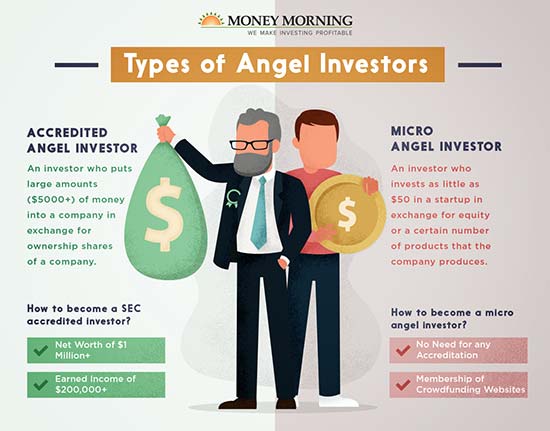
Angel investors need to have significant financial resources to invest in startups. This typically involves:
- Having a high net worth, often exceeding $1 million, excluding the value of their primary residence.
- Being able to allocate a portion of their wealth to high-risk investments without jeopardizing their financial stability.
- Understanding that returns may take several years to materialize, if at all.
Industry Knowledge
Angel investors should possess deep industry knowledge to make informed decisions. This includes:
- Having experience or expertise in the specific sector they are investing in.
- Staying updated on market trends and emerging technologies.
- Being able to evaluate the potential of a startup based on its business model and market fit.
Risk Tolerance
Angel investing is inherently risky, and investors must have a high risk tolerance. Key points include:
- Accepting that a significant portion of their investments may fail.
- Being prepared for the possibility of losing their entire investment in some cases.
- Understanding that the potential for high returns comes with high uncertainty.
Networking Skills
Effective networking skills are crucial for angel investors. This involves:
- Building relationships with entrepreneurs, other investors, and industry experts.
- Participating in startup events, pitch competitions, and industry conferences.
- Leveraging their network to provide mentorship and support to the startups they invest in.
Due Diligence
Conducting thorough due diligence is essential before making an investment. This includes:
- Analyzing the startup's financial statements and business plan.
- Evaluating the management team and their track record.
- Assessing the market potential and competitive landscape of the startup.
What do venture capitalists typically invest in?
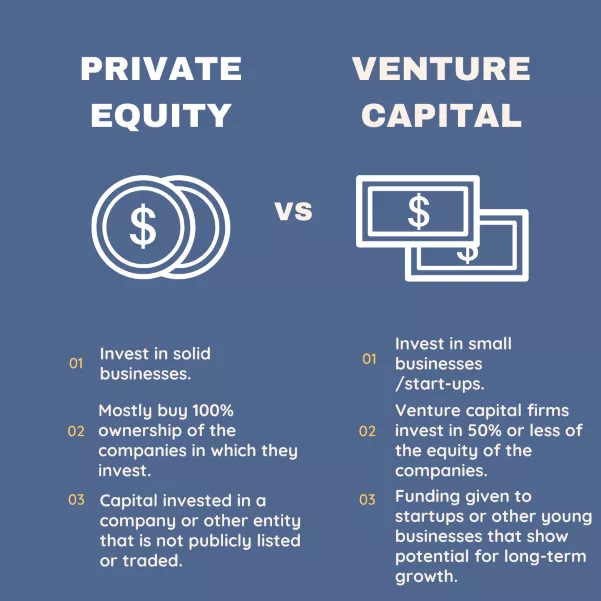
What Industries Do Venture Capitalists Focus On?
Venture capitalists typically invest in industries with high growth potential and scalability. These industries often include:
- Technology: Startups in software, hardware, artificial intelligence, and fintech are common targets due to their rapid innovation cycles.
- Biotechnology and Healthcare: Companies developing new drugs, medical devices, or healthcare solutions attract significant investment.
- E-commerce and Consumer Goods: Businesses with unique online platforms or innovative consumer products are often funded.
- Clean Energy and Sustainability: Startups focused on renewable energy, waste reduction, and sustainable practices are increasingly popular.
- Financial Services: Fintech companies disrupting traditional banking and payment systems are a major focus.
What Stage of Companies Do Venture Capitalists Invest In?
Venture capitalists invest in companies at various stages of development, depending on their risk appetite and investment strategy:
- Seed Stage: Early-stage funding for startups with a concept or prototype but limited revenue.
- Early Stage (Series A): Funding for companies with a proven product and initial market traction.
- Growth Stage (Series B and C): Investments in companies scaling operations and expanding market reach.
- Late Stage (Series D and beyond): Funding for mature companies preparing for IPOs or acquisitions.
- Bridge Financing: Short-term funding to help companies reach the next milestone.
What Criteria Do Venture Capitalists Use to Evaluate Investments?
Venture capitalists assess potential investments based on several key criteria:
- Market Opportunity: The size and growth potential of the target market.
- Team Expertise: The experience and capability of the founding team.
- Product Differentiation: The uniqueness and competitive advantage of the product or service.
- Revenue Model: The clarity and scalability of the business model.
- Traction: Evidence of customer adoption, revenue growth, or partnerships.
What Are the Risks Associated with Venture Capital Investments?
Venture capital investments come with inherent risks, including:
- High Failure Rates: Many startups fail to achieve profitability or scale.
- Market Volatility: Changes in market conditions can impact a startup's success.
- Liquidity Risk: Investments are often illiquid until an exit event occurs.
- Regulatory Challenges: Startups may face legal or compliance hurdles.
- Competition: Intense competition can erode market share and margins.
What Are the Expected Returns for Venture Capitalists?
Venture capitalists aim for high returns to compensate for the risks involved:
- 10x or Higher Returns: Successful investments often yield returns many times the initial capital.
- Equity Stake: Investors typically acquire a significant ownership percentage in the company.
- Exit Strategies: Returns are realized through IPOs, acquisitions, or secondary market sales.
- Portfolio Diversification: Investing in multiple startups mitigates risk and increases the chance of high returns.
- Long-Term Horizon: Returns are often realized over 5-10 years, requiring patience.
Frequently Asked Questions (FAQs)
What are the key factors you consider before investing in a startup?
When evaluating a startup, market potential is one of the most critical factors. I look for startups operating in large or rapidly growing markets with significant demand. Additionally, the team's expertise and track record are crucial. A strong, cohesive team with relevant experience increases the likelihood of success. I also assess the product or service itself—its uniqueness, scalability, and ability to solve a real problem. Finally, I consider the traction the startup has achieved so far, such as user growth, revenue, or partnerships, as it provides insight into its potential.
How important is the business model when deciding to invest?
The business model is a cornerstone of my investment decision. I look for a clear and sustainable revenue model that demonstrates how the startup plans to generate income. A well-defined value proposition and a path to profitability are essential. I also evaluate whether the model is scalable, as this determines the startup's ability to grow and capture a larger market share. Startups with innovative or disruptive business models often stand out, but they must also show a realistic plan for execution.
What role does the startup's financial health play in your investment decision?
The financial health of a startup is a significant factor in my checklist. I review the startup's burn rate and runway to understand how long they can operate before needing additional funding. A detailed analysis of their financial projections helps me assess their growth potential and whether they can achieve profitability. I also look at their funding history and how they have utilized previous investments. A startup with a clear financial strategy and disciplined spending is more likely to secure my investment.
How do you evaluate the competitive landscape of a startup?
Understanding the competitive landscape is vital before investing. I analyze the startup's unique selling points (USPs) and how they differentiate themselves from competitors. A thorough assessment of the market competition helps me determine whether the startup has a defensible position or a moat that protects it from rivals. I also consider the startup's ability to adapt to changing market conditions and outpace competitors. A startup with a clear competitive advantage and a strategy to maintain it is more appealing to me as an investor.
Leave a Reply
Our Recommended Articles