
How Does Equity Dilution Work When a Start Up Goes Through Several Rounds of Funding From Seed to Vc Etc


Equity dilution is a fundamental concept for startup founders and investors to understand as a company grows and secures funding. When a startup raises capital through multiple rounds, from seed funding to venture capital (VC) investments, the ownership structure of the company evolves. Each funding round typically involves issuing new shares, which reduces the percentage ownership of existing shareholders, including founders and early investors. This process, known as equity dilution, is essential for raising capital but can impact control and financial returns. Understanding how dilution works, its implications, and strategies to manage it is crucial for navigating the complex journey of startup financing.
- How Does Equity Dilution Work When a Startup Goes Through Several Rounds of Funding From Seed to VC?
- How does equity dilution work in startups?
- How much equity is diluted in seed rounds?
- How many rounds of funding do startups go through?
- How should you split equity in a startup?
- Frequently Asked Questions (FAQs)
How Does Equity Dilution Work When a Startup Goes Through Several Rounds of Funding From Seed to VC?
Equity dilution occurs when a startup issues new shares during funding rounds, reducing the ownership percentage of existing shareholders. This process is common as startups progress from seed funding to later stages like Series A, B, and beyond. Each funding round typically involves selling a portion of the company to investors in exchange for capital, which is essential for growth but impacts the equity stakes of founders, early investors, and employees.
See Also What is the Difference Between an Angel Series a and B Round of Funding
What Is Equity Dilution in Startups?
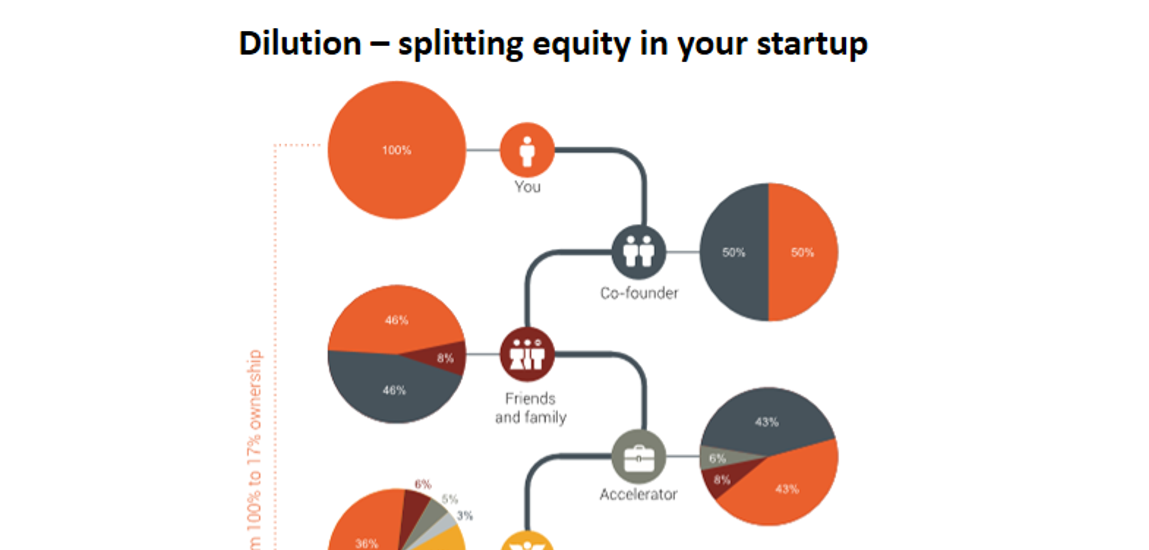
Equity dilution refers to the reduction in ownership percentage that occurs when a company issues new shares. For example, if a founder owns 100% of a startup and raises funds by selling 20% of the company to investors, their ownership drops to 80%. This process repeats with each funding round, gradually reducing the founder's stake while bringing in capital to fuel growth.
How Does Seed Funding Impact Equity?
Seed funding is often the first external capital a startup raises. At this stage, founders may give up a significant portion of equity, sometimes between 10% to 25%, depending on the valuation and the amount raised. This initial dilution sets the stage for future rounds, as investors in later stages will expect their share of equity as well.
See Also Why Do Venture Capitalists Prefer Preferred Stocks Over Common Stocks
What Happens During Series A and Beyond?
In Series A and subsequent rounds, startups raise larger amounts of capital, often from venture capital firms. These rounds typically involve more significant equity dilution, as investors demand a larger stake in exchange for higher funding amounts. For example, a Series A round might dilute existing shareholders by another 20% to 30%, depending on the valuation and terms.
How Do Employee Stock Options Affect Dilution?
Employee stock options are another factor in equity dilution. Startups often allocate a portion of equity (e.g., 10% to 20%) to an employee stock option pool to attract and retain talent. This pool is created by diluting existing shareholders, including founders and investors, but is crucial for building a strong team.
See Also What Are the Good Ways to Calculate Percentage of Equity Giving to Venture Capital When a Startup Gets Funded
Some investors negotiate anti-dilution provisions to protect their ownership percentage. These provisions adjust their equity stake if the company issues shares at a lower valuation in future rounds. While this protects investors, it can lead to further dilution for other shareholders, including founders.
| Funding Round | Typical Equity Dilution | Key Considerations |
|---|---|---|
| Seed | 10% - 25% | Initial capital for product development and market validation. |
| Series A | 20% - 30% | Larger funding for scaling operations and expanding the team. |
| Series B | 15% - 25% | Further growth, market expansion, and product diversification. |
| Series C+ | 10% - 20% | Pre-IPO or acquisition preparation, significant scaling. |
How does equity dilution work in startups?
 Which Vc Firms Have a Business Development Team That Works With Portfolio Companies
What is Equity Dilution in Startups?
Equity dilution occurs when a startup issues new shares, reducing the ownership percentage of existing shareholders. This typically happens during funding rounds, employee stock option plans (ESOPs), or other equity-based incentives. The process is essential for raising capital but impacts the proportional stake of early investors and founders.
- New shares are issued to investors or employees.
- The total number of shares increases, reducing the percentage owned by existing shareholders.
- Dilution is a trade-off for capital infusion or talent acquisition.
Why Does Equity Dilution Happen?
Equity dilution is a common strategy for startups to secure funding or attract top talent. It allows the company to grow without taking on debt, but it comes at the cost of reduced ownership for existing stakeholders.
- Funding rounds (e.g., Seed, Series A, B, etc.) require issuing new shares to investors.
- Employee stock options (ESOPs) are used to incentivize and retain talent.
- Strategic partnerships may involve equity stakes to align interests.
How Does Equity Dilution Affect Founders?
Founders often experience significant equity dilution as their startup grows. While dilution reduces their ownership percentage, it can also increase the overall value of their stake if the company succeeds.
- Early-stage dilution occurs during initial funding rounds.
- Later-stage dilution happens in subsequent rounds or ESOP expansions.
- Founders must balance ownership control with the need for growth capital.
How Do Investors View Equity Dilution?
Investors understand that equity dilution is part of the startup journey. They accept dilution in exchange for potential returns, provided the company's valuation increases over time.
- Investors focus on the post-money valuation and their percentage stake.
- They may negotiate anti-dilution provisions to protect their investment.
- Dilution is acceptable if it leads to company growth and higher valuations.
Can Equity Dilution Be Prevented?
While equity dilution cannot be entirely avoided, startups can take steps to minimize its impact. Careful planning and strategic decisions can help maintain a balance between growth and ownership.
- Use convertible notes or SAFE agreements to delay equity issuance.
- Limit the size of ESOP pools to avoid excessive dilution.
- Negotiate pro-rata rights to allow existing investors to maintain their ownership percentage.
How much equity is diluted in seed rounds?

What is Equity Dilution in Seed Rounds?
Equity dilution in seed rounds refers to the reduction in the percentage of ownership that existing shareholders experience when new shares are issued to investors. This typically occurs when startups raise capital to fund their growth. The dilution happens because the total number of shares increases, thereby reducing the proportional ownership of the original shareholders.
- New shares are issued to investors, increasing the total share count.
- Existing shareholders' ownership percentage decreases proportionally.
- Dilution is a common trade-off for securing necessary funding.
How Much Equity is Typically Diluted in Seed Rounds?
In seed rounds, startups typically dilute between 10% to 25% of their equity. The exact percentage depends on factors such as the startup's valuation, the amount of funding raised, and the negotiation terms with investors. Higher valuations often result in less dilution for founders and early stakeholders.
- 10-25% is the typical range for equity dilution in seed rounds.
- Higher valuations can reduce the percentage of equity given away.
- Negotiation terms with investors play a significant role in determining dilution.
Factors Influencing Equity Dilution in Seed Rounds
Several factors influence how much equity is diluted during seed rounds. These include the startup's valuation, the amount of capital raised, the terms of the investment, and the investor's expectations. Founders must carefully balance these factors to minimize dilution while securing sufficient funding.
- Valuation directly impacts the percentage of equity given away.
- The amount of capital raised determines the extent of dilution.
- Investment terms, such as convertible notes or equity, affect dilution.
How to Minimize Equity Dilution in Seed Rounds
To minimize equity dilution, founders can focus on increasing their startup's valuation, negotiating favorable terms with investors, and raising only the necessary amount of capital. Additionally, using instruments like convertible notes or SAFEs can delay dilution until a later funding round.
- Increase the startup's valuation to reduce equity given away.
- Negotiate favorable terms with investors to limit dilution.
- Use convertible notes or SAFEs to defer dilution.
Long-Term Impact of Equity Dilution in Seed Rounds
Equity dilution in seed rounds can have long-term implications for founders and early stakeholders. While dilution is necessary to raise capital, excessive dilution can reduce control and future financial returns. Founders must plan strategically to ensure they retain sufficient ownership and influence over their company.
- Excessive dilution can reduce control over the company.
- Future financial returns may be impacted by early-stage dilution.
- Strategic planning is essential to balance dilution and funding needs.
How many rounds of funding do startups go through?

What Are the Typical Funding Rounds for Startups?
Startups typically go through several rounds of funding to grow and scale their businesses. These rounds are designed to meet the company's financial needs at different stages of its development. The most common funding rounds include:
- Pre-Seed Funding: This is the earliest stage, where founders use personal savings or small investments to validate their idea.
- Seed Funding: This round helps startups develop their product, build a team, and conduct market research.
- Series A: Focused on optimizing the product and scaling operations, this round attracts larger investors.
- Series B: At this stage, startups aim to expand their market reach and improve infrastructure.
- Series C and Beyond: These rounds are for scaling globally, acquiring other companies, or preparing for an IPO.
Why Do Startups Need Multiple Funding Rounds?
Startups require multiple funding rounds because their financial needs evolve as they grow. Each round serves a specific purpose:
- Early-Stage Validation: Pre-seed and seed funding help validate the business idea and build a prototype.
- Scaling Operations: Series A and B funding enable startups to scale their operations and enter new markets.
- Global Expansion: Later rounds, like Series C, focus on global expansion and acquisitions.
Who Invests in Startup Funding Rounds?
Different types of investors participate in startup funding rounds depending on the stage:
- Angel Investors: Typically invest in pre-seed and seed rounds.
- Venture Capital Firms: Focus on Series A, B, and later rounds.
- Corporate Investors: Often participate in later stages for strategic partnerships.
How Much Funding Do Startups Raise in Each Round?
The amount raised in each funding round varies significantly based on the startup's stage and industry:
- Pre-Seed: Usually between $50,000 and $500,000.
- Seed: Typically ranges from $500,000 to $2 million.
- Series A: Often between $2 million and $15 million.
- Series B: Can range from $10 million to $50 million.
- Series C and Beyond: May exceed $50 million, depending on the startup's growth trajectory.
What Are the Key Milestones Between Funding Rounds?
Startups must achieve specific milestones to progress from one funding round to the next:
- Pre-Seed to Seed: Develop a minimum viable product (MVP) and validate the market.
- Seed to Series A: Demonstrate product-market fit and early revenue.
- Series A to Series B: Show consistent growth and scalability.
- Series B to Series C: Expand into new markets and achieve profitability.
How should you split equity in a startup?

Understanding the Importance of Equity Distribution
Equity distribution is a critical decision in a startup as it determines ownership and can impact the company's future. A fair and well-thought-out equity split ensures that all founders and key contributors are motivated and aligned with the company's goals. Here are some key considerations:
- Founder Contributions: Assess the value each founder brings, including skills, experience, and initial investment.
- Future Roles: Consider the roles and responsibilities each founder will take on moving forward.
- Risk and Commitment: Evaluate the level of risk and time commitment each founder is willing to undertake.
Common Equity Split Models
There are several models for splitting equity in a startup, each with its own advantages and disadvantages. Choosing the right model depends on the specific circumstances of the startup. Here are some common models:
- Equal Split: Dividing equity equally among all founders, which promotes fairness but may not reflect individual contributions.
- Weighted Split: Allocating equity based on the value each founder brings, which can be more equitable but harder to negotiate.
- Dynamic Split: Adjusting equity over time based on performance and contributions, which can be complex but fairer in the long run.
Key Factors to Consider in Equity Splits
When deciding how to split equity, it's important to consider several factors to ensure a fair and sustainable agreement. These factors can help prevent conflicts and ensure long-term success. Here are some key factors:
- Initial Investment: Consider the financial contributions made by each founder at the outset.
- Skill Set and Expertise: Evaluate the unique skills and expertise each founder brings to the table.
- Future Contributions: Anticipate the ongoing contributions each founder will make to the company's growth.
Legal and Financial Implications of Equity Splits
Equity splits have significant legal and financial implications that need to be carefully managed. Proper documentation and understanding of these implications can prevent future disputes. Here are some important considerations:
- Vesting Schedules: Implement vesting schedules to ensure founders earn their equity over time, protecting the company if someone leaves early.
- Tax Implications: Understand the tax consequences of equity distribution for both the company and the founders.
- Legal Agreements: Draft clear and comprehensive legal agreements to outline the terms of equity distribution and ownership.
Negotiating Equity Splits with Co-Founders
Negotiating equity splits can be challenging, but it's essential to approach the process with transparency and fairness. Effective communication and mutual understanding are key to reaching a satisfactory agreement. Here are some tips for successful negotiations:
- Open Dialogue: Maintain open and honest communication with co-founders throughout the negotiation process.
- Third-Party Mediation: Consider involving a neutral third party to help mediate and facilitate discussions.
- Document Agreements: Ensure all agreements are documented in writing to avoid misunderstandings and disputes later on.
Frequently Asked Questions (FAQs)
What is equity dilution in the context of startup funding?
Equity dilution occurs when a startup issues new shares during funding rounds, reducing the ownership percentage of existing shareholders. For example, if a founder owns 100% of a company and then raises capital by issuing new shares to investors, their ownership stake decreases proportionally. This process is common as startups progress from seed funding to Series A, B, C, and beyond. While dilution reduces ownership, it often brings in the necessary capital and expertise to grow the company, potentially increasing its overall value.
How does equity dilution affect founders and early investors?
For founders and early investors, equity dilution means their percentage ownership in the company decreases with each funding round. However, if the company's valuation increases significantly, the value of their reduced stake may still grow. For instance, owning 10% of a $100 million company is more valuable than owning 50% of a $10 million company. Founders must balance dilution with the need for capital to scale the business, ensuring they retain enough control and incentive to drive the company forward.
What are the key stages of equity dilution in startup funding?
Equity dilution typically occurs in several stages: seed funding, Series A, Series B, and subsequent rounds. During the seed stage, founders and early investors may experience their first dilution as angel investors or accelerators join. In Series ASeries B and Series C, involve even more significant investments, often from institutional investors, further diluting existing shareholders. Each round aims to fuel growth, but founders must carefully manage dilution to maintain influence and alignment with stakeholders.
How can founders minimize the impact of equity dilution?
Founders can minimize the impact of equity dilution by negotiating favorable terms during funding rounds, such as higher valuations or anti-dilution provisions. They can also explore alternative funding methods, like convertible notes or SAFE agreements, which delay equity issuance until a later round. Additionally, maintaining strong company performance and demonstrating growth potential can help secure better terms from investors. While dilution is inevitable, strategic planning and effective communication with stakeholders can help founders retain meaningful ownership and control over their startup.
Leave a Reply
Our Recommended Articles