
How Do You Write a Good Venture Capital Proposal?


Crafting a compelling venture capital (VC) proposal is a critical step for entrepreneurs seeking funding to scale their businesses. A well-structured proposal not only highlights the potential of your idea but also demonstrates your ability to execute it successfully. To stand out in a competitive landscape, your proposal must clearly articulate your value proposition, market opportunity, and growth strategy while addressing potential risks. Investors look for clarity, credibility, and confidence in your vision. This article explores the essential elements of a strong VC proposal, offering practical tips to help you present your startup in a way that captures investor interest and secures the funding you need to thrive.
How Do You Write a Good Venture Capital Proposal?
Writing a good venture capital (VC) proposal is a critical step for startups seeking funding. A well-crafted proposal not only showcases your business idea but also demonstrates your ability to execute it successfully. Below, we break down the key components of a compelling VC proposal.
See Also How much does a corporation pay to have TechStars power a custom accelerator program?
1. What Should Be Included in a Venture Capital Proposal?
A strong VC proposal should include the following elements:
- Executive Summary: A concise overview of your business, including the problem you're solving, your solution, and the market opportunity.
- Business Model: Explain how your company will generate revenue.
- Market Analysis: Provide data on your target market, including size, growth potential, and competition.
- Product or Service: Detail your offering and its unique value proposition.
- Financial Projections: Include realistic revenue, profit, and cash flow forecasts.
- Team: Highlight the experience and expertise of your founding team.
2. How to Craft a Compelling Executive Summary
The executive summary is the first section investors will read, so it must grab their attention. Keep it brief (1-2 pages) and focus on:
- The problem your business addresses.
- Your solution and why it’s better than existing alternatives.
- The market opportunity and potential for growth.
- A snapshot of your financial projections and funding requirements.
3. Why Is Market Analysis Crucial in a VC Proposal?
Investors want to see that you understand your market. A thorough market analysis should include:
- Market Size: Quantify the total addressable market (TAM).
- Growth Trends: Highlight industry growth rates and trends.
- Competitive Landscape: Identify key competitors and your competitive advantage.
- Customer Segments: Define your target audience and their needs.
4. How to Present Financial Projections Effectively
Financial projections are a cornerstone of your VC proposal. They should be:
- Realistic: Avoid overly optimistic estimates.
- Detailed: Include revenue, expenses, profit margins, and cash flow.
- Supported by Data: Base your projections on market research and historical data (if available).
- Clear: Use charts and tables to make the data easy to understand.
 I Have an Interview in Venture Capital What Are All the Things I Should Know for Modeling
5. What Makes a Strong Founding Team?
Investors bet on people as much as ideas. A strong founding team should:
- Have relevant experience in the industry.
- Demonstrate a track record of success or innovation.
- Show commitment and passion for the business.
- Highlight complementary skills among team members.
| Key Element | Description |
|---|---|
| Executive Summary | Brief overview of the business and its potential. |
| Market Analysis | Detailed insights into the target market and competition. |
| Financial Projections | Realistic and data-driven revenue and expense forecasts. |
| Founding Team | Highlight the team's expertise and commitment. |
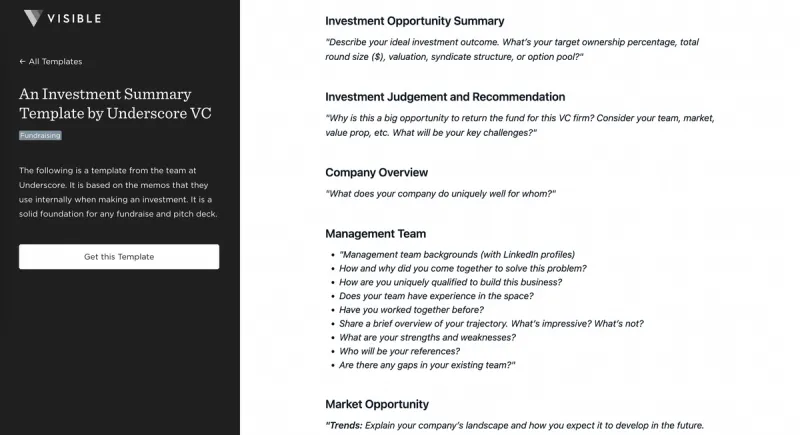
How to write a proposal for VC?
 Which Venture Capitalist Firms Offer Analyst Internship Positions for Undergraduates
Understanding the VC Proposal Structure
When writing a proposal for venture capital (VC), it is crucial to follow a structured format that clearly communicates your business idea and its potential. Here are the key components to include:
- Executive Summary: Provide a concise overview of your business, including the problem you solve, your solution, and the market opportunity.
- Business Model: Explain how your company will generate revenue and achieve profitability.
- Market Analysis: Detail the size of the market, target audience, and competitive landscape.
- Financial Projections: Present realistic financial forecasts, including revenue, expenses, and cash flow.
- Team Overview: Highlight the experience and expertise of your team members.
Crafting a Compelling Executive Summary
The executive summary is the first section of your VC proposal and should capture the investor's interest immediately. Here’s how to make it compelling:
See AlsoHow Much Money Did Facebook Raise From Venture Capitalists- Start with a Hook: Begin with a strong statement that highlights the uniqueness of your business.
- Clearly Define the Problem: Articulate the specific problem your business addresses.
- Present Your Solution: Describe your product or service and how it solves the problem.
- Showcase Market Potential: Provide data on the market size and growth potential.
- Summarize Financials: Include key financial metrics to give a snapshot of your business’s potential.
Developing a Robust Business Model
A strong business model is essential to convince VCs of your company’s viability. Here’s how to develop one:
- Identify Revenue Streams: Clearly outline how your business will make money.
- Define Cost Structure: Detail the major costs involved in running your business.
- Highlight Scalability: Explain how your business can grow and scale over time.
- Discuss Customer Acquisition: Describe your strategy for acquiring and retaining customers.
- Include Key Metrics: Provide metrics such as customer lifetime value (CLV) and customer acquisition cost (CAC).
Conducting a Thorough Market Analysis
Investors need to see that you understand your market deeply. Here’s how to conduct a thorough market analysis:
- Define Your Target Market: Identify the specific demographic or industry you are targeting.
- Analyze Market Size: Provide data on the total addressable market (TAM), serviceable available market (SAM), and serviceable obtainable market (SOM).
- Assess Market Trends: Discuss current trends and how they impact your business.
- Evaluate Competitors: Analyze your competitors and explain your competitive advantage.
- Identify Market Gaps: Highlight any unmet needs or gaps in the market that your business addresses.
Presenting Realistic Financial Projections
Financial projections are a critical part of your VC proposal. Here’s how to present them effectively:
- Include Historical Data: If applicable, provide past financial performance to establish credibility.
- Forecast Revenue: Project future revenue based on realistic assumptions.
- Detail Expenses: Break down expected costs, including fixed and variable expenses.
- Project Cash Flow: Show how cash will flow in and out of your business.
- Highlight Key Metrics: Include important financial metrics such as gross margin, net profit, and break-even point.
What is the 80/20 rule in venture capital?

The 80/20 rule in venture capital, also known as the Pareto Principle, suggests that 80% of returns in a venture capital portfolio typically come from 20% of the investments. This principle highlights the importance of identifying and focusing on high-performing startups, as the majority of returns are driven by a small fraction of successful companies.
What is the Origin of the 80/20 Rule in Venture Capital?
The 80/20 rule originates from the Pareto Principle, named after economist Vilfredo Pareto, who observed that 80% of wealth in Italy was owned by 20% of the population. In venture capital, this principle is applied to explain how a small number of investments generate the majority of returns. Key points include:
- Historical Context: The principle was first observed in wealth distribution but has been adapted to various fields, including venture capital.
- Application in VC: Investors rely on this rule to prioritize high-potential startups.
- Risk Management: It underscores the importance of diversification to mitigate losses from underperforming investments.
How Does the 80/20 Rule Impact Investment Strategies?
The 80/20 rule significantly influences how venture capitalists allocate resources and make decisions. It emphasizes the need to identify and support high-growth startups that can deliver outsized returns. Key aspects include:
- Focus on Quality: Investors prioritize startups with strong market potential and scalable business models.
- Portfolio Construction: A diversified portfolio is built to increase the chances of including a few high-performing companies.
- Resource Allocation: More time and capital are directed toward nurturing the most promising investments.
Why Do Most Startups Fail in Venture Capital?
The 80/20 rule also explains why the majority of startups fail to deliver significant returns. Factors contributing to this include:
- Market Fit: Many startups struggle to achieve product-market fit, limiting their growth potential.
- Execution Challenges: Poor management or operational inefficiencies can derail even promising ideas.
- Competition: Intense competition in crowded markets reduces the chances of success for most startups.
How Can Investors Identify the 20% of High-Performing Startups?
Identifying the 20% of startups that will generate 80% of returns is a critical skill for venture capitalists. Strategies include:
- Market Analysis: Assessing the size and growth potential of the target market.
- Team Evaluation: Evaluating the founding team's experience, vision, and execution capabilities.
- Innovation Assessment: Determining whether the startup offers a unique or disruptive solution.
What Are the Risks of Relying on the 80/20 Rule?
While the 80/20 rule is a useful guideline, it comes with risks that investors must consider:
- Overconcentration: Focusing too much on a few startups can lead to significant losses if they fail.
- Missed Opportunities: Ignoring smaller investments might result in overlooking hidden gems.
- Market Volatility: External factors like economic downturns can impact even the most promising startups.
How do you write a venture proposal?

Understanding the Purpose of a Venture Proposal
A venture proposal is a detailed document designed to present a business idea to potential investors or stakeholders. Its primary purpose is to convince them of the viability and profitability of the venture. To achieve this, the proposal must clearly outline the business concept, market opportunity, and financial projections. Key elements include:
- Executive Summary: A concise overview of the business idea, goals, and value proposition.
- Problem Statement: A clear explanation of the problem the venture aims to solve.
- Solution: A detailed description of the product or service offered and how it addresses the problem.
Conducting Market Research
Market research is a critical step in writing a venture proposal. It provides data-driven insights into the target market, competition, and industry trends. This section should demonstrate a deep understanding of the market landscape and validate the demand for the proposed solution. Key steps include:
- Identify Target Audience: Define the demographics, preferences, and pain points of your potential customers.
- Analyze Competitors: Study competitors' strengths, weaknesses, and market positioning.
- Assess Market Size: Estimate the total addressable market (TAM) and serviceable available market (SAM).
Developing a Business Model
The business model section explains how the venture will generate revenue and sustain profitability. It should outline the pricing strategy, sales channels, and cost structure. A well-defined business model reassures investors of the venture's financial viability. Key components include:
- Revenue Streams: Describe how the business will make money (e.g., subscriptions, sales, licensing).
- Cost Structure: Break down fixed and variable costs, including production, marketing, and operational expenses.
- Profit Margins: Highlight expected profit margins and scalability potential.
Creating a Financial Plan
A comprehensive financial plan is essential to demonstrate the venture's potential for growth and profitability. This section should include detailed projections, funding requirements, and a break-even analysis. Investors rely on this data to assess the feasibility of the venture. Key elements include:
- Revenue Projections: Provide realistic estimates of income over the next 3-5 years.
- Funding Requirements: Specify the amount of capital needed and how it will be used.
- Break-Even Analysis: Calculate the point at which the venture will become profitable.
Presenting the Team and Execution Plan
Investors place significant emphasis on the team behind the venture. This section should highlight the qualifications, experience, and roles of key team members. Additionally, it should outline the execution plan, including timelines and milestones. Key points to cover include:
- Team Expertise: Showcase the skills and achievements of the founding team and advisors.
- Execution Strategy: Detail the steps to launch and grow the business, including marketing and operations.
- Milestones: Set clear, measurable goals to track progress and demonstrate accountability.
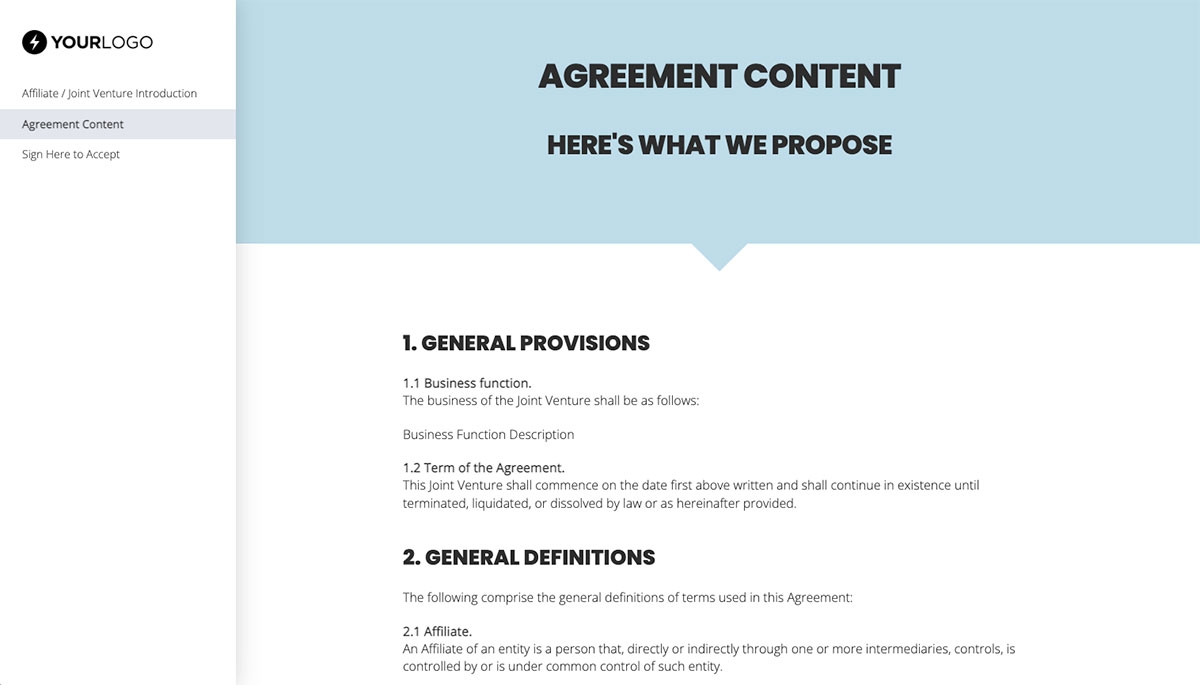
How do you write a JV proposal?
Understanding the Purpose of a JV Proposal
A Joint Venture (JV) proposal is a formal document that outlines the terms, objectives, and structure of a potential partnership between two or more parties. The purpose of this proposal is to clearly communicate the benefits, responsibilities, and expectations of the collaboration. To write an effective JV proposal, you need to:
- Define the goals of the joint venture, ensuring they align with the interests of all parties involved.
- Identify the target audience for the proposal, such as potential partners, investors, or stakeholders.
- Highlight the unique value that the partnership will bring to the table, such as shared resources, expertise, or market access.
Structuring the JV Proposal
The structure of a JV proposal is critical to its success. A well-organized proposal ensures that all key points are covered and makes it easier for the reader to understand the proposal. The structure should include:
- Executive Summary: A concise overview of the proposal, including the purpose, goals, and key benefits.
- Background information about the companies involved and the rationale for the joint venture.
- Objectives: Clear and measurable goals that the JV aims to achieve.
- Roles and Responsibilities: A detailed breakdown of each party's contributions and obligations.
- Financial Plan: An outline of the financial structure, including funding, profit-sharing, and risk management.
Key Elements to Include in a JV Proposal
To make your JV proposal compelling and comprehensive, ensure it includes the following key elements:
- Market Analysis: Demonstrate a clear understanding of the market, including opportunities and challenges.
- Operational Plan: Outline how the joint venture will operate, including timelines, milestones, and key activities.
- Legal Considerations: Address any legal requirements, such as contracts, intellectual property rights, and compliance.
- Risk Assessment: Identify potential risks and propose mitigation strategies.
- Exit Strategy: Define the terms under which the joint venture can be dissolved if necessary.
Tips for Writing a Persuasive JV Proposal
Writing a persuasive JV proposal requires a combination of clarity, professionalism, and strategic thinking. Here are some tips to enhance your proposal:
- Use clear and concise language to avoid misunderstandings and ensure the proposal is easy to read.
- Focus on mutual benefits to show how the partnership will be advantageous for all parties.
- Provide evidence and data to support your claims, such as market research or case studies.
- Tailor the proposal to the specific needs and interests of the potential partner.
- Include visuals like charts, graphs, or diagrams to make complex information more digestible.
Common Mistakes to Avoid in a JV Proposal
When writing a JV proposal, certain mistakes can undermine its effectiveness. Avoid these common pitfalls:
- Lack of clarity: Failing to clearly define the goals, roles, or terms of the partnership.
- Overpromising: Making unrealistic claims or commitments that cannot be fulfilled.
- Ignoring risks: Neglecting to address potential risks or challenges.
- Poor formatting: Submitting a proposal that is poorly organized or difficult to read.
- Insufficient research: Not providing enough data or evidence to support the proposal.
Frequently Asked Questions (FAQs)
What are the key components of a strong venture capital proposal?
A strong venture capital proposal should include several key components to effectively communicate your business idea and attract investors. These components include a clear executive summary, which provides a concise overview of your business, its mission, and its value proposition. Additionally, you should include a detailed market analysis that demonstrates your understanding of the industry, target audience, and competitive landscape. A well-defined business model and financial projections are also crucial, as they show how your company plans to generate revenue and achieve profitability. Finally, don't forget to highlight your team's expertise and any traction your business has already gained, such as customer acquisition or product development milestones.
How important is the executive summary in a venture capital proposal?
The executive summary is one of the most critical parts of a venture capital proposal because it is often the first section investors read. It serves as a snapshot of your business, summarizing the most important aspects in a concise and compelling manner. A well-crafted executive summary should clearly articulate your business idea, the problem it solves, and why it is unique or innovative. It should also highlight your market opportunity, key milestones, and the potential for growth. Since investors review numerous proposals, a strong executive summary can make your proposal stand out and encourage them to read further.
What should be included in the financial projections of a venture capital proposal?
Financial projections are a vital part of a venture capital proposal, as they provide investors with a clear picture of your business's financial potential. These projections should include a profit and loss statement, cash flow statement, and balance sheet for at least the next three to five years. Be sure to outline your revenue streams, cost structure, and any assumptions you’ve made in your calculations. Additionally, include a break-even analysis to show when your business is expected to become profitable. Investors will scrutinize these numbers to assess the viability of your business, so ensure they are realistic, well-researched, and backed by data.
How can I make my venture capital proposal stand out to investors?
To make your venture capital proposal stand out, focus on creating a compelling narrative that clearly communicates your vision and the problem your business solves. Use data-driven insights to support your claims and demonstrate a deep understanding of your market. Highlight any unique differentiators that set your business apart from competitors, such as proprietary technology, a strong intellectual property portfolio, or a proven track record of success. Additionally, ensure your proposal is visually appealing and well-organized, with clear headings, charts, and graphs to make complex information easy to digest. Finally, tailor your proposal to the specific investor by showing how your business aligns with their investment thesis and portfolio.
Leave a Reply
Our Recommended Articles