
I Work for a Vc Company That S Not Looking for Unicorns is There Any Chance They Can Succeed How Does This Even Make Sense


In the high-stakes world of venture capital, the pursuit of unicorns—startups valued at over $1 billion—has become a defining strategy for many firms. However, not all VC companies follow this path. Some focus on building sustainable, profitable businesses rather than chasing elusive billion-dollar valuations. This raises an important question: Can a VC firm succeed without targeting unicorns? By prioritizing steady growth, realistic valuations, and long-term viability, these firms challenge the conventional wisdom of the industry. This article explores how such an approach can make sense, examining the potential for success and the unique advantages of investing in businesses that prioritize substance over hype.
Can a VC Company Succeed Without Chasing Unicorns? Exploring the Strategy
Working for a VC company that isn’t focused on finding unicorns might seem counterintuitive in today’s startup ecosystem, where high-risk, high-reward investments dominate the narrative. However, this approach can make sense and even thrive under the right circumstances. By targeting sustainable, profitable businesses instead of chasing billion-dollar valuations, such a VC firm can build a diverse and resilient portfolio. This strategy reduces dependency on a few high-profile successes and focuses on steady growth and long-term value creation.
See AlsoWhere Do Venture Capitalists Eat in the Bay Area/silicon Valley?1. What Does It Mean to Avoid Unicorns in VC Investing?
Avoiding unicorns means the VC company is not prioritizing startups with the potential to reach a $1 billion valuation. Instead, they focus on businesses with realistic growth trajectories, strong unit economics, and predictable revenue streams. This approach emphasizes lower-risk investments and avoids the volatility associated with high-growth, high-burn-rate startups.
| Focus Area | Unicorn-Centric VC | Non-Unicorn VC |
|---|---|---|
| Investment Goal | Billion-dollar valuations | Sustainable profitability |
| Risk Level | High | Moderate |
| Portfolio Diversity | Few high-profile bets | Diverse, steady-growth companies |
2. How Can a Non-Unicorn VC Strategy Succeed?
A non-unicorn VC strategy can succeed by focusing on market validation, scalable business models, and strong management teams. By investing in companies that solve real-world problems and have clear paths to profitability, the VC firm can achieve consistent returns. Additionally, this approach reduces the pressure to exit quickly, allowing for longer investment horizons and compounding growth.
See Also What Are Typical Finders Fees Vcs Are Ready to Pay for a Unique Lead on a Start Up
3. What Are the Benefits of Not Chasing Unicorns?
The benefits include lower risk, higher predictability, and better alignment with founders who prioritize sustainable growth over rapid scaling. This strategy also fosters stronger relationships with portfolio companies, as the focus is on supporting their journey rather than pushing for aggressive exits.
4. What Challenges Might a Non-Unicorn VC Face?
One challenge is the perception of lower returns compared to unicorn-focused VCs. Additionally, finding high-quality startups that align with this strategy requires a deep understanding of niche markets and disciplined deal sourcing. The VC firm must also manage investor expectations, as limited partners may be accustomed to high-risk, high-reward models.
See Also What Are Examples of Corporate Venture Capital Cvc Firms Worldwide
5. How Does This Strategy Align with Market Trends?
This strategy aligns with the growing emphasis on profitability and sustainability in the startup ecosystem. As investors and founders become more cautious about burn rates and overvaluation, a non-unicorn approach offers a balanced alternative. It also resonates with industries where steady growth is more achievable than exponential scaling, such as SaaS, e-commerce, and B2B services.
| Market Trend | Relevance to Non-Unicorn VC |
|---|---|
| Focus on profitability | Aligns with sustainable growth goals |
| Cautious funding environment | Reduces dependency on large funding rounds |
| Rise of niche markets | Supports targeted, scalable businesses |
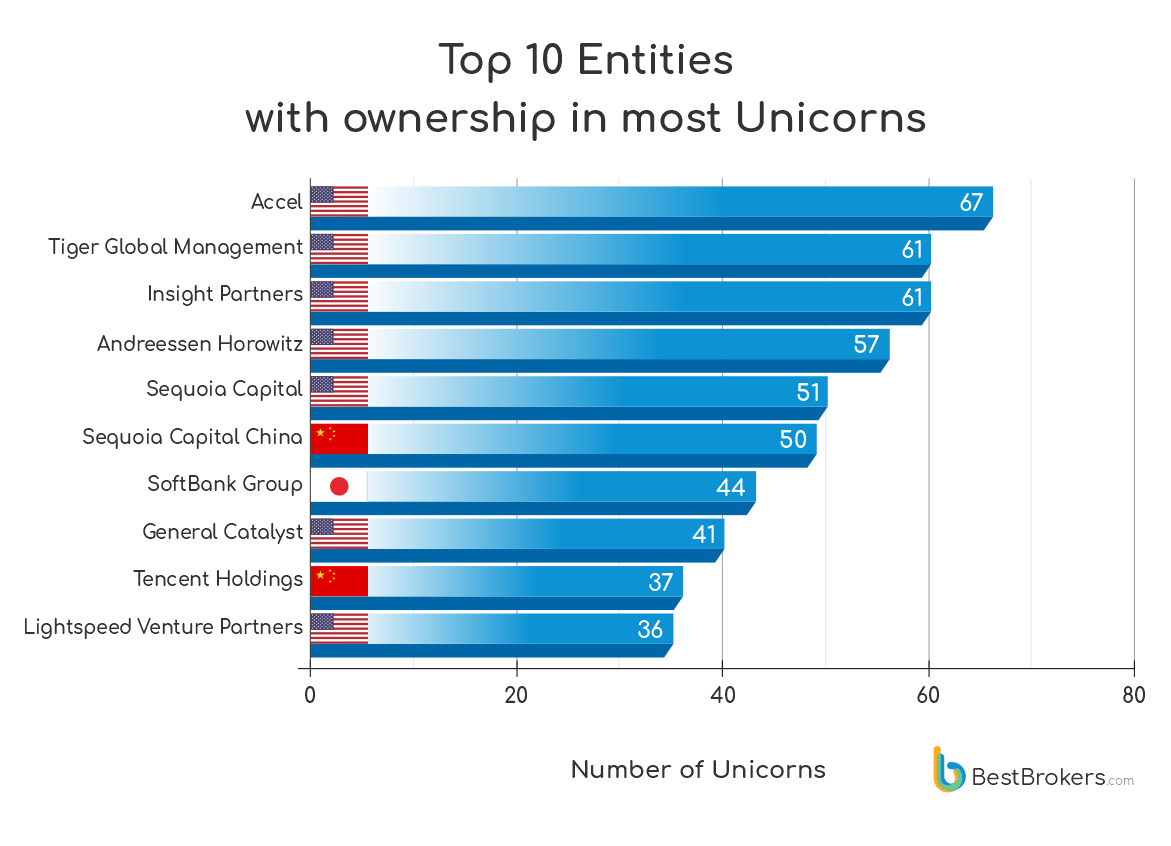
Which VC firms have the most unicorns?
 Who Are the Top Venture Capital Firms in the Biotech Industry?
Top Venture Capital Firms with the Most Unicorns
Several venture capital (VC) firms have established themselves as leaders in backing unicorn companies—startups valued at over $1 billion. These firms are known for their strategic investments and ability to identify high-growth potential startups. Below is a list of the most prominent VC firms with the most unicorns:
- Sequoia Capital: Known for early investments in companies like Airbnb, Stripe, and WhatsApp.
- Andreessen Horowitz (a16z): Backed unicorns such as Coinbase, Robinhood, and Lyft.
- Accel: Invested in Facebook, Slack, and Dropbox during their early stages.
- Tiger Global Management: A prolific investor in companies like ByteDance, Stripe, and Databricks.
- SoftBank Vision Fund: Known for massive investments in companies like Uber, WeWork, and DoorDash.
Why Sequoia Capital Leads in Unicorn Investments
Sequoia Capital has consistently been at the forefront of identifying and nurturing unicorns. Their success can be attributed to:
See Also What Are the Top Tier Vc Firms for Enterprise Saas?
- Early-stage focus: They often invest in startups during their seed or Series A rounds.
- Global presence: With offices in the U.S., China, India, and Southeast Asia, they tap into diverse markets.
- Strong mentorship: They provide startups with strategic guidance and operational support.
Andreessen Horowitz's Strategy for Backing Unicorns
Andreessen Horowitz has built a reputation for investing in disruptive technologies. Their approach includes:
- Sector specialization: They focus on areas like fintech, crypto, and enterprise software.
- Network effects: They leverage their extensive network to help startups scale.
- Long-term vision: They support companies through multiple funding rounds.
Accel's Role in Shaping Unicorn Companies
Accel has a proven track record of identifying high-potential startups. Key factors in their success include:
- Early investments: They were among the first to back Facebook and Slack.
- Global reach: They have a strong presence in both the U.S. and international markets.
- Value-added support: They provide startups with resources and expertise to grow.
Tiger Global Management's Aggressive Unicorn Portfolio
Tiger Global Management is known for its aggressive investment strategy. Their approach involves:
- High-frequency investing: They often participate in multiple funding rounds for a single company.
- Diverse portfolio: They invest across industries, from tech to e-commerce.
- Global focus: They have significant investments in both U.S. and international unicorns.
SoftBank Vision Fund's Impact on Unicorn Growth
SoftBank Vision Fund has made headlines for its massive investments in unicorns. Their strategy includes:
- Large-scale funding: They often provide billions in capital to fuel rapid growth.
- Focus on disruption: They target companies that can transform industries.
- Global ambition: They invest in startups across North America, Asia, and Europe.
What does unicorn mean in VC?
:max_bytes(150000):strip_icc()/Unicorn_Final_4187388-2771d244d7334a09875afc095841c422-a29e9aaa27dd40898b546b073cdc6896.jpg)
What is a Unicorn in Venture Capital?
In the context of venture capital (VC), a unicorn refers to a privately held startup company that has achieved a valuation of $1 billion or more. The term was coined to highlight the rarity of such companies, as they were once considered as mythical as unicorns. These companies are often seen as high-growth, innovative, and disruptive in their respective industries.
- Valuation: A unicorn is defined by its valuation, which must exceed $1 billion.
- Private Status: These companies are typically privately held, meaning they are not listed on public stock exchanges.
- Rarity: The term emphasizes the rarity and exceptional nature of such companies.
How Do Companies Become Unicorns?
Companies achieve unicorn status through a combination of factors, including rapid growth, innovative products or services, and significant investment from venture capitalists. The process often involves multiple rounds of funding, where the company's valuation increases with each round.
- Innovation: Developing unique and disruptive products or services.
- Funding Rounds: Securing substantial investment from venture capitalists or angel investors.
- Market Traction: Demonstrating significant growth and market penetration.
Examples of Unicorn Companies
Some well-known examples of unicorn companies include Uber, Airbnb, and SpaceX. These companies have not only achieved high valuations but have also transformed their respective industries through innovation and scalability.
- Uber: Revolutionized the transportation industry with its ride-sharing platform.
- Airbnb: Disrupted the hospitality industry by enabling peer-to-peer lodging rentals.
- SpaceX: Pioneered advancements in space technology and exploration.
Why Are Unicorns Important in Venture Capital?
Unicorns are important in the venture capital ecosystem because they represent the pinnacle of success for startups. They attract significant attention from investors, media, and other stakeholders, often leading to further investment opportunities and market influence.
- Investor Returns: High potential for substantial returns on investment.
- Market Influence: Ability to shape and dominate entire industries.
- Media Attention: Attracts significant media coverage, enhancing brand visibility.
Challenges Faced by Unicorn Companies
Despite their success, unicorn companies face numerous challenges, including maintaining their valuation, scaling operations, and navigating regulatory hurdles. These challenges can impact their long-term sustainability and growth.
- Valuation Pressure: Maintaining or increasing the $1 billion valuation.
- Operational Scaling: Managing rapid growth and expansion.
- Regulatory Compliance: Navigating complex and evolving regulatory environments.
What percentage of startups get VC funding?
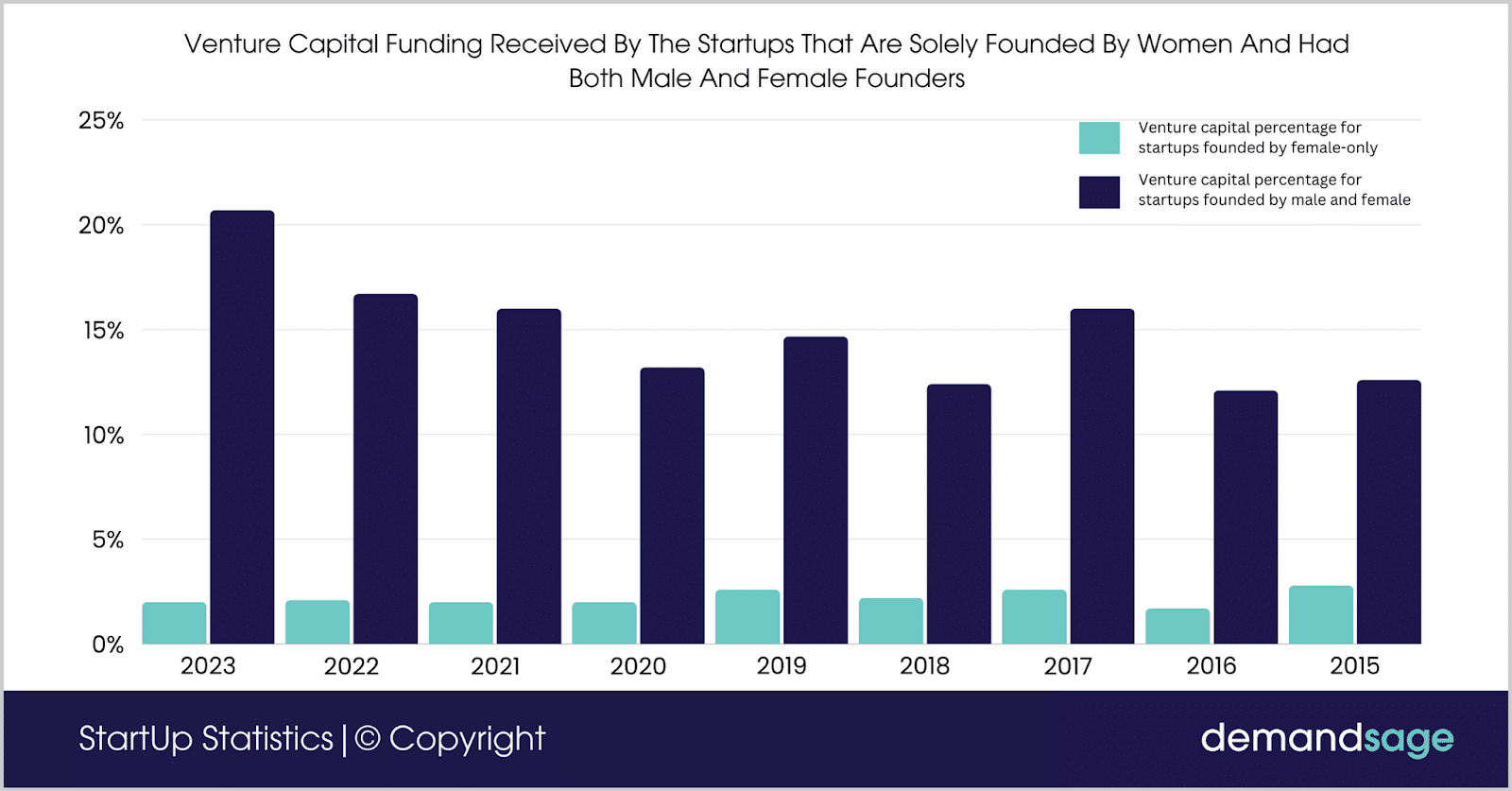
What Percentage of Startups Receive VC Funding?
Only a small fraction of startups secure venture capital (VC) funding. According to recent data, approximately 0.05% of startups in the United States receive VC funding. This means that out of millions of startups, only a few thousand manage to attract venture capital investment. The competition is intense, and most startups rely on other funding sources such as bootstrapping, angel investors, or crowdfunding.
Why Is VC Funding So Hard to Obtain?
Venture capital funding is highly competitive due to the following reasons:
- High Standards: VCs look for startups with exceptional growth potential, strong teams, and scalable business models.
- Risk Aversion: VCs prefer to invest in industries with proven success rates, such as tech and biotech, leaving other sectors underrepresented.
- Limited Funds: Despite the large sums involved, VCs have a finite amount of capital to allocate, making them highly selective.
Which Industries Are Most Likely to Receive VC Funding?
Certain industries are more likely to attract VC funding due to their high growth potential and scalability:
- Technology: Software, AI, and fintech startups dominate VC investments due to their rapid scalability.
- Biotechnology: Innovations in healthcare and life sciences attract significant VC interest.
- Clean Energy: Startups focused on sustainability and renewable energy are increasingly funded by VCs.
What Are the Alternatives to VC Funding?
Startups that do not secure VC funding often explore alternative financing options:
- Bootstrapping: Using personal savings or revenue to fund the business.
- Angel Investors: High-net-worth individuals who provide early-stage capital.
- Crowdfunding: Raising small amounts of money from a large number of people through platforms like Kickstarter.
How Can Startups Increase Their Chances of Securing VC Funding?
To improve their odds of attracting VC funding, startups should focus on the following strategies:
- Build a Strong Team: VCs prioritize startups with experienced and capable founders.
- Demonstrate Traction: Showing early signs of growth, such as user acquisition or revenue, can make a startup more attractive.
- Network Effectively: Building relationships with VCs and industry influencers can open doors to funding opportunities.
What percentage of companies become unicorns?

What is the likelihood of a startup becoming a unicorn?
The likelihood of a startup becoming a unicorn (a privately held startup valued at over $1 billion) is extremely low. Studies suggest that only about 0.00006% of startups achieve this status. This means that out of millions of startups founded globally each year, only a handful reach unicorn status. Factors such as market demand, innovation, and access to capital play a significant role in determining which companies succeed.
- Market demand: Startups addressing large or rapidly growing markets have a higher chance of becoming unicorns.
- Innovation: Companies with disruptive technologies or business models are more likely to attract significant investment.
- Access to capital: Startups backed by venture capital or angel investors have better resources to scale quickly.
How many unicorns exist globally?
As of recent data, there are approximately 1,200 unicorns worldwide. The majority of these companies are concentrated in the United States, followed by China and India. The number of unicorns has grown significantly over the past decade due to increased venture capital activity and the rise of technology-driven industries.
- United States: Home to the largest number of unicorns, particularly in Silicon Valley.
- China: A major hub for unicorns, especially in sectors like e-commerce and fintech.
- India: Emerging as a significant player with a growing number of unicorns in tech and consumer services.
What industries produce the most unicorns?
Unicorns are most commonly found in technology-driven industries. Sectors such as fintech, e-commerce, software-as-a-service (SaaS), and artificial intelligence dominate the unicorn landscape. These industries benefit from high scalability, global reach, and the ability to disrupt traditional markets.
- Fintech: Companies like Stripe and Robinhood have revolutionized financial services.
- E-commerce: Platforms such as Shopify and Wish have transformed online retail.
- SaaS: Businesses like Slack and Zoom have become essential tools for remote work.
What are the key factors for a startup to become a unicorn?
Several key factors contribute to a startup achieving unicorn status. These include strong leadership, scalable business models, timing, and access to funding. Startups that can execute their vision effectively and adapt to market changes are more likely to succeed.
- Strong leadership: Visionary founders and experienced management teams are critical.
- Scalable business models: Companies that can grow rapidly without proportional cost increases have an advantage.
- Timing: Entering the market at the right time can make a significant difference.
How long does it take for a startup to become a unicorn?
The time it takes for a startup to become a unicorn varies widely. On average, it takes about 5 to 7 years for a company to reach a $1 billion valuation. However, some companies achieve this milestone much faster, while others take longer. Factors such as industry, geography, and economic conditions influence the timeline.
- Industry: Tech startups often reach unicorn status faster due to rapid scalability.
- Geography: Startups in regions with strong venture capital ecosystems tend to grow quicker.
- Economic conditions: Favorable market conditions can accelerate growth and valuation.
Frequently Asked Questions (FAQs)
What does it mean for a VC company to not look for unicorns?
When a VC company states that they are not looking for unicorns, it means they are not solely focused on investing in startups that have the potential to become billion-dollar companies. Instead, they may prioritize businesses with sustainable growth, steady revenue streams, or those that solve real-world problems without necessarily aiming for exponential valuation. This approach can reduce risk and align with long-term investment strategies.
Can a VC company succeed without targeting unicorn startups?
Yes, a VC company can absolutely succeed without targeting unicorn startups. Success in venture capital is not solely defined by investing in companies that achieve billion-dollar valuations. By focusing on startups with solid business models, consistent profitability, or niche markets, a VC firm can achieve strong returns. Additionally, avoiding the high-risk, high-reward unicorn strategy can lead to a more diversified portfolio and reduced volatility.
How does not chasing unicorns make sense for a VC company?
Not chasing unicorns makes sense for a VC company when their strategy aligns with risk management and long-term stability. Unicorn startups often require massive investments and have a high failure rate. By focusing on smaller, more sustainable ventures, a VC firm can build a portfolio with lower risk and predictable returns. This approach also allows them to support a broader range of entrepreneurs and industries, fostering innovation in less competitive markets.
What are the advantages of investing in non-unicorn startups?
Investing in non-unicorn startups offers several advantages, including lower competition for deals, more reasonable valuations, and the ability to provide hands-on support to growing companies. These startups often operate in underserved markets or focus on niche solutions, which can lead to steady growth and profitability. Additionally, non-unicorn investments typically require smaller capital outlays, allowing a VC firm to diversify its portfolio and mitigate risks associated with high-growth, high-burn-rate companies.
Leave a Reply
Our Recommended Articles