
What Are the Major Advantages of Being a Venture Capitalist?


Venture capitalists (VCs) play a pivotal role in the startup ecosystem, providing not only financial backing but also strategic guidance to emerging businesses. Becoming a venture capitalist offers numerous advantages, making it an attractive career path for those with a passion for innovation and entrepreneurship. From the potential for substantial financial returns to the opportunity to shape the future of groundbreaking technologies, the role is both rewarding and impactful. Additionally, venture capitalists gain access to a vast network of industry leaders and entrepreneurs, fostering collaboration and growth. This article explores the major advantages of being a venture capitalist, shedding light on why this profession continues to draw ambitious individuals worldwide.
What Are the Major Advantages of Being a Venture Capitalist?
Venture capitalists (VCs) play a pivotal role in the startup ecosystem, providing not only financial backing but also strategic guidance to emerging companies. The role of a venture capitalist comes with numerous advantages, ranging from financial rewards to the opportunity to shape the future of innovative industries. Below, we explore the major benefits of being a venture capitalist in detail.
See AlsoHow Much Money Did Facebook Raise From Venture Capitalists1. High Financial Rewards
One of the most significant advantages of being a venture capitalist is the potential for high financial returns. VCs invest in early-stage companies with high growth potential, and if these companies succeed, the returns can be substantial. For instance, a successful exit through an IPO or acquisition can yield returns that are multiples of the initial investment. This potential for outsized gains makes venture capital an attractive career for those with a high-risk tolerance and a keen eye for promising startups.
2. Opportunity to Work with Innovative Startups
Venture capitalists have the unique opportunity to work closely with innovative startups that are often at the forefront of technological advancements. This allows VCs to be part of groundbreaking projects and contribute to the development of new products, services, and technologies. The thrill of being involved in the early stages of a company that could potentially disrupt an industry is a major draw for many in the field.
See Also I Have an Interview in Venture Capital What Are All the Things I Should Know for Modeling
3. Building a Diverse Portfolio
A key advantage of being a venture capitalist is the ability to build a diverse investment portfolio. By investing in a variety of sectors and stages, VCs can spread their risk and increase the likelihood of achieving significant returns. This diversification not only mitigates risk but also provides exposure to a wide range of industries, from tech and healthcare to consumer goods and fintech.
4. Networking and Relationship Building
Venture capitalists often have extensive networks that include other investors, entrepreneurs, and industry experts. These connections can be invaluable for sourcing deals, gaining insights into market trends, and providing portfolio companies with the resources they need to succeed. The ability to build and leverage these relationships is a significant advantage in the venture capital industry.
See Also Which Vc Firms Are the Best to Work With?
5. Influence and Impact on Business Strategy
As a venture capitalist, you have the opportunity to influence the strategic direction of the companies you invest in. This can include providing guidance on business models, market entry strategies, and operational improvements. The ability to shape the trajectory of a startup and contribute to its success is a rewarding aspect of the role.
| Advantage | Description |
|---|---|
| High Financial Rewards | Potential for substantial returns through successful exits. |
| Innovative Startups | Opportunity to work with cutting-edge companies. |
| Diverse Portfolio | Ability to spread risk across various sectors and stages. |
| Networking | Extensive connections with investors and industry experts. |
| Strategic Influence | Impact on the business strategies of portfolio companies. |
What are the advantages of venture capitalists?
 What's the Best Course on Venture Capital?
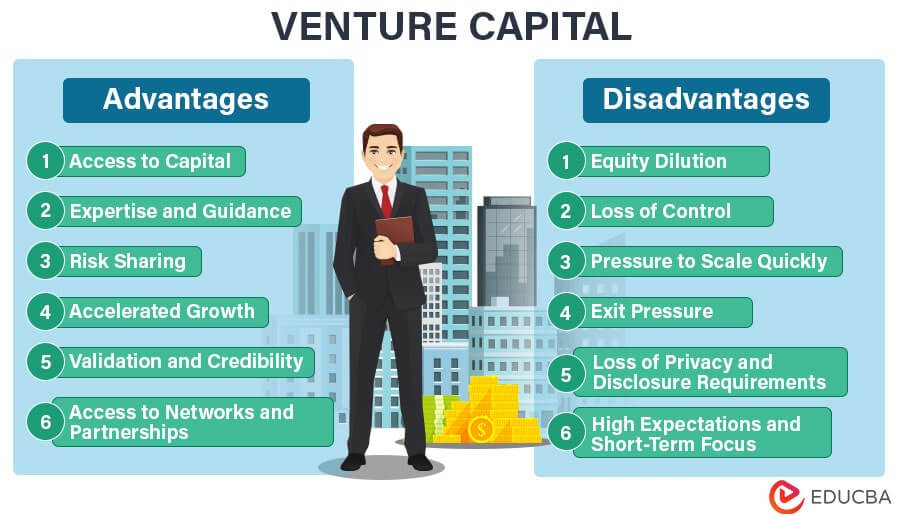
Access to Significant Capital
One of the primary advantages of venture capitalists is their ability to provide significant capital to startups and growing businesses. This funding is often crucial for companies that need to scale quickly or invest in research and development. Venture capitalists typically invest large sums of money, which can help businesses achieve their goals faster than they could through traditional financing methods.
- Large investments enable rapid scaling and growth.
- Funding is often provided in multiple rounds, allowing for sustained growth.
- Access to capital can help businesses outpace competitors.
Expertise and Mentorship
Venture capitalists often bring a wealth of industry expertise and experience to the table. They can provide valuable mentorship and guidance to the companies they invest in, helping them navigate challenges and make informed decisions. This expertise can be particularly beneficial for startups that may lack experience in certain areas of business management.
- Venture capitalists offer strategic advice based on their experience.
- They can help with business planning and market analysis.
- Mentorship can lead to better decision-making and improved business outcomes.
Networking Opportunities
Venture capitalists often have extensive networks within the industry, which can be invaluable for the companies they invest in. These networks can open doors to potential partners, customers, and even future investors. The connections provided by venture capitalists can significantly enhance a company's ability to grow and succeed.
- Access to a wide range of industry contacts.
- Opportunities for strategic partnerships and collaborations.
- Increased visibility and credibility within the industry.
Risk Sharing
Venture capitalists are willing to take on high levels of risk in exchange for potential high returns. This risk-sharing model can be advantageous for startups that may not have the financial stability to take on significant risks on their own. By sharing the risk, venture capitalists allow companies to pursue ambitious projects and innovations.
- Venture capitalists absorb a portion of the financial risk.
- This allows companies to pursue innovative and high-risk projects.
- Reduced financial burden on the company itself.
Long-Term Strategic Support
Venture capitalists often provide long-term strategic support to the companies they invest in. This support can include assistance with future funding rounds, exit strategies, and even operational improvements. The ongoing involvement of venture capitalists can help ensure the sustained success and growth of the company.
- Assistance with future funding rounds and financial planning.
- Guidance on exit strategies such as IPOs or acquisitions.
- Ongoing support for operational and strategic improvements.
What benefits most from venture capital?

Startups and Early-Stage Companies
Startups and early-stage companies benefit the most from venture capital. This funding allows them to scale quickly, innovate, and compete in competitive markets. Key advantages include:
- Access to Capital: Startups gain the financial resources needed to develop products, hire talent, and expand operations.
- Mentorship and Expertise: Venture capitalists often provide strategic guidance and industry connections.
- Market Validation: Securing venture capital can signal credibility and attract further investment or partnerships.
Innovation and Technology Development
Venture capital is a driving force behind innovation and technology development. It enables companies to invest in research and development, pushing the boundaries of what is possible. Key benefits include:
- Funding for R&D: Companies can allocate resources to develop cutting-edge technologies.
- Risk Mitigation: Venture capital allows firms to take calculated risks without jeopardizing their core operations.
- Accelerated Growth: Innovations can be brought to market faster with sufficient funding.
Job Creation and Economic Growth
Venture capital plays a significant role in job creation and economic growth. By funding startups and scaling businesses, it contributes to employment opportunities and economic development. Key impacts include:
- Employment Opportunities: Startups often hire extensively as they grow, creating jobs in various sectors.
- Economic Diversification: Venture-backed companies introduce new industries and services, diversifying the economy.
- Regional Development: Successful startups can transform local economies by attracting talent and investment.
Investor Returns and Portfolio Diversification
Venture capital offers significant returns for investors and helps diversify their portfolios. High-risk, high-reward investments in startups can yield substantial profits. Key advantages include:
- High Potential Returns: Successful startups can provide exponential returns on investment.
- Portfolio Diversification: Investing in startups reduces reliance on traditional asset classes like stocks and bonds.
- Early Access to Innovation: Investors gain exposure to groundbreaking technologies and business models.
Ecosystem Development and Networking
Venture capital fosters the development of entrepreneurial ecosystems and strengthens professional networks. It connects startups with mentors, partners, and other stakeholders. Key benefits include:
- Community Building: Venture capital firms often create hubs for collaboration and knowledge sharing.
- Access to Networks: Startups gain access to a wide network of industry experts and potential partners.
- Resource Sharing: Shared resources and expertise within the ecosystem accelerate growth and innovation.
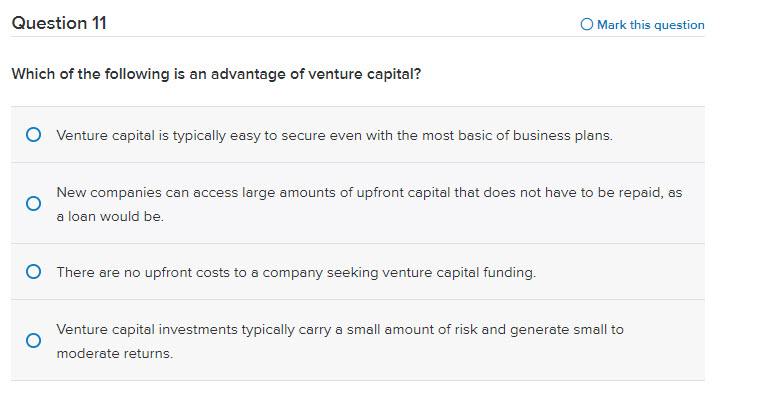
Which of the following is an advantage of venture capital?
Access to Significant Funding
One of the primary advantages of venture capital is the access to significant funding that it provides. This funding can be crucial for startups and growing businesses that require substantial capital to scale their operations, develop new products, or enter new markets.
- Large Capital Infusions: Venture capital firms often provide large sums of money that are difficult to obtain through traditional financing methods like bank loans.
- Flexible Use of Funds: Unlike some loans, venture capital can often be used for a variety of purposes, including research and development, marketing, and hiring key personnel.
- No Immediate Repayment: Venture capital does not require immediate repayment, allowing businesses to focus on growth without the pressure of monthly loan payments.
Expertise and Mentorship
Venture capital firms often bring more than just money to the table; they also provide expertise and mentorship. This can be invaluable for startups that may lack experience in certain areas such as business strategy, marketing, or operations.
- Industry Knowledge: Venture capitalists often have deep industry knowledge and can provide insights that help businesses avoid common pitfalls.
- Strategic Guidance: They can offer strategic guidance on everything from product development to market entry strategies.
- Network Access: Venture capitalists typically have extensive networks that can open doors to potential partners, customers, and even future investors.
Accelerated Growth
With the infusion of venture capital, businesses can experience accelerated growth. This rapid scaling can be crucial in competitive markets where being first to market can make a significant difference.
- Faster Scaling: The additional capital allows businesses to scale operations more quickly than they could with organic growth alone.
- Market Expansion: Companies can expand into new markets more rapidly, taking advantage of emerging opportunities.
- Product Development: Accelerated product development cycles can lead to quicker iterations and improvements, keeping the business ahead of competitors.
Risk Sharing
Venture capital allows for risk sharing between the entrepreneur and the investor. This can be particularly appealing for entrepreneurs who are wary of taking on too much financial risk on their own.
- Shared Financial Risk: The financial risk is shared with the venture capitalist, reducing the burden on the entrepreneur.
- Diversified Risk: Venture capitalists often invest in multiple startups, diversifying their risk, which can make them more willing to take on high-risk, high-reward opportunities.
- Long-Term Focus: Venture capitalists are typically focused on long-term growth, which aligns with the entrepreneur's goals and reduces the pressure for short-term profitability.
Enhanced Credibility
Securing venture capital can significantly enhance a company's credibility. This can be beneficial in various ways, from attracting top talent to securing additional funding from other sources.
- Attracting Talent: The backing of a reputable venture capital firm can make it easier to attract top talent, as it signals stability and growth potential.
- Additional Funding: Other investors are more likely to invest in a company that has already secured venture capital, as it serves as a validation of the business model.
- Customer Confidence: Customers and clients may also view the company more favorably, knowing that it has the support of experienced investors.
Why become a venture capitalist?

Why Become a Venture Capitalist?
Becoming a venture capitalist offers the opportunity to work at the intersection of finance, innovation, and entrepreneurship. It allows individuals to identify and support promising startups, shaping the future of industries while potentially earning significant financial returns. Venture capitalists play a critical role in fostering innovation by providing not only capital but also mentorship, strategic guidance, and access to networks. This career path is ideal for those who are passionate about technology, business growth, and making a tangible impact on the economy.
Financial Rewards and High Returns
One of the primary reasons to become a venture capitalist is the potential for high financial returns. Successful investments in startups can yield significant profits, often far exceeding traditional investment avenues.
- Equity stakes in high-growth companies can multiply in value over time.
- Carried interest, a share of the profits, provides substantial earnings for venture capitalists.
- Diversifying investments across multiple startups reduces risk while maximizing potential rewards.
Influence on Innovation and Entrepreneurship
Venture capitalists have the unique ability to drive innovation by funding and supporting groundbreaking ideas. They help entrepreneurs turn their visions into reality, contributing to technological advancements and economic growth.
- Access to cutting-edge technologies and disruptive business models.
- Opportunity to mentor and guide founders, shaping the direction of startups.
- Playing a pivotal role in solving global challenges through innovative solutions.
Building a Diverse Professional Network
A career in venture capital provides access to a vast network of industry leaders, entrepreneurs, and investors. This network can be invaluable for personal and professional growth.
- Collaborating with top-tier entrepreneurs and innovators.
- Connecting with other investors to share insights and opportunities.
- Expanding influence across multiple industries and geographies.
Intellectual Stimulation and Continuous Learning
Venture capitalism is a dynamic field that requires staying ahead of trends and understanding emerging markets. This ensures continuous learning and intellectual engagement.
- Analyzing market trends and identifying high-potential sectors.
- Evaluating business models and technologies to make informed decisions.
- Adapting to the fast-paced nature of the startup ecosystem.
Creating a Lasting Impact
Venture capitalists have the opportunity to create a lasting impact by supporting companies that can transform industries and improve lives. Their work often extends beyond financial gains to societal contributions.
- Supporting startups that address critical global issues like healthcare, education, and sustainability.
- Empowering underrepresented founders and fostering diversity in entrepreneurship.
- Leaving a legacy by contributing to the growth of successful, impactful companies.
Frequently Asked Questions (FAQs)
What are the financial benefits of being a venture capitalist?
One of the major advantages of being a venture capitalist is the potential for significant financial returns. Venture capitalists invest in early-stage companies with high growth potential, and if these companies succeed, the returns can be substantial. Additionally, venture capitalists often receive equity stakes in the companies they invest in, which can appreciate significantly over time. This allows them to benefit from both the growth of the companies and any eventual exits, such as acquisitions or IPOs.
How does being a venture capitalist provide networking opportunities?
Being a venture capitalist offers unparalleled networking opportunities. Venture capitalists frequently interact with entrepreneurs, other investors, and industry experts, which can lead to valuable connections. These relationships can provide insights into emerging trends, access to new investment opportunities, and collaborations that can enhance their portfolio. Furthermore, the role often involves attending industry conferences, pitch events, and exclusive gatherings, further expanding their professional network.
What role does influence and impact play in venture capitalism?
Venture capitalists have the unique opportunity to influence the direction of innovative companies and industries. By providing not only capital but also strategic guidance, mentorship, and resources, they can help shape the future of the businesses they invest in. This level of impact is particularly rewarding for those who are passionate about fostering innovation and entrepreneurship. Additionally, successful investments can lead to job creation, economic growth, and advancements in technology, contributing to a broader societal impact.
How does venture capitalism offer personal and professional growth?
Venture capitalism is a career that fosters both personal and professional growth. The role requires continuous learning, as venture capitalists must stay informed about market trends, emerging technologies, and new business models. This constant exposure to innovation and problem-solving enhances their analytical and decision-making skills. On a personal level, the satisfaction of helping entrepreneurs bring their visions to life and witnessing the growth of successful startups can be immensely fulfilling. The dynamic nature of the job also ensures that no two days are the same, keeping the work engaging and challenging.
Leave a Reply
Our Recommended Articles