
What Are the Questions Venture Capitalists Should Ask During Each Pitch From an Entrepreneur


When entrepreneurs pitch their ideas to venture capitalists, the stakes are high. Both parties are seeking a partnership that can drive innovation and generate substantial returns. For venture capitalists, the key to identifying promising opportunities lies in asking the right questions. These inquiries not only uncover the viability of the business model but also reveal the entrepreneur’s vision, preparedness, and ability to execute. From understanding market potential to assessing scalability and risk, the questions posed during a pitch can make or break an investment decision. This article explores the essential questions venture capitalists should ask to evaluate each pitch effectively and make informed investment choices.
- What Are the Questions Venture Capitalists Should Ask During Each Pitch From an Entrepreneur?
- What should the entrepreneur ask the venture capitalist?
- What are the 3 questions every entrepreneur must answer?
- What should an entrepreneur try to convey to a venture capitalist during a pitch to try to get him or her to invest in the entrepreneur's company or idea?
- How do you pitch to venture capitalists?
- Frequently Asked Questions by our Community
What Are the Questions Venture Capitalists Should Ask During Each Pitch From an Entrepreneur?
When evaluating a pitch from an entrepreneur, venture capitalists (VCs) need to ask the right questions to assess the viability, scalability, and potential of the business. These questions help VCs understand the entrepreneur's vision, the market opportunity, and the risks involved. Below, we explore key areas and questions VCs should focus on during a pitch.
See Also Do Vc Firms Invest in Start Up Retail Companies Looking to Franchise for Scalability
1. What Problem Does Your Product or Service Solve?
Understanding the problem the entrepreneur is addressing is crucial. VCs should ask:
- What is the specific pain point your product or service solves?
- How significant is this problem in the market?
- What evidence do you have that this problem exists?
This helps determine if the solution is addressing a real and substantial need. Entrepreneurs should provide data or examples to validate the problem's existence and its impact on potential customers.
See Also How Does One Become an Entrepreneur in Residence at a Venture Capital Firm
2. What Is Your Unique Value Proposition?
VCs need to know what sets the entrepreneur's offering apart from competitors. Key questions include:
- What makes your product or service unique?
- How do you differentiate yourself from existing solutions?
- What is your competitive advantage?
The entrepreneur should clearly articulate their unique value proposition and explain why their solution is better or different from others in the market. This could include factors like technology, pricing, or customer experience.
See AlsoDid You Sacrifice Your Career to Raise Your Kids?3. What Is Your Business Model and Revenue Strategy?
A clear and scalable business model is essential for long-term success. VCs should inquire:
- How do you plan to generate revenue?
- What is your pricing strategy?
- What are your customer acquisition costs?
The entrepreneur should provide a detailed explanation of their revenue streams, pricing structure, and how they plan to scale their business model. This helps VCs assess the financial viability of the venture.
See Also Are there any reasons why a startup would not want to go through TechStars?
4. What Is Your Market Size and Growth Potential?
VCs are interested in businesses with significant growth potential. Questions to ask include:
- What is the total addressable market (TAM) for your product or service?
- What is your serviceable available market (SAM)?
- What is your serviceable obtainable market (SOM)?
The entrepreneur should provide data on the market size and explain how they plan to capture a share of it. This helps VCs understand the scalability of the business.
5. What Is Your Team's Background and Experience?
The team behind the venture is often as important as the idea itself. VCs should ask:
- What is your team's experience in this industry?
- What relevant skills and expertise do you bring to the table?
- How do you plan to scale your team as the business grows?
The entrepreneur should highlight their team's strengths and explain how their experience positions them to execute the business plan successfully.
| Key Area | Questions to Ask |
|---|---|
| Problem Identification | What is the specific pain point? How significant is the problem? |
| Unique Value Proposition | What makes your product unique? How do you differentiate? |
| Business Model | How do you generate revenue? What is your pricing strategy? |
| Market Size | What is your TAM, SAM, and SOM? |
| Team Experience | What is your team's background? How will you scale the team? |
What should the entrepreneur ask the venture capitalist?

What is the Venture Capitalist's Investment Strategy?
Understanding the venture capitalist's investment strategy is crucial for aligning expectations. Entrepreneurs should ask:
- What industries or sectors do you typically invest in?
- What stage of companies do you prefer to fund (e.g., seed, early-stage, growth)?
- What is your average investment size and how much equity do you usually seek?
What Value Can the Venture Capitalist Add Beyond Funding?
Venture capitalists often bring more than just money to the table. Entrepreneurs should inquire about:
- Mentorship and guidance in scaling the business.
- Networking opportunities with industry experts and potential partners.
- Operational support such as marketing, hiring, or product development.
What is the Venture Capitalist's Track Record?
Evaluating the venture capitalist's past performance can provide insights into their credibility. Entrepreneurs should ask:
- Can you share examples of successful companies you've funded?
- What is your exit strategy for investments (e.g., IPOs, acquisitions)?
- How do you handle underperforming portfolio companies?
What Are the Terms and Conditions of the Investment?
Understanding the terms of the deal is essential to avoid future conflicts. Entrepreneurs should clarify:
- What are the key terms of the investment agreement?
- Are there any special clauses like liquidation preferences or anti-dilution provisions?
- What level of control will the venture capitalist have over business decisions?
How Does the Venture Capitalist Handle Communication and Reporting?
Effective communication is vital for a successful partnership. Entrepreneurs should ask:
- How often do you expect updates or reports?
- What metrics do you prioritize when evaluating progress?
- Who will be the primary point of contact for ongoing communication?
What are the 3 questions every entrepreneur must answer?

What Problem Are You Solving?
Every entrepreneur must clearly identify the problem their business aims to solve. This is the foundation of any successful venture. Without a clear understanding of the problem, it is impossible to create a product or service that meets the needs of the market. Here are three key points to consider:
- Define the problem in specific terms. Avoid vague descriptions and focus on the exact pain points your target audience experiences.
- Research the market to ensure the problem is significant enough to warrant a solution. Validate the demand through surveys, interviews, or data analysis.
- Understand the competition and how they are addressing the problem. Identify gaps or areas where your solution can offer a unique advantage.
Who Is Your Target Audience?
Knowing your target audience is crucial for tailoring your product or service to meet their needs. A well-defined audience helps in creating effective marketing strategies and ensures that your business resonates with the right people. Consider the following steps:
- Demographics: Identify the age, gender, income level, education, and location of your ideal customer.
- Psychographics: Understand their interests, values, and lifestyle choices to align your offering with their preferences.
- Behavioral patterns: Analyze their purchasing habits, online behavior, and decision-making processes to refine your approach.
What Is Your Unique Value Proposition?
Your unique value proposition (UVP) is what sets you apart from competitors. It answers why customers should choose your product or service over others. Crafting a compelling UVP requires clarity and focus. Here’s how to approach it:
- Highlight the benefits: Clearly articulate how your product or service solves the problem better than alternatives.
- Emphasize uniqueness: Identify what makes your offering different, whether it’s innovation, quality, price, or customer experience.
- Communicate effectively: Ensure your UVP is simple, memorable, and consistently reflected in all marketing materials.
How Will You Monetize Your Idea?
Monetization is the backbone of any business. Entrepreneurs must have a clear plan for generating revenue. This involves understanding your business model and ensuring it aligns with your target audience’s willingness to pay. Key considerations include:
- Revenue streams: Identify how you will make money, whether through sales, subscriptions, advertising, or other methods.
- Pricing strategy: Set prices that reflect the value of your offering while remaining competitive in the market.
- Scalability: Ensure your monetization strategy can grow as your business expands.
What Are Your Key Metrics for Success?
Measuring success is essential for tracking progress and making informed decisions. Entrepreneurs must define key performance indicators (KPIs) that align with their business goals. Focus on the following:
- Financial metrics: Track revenue, profit margins, and cash flow to ensure financial health.
- Customer metrics: Monitor customer acquisition cost, retention rates, and satisfaction levels.
- Operational metrics: Evaluate efficiency, productivity, and scalability to optimize business processes.
What should an entrepreneur try to convey to a venture capitalist during a pitch to try to get him or her to invest in the entrepreneur's company or idea?

1. The Problem and Its Significance
An entrepreneur should clearly articulate the problem their company or idea aims to solve. This involves explaining why the problem is significant and how it affects a large or growing market. The venture capitalist needs to understand the pain points and why the problem is worth solving.
- Define the problem in simple terms.
- Highlight the market size and potential impact.
- Explain why existing solutions are inadequate.
2. The Solution and Its Uniqueness
The entrepreneur must present their solution and explain how it effectively addresses the problem. It’s crucial to emphasize what makes the solution unique or superior to existing alternatives. This could include proprietary technology, a novel approach, or a disruptive business model.
- Describe the core features of the solution.
- Highlight the competitive advantage.
- Provide evidence of traction or validation, if available.
3. Market Opportunity and Growth Potential
Venture capitalists are interested in the market opportunity and the potential for growth. The entrepreneur should demonstrate a deep understanding of the target market, including its size, trends, and growth projections. They should also outline a clear path to capturing a significant share of the market.
- Provide market research and data.
- Explain the target audience and customer segments.
- Discuss scalability and expansion opportunities.
4. Business Model and Revenue Strategy
The entrepreneur must clearly explain how the company will generate revenue and achieve profitability. This includes detailing the business model, pricing strategy, and customer acquisition plan. Venture capitalists want to see a clear and sustainable path to financial success.
- Outline the revenue streams.
- Explain the cost structure and margins.
- Describe the sales and marketing strategy.
5. Team and Execution Capability
Venture capitalists invest in teams as much as they invest in ideas. The entrepreneur should highlight the strengths and experience of the founding team, emphasizing their ability to execute the business plan. This includes showcasing relevant expertise, past successes, and a clear division of roles.
- Introduce the key team members and their backgrounds.
- Highlight relevant experience and achievements.
- Demonstrate commitment and passion for the project.
How do you pitch to venture capitalists?
Understanding the Venture Capitalist's Perspective
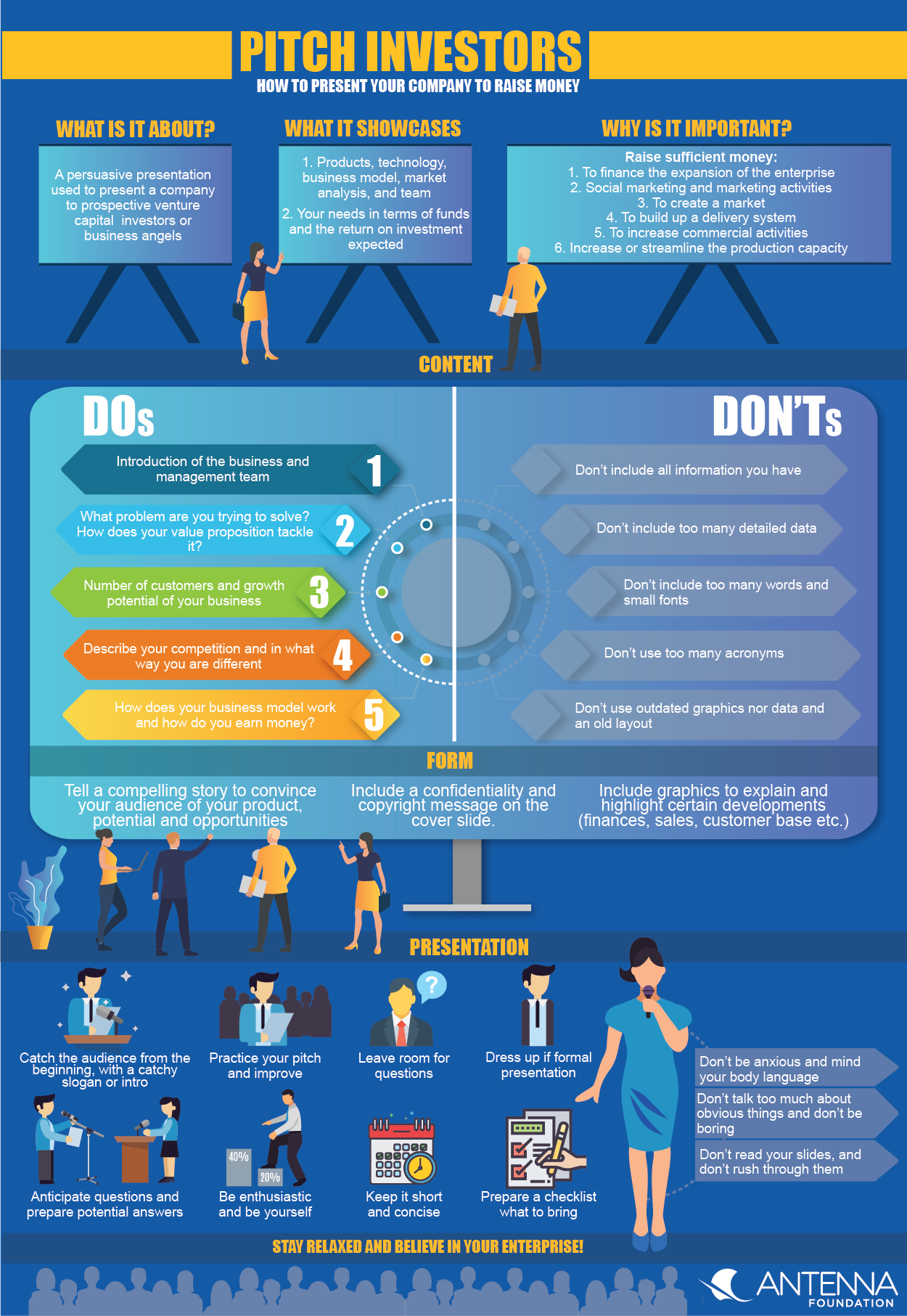
When pitching to venture capitalists, it's crucial to understand their goals and motivations. They are looking for high-growth potential businesses that can provide a significant return on investment. Here are key points to consider:
- Research the venture capitalist's portfolio to align your pitch with their interests.
- Highlight the scalability and market potential of your business.
- Be prepared to discuss the exit strategy, as this is a critical factor for investors.
Crafting a Compelling Story
Your pitch should tell a compelling story that captures the imagination of the venture capitalists. This narrative should clearly outline the problem, your solution, and the impact it will have. Consider the following:
- Start with a strong opening that grabs attention immediately.
- Use data and anecdotes to make your case more relatable and convincing.
- Ensure your story is clear and concise, avoiding unnecessary jargon.
Presenting a Solid Business Model
A robust business model is the backbone of any successful pitch. Venture capitalists need to see that your business can generate sustainable revenue. Focus on these aspects:
- Detail your revenue streams and how they will evolve over time.
- Explain your customer acquisition strategy and cost.
- Show evidence of market validation, such as customer testimonials or pilot results.
Demonstrating a Strong Team
Venture capitalists invest in people as much as they do in ideas. Demonstrating that you have a capable and committed team is essential. Highlight the following:
- The experience and expertise of your team members.
- Past successes or relevant projects that showcase your team's capability.
- The roles and responsibilities within your team, showing a clear structure and leadership.
Preparing for Tough Questions
Be ready to face challenging questions from venture capitalists. This preparation shows that you are thorough and have a deep understanding of your business. Consider these tips:
- Anticipate potential weaknesses in your business plan and prepare reasoned responses.
- Practice clear and confident answers to common questions about market competition and financial projections.
- Use feedback from previous pitches to refine your answers and approach.
Frequently Asked Questions by our Community
What key metrics should venture capitalists focus on during a pitch?
When evaluating a pitch, venture capitalists should prioritize key metrics that demonstrate the startup's growth potential and market viability. These include customer acquisition cost (CAC), lifetime value (LTV), monthly recurring revenue (MRR), and burn rate. Understanding these metrics helps assess whether the business model is scalable and sustainable. Additionally, VCs should inquire about the startup's traction, such as user growth, revenue trends, and market penetration, to gauge how well the product or service is resonating with its target audience.
How does the entrepreneur plan to address market competition?
Venture capitalists should ask entrepreneurs to explain their competitive strategy and how they differentiate their product or service in the market. This includes understanding the startup's unique value proposition (UVP), barriers to entry, and plans to outperform competitors. Entrepreneurs should also provide insights into their market research, customer feedback, and any intellectual property that gives them an edge. VCs need to ensure the startup has a clear plan to not only enter the market but also sustain and grow its position over time.
What is the startup's go-to-market strategy?
A critical question for venture capitalists is how the entrepreneur plans to execute their go-to-market strategy. This involves understanding the channels they will use to reach customers, such as digital marketing, partnerships, or direct sales. VCs should also inquire about the startup's marketing budget, timeline for scaling, and any pilot programs or early adopters that validate their approach. A well-defined go-to-market strategy demonstrates that the entrepreneur has a realistic plan to acquire customers and generate revenue efficiently.
How will the funding be utilized to achieve milestones?
Venture capitalists need to know how the entrepreneur plans to allocate the funding to achieve specific milestones. This includes understanding the breakdown of expenses, such as product development, hiring, marketing, and operational costs. Entrepreneurs should provide a clear roadmap of how the investment will drive growth, such as launching new features, expanding into new markets, or increasing market share. VCs want to ensure that the funds will be used strategically to maximize the startup's potential and deliver a strong return on investment.
Leave a Reply
Our Recommended Articles