
Whats the Difference Between Growth Equity and Venture Capital

Growth equity and venture capital are two prominent investment strategies within the private equity landscape, each catering to businesses at different stages of development. While both aim to generate substantial returns, they differ significantly in their approach, risk tolerance, and target companies. Growth equity typically focuses on established businesses seeking capital to scale operations, enter new markets, or optimize their infrastructure. In contrast, venture capital is often directed toward early-stage startups with high growth potential but higher risk. Understanding the distinctions between these two investment models is crucial for entrepreneurs and investors alike, as it influences funding decisions, expectations, and long-term business strategies.
- What is the Difference Between Growth Equity and Venture Capital?
- What is the difference between venture capital and growth equity?
- Is growth capital the same as growth equity?
- What is the difference between equity and VC?
- What is the difference between growth and equity?
-
Frequently Asked Questions (FAQs)
- What is the primary focus of growth equity compared to venture capital?
- How do the investment stages differ between growth equity and venture capital?
- What level of risk is associated with growth equity versus venture capital?
- How do growth equity and venture capital differ in terms of ownership and control?
What is the Difference Between Growth Equity and Venture Capital?
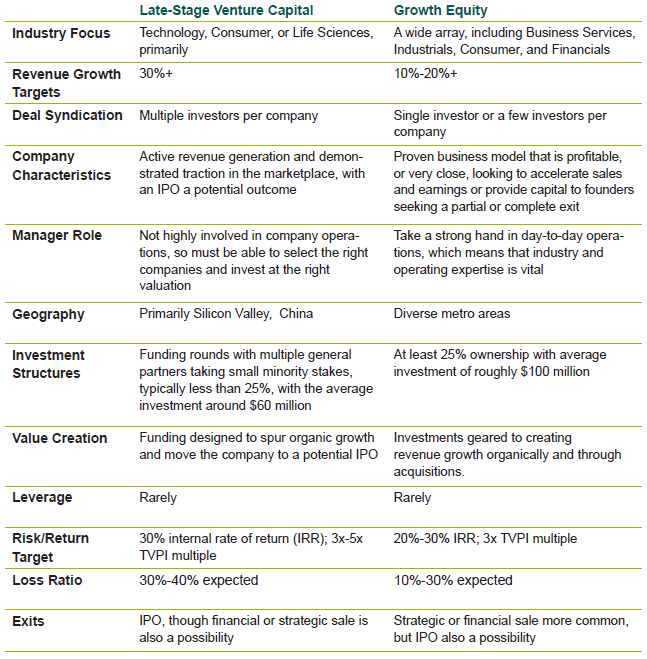
Growth equity and venture capital are both investment strategies aimed at funding companies with high growth potential, but they differ significantly in terms of stage of investment, risk profile, and investment approach. Growth equity typically targets more mature companies that have already established a market presence and are looking to scale further, while venture capital focuses on early-stage startups with innovative ideas but limited operational history. Below, we explore these differences in detail.
See Also What is the Difference Between Venture and Non Venture Capital or in Other Words What is the Definition of Non Venture Capital
1. What is Growth Equity?
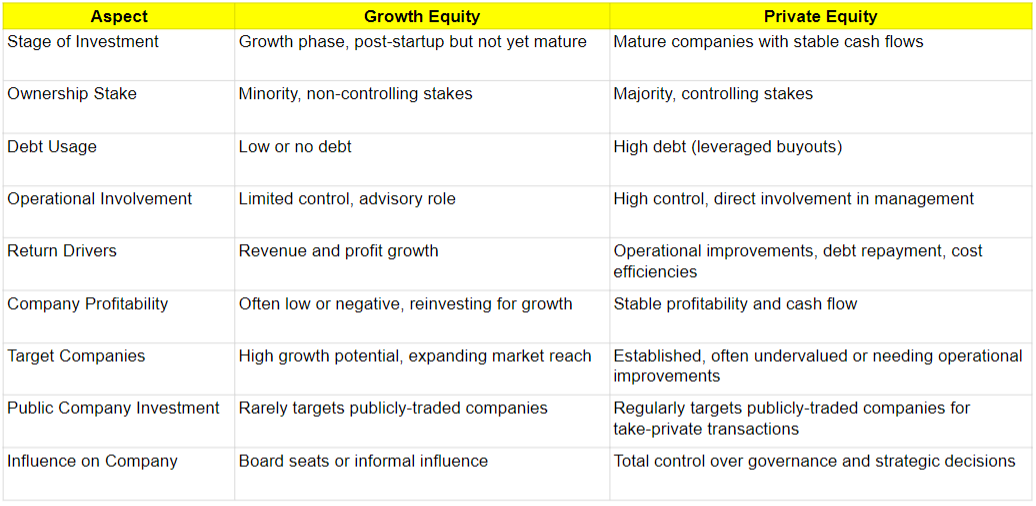
Growth equity refers to investments made in established companies that are experiencing rapid growth and require capital to expand their operations, enter new markets, or improve their infrastructure. These companies are typically profitable or near profitability and have a proven business model. Growth equity investors aim to provide capital in exchange for a minority stake, allowing the company to scale without taking on excessive debt.
2. What is Venture Capital?
Venture capital (VC) is a form of financing provided to early-stage startups with high growth potential but limited revenue or operational history. VC investors take on higher risk in exchange for the possibility of exponential returns. They often invest in innovative industries like technology, biotech, or clean energy, where the potential for disruption is significant. Venture capitalists typically seek a significant equity stake and actively participate in the company’s strategic decisions.
See Also Whats the Difference Between Venture Capital and Corporate Development
3. Key Differences in Investment Stages
The primary difference between growth equity and venture capital lies in the stage of the company they target. Growth equity focuses on later-stage companies that have already achieved product-market fit and are looking to scale. In contrast, venture capital targets early-stage companies that are still developing their product or service and may not yet have a clear path to profitability.
4. Risk and Return Profiles
Growth equity investments are generally considered lower risk compared to venture capital because they involve companies with established revenue streams and proven business models. However, the potential returns may also be more modest. Venture capital, on the other hand, involves higher risk due to the uncertainty of early-stage startups, but it offers the possibility of outsized returns if the company succeeds.
See Also What Are the Different Types of Venture Capital Firms?
5. Involvement in Company Operations
Growth equity investors typically take a less hands-on approach compared to venture capitalists. They provide capital and strategic guidance but usually do not interfere with day-to-day operations. Venture capitalists, however, often play an active role in shaping the company’s direction, offering mentorship, and connecting the startup with industry networks.
| Aspect | Growth Equity | Venture Capital |
|---|---|---|
| Stage of Investment | Later-stage, established companies | Early-stage startups |
| Risk Level | Lower risk | Higher risk |
| Return Potential | Moderate returns | High potential returns |
| Involvement | Less hands-on | Active involvement |
| Target Companies | Profitable or near-profitable | Pre-revenue or early-revenue |
What is the difference between venture capital and growth equity?

 What Career is More Lucrative; Private Equity or Venture Capital?
Definition and Focus of Venture Capital
Venture capital (VC) is a form of private equity financing that focuses on investing in early-stage, high-potential startups with significant growth potential. These companies are often in the seed or Series A funding stages and may not yet be profitable. The primary goal of venture capital is to provide capital to help these startups scale rapidly and achieve market dominance. Key characteristics include:
- High-risk, high-reward: VC investments are inherently risky due to the early-stage nature of the companies.
- Equity stake: VCs typically take an equity stake in the company in exchange for funding.
- Active involvement: Venture capitalists often provide mentorship, strategic guidance, and industry connections.
Definition and Focus of Growth Equity
Growth equity is a type of private equity investment that targets established companies with proven business models and steady revenue streams. These companies are typically in the expansion phase and require capital to scale operations, enter new markets, or make strategic acquisitions. Growth equity investors seek to minimize risk by investing in companies with a clear path to profitability. Key characteristics include:
- Lower risk: Growth equity investments are less risky compared to venture capital, as the companies are already established.
- Minority or majority stakes: Investors may take minority or majority stakes, depending on the company's needs.
- Focus on scaling: The primary goal is to accelerate growth rather than fund initial development.
Stage of Investment
The stage at which venture capital and growth equity invest is a key differentiator. Venture capital typically targets startups in their infancy, often before they have a fully developed product or significant revenue. In contrast, growth equity focuses on companies that have already demonstrated market traction and are looking to expand. Key differences include:
- VC: Invests in seed, Series A, or early-stage rounds.
- Growth equity: Invests in later-stage companies with proven business models.
- Risk profile: VC investments are riskier due to the lack of historical performance data.
Risk and Return Profile
The risk and return profiles of venture capital and growth equity differ significantly. Venture capital investments are high-risk but offer the potential for exponential returns if the startup succeeds. Growth equity, on the other hand, involves lower risk but typically offers more moderate returns. Key points include:
- VC: High failure rate but potential for 10x or higher returns on successful investments.
- Growth equity: Lower failure rate with returns typically in the range of 2x to 5x.
- Investment horizon: VC investments often take longer to mature compared to growth equity.
Role of Investors
The role of investors in venture capital and growth equity also varies. Venture capitalists often take an active role in guiding the startup, providing strategic advice, and leveraging their networks. Growth equity investors, while still involved, tend to focus more on financial and operational improvements. Key differences include:
- VC: Hands-on involvement in product development, hiring, and market strategy.
- Growth equity: Focus on optimizing operations, expanding market reach, and improving profitability.
- Board representation: Both may seek board seats, but VCs are more likely to influence day-to-day decisions.
Is growth capital the same as growth equity?

What is Growth Capital?
Growth capital refers to the funds provided to established companies that are looking to expand or restructure their operations, enter new markets, or finance significant acquisitions. This type of capital is typically used by companies that are already generating revenue but need additional resources to scale their business. Key characteristics of growth capital include:
- Non-dilutive financing: Often structured as debt or mezzanine financing, it does not require giving up equity.
- Targeted use: Funds are specifically allocated for growth initiatives like market expansion or product development.
- Lower risk: Provided to companies with proven business models and steady cash flows.
What is Growth Equity?
Growth equity is a form of private equity investment focused on companies that are experiencing rapid growth and require capital to scale further. Unlike growth capital, growth equity involves purchasing a minority or majority stake in the company, providing both funding and strategic support. Key aspects of growth equity include:
- Equity investment: Investors acquire ownership in the company in exchange for capital.
- High-growth focus: Targets companies with strong growth potential but may not yet be profitable.
- Active involvement: Investors often play a role in guiding the company’s strategy and operations.
Key Differences Between Growth Capital and Growth Equity
While both growth capital and growth equity aim to support business expansion, they differ in structure, risk, and investor involvement. The main differences include:
- Funding structure: Growth capital is typically debt-based, while growth equity involves equity stakes.
- Risk profile: Growth capital is lower risk, targeting stable companies, whereas growth equity targets high-growth, higher-risk ventures.
- Investor role: Growth capital providers are usually passive, while growth equity investors actively participate in decision-making.
When to Choose Growth Capital
Growth capital is ideal for companies that meet specific criteria and have clear, scalable growth plans. Situations where growth capital is suitable include:
- Established businesses: Companies with a proven track record and steady cash flow.
- Debt capacity: Businesses capable of servicing debt without compromising operations.
- Specific growth initiatives: Projects like market expansion or product launches that require targeted funding.
When to Choose Growth Equity
Growth equity is better suited for companies with high growth potential but may lack the stability or cash flow to secure debt financing. Scenarios where growth equity is appropriate include:
- High-growth startups: Companies with innovative products or services poised for rapid expansion.
- Equity dilution acceptance: Businesses willing to give up ownership in exchange for capital and expertise.
- Strategic partnerships: Companies seeking investors who can provide mentorship and industry connections.
What is the difference between equity and VC?
What is Equity?
Equity refers to ownership in a company, represented by shares or stock. When an investor purchases equity, they acquire a portion of the company and become a shareholder. This ownership entitles them to a share of the company's profits, usually in the form of dividends, and gives them voting rights in major decisions. Equity investments are common in both private and public companies, and they are often used to raise capital without incurring debt.
- Ownership Stake: Equity investors own a percentage of the company.
- Profit Sharing: Shareholders may receive dividends based on company performance.
- Voting Rights: Equity holders often have a say in corporate decisions.
What is Venture Capital (VC)?
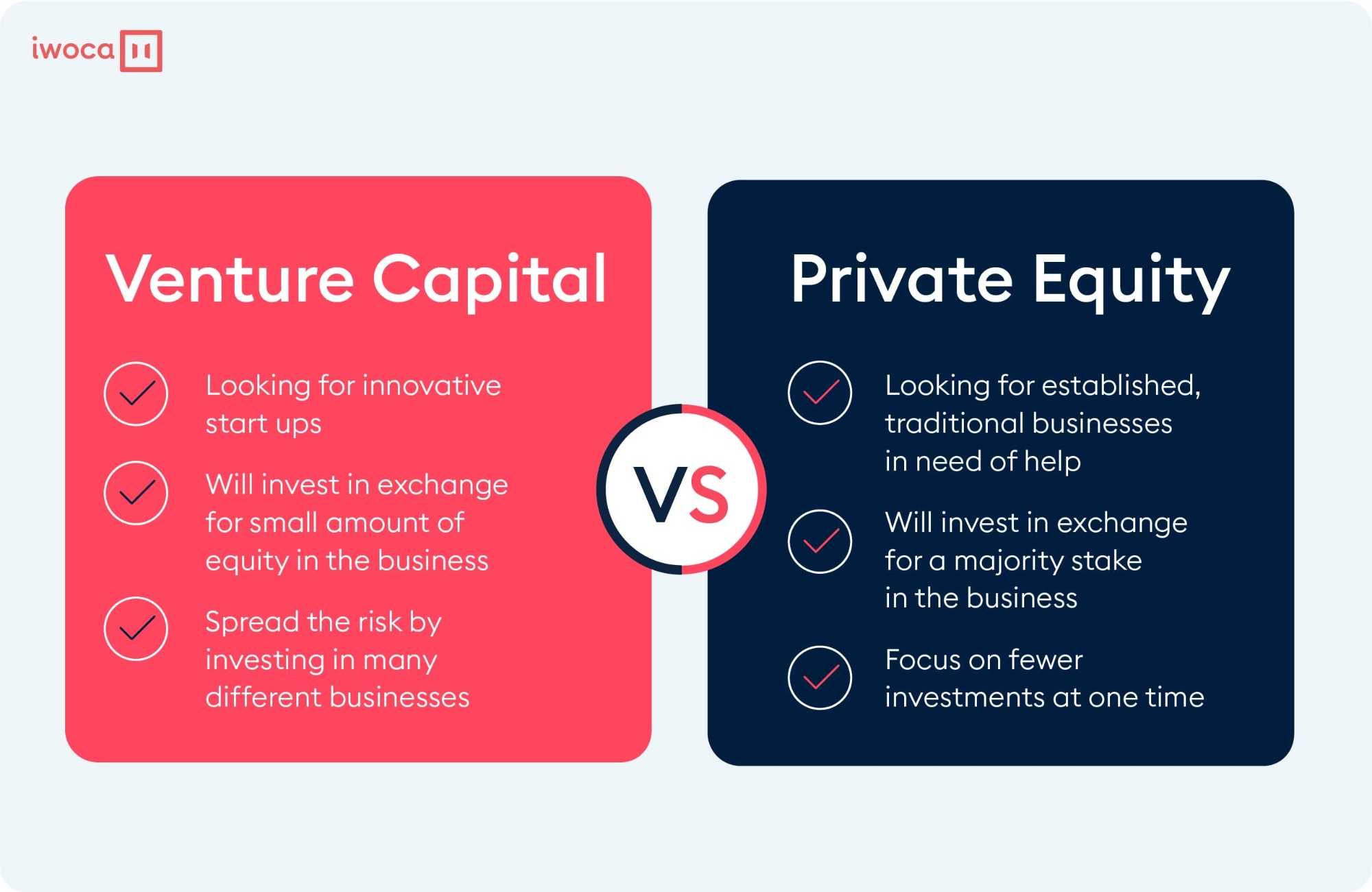
Venture Capital (VC) is a form of private equity financing provided to early-stage, high-potential startups or small businesses with long-term growth potential. VC firms or individual investors (venture capitalists) invest in these companies in exchange for equity, often taking an active role in guiding the business. Unlike traditional equity investments, VC is typically focused on high-risk, high-reward opportunities and is common in technology and innovation-driven industries.
- High-Risk Investment: VC targets startups with significant growth potential but higher risk.
- Active Involvement: Venture capitalists often provide mentorship and strategic guidance.
- Exit Strategy: VC investments aim for a profitable exit, such as an IPO or acquisition.
Key Differences in Investment Stage
One of the primary differences between equity and VC is the stage of the company they target. Equity investments can occur at any stage, from early startups to established public companies. In contrast, VC is specifically focused on early-stage companies that are not yet profitable but have high growth potential. This makes VC investments riskier but potentially more rewarding if the company succeeds.
- Equity: Can be invested in companies at any stage.
- VC: Primarily targets early-stage startups.
- Risk Level: VC investments are generally riskier than traditional equity investments.
Differences in Investor Involvement
Another key distinction lies in the level of investor involvement. Equity investors, especially in public companies, may have minimal involvement in day-to-day operations. On the other hand, venture capitalists often take an active role in the companies they invest in, providing strategic advice, mentorship, and networking opportunities to help the business grow.
- Equity Investors: Typically passive, with limited involvement in operations.
- Venture Capitalists: Actively participate in guiding the company.
- Support: VC investors often provide resources beyond funding.
Differences in Return Expectations
The return expectations for equity and VC investments also differ significantly. Equity investors may seek steady returns through dividends and gradual stock appreciation. In contrast, venture capitalists aim for exponential returns through a successful exit event, such as an IPO or acquisition, which can yield much higher profits but also carries greater uncertainty.
- Equity Returns: Steady dividends and moderate stock growth.
- VC Returns: High returns from exit events like IPOs or acquisitions.
- Risk vs. Reward: VC offers higher potential rewards but with increased risk.
What is the difference between growth and equity?
Understanding Growth and Equity
Growth refers to the increase in value or size of an asset, investment, or economy over time. It is often measured in terms of revenue, profit, or market capitalization. On the other hand, equity represents ownership in a company or asset, typically measured by shares or the residual interest after deducting liabilities from assets. While growth focuses on expansion and value appreciation, equity emphasizes ownership and financial stake.
- Growth is about increasing value or size.
- Equity represents ownership or financial interest.
- Growth is measured by metrics like revenue or market cap, while equity is measured by shares or net worth.
Key Differences in Investment Strategies
When it comes to investment strategies, growth and equity serve different purposes. Growth investments focus on companies or assets with high potential for value appreciation, often reinvesting profits to fuel expansion. Equity investments, however, involve purchasing shares to gain ownership and benefit from dividends or long-term value appreciation. Growth strategies are riskier but offer higher returns, while equity strategies provide stability and ownership benefits.
- Growth investments target high-value appreciation.
- Equity investments focus on ownership and dividends.
- Growth strategies are riskier, while equity strategies offer stability.
Role in Business and Finance
In business and finance, growth and equity play distinct roles. Growth is essential for companies aiming to expand their market share, increase revenue, or innovate. Equity, however, is crucial for raising capital, as it allows businesses to sell shares to investors. While growth drives a company's future potential, equity ensures its financial stability and ability to attract investors.
- Growth drives market expansion and innovation.
- Equity helps raise capital through share sales.
- Growth focuses on future potential, while equity ensures financial stability.
Impact on Economic Development
In the context of economic development, growth and equity have different impacts. Economic growth refers to the increase in a country's GDP, production, and income levels, often driven by technological advancements and investments. Equity, in this context, refers to the fair distribution of resources and opportunities among the population. While growth boosts overall prosperity, equity ensures that the benefits are shared equitably.
- Economic growth increases GDP and production.
- Equity ensures fair resource distribution.
- Growth drives prosperity, while equity promotes social fairness.
Measurement and Evaluation
Measuring growth and equity involves different metrics and approaches. Growth is evaluated using indicators like revenue growth rate, profit margins, or market expansion. Equity is assessed through metrics such as share price, ownership percentage, or net asset value. Understanding these differences is crucial for investors, businesses, and policymakers to make informed decisions.
- Growth is measured by revenue growth rate and profit margins.
- Equity is evaluated through share price and ownership percentage.
- Different metrics are used to assess growth and equity.
Frequently Asked Questions (FAQs)
What is the primary focus of growth equity compared to venture capital?
Growth equity primarily focuses on investing in established companies that have already demonstrated a proven business model and are looking to scale further. These companies typically have consistent revenue streams and are seeking capital to expand operations, enter new markets, or optimize their infrastructure. In contrast, venture capital targets early-stage or startup companies with high growth potential but often unproven business models. Venture capital investors take on higher risk in exchange for the possibility of significant returns if the startup succeeds.
How do the investment stages differ between growth equity and venture capital?
Growth equity investments usually occur during the later stages of a company's lifecycle, often referred to as the growth or expansion stage. At this point, the company has moved beyond the initial startup phase and is looking to accelerate its growth trajectory. On the other hand, venture capital is typically deployed during the seed, early, or Series A stages, when a company is still in its infancy and requires funding to develop its product, build a team, or establish a market presence.
What level of risk is associated with growth equity versus venture capital?
Growth equity is generally considered lower risk compared to venture capital because it invests in companies that have already achieved a level of stability and success. These companies have a track record of generating revenue and often operate in less volatile markets. Venture capital, however, involves higher risk as it backs startups that may not yet have a viable product, proven market demand, or consistent revenue. The potential for failure is greater, but so is the potential for outsized returns if the startup becomes a market leader.
How do growth equity and venture capital differ in terms of ownership and control?
In growth equity investments, the focus is often on providing capital without seeking significant control over the company's operations. Growth equity investors typically take a minority stake and work collaboratively with the existing management team to support strategic growth initiatives. In contrast, venture capital investors may demand more control, especially in early-stage startups, to guide the company's direction, protect their investment, and ensure alignment with their vision. This can include board seats, voting rights, or influence over key decisions.
Leave a Reply
Our Recommended Articles