
Single Member LLC Operating Agreement: Florida

A Single Member Limited Liability Company (LLC) operating agreement in Florida serves as a foundational document for business owners seeking to formalize their operations while maintaining personal liability protection. Although Florida law does not legally require single-member LLCs to adopt an operating agreement, creating one is highly recommended to clarify business structure, operational procedures, and financial management. This agreement reinforces the separation between personal and business assets, a critical factor in safeguarding limited liability status. It also outlines ownership rights, profit distribution, and dissolution protocols, ensuring compliance with state regulations. This article explores the essential components of a Florida single-member LLC operating agreement and its role in fostering legal clarity and long-term business stability.
-
Single Member LLC Operating Agreement in Florida: Key Considerations and Legal Requirements
- What Is a Single Member LLC Operating Agreement in Florida?
- Why Is an Operating Agreement Important for a Florida Single Member LLC?
- Essential Clauses to Include in a Florida Single Member LLC Operating Agreement
- How Does a Single Member LLC Operating Agreement Protect Assets in Florida?
- Tax Implications of a Single Member LLC Operating Agreement in Florida
- Amending a Single Member LLC Operating Agreement in Florida
-
Does a single-member LLC need an operating agreement in Florida?
- Is an Operating Agreement Legally Required for Single-Member LLCs in Florida?
- Benefits of an Operating Agreement for Florida Single-Member LLCs
- How an Operating Agreement Protects Limited Liability Status
- Key Clauses to Include in a Single-Member LLC Operating Agreement
- Steps to Create an Operating Agreement for a Florida Single-Member LLC
- How to write an operating agreement for a single-member LLC?
-
Does Florida recognize single members LLC?
- Does Florida Recognize Single-Member LLCs?
- Legal Recognition of Single-Member LLCs in Florida
- Benefits of Forming a Single-Member LLC in Florida
- Steps to Form a Single-Member LLC in Florida
- Liability Protection for Single-Member LLC Owners in Florida
- Tax Considerations for Florida Single-Member LLCs
- Can an LLC operate without an operating agreement?
-
Frequently Asked Questions About LLCs (FAQs)
- Is a Single Member LLC Operating Agreement legally required in Florida?
- What key clauses should a Florida Single Member LLC Operating Agreement include?
- Can a Single Member LLC Operating Agreement be amended in Florida?
- How does a Florida Single Member LLC Operating Agreement protect personal assets?
Single Member LLC Operating Agreement in Florida: Key Considerations and Legal Requirements
What Is a Single Member LLC Operating Agreement in Florida?
A Single Member LLC Operating Agreement in Florida is a legal document outlining the ownership structure, management rules, and operational procedures for a limited liability company (LLC) with one owner. Although Florida does not legally require an LLC to have an operating agreement, creating one establishes clear guidelines, protects the owner’s limited liability status, and ensures compliance with state laws. It defines the separation between personal and business assets, which is critical in legal disputes or audits.
See AlsoSingle Member LLC: Illinois| Purpose | Clarify business structure, protect liability status, define profit distribution |
| Legal Requirement | Not mandatory in Florida but highly recommended |
| Key Components | Ownership details, management roles, dissolution terms |
Why Is an Operating Agreement Important for a Florida Single Member LLC?
An Operating Agreement reinforces the legitimacy of the LLC as a separate legal entity, which is vital for maintaining personal asset protection. Without it, courts may treat the LLC as a sole proprietorship, exposing the owner to liability. It also provides clarity on business operations, such as profit allocation, decision-making authority, and procedures for adding members or dissolving the business.
| Asset Protection | Prevents piercing the corporate veil in lawsuits |
| Operational Clarity | Defines roles, profit-sharing, and dispute resolution |
| Future Flexibility | Simplifies adding members or transferring ownership |
Essential Clauses to Include in a Florida Single Member LLC Operating Agreement
A well-drafted agreement should include clauses addressing ownership percentage, management structure, and dissolution processes. Key provisions cover profit distribution, tax treatment (e.g., pass-through taxation), and rules for amending the agreement. Including a severability clause ensures the document remains valid even if one section is challenged.
See AlsoSingle Member LLC: Colorado| Ownership Structure | 100% ownership by the single member |
| Management Rights | Member-managed vs. manager-managed roles |
| Dissolution Terms | Steps to wind down the LLC |
How Does a Single Member LLC Operating Agreement Protect Assets in Florida?
The agreement legally separates the owner’s personal assets from the LLC’s liabilities. By formalizing this division, it reduces the risk of creditors pursuing personal property for business debts. Courts in Florida often require proof of an Operating Agreement to uphold limited liability protection during lawsuits or bankruptcy proceedings.
| Personal Liability Shield | Limits debt obligations to business assets |
| Documentation Proof | Required in court to validate LLC legitimacy |
| Creditor Protection | Prevents seizure of personal accounts or property |
Tax Implications of a Single Member LLC Operating Agreement in Florida
A Florida Single Member LLC is typically treated as a disregarded entity by the IRS, meaning profits and losses are reported on the owner’s personal tax return. However, the Operating Agreement can specify alternative tax classifications, such as electing corporate taxation (S-Corp or C-Corp) to optimize tax efficiency.
See Also What Are Examples of Vc Due Diligence Check Lists?
| Default Tax Status | Disregarded entity (pass-through taxation) |
| Elective Tax Options | S-Corp or C-Corp for potential savings |
| State Compliance | No Florida state income tax for LLCs |
Amending a Single Member LLC Operating Agreement in Florida
The owner can amend the agreement at any time by following the procedures outlined in the original document. Common reasons for amendments include changing the LLC’s business purpose, updating management roles, or adjusting profit distribution methods. Amendments must be documented in writing and signed by the sole member.
| Amendment Process | Member approval, written documentation, filing updates |
| Common Revisions | Tax elections, ownership transfers, operational changes |
| Legal Compliance | Ensure amendments align with Florida statutes |
Does a single-member LLC need an operating agreement in Florida?
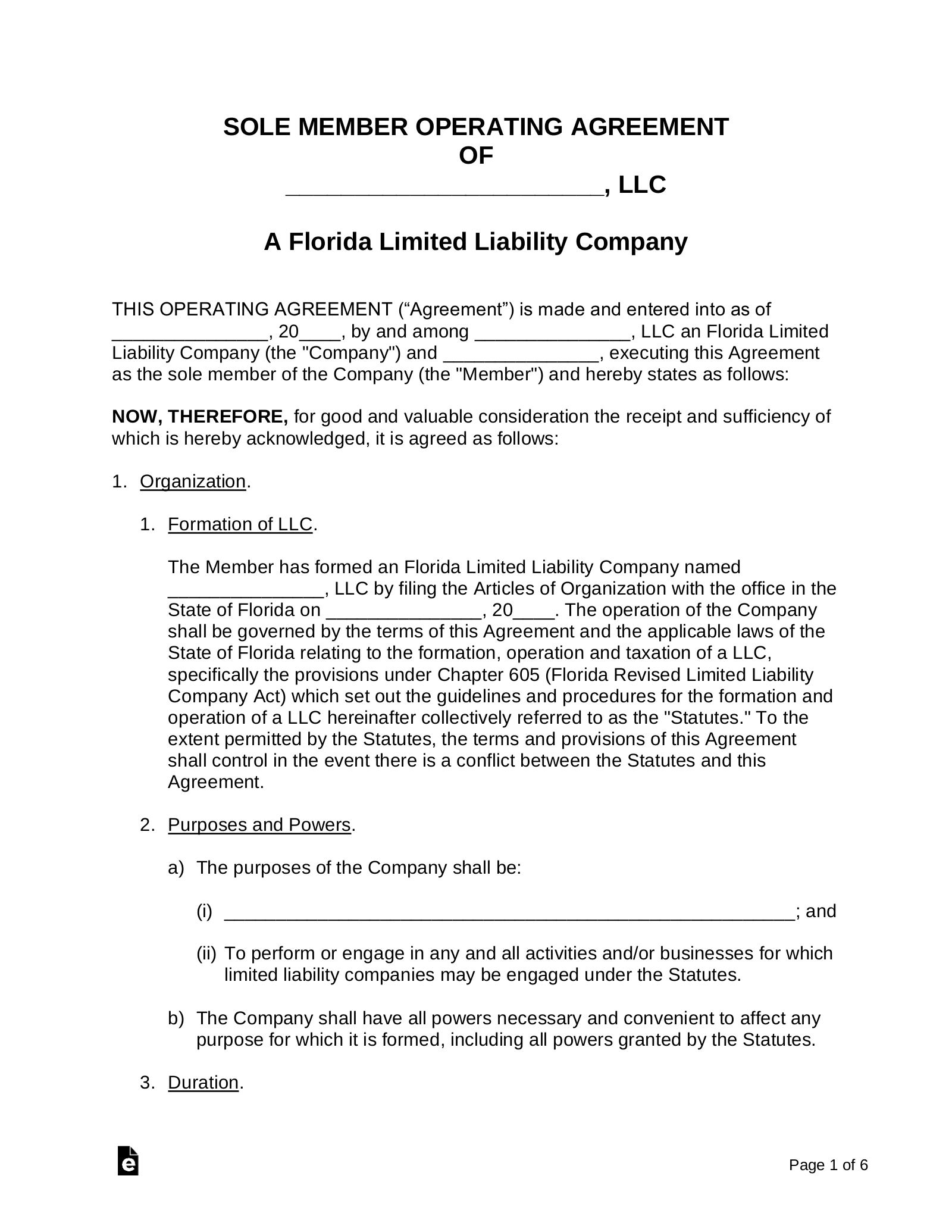
Florida law does not legally require a single-member LLC to have an operating agreement. However, creating one is strongly recommended to establish clear business protocols, protect limited liability status, and define the company's structure. Without an operating agreement, the LLC may default to Florida’s default LLC statutes, which might not align with the owner’s intentions.
Is an Operating Agreement Legally Required for Single-Member LLCs in Florida?
While Florida does not mandate an operating agreement for single-member LLCs, adopting one provides critical legal and operational advantages. State law (Florida Statutes, Chapter 605) governs LLCs but lacks specificity for unique business needs. Key reasons to consider an operating agreement include:
See AlsoHow to Get Investors for Music- Clarifying ownership and management roles to avoid ambiguity in decision-making.
- Reinforcing the limited liability protection by separating personal and business assets.
- Customizing rules for profit distribution, dissolution, or transfer of ownership.
Benefits of an Operating Agreement for Florida Single-Member LLCs
An operating agreement adds legitimacy and structure to a single-member LLC, even if not required. Benefits include:
- Enhanced legal protection by demonstrating the LLC operates as a separate entity.
- Defining procedures for tax elections (e.g., S-Corp status) and financial management.
- Providing a framework for resolving disputes or admitting new members in the future.
How an Operating Agreement Protects Limited Liability Status
Courts may pierce the corporate veil if an LLC lacks formal governance, exposing the owner to personal liability. An operating agreement helps by:
- Documenting compliance with corporate formalities (e.g., record-keeping, meetings).
- Showing a clear separation between the owner’s personal and business finances.
- Outlining management responsibilities to prevent commingling of assets.
Key Clauses to Include in a Single-Member LLC Operating Agreement
A well-drafted agreement should address:
- Ownership structure and the member’s capital contributions.
- Procedures for dissolving the LLC or transferring membership interests.
- Guidelines for tax treatment and profit/loss allocations.
Steps to Create an Operating Agreement for a Florida Single-Member LLC
To draft an effective agreement:
- Outline business objectives and operational rules.
- Specify management authority (member-managed vs. manager-managed).
- Consult a business attorney to ensure compliance with state laws.
How to write an operating agreement for a single-member LLC?
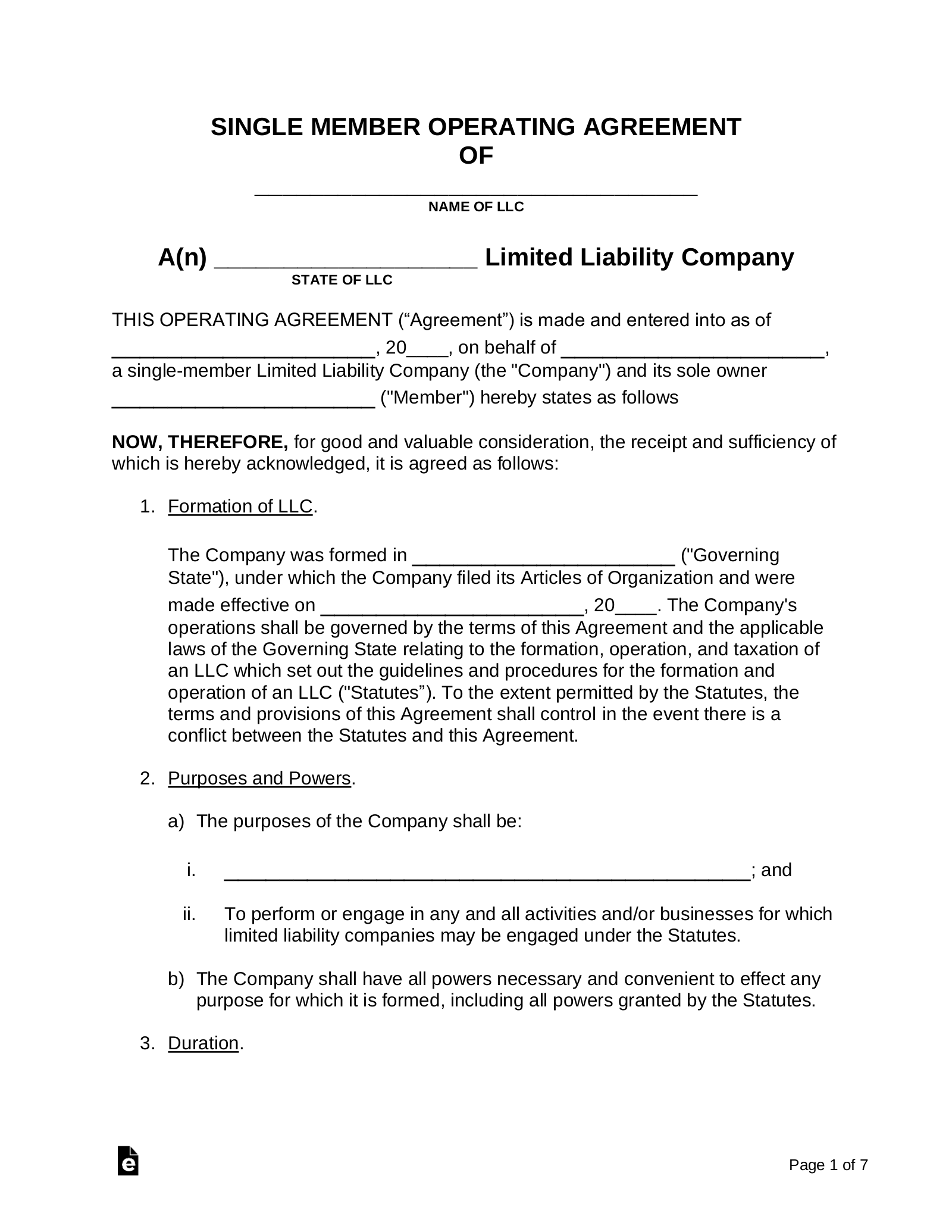
Understanding the Purpose of a Single-Member LLC Operating Agreement
An operating agreement for a single-member LLC outlines the structure, management, and operational guidelines of the business. Even with one owner, this document establishes legal separation between personal and business assets, reinforces limited liability protection, and ensures compliance with state requirements. Key elements include ownership details, management roles, profit distribution, and dissolution procedures.
- Define the LLC’s basic information (name, address, purpose).
- Clarify ownership structure (100% membership interest).
- Include management provisions (member-managed vs. manager-managed).
Essential Clauses to Include in the Agreement
To create a comprehensive operating agreement, incorporate clauses that address legal and financial responsibilities. These clauses protect the LLC’s status and prevent disputes during audits or legal challenges. Focus on specificity to avoid ambiguity.
- Capital contributions (initial funding and future investments).
- Profit and loss allocation (tax implications).
- Decision-making authority (sole control vs. delegation).
Compliance with State Laws and Regulations
Each state has unique requirements for LLC operating agreements. Research state-specific statutes to ensure your document aligns with local laws. Non-compliance could jeopardize liability protection or lead to penalties.
- Check filing requirements (mandatory clauses in some states).
- Adhere to annual reporting rules (if applicable).
- Include a registered agent’s details (name and address).
Drafting Procedures for Amendments and Dissolution
Define clear processes for modifying the agreement or dissolving the LLC. This ensures transparency and legal validity if changes or closure occur.
- Amendment protocols (member approval and documentation).
- Dissolution triggers (voluntary closure or unforeseen events).
- Asset distribution plans (handling debts and remaining assets).
Taxation and Financial Provisions
Specify how the LLC will handle taxation and financial reporting. Single-member LLCs are typically treated as disregarded entities by default, but the agreement can outline alternative tax elections.
- Tax classification (default vs. S-Corp election).
- Banking and accounting practices (separate business accounts).
- Record-keeping requirements (financial statements and receipts).
Legal Protection and Asset Management
Emphasize clauses that reinforce limited liability protection and asset management. This shields personal assets from business liabilities and strengthens the LLC’s credibility.
- Separation of assets (no co-mingling funds).
- Liability clauses (member’s limited responsibility).
- Insurance requirements (coverage for lawsuits or losses).
Does Florida recognize single members LLC?

Does Florida Recognize Single-Member LLCs?
Yes, Florida fully recognizes single-member LLCs (SMLLCs) under the Florida Revised Limited Liability Company Act (Chapter 605). The state treats SMLLCs similarly to multi-member LLCs, granting them the same legal protections and operational flexibility. Florida does not impose additional restrictions on ownership structure, making it a favorable state for solo entrepreneurs.
Legal Recognition of Single-Member LLCs in Florida
Florida law explicitly allows the formation of single-member LLCs and provides them with the same legal standing as multi-member entities. Key aspects include:
- The Florida Revised LLC Act (Chapter 605) does not differentiate between single-member and multi-member LLCs in terms of rights or obligations.
- SMLLCs are recognized as separate legal entities, offering liability protection to the owner.
- Florida courts uphold the corporate veil for SMLLCs, provided compliance with formalities is maintained.
Benefits of Forming a Single-Member LLC in Florida
Establishing a single-member LLC in Florida offers numerous advantages, such as:
- Limited liability protection, shielding personal assets from business debts or lawsuits.
- Flexibility in management structure and decision-making, as no partners are involved.
- Pass-through taxation by default, avoiding double taxation unless corporate tax status is elected.
Steps to Form a Single-Member LLC in Florida
Creating a single-member LLC in Florida involves:
- Choosing a unique business name compliant with Florida naming rules.
- Appointing a registered agent with a physical address in Florida.
- Filing Articles of Organization with the Florida Division of Corporations ($125 filing fee).
- Drafting an operating agreement (not mandatory but recommended).
- Obtaining an EIN from the IRS for tax and banking purposes.
Liability Protection for Single-Member LLC Owners in Florida
Florida’s LLC laws provide robust liability protection for single-member LLC owners, including:
- Protection from personal liability for business debts or legal judgments.
- Separation of business and personal assets, provided corporate formalities are observed.
- Exceptions apply in cases of fraud or commingling of funds, which may pierce the corporate veil.
Tax Considerations for Florida Single-Member LLCs
Single-member LLCs in Florida enjoy tax flexibility:
- Default tax treatment as a disregarded entity, with income reported on the owner’s personal tax return.
- Option to elect S-Corporation or C-Corporation status for potential tax savings.
- No state income tax in Florida, though federal taxes and other state fees (e.g., sales tax) may apply.
- Annual state business tax exemptions for SMLLCs meeting specific criteria.
Can an LLC operate without an operating agreement?
.jpg)
Is an Operating Agreement Legally Required for an LLC?
While most states in the U.S. do not legally mandate an operating agreement for LLCs, a few states (e.g., California, New York, Missouri) require it during formation. Even where not required, operating agreements are critical to:
- Override default state laws governing LLC operations.
- Clarify member roles, profit-sharing, and decision-making processes.
- Strengthen the LLC’s legal standing to maintain limited liability protection.
What Risks Arise from Operating Without an Agreement?
An LLC without an operating agreement faces significant risks, including:
- Member disputes due to undefined roles, profit splits, or exit strategies.
- Loss of personal liability protection if courts disregard the LLC’s corporate veil.
- Default state rules may enforce unwanted structures, like equal profit distribution regardless of ownership percentages.
How Do Default State Rules Apply Without an Operating Agreement?
In the absence of an operating agreement, state statutes govern the LLC. For example:
- Profits and losses are divided equally among members, even if capital contributions differ.
- All members typically have equal voting rights, regardless of ownership stake.
- States may impose restrictions on transferring ownership or dissolving the LLC.
What Are the Advantages of Drafting an Operating Agreement?
Creating an operating agreement provides clarity and protection, such as:
- Defining management structure (member-managed vs. manager-managed).
- Outlining procedures for adding or removing members and resolving disputes.
- Preserving tax flexibility (e.g., electing S-corp status or partnership taxation).
Can an LLC Retroactively Create an Operating Agreement?
Yes, an LLC can draft an operating agreement after formation, but this may lead to complications:
- Existing disagreements among members could hinder consensus on terms.
- Retroactive terms may not resolve prior disputes or liabilities.
- Delayed creation risks exposure to unfavorable state default rules in the interim.
Frequently Asked Questions About LLCs (FAQs)
Is a Single Member LLC Operating Agreement legally required in Florida?
No, Florida law does not legally mandate a Single Member LLC to have an Operating Agreement. However, it is highly recommended to create one to establish clear operational guidelines, protect limited liability status, and define ownership rights. Without an Operating Agreement, the LLC may default to Florida’s default LLC statutes, which might not align with the member’s intentions for management, profit distribution, or dispute resolution.
What key clauses should a Florida Single Member LLC Operating Agreement include?
A Florida Single Member LLC Operating Agreement should outline management structure, member responsibilities, profit and loss allocation, and dissolution procedures. It should also specify asset protection measures, such as separating personal and business finances, and include provisions for succession planning or transferring ownership. Clauses addressing compliance with Florida’s annual report requirements and registered agent details are also critical for legal adherence.
Can a Single Member LLC Operating Agreement be amended in Florida?
Yes, a Single Member LLC Operating Agreement in Florida can be amended at any time by the sole member, as long as the changes comply with state law. Amendments typically require written consent from the member and should be documented formally. It’s advisable to review and update the agreement periodically, especially after major business changes like asset acquisitions, tax status updates, or adjustments to operational strategies.
How does a Florida Single Member LLC Operating Agreement protect personal assets?
A properly drafted Operating Agreement strengthens the liability protection of a Single Member LLC by legally separating the member’s personal assets from business liabilities. It demonstrates to courts that the LLC operates as a distinct legal entity, reducing the risk of piercing the corporate veil. The agreement should include clauses enforcing financial separation, such as maintaining dedicated business accounts and avoiding commingling funds, which are critical for upholding limited liability status in Florida.
Leave a Reply
Our Recommended Articles