
How to Dissolve an LLC in Wyoming

Dissolving a Limited Liability Company (LLC) in Wyoming involves a structured process to ensure legal compliance and avoid future liabilities. While forming an LLC in Wyoming is straightforward, winding down the business requires careful attention to state-specific regulations. Owners must settle outstanding debts, notify creditors, distribute remaining assets, and file formal dissolution documents with the Wyoming Secretary of State. Additionally, tax obligations and annual report filings must be addressed to prevent penalties. Understanding these steps is critical for a smooth closure, whether the decision stems from business restructuring, financial challenges, or retirement. This guide outlines the essential requirements and procedures to legally dissolve an LLC in Wyoming efficiently.
Step-by-Step Guide to Dissolving an LLC in Wyoming
Understanding Voluntary Dissolution of an LLC in Wyoming
To dissolve an LLC in Wyoming, members must agree to voluntarily dissolve the business. This process involves formal approval by LLC members, settling debts, and filing dissolution documents with the Wyoming Secretary of State. Ensure the LLC’s operating agreement outlines dissolution procedures, or follow state statutes if no agreement exists.
See AlsoHow to Dissolve an LLC in Arizona| Key Step | Details |
|---|---|
| Member Approval | Members must vote as per the LLC agreement (usually majority or unanimous consent). |
| File Articles of Dissolution | Submit the form to the Wyoming SOS with a $60 fee. |
| Debt Settlement | Pay creditors and distribute remaining assets to members. |
Member Voting and Documentation Requirements
Wyoming requires LLC members to formally approve dissolution through a vote. Document the decision in meeting minutes or a written consent form. Retain these records to prove compliance with state laws.
| Requirement | Description |
|---|---|
| Voting Threshold | Follow terms in the operating agreement or default to state-mandated majority. |
| Written Consent | Members can sign a dissolution agreement without a formal meeting. |
Filing Articles of Dissolution with the Wyoming SOS
Submit Articles of Dissolution (Form LLC-250) to the Wyoming Secretary of State. Include the LLC’s name, dissolution date, and confirmation that debts are settled. File online, by mail, or in person with a $60 filing fee.
See AlsoWyoming LLC Filing Fee| Filing Method | Details |
|---|---|
| Online | Fastest option via Wyoming SOS website. |
| Fee | $60 (non-refundable). |
| Processing Time | 1-2 business days for online submissions. |
Settling Debts and Obligations Before Dissolution
Wyoming law requires LLCs to settle all debts and notify creditors before dissolving. Liquidate assets if necessary, and retain records of payments for at least three years post-dissolution.
| Action | Description |
|---|---|
| Liquidate Assets | Sell property to pay outstanding debts. |
| Creditor Notification | Inform creditors in writing about the dissolution. |
| Recordkeeping | Maintain proof of debt resolution. |
Tax Obligations and Final Tax Returns
File final state and federal tax returns after dissolution. Wyoming LLCs must pay any owed sales tax, employment taxes, and annual report fees. Notify the IRS by marking the final return as “Final.”
See AlsoHow to Dissolve an LLC in New Jersey| Tax Type | Requirement |
|---|---|
| State Taxes | File final Wyoming sales tax return (Form 41-113). |
| Federal Taxes | Submit IRS Form 1065 (if applicable) and close EIN. |
Can you dissolve Wyoming LLC online?

How to Dissolve a Wyoming LLC Online
To dissolve a Wyoming LLC online, you must follow the state’s legal requirements. Begin by filing Articles of Dissolution through the Wyoming Secretary of State’s website. Ensure all taxes and fees are paid, and members agree to dissolution.
- Visit the Wyoming Secretary of State’s business filing portal.
- Complete the Articles of Dissolution form (available for download or online submission).
- Pay the required filing fee (currently $60).
- Submit the form electronically and await confirmation.
Required Documents for Dissolving a Wyoming LLC
Dissolving a Wyoming LLC requires specific documentation to ensure compliance. Key documents include the Articles of Dissolution, tax clearance certificates, and internal member consent records.
- Articles of Dissolution: Officially terminates the LLC’s existence.
- Tax Compliance: Proof of settled state taxes or a clearance certificate from the Wyoming Department of Revenue.
- Operating Agreement: Ensure dissolution aligns with the LLC’s internal rules.
Wyoming LLC Tax Obligations During Dissolution
Before dissolving a Wyoming LLC, settle all state tax obligations to avoid penalties. This includes annual report fees, sales taxes, and unemployment taxes.
- File a final annual report with the Wyoming Secretary of State.
- Pay outstanding sales tax or other industry-specific taxes.
- Request a tax clearance certificate to confirm compliance.
Consequences of Not Properly Dissolving a Wyoming LLC
Failing to dissolve a Wyoming LLC correctly can lead to ongoing fees, legal liabilities, and damage to credit scores.
- Annual report fees and penalties continue accruing.
- Members remain personally liable for unresolved debts or lawsuits.
- The LLC may face administrative dissolution by the state, harming business credibility.
Benefits of Dissolving a Wyoming LLC Online
Online dissolution offers speed, convenience, and reduced paperwork for Wyoming LLC owners.
- 24/7 accessibility via the state’s online portal.
- Immediate confirmation of submission and processing.
- Lower risk of errors compared to paper filings.
Do I have to pay taxes if I dissolve my LLC?

Do I Have to Pay Taxes When Dissolving an LLC?
Yes, you may still owe taxes when dissolving your LLC, depending on the timing, remaining assets, and unresolved liabilities. Key factors include:
- Final tax returns: File federal and state returns for the partial year the LLC operated before dissolution.
- Unpaid taxes: Settle outstanding payroll, sales, or income taxes accrued before dissolution.
- Asset distribution: Selling or transferring assets may trigger capital gains taxes or other liabilities.
- State-specific requirements: Some states impose franchise taxes or fees even during dissolution.
What Taxes Are Due During LLC Dissolution?
Tax obligations during dissolution depend on the LLC’s financial activities and state laws:
- Income tax: Report income earned up to the dissolution date on your final return.
- Sales tax: Remit collected sales taxes to state agencies.
- Payroll taxes: Ensure all employee-related taxes (e.g., Social Security) are paid.
- State dissolution fees: Some states require fees to formally terminate the LLC.
How Does Asset Distribution Affect Taxes?
Distributing assets during dissolution may have tax consequences:
- Capital gains tax: Applies if assets (e.g., property, equipment) are sold above their book value.
- Fair market value: Members may owe taxes on assets received, based on their current value.
- Debt settlements: Paying off debts before distribution can reduce taxable income.
Are There State-Specific Tax Obligations?
State laws vary, impacting tax responsibilities during dissolution:
- Franchise taxes: States like California require annual franchise taxes even in the dissolution year.
- Annual report fees: Some states mandate final report filings with associated fees.
- Dissolution filings: Fees for submitting dissolution paperwork to the state.
What Happens to Unpaid Taxes After Dissolution?
Unresolved taxes can lead to personal liability or penalties:
- IRS claims: The IRS can pursue unpaid federal taxes from LLC members personally.
- State tax liens: States may place liens on distributed assets or members’ personal assets.
- Penalties: Late payment fees or interest may accrue if taxes remain unpaid post-dissolution.
How do I officially close an LLC?
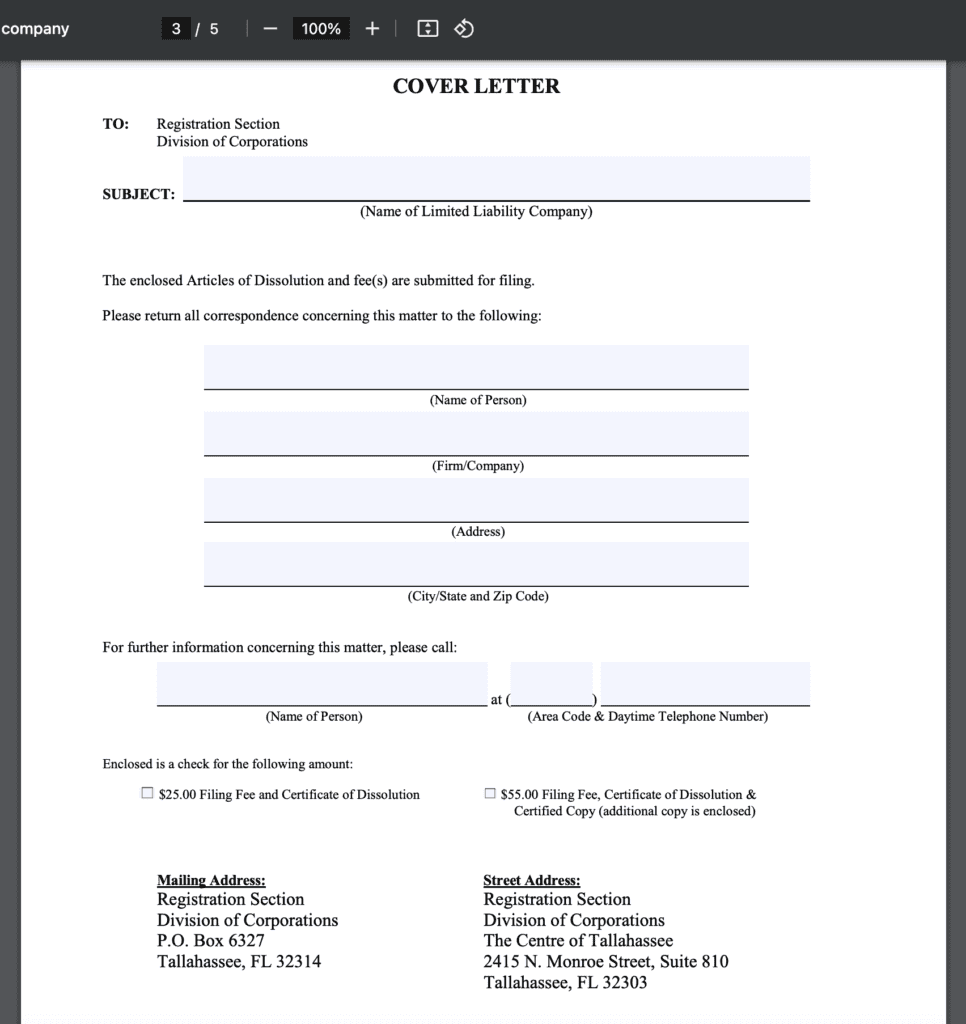
Steps to Dissolve an LLC According to State Requirements
To officially close an LLC, you must follow your state’s dissolution process. Start by reviewing your operating agreement for internal dissolution procedures, then file Articles of Dissolution (or a similar document) with the state.
- Check your state’s filing requirements (e.g., fees, forms, and deadlines).
- Hold a member vote to approve dissolution, as outlined in the operating agreement.
- Submit the dissolution paperwork to the state agency (e.g., Secretary of State).
Settling Debts and Tax Obligations
Before closing, ensure all debts, taxes, and liabilities are resolved. Notify creditors, settle outstanding bills, and file a final federal and state tax return.
- Pay off remaining business debts and distribute assets to members.
- File final IRS Form 1065 (partnerships) or Form 1120 (corporations) and state tax returns.
- Address sales tax, payroll tax, and other obligations with relevant agencies.
Notifying Creditors and Handling Claims
Legally inform creditors and third parties about the LLC’s closure to avoid future disputes.
- Publish a dissolution notice in a local newspaper (required in some states).
- Send written notices to known creditors and settle valid claims.
- Maintain records of communications for legal protection.
Canceling Licenses, Permits, and Registrations
Terminate all business-related licenses to prevent ongoing fees or penalties.
- Cancel local, state, and federal business licenses.
- Close sales tax permits and employer accounts (e.g., state labor department).
- Terminate fictitious business names (DBAs) if applicable.
Closing Accounts and Maintaining Records
Formally shut down financial accounts and retain documents for compliance.
- Close business bank accounts and credit lines.
- Cancel the LLC’s Employer Identification Number (EIN) with the IRS.
- Keep financial and dissolution records for 3–7 years, as required by law.
Frequently Asked Questions About LLCs (FAQs)
What Are the Steps to Dissolve an LLC in Wyoming?
To dissolve an LLC in Wyoming, you must follow a structured process. First, review your LLC’s Operating Agreement for dissolution-specific requirements, such as member voting procedures. Next, file Articles of Dissolution with the Wyoming Secretary of State, either online or by mail, and pay the required filing fee. Ensure all tax obligations and outstanding debts are settled, including state taxes and liabilities to creditors. Notify creditors, clients, and vendors of the dissolution, and liquidate remaining assets to distribute funds to members. Finally, close business accounts and cancel licenses or permits to finalize the process.
Are There Tax Obligations When Dissolving a Wyoming LLC?
Yes, fulfilling tax obligations is critical during dissolution. Wyoming LLCs must file a final state tax return and settle any owed sales, payroll, or franchise taxes. The IRS also requires a final federal tax return (Form 1065 or 1120-S) and may require closing your Employer Identification Number (EIN). Additionally, ensure compliance with local tax requirements, such as county-level filings. Failure to resolve taxes may result in penalties or legal complications, so obtaining a tax clearance certificate from the Wyoming Department of Revenue is advisable.
How Long Does It Take to Dissolve an LLC in Wyoming?
The timeline for dissolving an LLC in Wyoming depends on several factors. Processing Articles of Dissolution typically takes 10–15 business days if filed by mail, or faster with expedited online filing. Delays may occur if there are unresolved debts, pending lawsuits, or incomplete tax filings. Settling creditor claims and asset distribution can add weeks or months, depending on the LLC’s complexity. To avoid delays, ensure all paperwork is accurate and obligations are met before submitting dissolution documents.
What Happens to Liabilities After Dissolving a Wyoming LLC?
Once an LLC is properly dissolved, existing liabilities generally remain with the business, not its members. However, members must ensure all debts and obligations are addressed during the winding-up process. Creditors must be notified, and claims resolved before asset distribution. If dissolution is mishandled—such as failing to notify creditors—members could face personal liability. Properly filing dissolution documents and maintaining records of compliance helps protect members from future legal or financial claims.
Leave a Reply
Our Recommended Articles