
LLC Operating Agreement: New Hampshire

Forming a limited liability company (LLC) in New Hampshire requires careful attention to foundational legal documents, and the LLC operating agreement stands as a critical component. While the state does not legally mandate an operating agreement, drafting one is essential for defining internal governance, member roles, profit distribution, and dispute resolution procedures. This agreement serves as a contractual blueprint, ensuring clarity among members and protecting the LLC’s limited liability status by reinforcing its legal separation from personal assets. Tailored to New Hampshire’s statutes, a well-structured operating agreement can prevent conflicts, streamline operations, and provide flexibility in managing the business. This article explores key considerations for creating an effective LLC operating agreement in the Granite State.
- Understanding the LLC Operating Agreement in New Hampshire
-
Does NH require an LLC operating agreement?
- Is an LLC Operating Agreement Legally Required in New Hampshire?
- Key Benefits of Having an LLC Operating Agreement in New Hampshire
- What Should a New Hampshire LLC Operating Agreement Include?
- Risks of Not Having an Operating Agreement for a New Hampshire LLC
- How to Draft an Operating Agreement for a New Hampshire LLC
-
Can I write my own operating agreement for my LLC?
- Can I Legally Write My Own Operating Agreement for My LLC?
- What Are the Advantages of Drafting Your Own Operating Agreement?
- What Risks Are Involved in Writing Your Own Operating Agreement?
- What Key Elements Should a Self-Written Operating Agreement Include?
- When Should You Consult a Lawyer Instead of Writing Your Own Operating Agreement?
- Does an LLC always have an operating agreement?
- Does an LLC operating agreement need to be notarized?
- Frequently Asked Questions About LLCs (FAQs)
Understanding the LLC Operating Agreement in New Hampshire
Key Provisions of a New Hampshire LLC Operating Agreement
A New Hampshire LLC Operating Agreement outlines the structure and rules governing the LLC. Key provisions include management structure (member-managed or manager-managed), profit and loss distribution, voting rights, and procedures for adding or removing members. It also addresses dissolution processes and dispute resolution mechanisms. While New Hampshire does not legally require an Operating Agreement, having one ensures clarity and legal protection.
See AlsoLLC Operating Agreement: Illinois| Provision | Description |
| Management Structure | Defines whether members or managers control daily operations. |
| Profit Distribution | Specifies how profits/losses are allocated among members. |
| Voting Rights | Outlines decision-making processes and voting thresholds. |
| Dissolution | Details steps to wind down the LLC. |
State-Specific Requirements for New Hampshire LLC Operating Agreements
New Hampshire LLC laws (RSA 304-C) do not mandate specific clauses, but agreements must comply with state statutes. For example, the agreement cannot override a member’s right to inspect records (RSA 304-C:45) or circumvent fiduciary duties. Additionally, New Hampshire requires LLCs to appoint a registered agent and file an Annual Report with the Secretary of State.
| Requirement | Details |
| Registered Agent | A physical address in NH to receive legal documents. |
| Annual Report | Due by April 1 each year, with a $100 fee. |
| State Fees | $100 to form an LLC; $15 for name reservation. |
Amending an LLC Operating Agreement in New Hampshire
To amend the Operating Agreement, members must follow procedures outlined in the original document. Typically, amendments require a majority or supermajority vote. New Hampshire law permits oral or written amendments, but written updates are strongly recommended. Amendments should reflect changes in ownership, management, or business objectives.
See AlsoSample California LLC Operating Agreement| Step | Action |
| Proposal | A member proposes the amendment. |
| Voting | Members vote per agreed-upon thresholds. |
| Documentation | Update and redistribute the amended agreement. |
Tax Considerations for New Hampshire LLCs
New Hampshire LLCs benefit from pass-through taxation by default, meaning profits are reported on members’ personal tax returns. The state does not impose income tax on wages or business profits but taxes interest and dividends at 5%. LLCs must also comply with federal tax obligations, including self-employment taxes and filing Form 1065 (if multi-member).
| Tax Type | Details |
| Pass-Through Taxation | No state-level income tax on LLC profits. |
| Interest & Dividends Tax | 5% state tax on investment income. |
| Federal Taxes | Self-employment tax (15.3%) applies to active members. |
Compliance and Enforcement of Operating Agreements in New Hampshire
Courts in New Hampshire generally uphold Operating Agreements if they are clear, consistent with state law, and adopted in good faith. Disputes often arise over ambiguous clauses, such as profit-sharing ratios or management authority. Members should ensure the agreement includes dispute resolution methods, such as mediation or arbitration.
See AlsoLLC Operating Agreement: CT| Compliance Aspect | Guidance |
| Clarity | Avoid vague language to prevent legal challenges. |
| Dispute Resolution | Include mediation/arbitration clauses. |
| Annual Compliance | File reports and pay fees on time. |
Does NH require an LLC operating agreement?
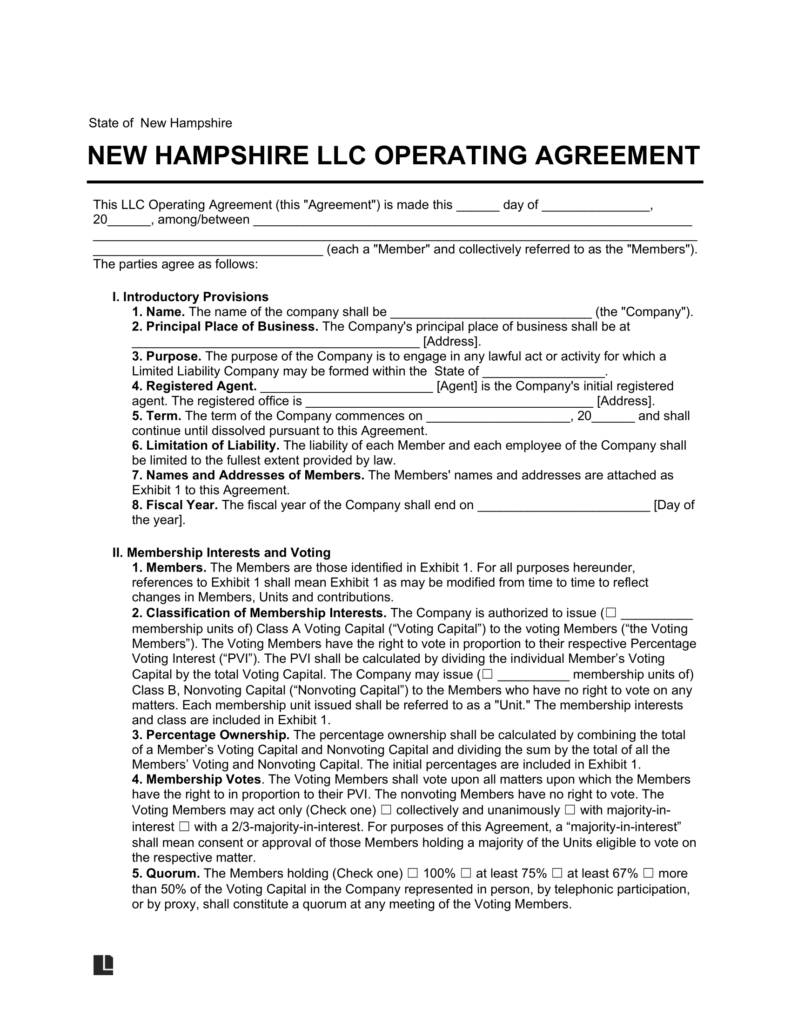
Is an LLC Operating Agreement Legally Required in New Hampshire?
New Hampshire does not legally require LLCs to have an operating agreement. However, while the state statutes (NH RSA 304-C) do not mandate it, creating one is strongly recommended to define internal governance, member rights, and financial arrangements. Without an operating agreement, the LLC defaults to New Hampshire’s default rules, which may not align with the members’ intentions.
See AlsoLLC Operating Agreement: MaineKey Benefits of Having an LLC Operating Agreement in New Hampshire
An operating agreement provides legal clarity and operational structure for an LLC. Benefits include:
- Customized governance: Overrides default state laws to tailor rules for management, profit distribution, and decision-making.
- Member protection: Clearly defines roles, responsibilities, and liability protections for members.
- Dispute resolution: Establishes procedures to resolve conflicts, reducing the risk of costly litigation.
What Should a New Hampshire LLC Operating Agreement Include?
A well-drafted operating agreement should cover:
See AlsoNJ LLC Operating Agreement- Member ownership percentages: Specifies each member’s financial and voting rights.
- Management structure: Outlines whether the LLC is member-managed or manager-managed.
- Dissolution terms: Defines conditions for dissolving the LLC and distributing assets.
Risks of Not Having an Operating Agreement for a New Hampshire LLC
Operating without an agreement exposes the LLC to risks such as:
- State default rules: New Hampshire’s generic laws govern the LLC, which may not suit members’ needs.
- Unclear financial obligations: Disputes may arise over profit-sharing or capital contributions.
- Loss of liability protection: Courts may disregard the LLC’s limited liability status if operations appear informal.
How to Draft an Operating Agreement for a New Hampshire LLC
While not mandatory, drafting an agreement involves:
- Using templates or legal software: Start with state-specific templates to ensure compliance.
- Consulting an attorney: Customize clauses for complex ownership structures or unique business needs.
- Member approval: All members must review, agree to, and sign the document to make it legally binding.
Can I write my own operating agreement for my LLC?
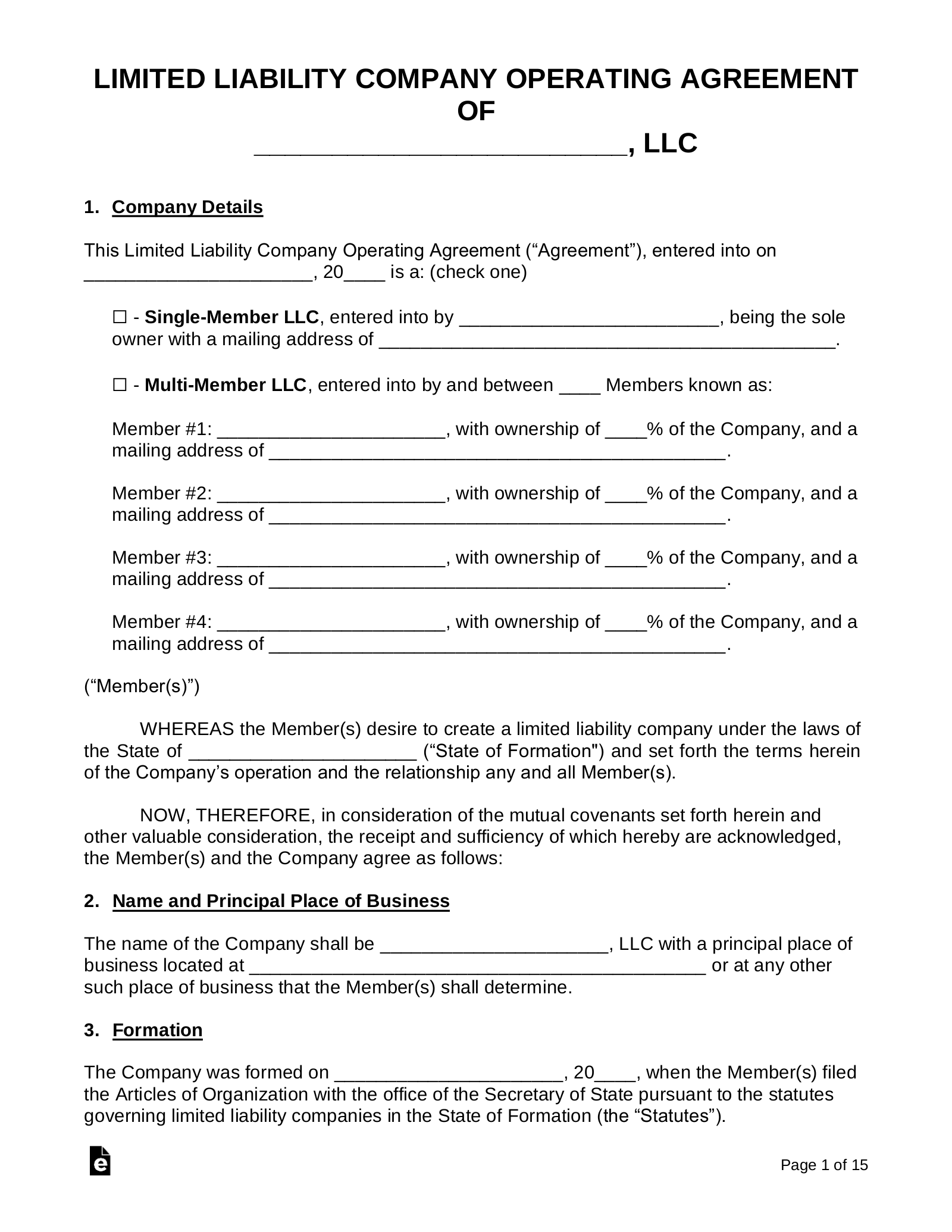
Can I Legally Write My Own Operating Agreement for My LLC?
Yes, you can legally write your own operating agreement for your LLC. Most states do not legally require an attorney to draft this document, and many LLC owners create their own using templates or guidelines. However, while it is legally permissible, accuracy and compliance with your state’s regulations are critical.
- Check your state’s specific requirements for operating agreements (e.g., California and New York mandate written agreements for multi-member LLCs).
- Ensure the agreement aligns with your LLC’s Articles of Organization and state laws.
- Avoid generic language; tailor terms to your business structure and goals.
What Are the Advantages of Drafting Your Own Operating Agreement?
Drafting your own operating agreement offers cost savings and customization. By creating it yourself, you retain full control over the terms and avoid legal fees.
- Save money by using free or low-cost templates from reputable sources.
- Define profit-sharing ratios, voting rights, and management roles precisely.
- Update the agreement easily as your business evolves.
What Risks Are Involved in Writing Your Own Operating Agreement?
Self-drafted operating agreements carry risks like ambiguity or non-compliance, which could lead to disputes or legal challenges.
- Overlooking state-specific rules may invalidate parts of the agreement.
- Vague clauses about dissolution or member exit strategies can cause conflicts.
- Missing critical provisions, such as dispute resolution methods, may weaken enforceability.
What Key Elements Should a Self-Written Operating Agreement Include?
A comprehensive operating agreement must outline ownership structure, management, and operational procedures.
- Define member roles (e.g., managers vs. passive investors).
- Specify profit and loss distribution methods.
- Include protocols for adding/removing members and dissolving the LLC.
When Should You Consult a Lawyer Instead of Writing Your Own Operating Agreement?
While DIY agreements work for simple LLCs, consult a lawyer for complex scenarios to avoid legal pitfalls.
- If your LLC has multiple classes of ownership or unusual profit-sharing terms.
- When operating in multiple states with differing regulations.
- If your business involves high-risk activities or industry-specific compliance requirements.
Does an LLC always have an operating agreement?
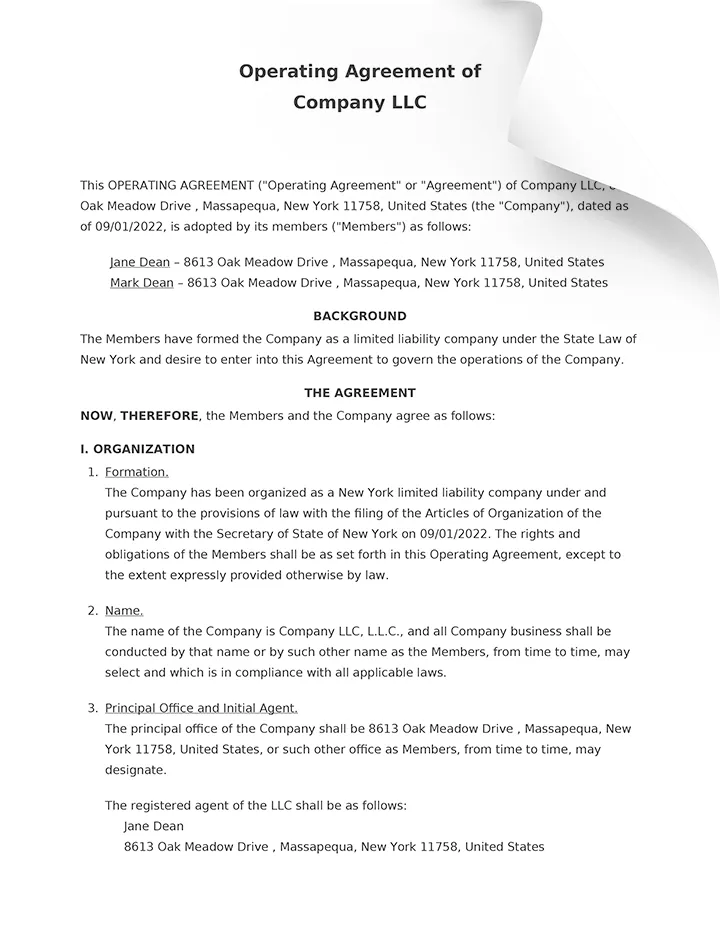
Is an Operating Agreement Legally Required for an LLC?
An operating agreement is not universally mandated by law for LLCs in all U.S. states. However, some states, such as California, New York, and Delaware, legally require LLCs to have one. Even in states where it is not obligatory, creating an operating agreement is strongly recommended to avoid ambiguity and govern internal operations.
- State laws vary: Check your state’s LLC statutes to confirm requirements.
- Single-member LLCs: Some states may not require one, but it still protects personal liability protection.
- Multi-member LLCs: Highly advised to outline roles, profit-sharing, and dispute resolution.
Why Should an LLC Have an Operating Agreement Even If Not Required?
An operating agreement provides clarity, protects members’ limited liability status, and prevents default state rules from governing the LLC. Without it, the business may face disputes, legal vulnerabilities, or unintended operational constraints.
- Customization: Overrides generic state default rules.
- Liability protection: Reinforces separation between personal and business assets.
- Dispute prevention: Clearly defines member responsibilities and decision-making processes.
What Happens If an LLC Lacks an Operating Agreement?
Without an operating agreement, the LLC defaults to state laws, which may not align with members’ intentions. This can lead to conflicts, operational inefficiencies, or even court intervention during disputes.
- State default rules: Govern profit distribution, management, and dissolution.
- Increased litigation risk: Ambiguities may escalate disagreements among members.
- Credibility issues: Banks or investors may question the LLC’s professionalism.
What Key Provisions Are Included in an Operating Agreement?
A comprehensive operating agreement outlines ownership structure, management, voting rights, profit distribution, and dissolution procedures. Tailoring these provisions ensures the LLC operates smoothly.
- Ownership percentages: Defines members’ stakes and capital contributions.
- Management structure: Specifies member-managed vs. manager-managed roles.
- Dissolution terms: Details steps for winding down the LLC.
How to Create an Operating Agreement for an LLC?
Drafting an operating agreement involves outlining member agreements, adhering to state laws, and ensuring all parties sign the document. Templates or legal professionals can assist in creating a compliant and thorough agreement.
- Use templates or attorneys: Online tools for simplicity; lawyers for complex needs.
- Customize clauses: Adapt to the LLC’s unique goals and structure.
- Formalize with signatures: Ensure all members sign and retain copies.
Does an LLC operating agreement need to be notarized?
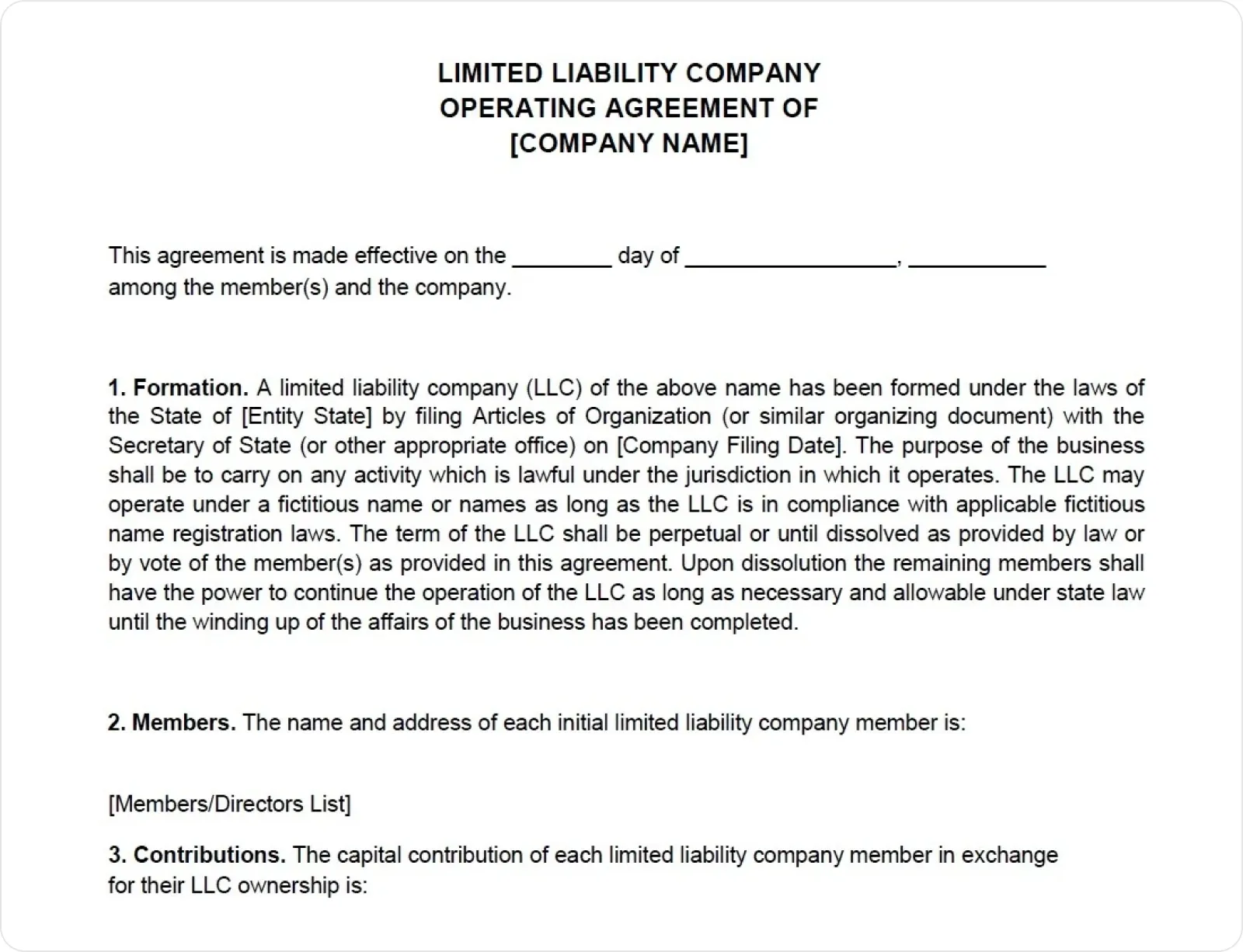
Is Notarization Legally Required for an LLC Operating Agreement?
In most U.S. states, an LLC operating agreement does not require notarization to be legally valid. The agreement becomes enforceable once all members sign it, even without a notary’s seal. However, requirements may vary slightly depending on state laws. For example:
- State laws generally prioritize member signatures over notarization.
- Some states may mandate witnesses for certain clauses.
- Notarization may be recommended for third-party verification in disputes.
Why Might You Consider Notarizing an LLC Operating Agreement?
While not legally required, notarizing an LLC operating agreement can provide additional legal safeguards. Benefits include:
- Authenticity: A notary verifies signers’ identities, reducing fraud claims.
- Enforceability: Courts may view notarized agreements as more credible.
- Bank or investor requirements: Some institutions request notarized documents for loans or partnerships.
State-Specific Rules for LLC Operating Agreements
Though most states do not mandate notarization, a few have unique requirements. Always check local regulations:
- New York requires publishing LLC formation notices but does not require notarized operating agreements.
- California emphasizes written agreements but does not enforce notarization.
- Florida allows oral agreements but recommends written, signed documents for clarity.
Steps to Notarize an LLC Operating Agreement
If you choose to notarize, follow these steps:
- Prepare the document: Ensure all members have reviewed and signed the agreement.
- Visit a notary: Members must present government-issued ID and sign in the notary’s presence.
- Attach the notarial certificate: The notary will affix a seal or stamp to validate the signatures.
Alternatives to Notarizing an LLC Operating Agreement
If notarization isn’t feasible, consider these alternatives to strengthen the agreement’s validity:
- Witness signatures: Have a neutral third party witness the signing.
- Digital signatures: Use platforms like DocuSign, which comply with the ESIGN Act.
- Annual reviews: Update and re-sign the agreement periodically to confirm member consent.
Frequently Asked Questions About LLCs (FAQs)
Is an LLC Operating Agreement required for New Hampshire LLCs?
New Hampshire does not legally require LLCs to have an Operating Agreement. However, drafting one is strongly recommended to define ownership structure, management roles, profit distribution, and dispute resolution processes. Without a customized agreement, your LLC will default to the state’s generic rules under the New Hampshire Revised Limited Liability Company Act (RSA 304-C), which may not align with your business needs. An Operating Agreement also reinforces your LLC’s limited liability protection by demonstrating a formal separation between personal and business affairs.
What key provisions should a New Hampshire LLC Operating Agreement include?
A comprehensive Operating Agreement for a New Hampshire LLC should outline member ownership percentages, voting rights, management structure (member-managed vs. manager-managed), profit/loss allocation, meeting protocols, and dissolution procedures. It should also address buyout rules, transfer restrictions for membership interests, and methods for amending the agreement. Including clauses for handling member disputes or withdrawals ensures clarity and reduces future conflicts. Tailoring these provisions to your LLC’s specific goals is critical for legal and operational efficiency.
Can a New Hampshire LLC Operating Agreement be amended after formation?
Yes, a New Hampshire LLC Operating Agreement can be amended post-formation, provided the changes comply with the amendment process outlined in the original document. Typically, amendments require a majority or supermajority vote of the members, depending on the terms set initially. Any changes should be documented in writing, signed by all members, and retained with the LLC’s records. If amendments affect publicly filed information (e.g., management structure), updates may need to be submitted to the New Hampshire Secretary of State.
How does a New Hampshire LLC Operating Agreement affect taxation?
A New Hampshire LLC Operating Agreement does not directly dictate federal or state tax obligations, but it influences how the LLC is classified by the IRS. By default, single-member LLCs are taxed as sole proprietorships, while multi-member LLCs are taxed as partnerships. However, the agreement can specify an election to be taxed as an S-corp or C-corp. New Hampshire does not impose income tax on LLCs, but members may owe Business Profits Tax (BPT) or Interest & Dividends Tax based on distributions. Clear tax-related clauses in the agreement help avoid ambiguities.
Leave a Reply
Our Recommended Articles