
LLC Operating Agreement: Oregon

An LLC Operating Agreement is a foundational document that outlines the structure, management, and operational guidelines for a limited liability company in Oregon. While the state does not legally require businesses to file this agreement, drafting one is critical for establishing clear roles, profit-sharing arrangements, and decision-making processes among members. It also safeguards the company’s limited liability status by separating personal and business assets. Oregon-specific considerations, such as state tax requirements, dissolution procedures, and member dispute resolution, should be addressed to ensure compliance and avoid future conflicts. A well-crafted operating agreement provides clarity, legal protection, and a roadmap for navigating the complexities of running an LLC.
- Understanding the Oregon LLC Operating Agreement: Key Components and Legal Requirements
- Does Oregon require an operating agreement for LLC?
-
Can I write my own operating agreement for my LLC?
- Is It Legally Permissible to Draft Your Own LLC Operating Agreement?
- What Are the Benefits of Writing Your Own Operating Agreement?
- What Risks Are Involved in a DIY Operating Agreement?
- How to Ensure Your Self-Written Operating Agreement Is Valid?
- When Should You Consult an Attorney Instead of Writing Your Own?
- What are the pitfalls of an LLC operating agreement?
- Frequently Asked Questions About LLCs (FAQs)
Understanding the Oregon LLC Operating Agreement: Key Components and Legal Requirements
Legal Requirements for an Oregon LLC Operating Agreement
While Oregon does not legally mandate LLCs to have an Operating Agreement, creating one is highly recommended. This document outlines the internal rules, member roles, and operational procedures, ensuring compliance with Oregon Revised Statutes Chapter 63. It must align with state laws regarding member rights, profit distribution, and dissolution protocols.
See AlsoAlabama LLC Operating Agreement| Requirement | Description | Oregon-Specific |
|---|---|---|
| Member Information | Names, addresses, and ownership percentages | Recommended |
| Management Structure | Member-managed vs. manager-managed | Required if manager-managed |
| Profit Distribution | Rules for allocating profits/losses | Flexible, unless specified |
| Dissolution Terms | Process for winding up the LLC | Must comply with ORS 63.645 |
Management Structure Options for Oregon LLCs
Oregon LLCs can choose between a member-managed or manager-managed structure. In a member-managed LLC, all members participate in daily decisions. A manager-managed LLC delegates authority to appointed managers, which can include non-members. The Operating Agreement must clearly define roles, voting rights, and decision-making processes.
| Structure Type | Decision-Making Authority | Best For |
|---|---|---|
| Member-Managed | All members vote on key decisions | Smaller LLCs with active owners |
| Manager-Managed | Designated managers handle operations | LLCs with passive investors |
Profit and Loss Allocation in Oregon LLC Agreements
Oregon allows flexibility in distributing profits and losses. Default rules under ORS 63.245 allocate based on ownership percentages, but the Operating Agreement can customize terms. For example, distributions might prioritize capital contributions or reward specific roles. Clauses should address tax implications and member exit scenarios.
See AlsoIdaho LLC Operating Agreement| Allocation Method | Description | Common Scenarios |
|---|---|---|
| Equal Distribution | Split equally among members | Members with equal roles |
| Percentage-Based | Based on ownership stake | Default under Oregon law |
| Hybrid Model | Mix of roles and contributions | LLCs with varying involvement |
Amending an Oregon LLC Operating Agreement
Amendments require approval per terms outlined in the original Agreement. Most Oregon LLCs mandate a majority or unanimous member vote. Changes must be documented in writing and reflect compliance with state laws. Common amendments include adding members, altering profit shares, or updating management roles.
| Amendment Type | Typical Process | Vote Requirement |
|---|---|---|
| Membership Changes | Update member list and ownership | Majority vote |
| Profit Rule Revisions | Adjust distribution terms | Unanimous consent |
| Management Restructuring | Shift authority between members/managers | As per original Agreement |
Dissolving an Oregon LLC: Steps Outlined in the Operating Agreement
The Operating Agreement should specify dissolution triggers, such as member consensus, bankruptcy, or state-mandated termination. Oregon requires filing Articles of Dissolution with the Secretary of State, settling debts, and distributing remaining assets. The Agreement may include wind-down procedures and member responsibilities.
See AlsoNew Mexico LLC Operating Agreement| Step | Description | Oregon Law Reference |
|---|---|---|
| Member Approval | Vote to dissolve the LLC | ORS 63.645 |
| Debt Settlement | Pay creditors and final taxes | ORS 63.655 |
| Asset Distribution | Allocate remaining assets to members | Operating Agreement terms |
Does Oregon require an operating agreement for LLC?
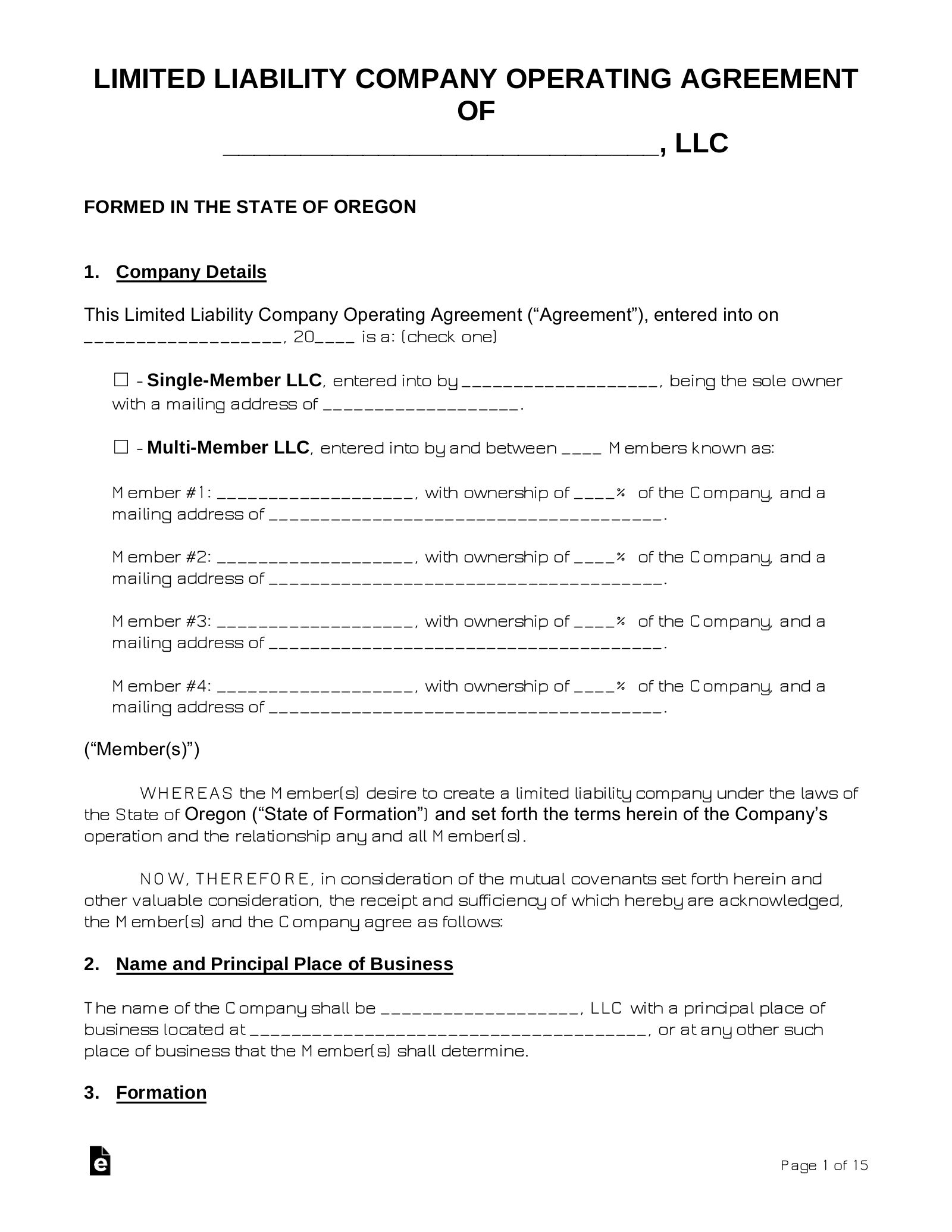
Is an Operating Agreement Legally Required for an LLC in Oregon?
Oregon does not legally require LLCs to have an operating agreement. However, while the state statutes (ORS 63.001 to 63.997) do not mandate one, creating an operating agreement is strongly recommended. This document helps define the company’s structure, member roles, and operational procedures, offering legal and financial clarity.
See AlsoIndiana LLC Operating Agreement- No statutory requirement: Oregon law does not explicitly demand an operating agreement for LLC formation.
- Recommended practice: Legal and business experts advise drafting one to avoid disputes.
- Customizable rules: Without an agreement, Oregon’s default LLC laws govern the business, which may not align with members’ preferences.
Why Should Oregon LLCs Consider an Operating Agreement?
An operating agreement provides legal protection and operational clarity for Oregon LLCs. It ensures members agree on critical aspects like profit distribution, management roles, and dispute resolution, reducing the risk of conflicts.
- Clarifies member roles: Defines responsibilities, voting rights, and decision-making processes.
- Protects limited liability status: Helps maintain the corporate veil by formalizing business operations.
- Customizes governance: Overrides default state laws, allowing tailored rules for dissolution, ownership transfers, and more.
Key Components of an Oregon LLC Operating Agreement
A well-drafted operating agreement should include essential provisions to address governance, finances, and member relationships. These components ensure the LLC operates smoothly under agreed-upon terms.
- Ownership structure: Details member ownership percentages and capital contributions.
- Profit and loss allocation: Outlines how profits/losses are distributed among members.
- Dispute resolution: Establishes processes for handling disagreements, such as mediation or buyout clauses.
Consequences of Not Having an Operating Agreement in Oregon
Without an operating agreement, Oregon LLCs default to state law, which may lead to unintended outcomes during disputes or major decisions. This lack of customization can create ambiguity and legal vulnerabilities.
- Default state rules apply: Oregon’s generic LLC statutes govern issues like profit sharing and management.
- Increased dispute risk: Ambiguity in roles or procedures may lead to member conflicts.
- Weakened liability protection: Courts may question the LLC’s legitimacy without formal governance documentation.
How to Draft an Operating Agreement for an Oregon LLC
Drafting an operating agreement involves collaboration among members and may require legal guidance to ensure compliance and completeness. While templates exist, tailoring the document to the LLC’s needs is critical.
- Outline business objectives: Define the LLC’s purpose, management structure, and member expectations.
- Consult an attorney: Ensure the agreement complies with Oregon law and addresses unique business needs.
- Review and update regularly: Amend the agreement as the LLC grows or circumstances change.
Can I write my own operating agreement for my LLC?
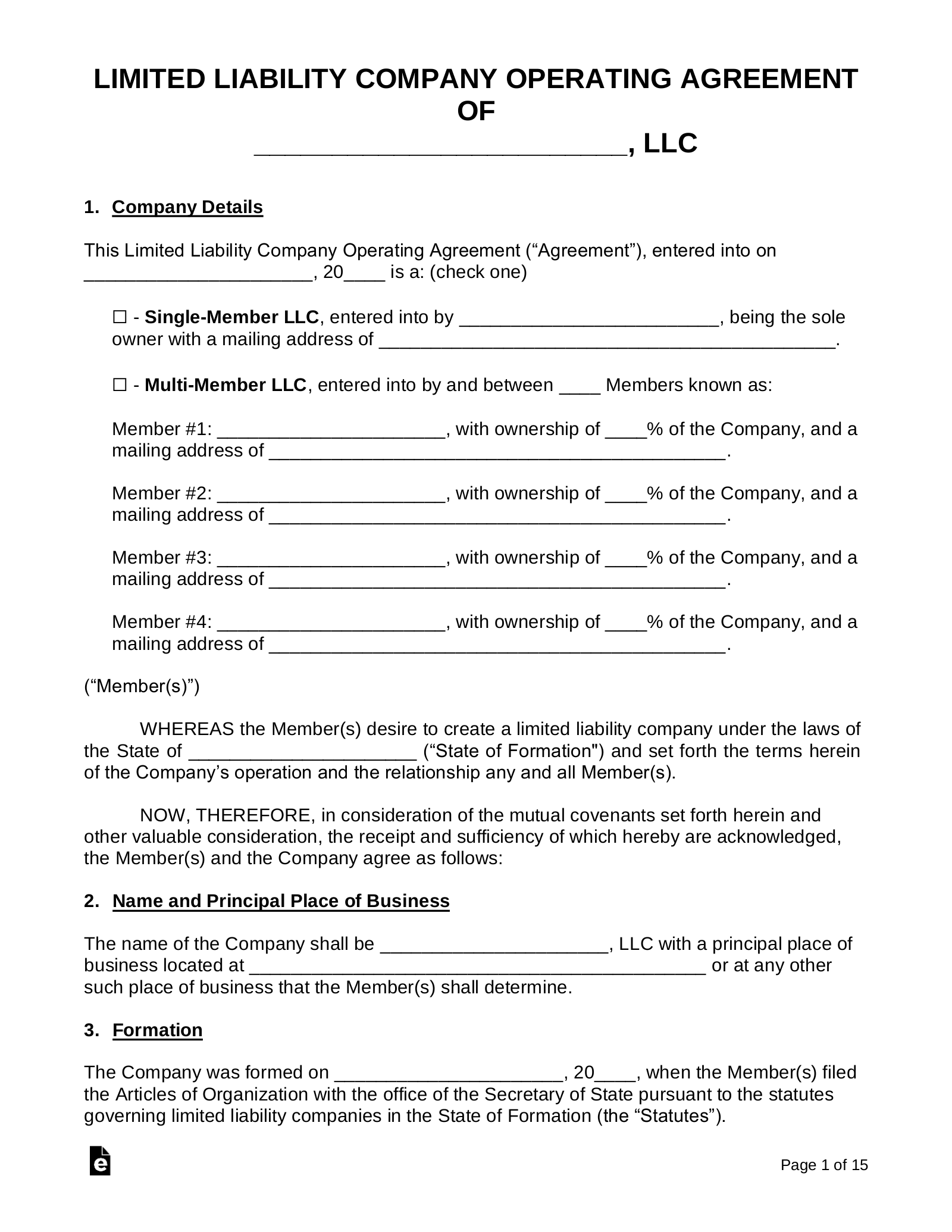
Is It Legally Permissible to Draft Your Own LLC Operating Agreement?
Yes, you can legally draft your own operating agreement for your LLC in most U.S. states. While some states do not explicitly require an operating agreement, having one is strongly recommended to define member roles, profit distribution, and dispute resolution processes.
- Check your state-specific laws to confirm if an operating agreement is mandatory or optional.
- Ensure the document complies with your state’s LLC statutes to avoid invalidation.
- Even if not required, an operating agreement strengthens your LLC’s legal standing and operational clarity.
What Are the Benefits of Writing Your Own Operating Agreement?
Creating a custom operating agreement allows you to tailor rules to your LLC’s unique needs, such as management structure or profit-sharing models. It also saves costs compared to hiring an attorney.
- Customization: Address specific business goals, voting rights, and exit strategies.
- Cost-effective: Avoid attorney fees for basic agreements.
- Flexibility: Easily amend terms as your business evolves.
What Risks Are Involved in a DIY Operating Agreement?
A self-drafted operating agreement may contain oversights or unenforceable clauses, leading to disputes or legal vulnerabilities. Ambiguous language can complicate member disagreements or regulatory compliance.
- Legal gaps: Missing critical clauses like dissolution procedures or member withdrawal terms.
- State law conflicts: Unintentionally violating statutory requirements.
- Enforcement challenges: Courts may disregard poorly drafted provisions.
How to Ensure Your Self-Written Operating Agreement Is Valid?
To validate your agreement, align it with state laws and include essential components like membership details, management roles, and amendment processes. Have all members review and sign it.
- Research state LLC laws to ensure compliance.
- Include mandatory clauses: Capital contributions, profit distribution, and dispute resolution.
- Notarize signatures (if required by your state) to enhance enforceability.
When Should You Consult an Attorney Instead of Writing Your Own?
Seek legal advice if your LLC has complex ownership structures, multi-state operations, or unique tax considerations. An attorney ensures compliance and mitigates risks.
- Multi-member disputes: Anticipate potential conflicts among owners.
- Regulatory complexity: Navigate industry-specific regulations (e.g., healthcare, finance).
- Asset protection: Safeguard personal assets with ironclad liability clauses.
What are the pitfalls of an LLC operating agreement?
1. Ambiguity in Roles and Responsibilities
A common pitfall in LLC operating agreements is ambiguous language regarding member roles, decision-making authority, and duties. Vague terms can lead to disputes, operational inefficiencies, or even legal challenges.
- Unclear decision-making processes may result in deadlocks between members.
- Failure to define management responsibilities could leave critical tasks unassigned.
- Lack of clarity on voting rights might create power imbalances.
2. Inadequate Capital Contribution Terms
Poorly defined capital contribution clauses can strain member relationships. Without explicit terms, disputes may arise over funding obligations or profit distribution.
- Missing deadlines for capital injections may jeopardize business operations.
- Unclear rules for profit-sharing ratios could lead to unfair allocations.
- Failure to address member loans or repayment terms creates financial ambiguity.
3. Overlooking Dispute Resolution Mechanisms
Many LLC agreements lack formal dispute resolution procedures, leaving members vulnerable to costly litigation or unresolved conflicts.
- Absence of mediation or arbitration clauses forces disputes into court.
- No guidelines for member exit strategies complicates voluntary departures.
- Failure to define buyout terms during disagreements stalls resolutions.
4. Ignoring State-Specific Compliance Requirements
Operating agreements must align with state LLC laws, which vary significantly. Non-compliance risks legal penalties or loss of liability protection.
- Overlooking annual reporting obligations may trigger fines.
- Misaligned taxation election clauses (e.g., S-Corp vs. partnership) create IRS issues.
- Failure to address dissolution protocols mandated by state law invalidates the agreement.
5. Inflexibility for Future Changes
Rigid operating agreements hinder adaptability. Without amendment procedures, the LLC may struggle to evolve with market or membership changes.
- No process for admitting new members complicates growth.
- Inability to adjust ownership percentages discourages investment.
- Static business purpose clauses limit operational diversification.
Frequently Asked Questions About LLCs (FAQs)
Is an LLC Operating Agreement required in Oregon?
While Oregon does not legally require LLCs to have an Operating Agreement, it is highly recommended. Without one, your LLC will default to Oregon’s default LLC laws under the Oregon Revised Statutes Chapter 63. An Operating Agreement allows you to customize rules for management, profit distribution, decision-making, and dispute resolution, ensuring your business operates according to your specific needs rather than generic state provisions.
What should be included in an Oregon LLC Operating Agreement?
An effective Oregon LLC Operating Agreement should outline the ownership percentages, member roles, voting rights, profit/loss allocation, management structure (member-managed vs. manager-managed), and procedures for adding/removing members. It should also address dissolution processes, buyout rules, and dispute resolution methods. Including clauses for meeting requirements, tax treatment elections, and amendments ensures clarity and legal enforceability.
Can an LLC Operating Agreement be amended in Oregon?
Yes, an Oregon LLC Operating Agreement can be amended, provided the changes comply with the terms outlined in the original agreement. Most agreements require a majority or supermajority vote by members to approve amendments. All changes should be documented in writing, signed by authorized members, and stored with the LLC’s records. Regular updates are advisable to reflect shifts in business goals, membership, or state law changes.
What happens if an Oregon LLC doesn’t have an Operating Agreement?
Without an Operating Agreement, an Oregon LLC is governed entirely by the default rules in the Oregon LLC Act. This may lead to unintended outcomes, such as equal profit-sharing regardless of ownership stakes, rigid management structures, and no clear process for resolving disputes. Additionally, banks or partners may request an Operating Agreement to validate the LLC’s legitimacy, and its absence could complicate financial or legal transactions.
Leave a Reply
Our Recommended Articles