
Alabama LLC Operating Agreement

An Alabama LLC Operating Agreement is a foundational document that outlines the structure, management, and operational guidelines for a limited liability company (LLC) within the state. While Alabama law does not legally require LLCs to adopt an operating agreement, creating one is a critical step in establishing clarity among members, protecting personal assets, and ensuring compliance with state regulations. This agreement typically addresses ownership percentages, profit-sharing arrangements, voting rights, and procedures for resolving disputes or dissolving the business. By formalizing these terms, an operating agreement helps prevent misunderstandings, strengthens legal protections, and provides a tailored framework for the LLC’s governance, fostering long-term stability and operational efficiency.
- Understanding the Importance of an Operating Agreement for Alabama LLCs
-
Does Alabama require an operating agreement for LLC?
- Is an Operating Agreement Legally Required for an LLC in Alabama?
- Benefits of Drafting an Operating Agreement in Alabama
- Key Components to Include in an Alabama LLC Operating Agreement
- Consequences of Not Having an Operating Agreement in Alabama
- How to Create an Operating Agreement for an Alabama LLC
-
Can I write my own operating agreement for my LLC?
- Is It Legally Permissible to Draft Your Own LLC Operating Agreement?
- What Are the Benefits of Customizing Your Own Operating Agreement?
- What Risks Are Involved in Self-Drafting an Operating Agreement?
- What Essential Clauses Must Your Operating Agreement Include?
- When Should You Consult a Legal Professional?
- Is an LLC operating agreement the same as an LLC agreement?
- Does an LLC operating agreement need to be notarized?
- Frequently Asked Questions About LLCs (FAQs)
Understanding the Importance of an Operating Agreement for Alabama LLCs
Essential Components of an Alabama LLC Operating Agreement
An Alabama LLC Operating Agreement is a foundational document outlining the structure and rules governing a limited liability company. Key components include:
- Member Information: Names, ownership percentages, and roles of members.
- Management Structure: Whether the LLC is member-managed or manager-managed.
- Profit and Loss Distribution: Guidelines for allocating financial outcomes.
- Voting Rights: Procedures for decision-making and resolving disputes.
- Dissolution Terms: Conditions under which the LLC may be dissolved.
| Component | Description |
|---|---|
| Member Information | Defines ownership and responsibilities |
| Management Structure | Clarifies decision-making authority |
| Profit Distribution | Outlines financial allocations |
Tax Implications for Alabama LLCs Under the Operating Agreement
Alabama LLCs are typically treated as pass-through entities for tax purposes. The Operating Agreement should specify:
- Federal Tax Classification: Default is partnership or sole proprietorship, but members can elect S-corp status.
- State Taxes: Alabama requires a Business Privilege Tax and annual reports.
- Self-Employment Taxes: Members may owe taxes on distributed profits.
| Tax Type | Details |
|---|---|
| Pass-Through Taxation | Profits taxed at member level |
| Business Privilege Tax | Annual state tax based on net worth |
| Federal Forms | Form 1065 (partnership) or Form 1120-S (S-corp) |
Amending an Alabama LLC Operating Agreement
Amendments require adherence to procedures outlined in the original agreement. Common steps include:
- Member Approval: Majority or unanimous consent, depending on initial terms.
- Documentation: Written amendments must be signed and dated.
- Filing Requirements: Amendments do not need state filing but should be retained internally.
| Step | Requirement |
|---|---|
| Member Vote | Follow predefined voting thresholds |
| Written Record | Maintain updated agreement copies |
Member Rights and Responsibilities in an Alabama LLC
The Operating Agreement defines rights (e.g., profit shares, voting power) and responsibilities (e.g., financial contributions, fiduciary duties). Critical aspects include:
- Capital Contributions: Required investments from members.
- Liability Protection: Members’ personal assets are generally shielded.
- Exit Strategies: Procedures for selling ownership interests.
| Right/Responsibility | Description |
|---|---|
| Voting Rights | Determines influence over major decisions |
| Fiduciary Duty | Requires acting in the LLC's best interest |
Dissolving an Alabama LLC: Steps Outlined in the Operating Agreement
Dissolution often follows triggers like member consensus or bankruptcy. Steps include:
- Vote for Dissolution: As per the agreement’s terms.
- Debt Settlement: Paying off creditors before asset distribution.
- Final Tax Filings: Submitting state and federal termination documents.
 What Do Venture Capital Lawyers Do What Do They Assist Venture Capitalists in What Are Their Day to Day Tasks Like
| Step | Action |
|---|---|
| Member Approval | Formal vote to dissolve |
| Asset Distribution | Split remaining assets per agreement |
Does Alabama require an operating agreement for LLC?
Is an Operating Agreement Legally Required for an LLC in Alabama?
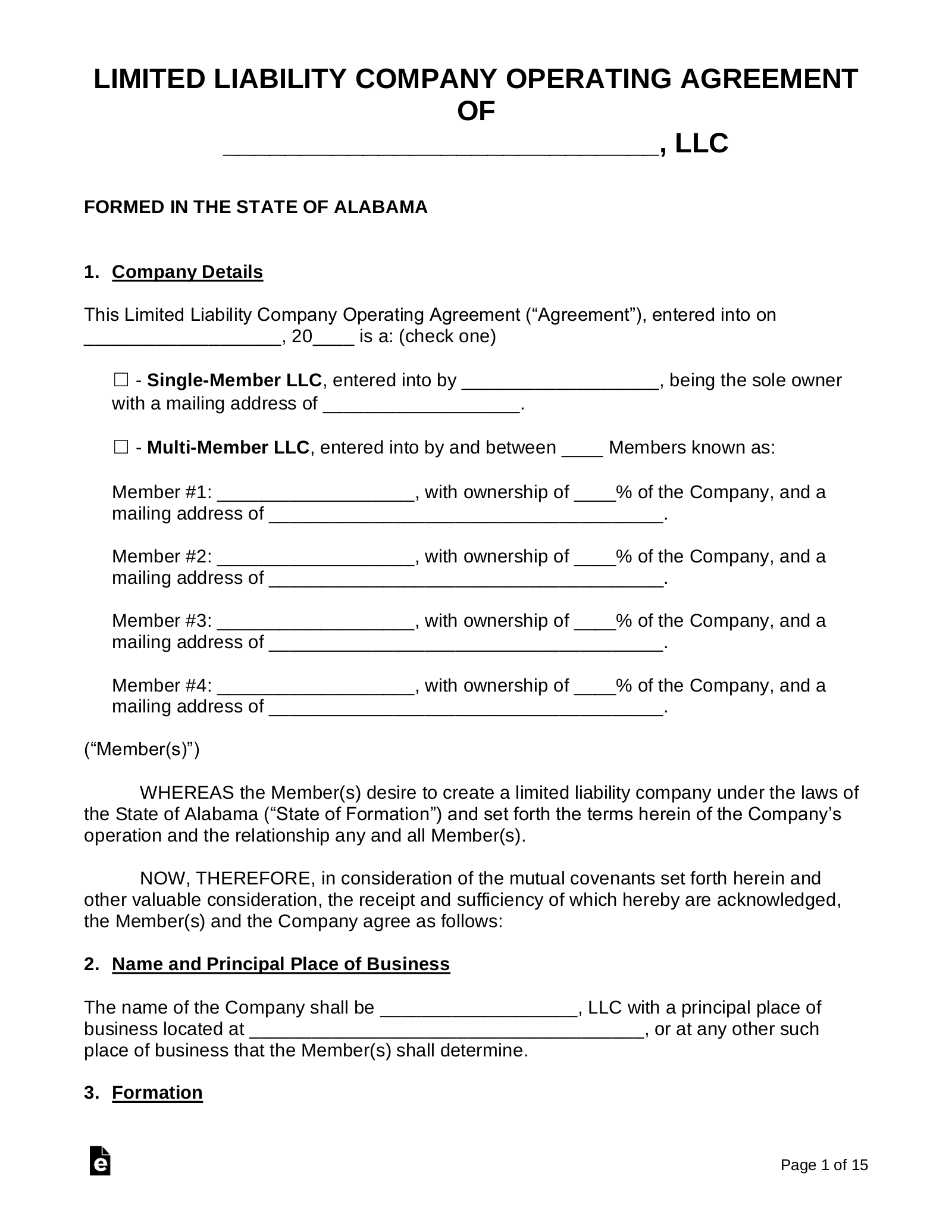
Alabama does not legally require LLCs to have an operating agreement. However, the state strongly recommends creating one to establish clear guidelines for business operations, member roles, and dispute resolution. While it’s optional under Alabama law, an operating agreement provides critical protections and structure, especially in multi-member LLCs.
See Also What Vcs or Angel Investors Are Interested in the Food Industry
- No statutory mandate: Alabama Code § 10A-5A-1.01 et seq. does not impose a legal requirement.
- Recommended best practice: Courts and legal professionals emphasize its importance for clarity.
- Single-member LLCs benefit: Even sole owners should draft one to separate personal and business assets.
Benefits of Drafting an Operating Agreement in Alabama
An operating agreement offers legal and operational advantages for Alabama LLCs, even if it’s not mandatory. It helps avoid conflicts, defines financial responsibilities, and strengthens the LLC’s credibility with banks or investors.
- Asset protection: Reinforces the LLC’s limited liability status, shielding personal assets.
- Custom rules: Overrides default state laws, allowing tailored governance.
- Dispute prevention: Clarifies profit-sharing, voting rights, and exit strategies.
Key Components to Include in an Alabama LLC Operating Agreement
A well-drafted operating agreement should cover essential aspects of the LLC’s management, finances, and member relationships. Alabama law allows flexibility, but certain provisions are critical for enforceability.
See Also Can You Present an Idea to a Venture Capitalist or Do You Have to Have a Business Plan
- Management structure: Member-managed vs. manager-managed roles.
- Profit/loss distribution: Percentages or formulas for allocating earnings.
- Dissolution process: Steps for winding down the LLC if necessary.
Consequences of Not Having an Operating Agreement in Alabama
Operating without an agreement exposes the LLC to uncertainty and risks, as Alabama’s default LLC rules will govern the business. These may not align with members’ intentions, leading to disputes or legal complications.
- State default rules apply: Alabama’s generic LLC statutes dictate operations.
- Member disagreements: Ambiguity in roles or profit splits may lead to litigation.
- Weakened liability protection: Courts may disregard the LLC’s separate entity status without clear documentation.
How to Create an Operating Agreement for an Alabama LLC
Creating an operating agreement involves drafting, reviewing, and formalizing the document. While Alabama does not require filing it with the state, members should sign and retain a copy for legal validity.
- Draft the document: Use templates or hire an attorney for customization.
- Review state laws: Ensure compliance with Alabama’s LLC regulations.
- Sign and store securely: All members must sign, and copies should be accessible.
Can I write my own operating agreement for my LLC?
Is It Legally Permissible to Draft Your Own LLC Operating Agreement?
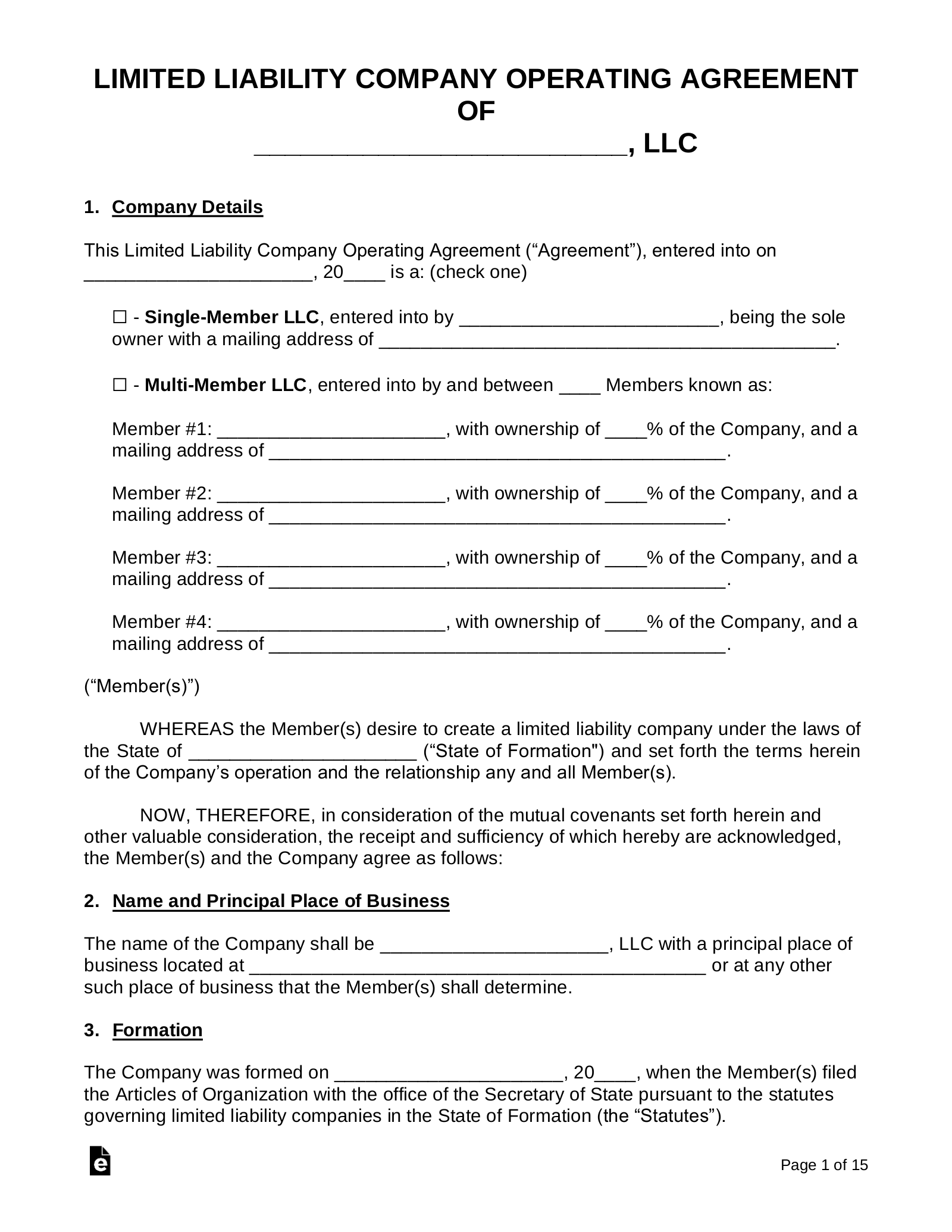
Yes, most states in the U.S. allow LLC members to create their own operating agreement. While some states do not legally require an operating agreement, having one is strongly advised to define ownership structure, profit-sharing, and management roles. However, ensure it complies with your state’s LLC laws by:
- Reviewing your state’s statutory requirements for LLCs.
- Avoiding clauses that violate public policy or state law.
- Including mandatory provisions like dissolution terms or voting rights.
What Are the Benefits of Customizing Your Own Operating Agreement?
Writing your own agreement offers flexibility to tailor rules to your LLC’s specific needs. Key advantages include:
- Defining custom profit distribution methods beyond ownership percentages.
- Establishing decision-making processes unique to your business.
- Clarifying member roles, responsibilities, and exit strategies.
What Risks Are Involved in Self-Drafting an Operating Agreement?
While drafting your own agreement is cost-effective, potential risks include:
- Omission of critical clauses, leading to disputes or legal gaps.
- Unintentional non-compliance with state-specific regulations.
- Ambiguous language causing interpretation conflicts among members.
What Essential Clauses Must Your Operating Agreement Include?
A comprehensive operating agreement should cover:
- Membership details: Names, contributions, and ownership percentages.
- Management structure: Member-managed vs. manager-managed.
- Dispute resolution: Processes for mediation, arbitration, or buyouts.
When Should You Consult a Legal Professional?
Seek legal advice if:
- Your LLC operates in multiple states with varying laws.
- You need to address complex tax or liability issues.
- Members have unequal bargaining power or unique demands.
Is an LLC operating agreement the same as an LLC agreement?
Understanding the Terminology: LLC Operating Agreement vs. LLC Agreement
An LLC Operating Agreement and an LLC Agreement are typically the same document, with the terms used interchangeably. Both refer to the legal contract outlining ownership, management, and operational rules for a limited liability company (LLC). The naming difference often depends on regional preferences or individual state laws.
- Interchangeable terms: Both describe the foundational document governing an LLC.
- Purpose: Defines member roles, profit distribution, and decision-making processes.
- Legal recognition: Required or recommended in most U.S. states to formalize the LLC structure.
Key Components of an LLC Operating Agreement
An LLC Operating Agreement details the internal workings of the company. While specific clauses vary, most agreements include ownership percentages, voting rights, and procedures for adding or removing members.
- Ownership structure: Outlines member capital contributions and profit shares.
- Management roles: Specifies if the LLC is member-managed or manager-managed.
- Dissolution terms: Explains steps for winding down the business.
Legal Requirements for an LLC Agreement
While not all states legally require an LLC Agreement, having one is strongly advised. It ensures compliance with state laws and protects members’ limited liability status.
- State variations: Some states, like California, mandate an Operating Agreement.
- Liability protection: Helps prevent courts from disregarding the LLC’s corporate veil.
- Dispute resolution: Provides clear guidelines to avoid member conflicts.
Differences in State-Specific LLC Agreement Rules
State laws influence how LLC Agreements are structured. For example, New York requires publishing details of LLC formation, while Delaware offers flexibility in management terms.
- Filing requirements: Some states require submission; others do not.
- Default provisions: States apply default rules if an agreement is absent.
- Tax implications: State-specific clauses may affect pass-through taxation.
Why an LLC Operating Agreement Is Essential
Even when not legally required, an LLC Operating Agreement safeguards the business’s operations. It clarifies financial responsibilities and prepares the LLC for unforeseen events like member disputes or death.
- Customization: Tailors rules to the LLC’s unique needs.
- Credibility: Enhances professionalism with banks, investors, or partners.
- Continuity: Ensures smooth transitions during membership changes.
Does an LLC operating agreement need to be notarized?
Legal Requirements for LLC Operating Agreements
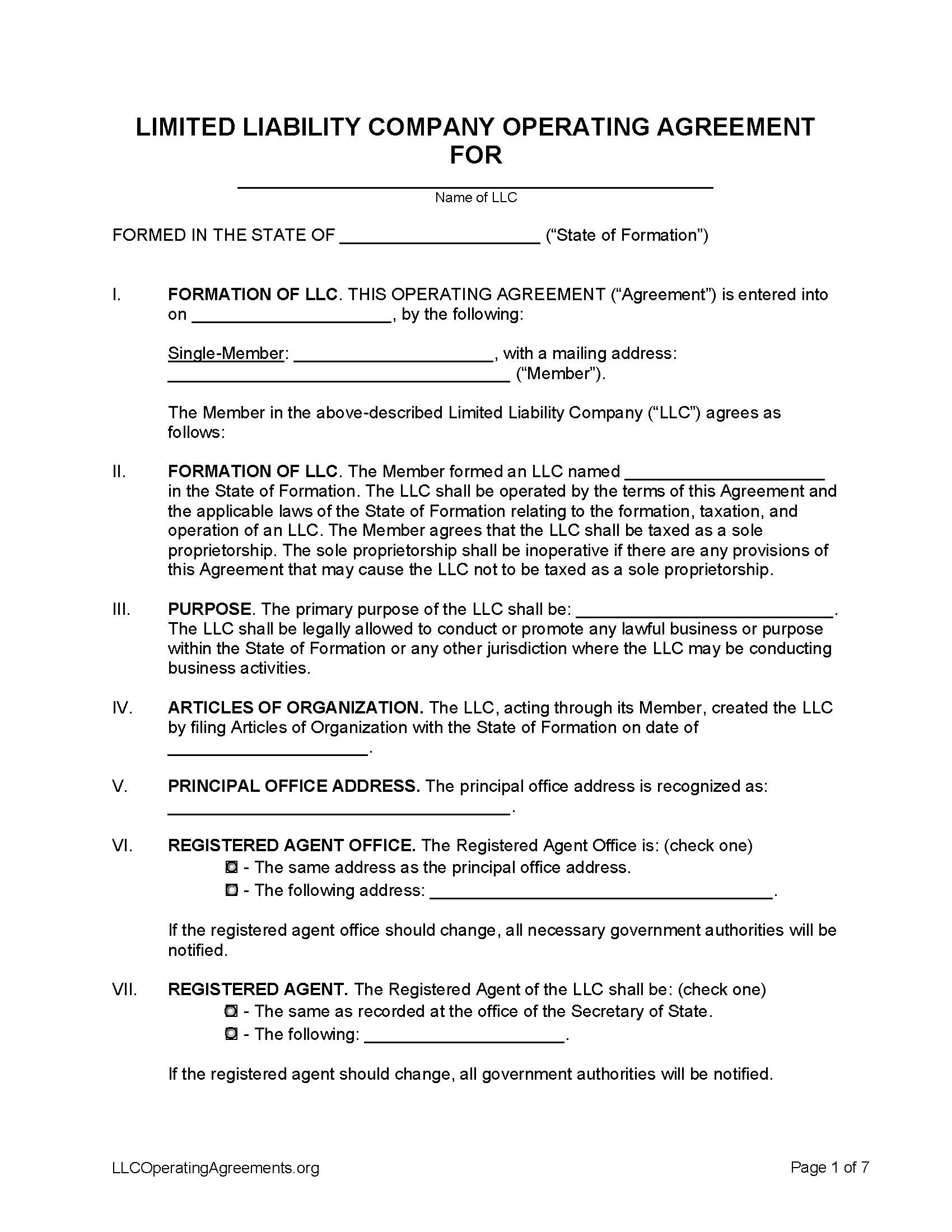
An LLC operating agreement does not typically require notarization under most state laws in the U.S. However, it must be signed by all members to establish its enforceability.
- Most states treat the operating agreement as an internal document, not a public filing.
- Some states, like California, mandate written agreements for multi-member LLCs but do not require notarization.
- Even without notarization, ensure the agreement complies with state-specific formalities (e.g., witness signatures in rare cases).
Benefits of Notarizing an LLC Operating Agreement
While not legally required, notarization adds a layer of legal credibility and can help resolve disputes.
- Notarization verifies the authenticity of signatures, reducing fraud claims.
- It may simplify court proceedings if the agreement’s validity is challenged.
- Some financial institutions or partners might request a notarized agreement for third-party transactions.
State-Specific Notarization Rules
Rules vary by state, so checking local regulations is critical.
- States like New York and Florida do not mandate notarization for operating agreements.
- In Texas, notarization is optional but recommended for clarity in legal disputes.
- Certain states may require notarization for amendments to the agreement, even if the original wasn’t notarized.
Steps to Formalize an LLC Operating Agreement
Formalizing the agreement involves drafting, signing, and optional notarization.
- Draft the agreement with clear terms on profit-sharing, management, and dissolution.
- Ensure all members sign the document, ideally in front of witnesses.
- Consider notarization for added legal protection, even if not required.
Common Misconceptions About Notarization
Misunderstandings about notarization often lead to unnecessary steps or risks.
- Myth: Notarization is legally required for enforceability (it is not in most states).
- Myth: A notarized agreement is immune to legal challenges (it only verifies signatures).
- Myth: All states treat notarization the same way (rules differ by jurisdiction).
Frequently Asked Questions About LLCs (FAQs)
Is an Operating Agreement required for an LLC in Alabama?
Alabama does not legally require LLCs to have an Operating Agreement, but it is highly recommended. While the state doesn’t mandate this document, creating one ensures clarity on ownership, management, and operational procedures. Single-member LLCs benefit by reinforcing liability protection, while multi-member LLCs avoid disputes by outlining member roles, profit-sharing, and decision-making rules. Without it, your LLC defaults to generic state laws, which may not suit your business needs.
What should be included in an Alabama LLC Operating Agreement?
A comprehensive Alabama LLC Operating Agreement should detail member ownership percentages, management structure (member-managed vs. manager-managed), and profit and loss distribution. It should also cover voting rights, procedures for adding or removing members, and guidelines for dissolving the LLC. Including dispute resolution methods and meeting protocols adds further clarity. Customizing these terms ensures alignment with your business’s unique goals.
Can I create an Alabama LLC Operating Agreement myself?
Yes, you can draft an Alabama LLC Operating Agreement yourself using online templates or business formation tools. However, complex LLC structures or partnerships with nuanced financial arrangements may require legal counsel. An attorney can ensure compliance with Alabama law and address tax implications, liability protections, or industry-specific regulations. Self-drafted agreements should always be reviewed by all members to confirm accuracy and enforceability.
What happens if my Alabama LLC doesn’t have an Operating Agreement?
Without an Operating Agreement, your Alabama LLC defaults to the state’s default LLC statutes, which may not reflect your business’s intentions. This could lead to conflicts over profit splits, management authority, or member exit strategies. Additionally, courts may disregard the liability protection of an LLC if there’s no formal agreement, potentially exposing personal assets. Creating one safeguards your operations and reinforces your LLC’s legal standing.
Leave a Reply
Our Recommended Articles