
Single Member LLC: Tennessee

A Single Member Limited Liability Company (LLC) in Tennessee offers entrepreneurs a flexible and streamlined structure for operating a business while safeguarding personal assets. As one of the most business-friendly states in the U.S., Tennessee provides a straightforward process for forming and managing an LLC, even for solo owners. This legal entity combines the liability protection of a corporation with the tax simplicity of a sole proprietorship, making it an attractive option for freelancers, consultants, and small business owners. Understanding Tennessee’s specific regulations, annual reporting requirements, and tax obligations is crucial for maintaining compliance and maximizing the benefits of this business model. Whether launching a new venture or restructuring an existing one, a Single Member LLC in Tennessee balances autonomy with legal security.
Single Member LLC in Tennessee: Formation, Benefits, and Requirements
Steps to Form a Single Member LLC in Tennessee
To form a Single Member LLC in Tennessee, follow these steps:
1. Choose a unique name compliant with Tennessee naming rules (include LLC or Limited Liability Company).
2. Appoint a registered agent with a physical Tennessee address.
3. File Articles of Organization online or by mail with the Tennessee Secretary of State ($50 minimum fee).
4. Create an Operating Agreement (not legally required but recommended).
5. Obtain an EIN from the IRS for tax purposes.
| Step | Description | Cost |
|---|---|---|
| Name Reservation | Ensure name availability | $20 |
| Articles of Organization | Formal registration | $50+ |
| Operating Agreement | Internal governance | Free templates available |
Advantages of a Tennessee Single Member LLC
A Single Member LLC in Tennessee offers:
- Pass-through taxation (no double taxation).
- Limited liability protection for personal assets.
- Flexible management without mandatory annual meetings.
- Minimal compliance requirements compared to corporations.
| Benefit | Details |
|---|---|
| Tax Flexibility | Choose between sole proprietorship or corporate taxation |
| Asset Protection | Shields personal assets from business debts |
Tennessee Single Member LLC Tax Considerations
Tennessee does not impose a state income tax, but Single Member LLCs must still:
- File federal taxes via the owner’s personal return (Form 1040 Schedule C).
- Pay franchise and excise taxes (minimum $450 annually).
- Comply with local business taxes.
| Tax Type | Requirement |
|---|---|
| Federal Taxes | Pass-through income reported on Schedule C |
| Franchise Tax | Based on net worth or property |
Compliance Requirements for Tennessee Single Member LLCs
Tennessee mandates:
- Annual Reports: File yearly with the Secretary of State ($300 minimum fee).
- Franchise Tax Payments: Due by the 15th day of the 4th month after fiscal year closes.
- Maintain updated records of business transactions.
| Requirement | Deadline |
|---|---|
| Annual Report | Due by the 1st day of the 4th month after fiscal year-end |
| Franchise Tax | April 15 for calendar-year filers |
Liability Protection for Tennessee Single Member LLC Owners
A Single Member LLC in Tennessee provides limited liability, but courts may pierce the veil if:
- The owner mixes personal and business finances.
- Fails to maintain an operating agreement.
- Engages in fraudulent activities.
| Risk | Prevention Tip |
|---|---|
| Co-mingling Funds | Use separate bank accounts |
| Inadequate Recordkeeping | Document all transactions |
Does Tennessee allow single members LLC?
Does Tennessee Allow Single-Member LLCs?
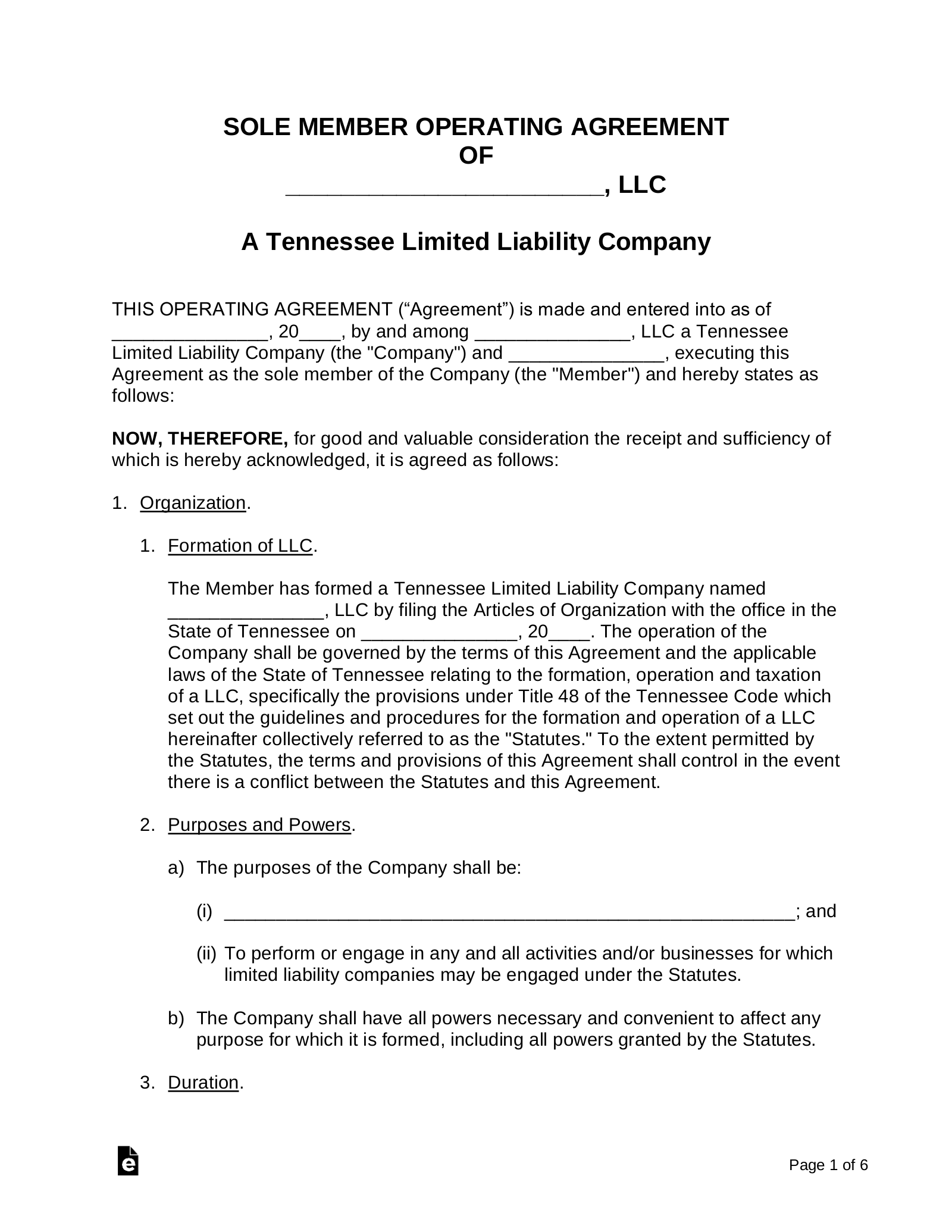
Yes, Tennessee permits the formation of single-member LLCs (Limited Liability Companies). The state follows the Tennessee Revised Limited Liability Company Act, which does not restrict ownership to multiple members. A single individual can form, own, and manage an LLC, enjoying benefits like limited liability protection and flexible taxation options.
See AlsoWyoming LLC Annual ReportHow to Form a Single-Member LLC in Tennessee
To establish a single-member LLC in Tennessee, follow these steps:
- Choose a unique business name compliant with state guidelines.
- File Articles of Organization with the Tennessee Secretary of State ($50 minimum fee).
- Appoint a registered agent with a physical Tennessee address.
- Create an Operating Agreement (not legally required but strongly recommended).
- Obtain an EIN (Employer Identification Number) from the IRS for tax purposes.
Benefits of a Single-Member LLC in Tennessee
A single-member LLC in Tennessee offers several advantages:
- Limited liability protection: Personal assets are shielded from business debts.
- Pass-through taxation: Profits and losses are reported on the owner’s personal tax return.
- Simplified management: No requirement for board meetings or complex governance structures.
- Flexibility: The owner retains full control over business decisions.
Compliance Requirements for Tennessee Single-Member LLCs
Tennessee single-member LLCs must adhere to ongoing compliance obligations:
- File annual reports with the Secretary of State ($300 fee per LLC).
- Maintain a registered agent and update their details if changes occur.
- Renew business licenses or permits as required by local or state laws.
- Keep financial and operational records separate from personal accounts.
Tax Treatment of Single-Member LLCs in Tennessee
Single-member LLCs in Tennessee are typically treated as disregarded entities for tax purposes:
- Federal taxes: Income is reported on the owner’s Schedule C (Form 1040).
- State taxes: Tennessee does not levy a personal income tax, but LLCs may owe franchise and excise taxes based on net earnings or property value.
- Self-employment taxes: Owners pay Social Security and Medicare taxes on net earnings.
Operating Agreements for Single-Member LLCs in Tennessee
Though not mandatory, an Operating Agreement is highly advisable for single-member LLCs:
- Defines the business structure and operational procedures.
- Reinforces limited liability protection by separating personal and business assets.
- Outlines plans for dissolution or transfer of ownership.
- Provides clarity in case of audits or legal disputes.
Can LLC have only one member?
Can an LLC Have Only One Member?
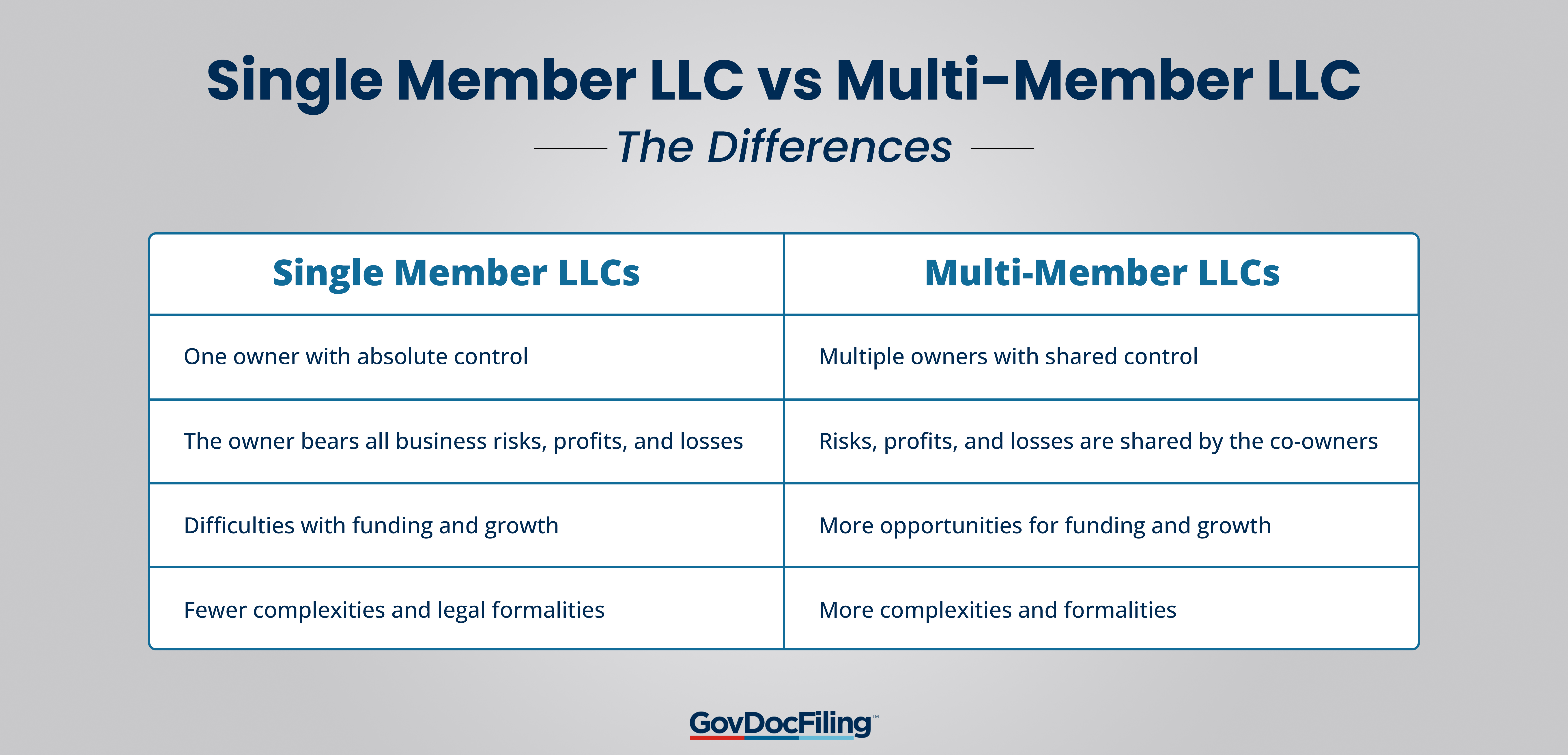
Yes, a Limited Liability Company (LLC) can legally operate with one member in most jurisdictions, including all U.S. states. A single-member LLC combines the flexibility of a sole proprietorship with the liability protection of a corporate structure. This setup allows the sole owner to maintain control while shielding personal assets from business debts.
Legal Structure of a Single-Member LLC
A single-member LLC is recognized as a separate legal entity from its owner, providing distinct advantages:
- Limited liability protection: Personal assets are protected from business liabilities.
- Simplified management: No requirement for a board or multiple members.
- Flexible taxation: The owner can choose to be taxed as a sole proprietorship, S corporation, or C corporation.
Formation Process for a Single-Member LLC
Establishing a single-member LLC involves key steps:
- Choose a business name compliant with state regulations.
- File Articles of Organization with the state and pay associated fees.
- Create an Operating Agreement, even if not always legally required, to outline business operations and structure.
Tax Implications for Single-Member LLCs
Single-member LLCs default to pass-through taxation, but owners have options:
- Schedule C reporting: Profits/losses reported on the owner’s personal tax return.
- Electing S Corp status: Potential tax savings by splitting income into salary and distributions.
- Self-employment taxes: Owners pay Medicare and Social Security taxes on net earnings.
Liability Protection in a Single-Member LLC
While liability protection is a key benefit, maintaining it requires:
- Separating finances: Use a dedicated business bank account.
- Avoiding personal guarantees: Limit liability for business debts.
- Compliance with formalities: File annual reports and renew licenses to preserve corporate veil.
Single-Member LLC vs. Sole Proprietorship
Key differences include:
- Liability: LLCs protect personal assets; sole proprietorships do not.
- Credibility: An LLC may enhance professional reputation.
- Tax flexibility: LLCs offer more tax election options compared to sole proprietorships.
State-Specific Rules for Single-Member LLCs
Regulations vary by state, so consider:
- Formation fees: Costs range significantly across states.
- Annual reporting: Some states require yearly filings or fees.
- Registered agent: Most states mandate a local agent for legal correspondence.
Do single member LLCs pay excise tax in Tennessee?

Do Single-Member LLCs Pay Excise Tax in Tennessee?
Yes, single-member LLCs in Tennessee are generally required to pay excise tax. Tennessee imposes a 6.5% excise tax on the net earnings of businesses operating in the state, including single-member LLCs. While single-member LLCs are typically treated as disregarded entities for federal income tax purposes, Tennessee state law treats them as separate entities subject to excise tax.
Understanding Tennessee Excise Tax Requirements
Tennessee’s excise tax applies to businesses with nexus (a physical or economic presence) in the state. Key points include:
- Tax base: Calculated on net earnings derived from Tennessee activities.
- Filing obligation: Even out-of-state single-member LLCs may owe tax if they generate income in Tennessee.
- No income tax: Tennessee does not levy a personal income tax, making excise tax a primary business tax.
Tax Obligations for Single-Member LLCs in Tennessee
Single-member LLCs must adhere to specific tax rules:
- Annual filings: Submit Form FAE 170 to report net earnings and calculate excise tax.
- Estimated payments: Businesses with tax liability exceeding $1,000 must make quarterly estimated payments.
- Federal vs. state treatment: Unlike federal rules, Tennessee does not recognize the LLC’s disregarded entity status for excise tax purposes.
Exemptions and Deductions for Excise Tax
Certain deductions and exemptions may reduce tax liability:
- Standard deduction: A $50,000 deduction from net earnings is allowed for most businesses.
- Industry-specific exemptions: Some sectors, like agriculture, may qualify for special deductions.
- Nonprofit exemptions: LLCs classified as nonprofits are generally exempt from excise tax.
Comparing Excise Tax and Franchise Tax in Tennessee
Tennessee also imposes a franchise tax, which differs from excise tax:
- Tax base: Franchise tax applies to the greater of net worth or real/appointed property value, while excise tax targets net earnings.
- Rates: Franchise tax is 0.25% of the taxable base, whereas excise tax is 6.5%.
- Filing requirements: Both taxes are reported on Form FAE 170, but calculations differ.
Frequently Asked Questions About LLCs (FAQs)
What are the steps to form a Single Member LLC in Tennessee?
To form a Single Member LLC in Tennessee, you must first choose a unique business name that complies with state guidelines. Next, file Articles of Organization with the Tennessee Secretary of State, either online or by mail, and pay the $50 filing fee. You’ll also need to appoint a registered agent with a physical address in Tennessee. While not legally required, drafting an Operating Agreement is highly recommended to outline business operations and ownership structure. Finally, obtain an Employer Identification Number (EIN) from the IRS, even if you have no employees, to open business bank accounts or handle taxes.
Does a Single Member LLC in Tennessee protect personal assets from business liabilities?
A Single Member LLC in Tennessee provides limited liability protection, separating personal assets from business debts and legal claims. However, this protection isn’t absolute. Courts may pierce the corporate veil if the owner mixes personal and business finances, fails to maintain proper records, or engages in fraudulent activities. To preserve liability protection, owners must treat the LLC as a distinct entity by keeping separate accounts, filing annual reports, and adhering to compliance requirements.
How is a Single Member LLC taxed in Tennessee?
By default, a Single Member LLC in Tennessee is treated as a disregarded entity for federal taxes, meaning profits and losses are reported on the owner’s personal tax return (Schedule C). Tennessee does not impose a state income tax, but LLCs must pay state franchise tax and excise tax based on net worth or income. Additionally, owners are subject to self-employment taxes on business earnings. Electing S-Corp status with the IRS could reduce self-employment taxes but requires adherence to specific payroll and compliance rules.
Are there annual reporting requirements for a Single Member LLC in Tennessee?
Yes, Tennessee requires all LLCs, including Single Member LLCs, to file an Annual Report with the Secretary of State. The report is due by the first day of the fourth month following the end of the fiscal year (typically April 1 for calendar-year filers) and costs $50 per member, with a $300 minimum fee. Additionally, LLCs must pay franchise and excise taxes annually, calculated based on net earnings or property values. Failure to file these reports or pay taxes may result in penalties or administrative dissolution of the LLC.
Leave a Reply
Our Recommended Articles