
Are Cfa Programs Useful to Aspiring Vcs What Percentage of Their Curriculum Intersects With Venture Capital Body of Knowledge Vcbok My Term


The Chartered Financial Analyst (CFA) program is widely recognized as a rigorous credential for finance professionals, but its relevance to aspiring venture capitalists (VCs) remains a topic of debate. Venture capital demands a unique blend of financial acumen, industry insight, and entrepreneurial mindset, raising questions about how well the CFA curriculum aligns with the Venture Capital Body of Knowledge (VCBOK). This article explores the intersection between the CFA program and the skills essential for venture capital success, analyzing the percentage of the CFA curriculum that directly applies to VCBOK and evaluating its utility for those aiming to thrive in the VC ecosystem.
- Are CFA Programs Useful to Aspiring VCs? What Percentage of Their Curriculum Intersects with the Venture Capital Body of Knowledge (VCBOK)?
- What is the best way to approach venture capitalists VCs through?
- What is an advantage of using venture capital as a source of finance?
-
What is the best major for venture capitalists?
- Why a Business or Finance Major is Ideal for Venture Capitalists
- The Role of a Computer Science Major in Venture Capital
- How an Economics Major Prepares You for Venture Capital
- The Importance of an Engineering Major for Venture Capitalists
- Why a Psychology or Behavioral Science Major is Useful in Venture Capital
-
Frequently Asked Questions by our Community
- Are CFA Programs Useful to Aspiring Venture Capitalists?
- What Percentage of the CFA Curriculum Intersects with the Venture Capital Body of Knowledge (VCBOK)?
- How Does the CFA Program Prepare Candidates for Venture Capital Roles?
- Should Aspiring Venture Capitalists Prioritize the CFA Program Over Other Certifications?
Are CFA Programs Useful to Aspiring VCs? What Percentage of Their Curriculum Intersects with the Venture Capital Body of Knowledge (VCBOK)?
1. Understanding the CFA Program Curriculum
The CFA Program is a globally recognized certification for finance professionals, focusing on investment management, financial analysis, and portfolio management. Its curriculum is divided into three levels, covering topics like ethics, quantitative methods, economics, corporate finance, and equity investments. While the program is comprehensive, its primary focus is on traditional finance roles, such as asset management and investment banking, rather than venture capital (VC).
See Also Who is the Best Headhunter for the Venture Capital Start Up Space
2. The Venture Capital Body of Knowledge (VCBOK)
The VCBOK encompasses the specialized knowledge required for venture capital professionals. This includes startup valuation, deal structuring, term sheet negotiation, portfolio management, and exit strategies. Unlike the CFA curriculum, the VCBOK is tailored to the unique challenges of investing in early-stage companies and fostering innovation.
3. Overlap Between CFA Curriculum and VCBOK
While the CFA Program and VCBOK share some common ground, the overlap is limited. Key areas of intersection include financial statement analysis, valuation techniques, and risk management. However, the CFA curriculum does not delve deeply into startup ecosystems, venture deal structures, or entrepreneurial finance, which are critical for aspiring VCs.
See Also Where Can I Find Investment Memos From Vc Firms?
| CFA Curriculum | VCBOK | Overlap |
|---|---|---|
| Financial Analysis | Startup Valuation | Partial |
| Portfolio Management | Portfolio Strategy | Partial |
| Corporate Finance | Deal Structuring | Limited |
4. Percentage of CFA Curriculum Relevant to Venture Capital
Approximately 10-15% of the CFA curriculum directly aligns with the VCBOK. This includes topics like financial modeling, valuation, and investment decision-making. However, the majority of the CFA Program focuses on areas that are less relevant to venture capital, such as fixed income securities and derivatives.
5. Is the CFA Program Worth It for Aspiring VCs?
For aspiring venture capitalists, the CFA Program can provide a solid foundation in financial analysis and investment principles. However, it is not a substitute for specialized knowledge in venture capital. Aspiring VCs may benefit more from programs or courses specifically designed for VC professionals, such as those offered by VC-focused institutions or accelerators. Additionally, gaining hands-on experience through internships or networking in the startup ecosystem is crucial.
See Also Do Venture Capitalists Reimburse Travel Expenses for Out of Town Entrepreneurs
What is the best way to approach venture capitalists VCs through?

Understanding the Venture Capital Landscape
Before approaching venture capitalists (VCs), it is crucial to understand the venture capital landscape. This involves researching the types of VCs, their investment focus, and their portfolio companies. Here are some key steps:
- Identify the right VCs: Look for VCs that have a history of investing in your industry or sector.
- Understand their investment thesis: Each VC firm has a specific investment thesis that guides their decisions. Make sure your business aligns with their goals.
- Research their portfolio: Review the companies they have invested in to gauge their interest in businesses similar to yours.
Building a Strong Network
Networking is one of the most effective ways to approach VCs. Building a strong network can provide you with introductions and recommendations that can significantly increase your chances of securing a meeting. Consider the following:
- Leverage your existing connections: Use your current network to get warm introductions to VCs.
- Attend industry events: Participate in conferences, meetups, and other events where VCs are likely to be present.
- Engage with VCs on social media: Follow VCs on platforms like LinkedIn and Twitter to stay updated on their activities and engage with their content.
Crafting a Compelling Pitch
Your pitch is your opportunity to make a strong impression on VCs. It should be clear, concise, and compelling. Here are some tips for crafting an effective pitch:
- Focus on the problem and solution: Clearly articulate the problem your business solves and how your solution is unique.
- Highlight traction and milestones: Showcase any significant achievements, such as revenue growth, user acquisition, or product development.
- Be prepared to answer tough questions: Anticipate potential concerns and have well-thought-out responses ready.
Preparing a Detailed Business Plan
A detailed business plan is essential when approaching VCs. It should provide a comprehensive overview of your business, including your market, strategy, and financial projections. Consider the following elements:
- Executive summary: Provide a high-level overview of your business and its value proposition.
- Market analysis: Demonstrate a deep understanding of your target market and competitive landscape.
- Financial projections: Include detailed financial forecasts that show the potential for growth and profitability.
Following Up Effectively
Following up after your initial meeting or pitch is crucial to maintaining momentum and keeping the conversation going. Here are some best practices for effective follow-up:
- Send a thank-you note: Express your gratitude for the opportunity to present your business.
- Provide additional information: If the VC requested more details, make sure to provide them promptly.
- Stay in touch: Keep the VC updated on your progress, even if they don't invest immediately.
What is an advantage of using venture capital as a source of finance?
Access to Significant Funding
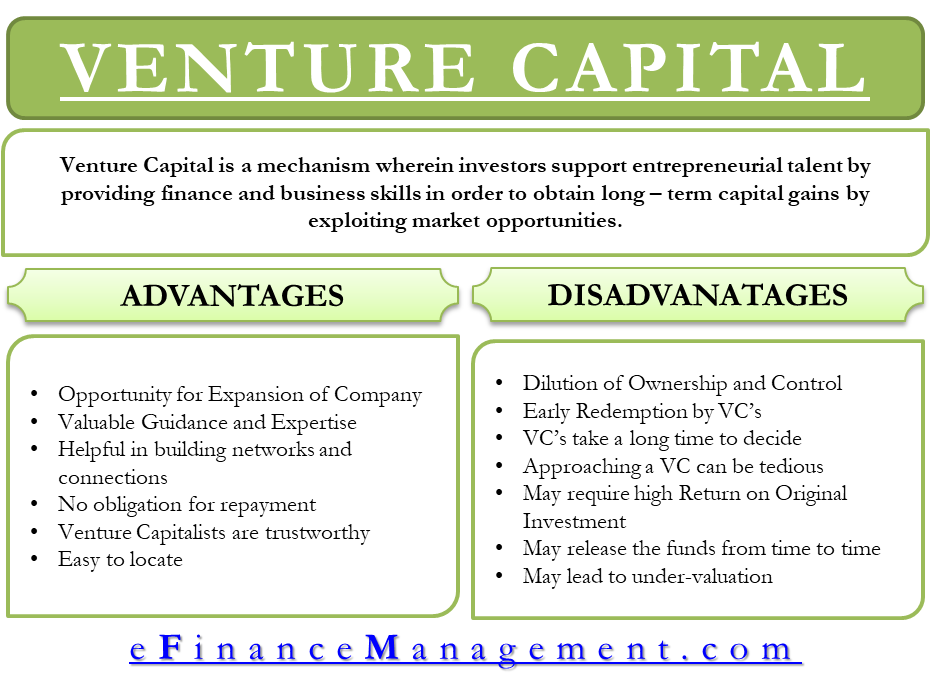
One of the primary advantages of using venture capital as a source of finance is the access to significant funding. Venture capitalists are often willing to invest large sums of money into promising startups or businesses with high growth potential. This can be particularly beneficial for businesses that require substantial capital to scale operations, develop new products, or enter new markets.
- Large investment amounts that can fuel rapid growth.
- Ability to secure funding without the need for collateral.
- Potential to attract additional investors due to the credibility gained from venture capital backing.
Expertise and Mentorship
Venture capitalists often bring more than just money to the table; they also provide expertise and mentorship. Many venture capitalists have extensive experience in the industry and can offer valuable guidance on business strategy, operations, and market expansion. This can be crucial for startups that may lack the necessary experience to navigate complex business environments.
- Access to a network of industry experts and advisors.
- Guidance on strategic decision-making and business planning.
- Support in identifying and mitigating potential risks.
Networking Opportunities
Another advantage of venture capital is the networking opportunities it provides. Venture capitalists often have extensive networks that can open doors to potential partners, customers, and even future investors. This can be invaluable for startups looking to establish themselves in competitive markets.
- Introduction to key industry players and potential collaborators.
- Opportunities to attend exclusive industry events and conferences.
- Access to a broader customer base through the venture capitalist's connections.
Flexibility in Repayment
Unlike traditional loans, venture capital does not require immediate repayment. This flexibility in repayment allows businesses to focus on growth and development without the pressure of meeting regular repayment schedules. The repayment is typically tied to the success of the business, often through equity stakes or future profits.
- No need for monthly repayments, reducing financial strain.
- Repayment is contingent on the business's success, aligning the interests of both parties.
- Allows for reinvestment of profits into the business for further growth.
Enhanced Credibility and Brand Image
Securing venture capital can significantly enhance a company's credibility and brand image. Being backed by reputable venture capitalists can serve as a strong endorsement, making it easier to attract customers, partners, and additional investors. This can be particularly beneficial for startups looking to establish themselves in competitive markets.
- Increased trust and credibility in the eyes of customers and partners.
- Enhanced ability to attract top talent due to the perceived stability and growth potential.
- Greater appeal to future investors, making it easier to secure additional funding rounds.
What is the best major for venture capitalists?

Why a Business or Finance Major is Ideal for Venture Capitalists
A business or finance major provides a solid foundation for understanding the financial and operational aspects of startups and companies. These majors cover essential topics such as:
- Financial modeling and valuation techniques.
- Investment strategies and portfolio management.
- Market analysis and competitive positioning.
The Role of a Computer Science Major in Venture Capital
A computer science major is highly valuable for venture capitalists, especially those focusing on tech startups. Key benefits include:
- Understanding emerging technologies like AI, blockchain, and machine learning.
- Evaluating the technical feasibility of product development.
- Assessing the scalability of software solutions.
How an Economics Major Prepares You for Venture Capital
An economics major equips venture capitalists with analytical skills to assess market trends and economic conditions. Key areas of focus include:
- Macroeconomic and microeconomic principles.
- Behavioral economics to understand consumer and investor behavior.
- Policy analysis to predict regulatory impacts on industries.
The Importance of an Engineering Major for Venture Capitalists
An engineering major is beneficial for venture capitalists investing in hardware or deep tech startups. Key advantages include:
- Understanding product design and manufacturing processes.
- Evaluating the technical risks and challenges of innovation.
- Assessing the feasibility of prototypes and R&D projects.
Why a Psychology or Behavioral Science Major is Useful in Venture Capital
A psychology or behavioral science major helps venture capitalists understand human behavior, which is critical for:
- Analyzing consumer behavior and market trends.
- Building strong relationships with founders and teams.
- Making informed decisions based on cognitive biases and decision-making patterns.
Frequently Asked Questions by our Community
Are CFA Programs Useful to Aspiring Venture Capitalists?
CFA programs can be beneficial to aspiring venture capitalists, but their usefulness depends on the individual's career goals and the specific demands of the venture capital (VC) industry. The CFA curriculum provides a strong foundation in financial analysis, valuation, and portfolio management, which are essential skills for evaluating investment opportunities. However, venture capital often requires a deeper understanding of startups, innovation ecosystems, and early-stage company dynamics, which are not the primary focus of the CFA program. Aspiring VCs may find the CFA program helpful for building credibility and technical expertise, but they should also seek additional knowledge in areas like entrepreneurship, technology trends, and deal structuring.
What Percentage of the CFA Curriculum Intersects with the Venture Capital Body of Knowledge (VCBOK)?
The overlap between the CFA curriculum and the Venture Capital Body of Knowledge (VCBOK) is relatively limited, typically ranging from 20% to 30%. The CFA program emphasizes topics like financial reporting, equity analysis, and fixed income, which are relevant to venture capital but not exhaustive. In contrast, VCBOK focuses on areas such as startup valuation, term sheet negotiation, due diligence, and exit strategies, which are critical for VC professionals. While the CFA program provides a solid financial foundation, aspiring VCs will need to supplement their learning with specialized resources or courses tailored to the venture capital industry.
How Does the CFA Program Prepare Candidates for Venture Capital Roles?
The CFA program prepares candidates for venture capital roles by equipping them with strong analytical and financial modeling skills, which are crucial for evaluating investment opportunities. Topics like equity valuation, corporate finance, and portfolio management are directly applicable to VC work. However, the program does not cover many of the soft skills and industry-specific knowledge required in venture capital, such as networking with entrepreneurs, understanding emerging technologies, and navigating the startup ecosystem. Aspiring VCs should view the CFA program as a complementary tool rather than a standalone solution for entering the field.
Should Aspiring Venture Capitalists Prioritize the CFA Program Over Other Certifications?
Aspiring venture capitalists should carefully consider whether the CFA program aligns with their career goals before prioritizing it over other certifications. While the CFA designation is highly respected in the finance industry, it may not be the most relevant credential for VC roles. Certifications like the Chartered Alternative Investment Analyst (CAIA) or specialized courses in venture capital and private equity might offer more targeted knowledge. Additionally, gaining practical experience through internships, networking, or working in startups can be more valuable than pursuing certifications. Ultimately, the decision should be based on the individual's career trajectory and the specific skills they need to succeed in venture capital.
Leave a Reply
Our Recommended Articles