
How to Value a Startup Company With No Revenue

Valuing a startup company with no revenue presents a unique challenge for investors, entrepreneurs, and analysts alike. Traditional valuation methods, such as discounted cash flow or revenue multiples, often fall short when financial metrics are absent. Instead, assessing such ventures requires a focus on qualitative factors and forward-looking indicators. Key considerations include the strength of the founding team, market size and potential, intellectual property, competitive advantages, and early traction via user growth or partnerships. Additionally, pre-revenue valuations may rely on benchmarking against similar startups or employing scenario-based models. This article explores practical frameworks and strategies to navigate the complexities of determining a startup’s worth in the absence of revenue, balancing innovation with risk.
- Challenges and Strategies for Valuing a Startup Company With No Revenue
- How do you value a startup with no revenue?
-
How do you value a company with no income?
- How Do You Value a Company with No Income Using the Market Approach?
- What Role Does Discounted Cash Flow (DCF) Play in Valuing a Non-Income Company?
- How Does the Cost-to-Duplicate Method Apply to Valuing Such Companies?
- Can Asset-Based Valuation Work for Companies Without Revenue?
- What Non-Financial Factors Influence Valuation for Pre-Revenue Companies?
- How do you calculate the value of a startup company?
- What is the valuation of a company if 10% is 0,000?
-
Frequently Asked Questions (FAQs)
- How Can You Value a Startup With No Revenue Using the Discounted Cash Flow (DCF) Method?
- What Non-Financial Factors Are Critical When Valuing a Pre-Revenue Startup?
- How Does the Venture Capital (VC) Method Apply to Startups With No Revenue?
- What Are the Risks of Overvaluing a Startup With No Revenue?
Challenges and Strategies for Valuing a Startup Company With No Revenue
1. Understanding the Importance of Market Potential
Valuing a startup with no revenue often begins with analyzing its market potential. Investors assess the Total Addressable Market (TAM) and Serviceable Obtainable Market (SOM) to estimate growth opportunities. Startups in large, underserved markets may justify higher valuations despite lacking revenue. For example, a fintech startup targeting unbanked populations in emerging economies could attract premium valuations.
See AlsoWashington LLC Annual Report| Metric | Description |
|---|---|
| TAM | Total revenue opportunity if 100% market share is achieved |
| SOM | Realistic market share a startup can capture in 3–5 years |
2. Assessing the Founding Team’s Expertise
A startup’s valuation often hinges on the founding team’s track record. Investors prioritize teams with industry experience, technical skills, or past exits. For instance, a founder who previously scaled a SaaS company may instill confidence in achieving milestones.
| Factor | Impact on Valuation |
|---|---|
| Prior exits | Increases credibility and reduces perceived risk |
| Industry expertise | Aligns with faster execution and fewer errors |
3. Analyzing the Business Model’s Scalability
Even without revenue, a startup’s scalable business model can drive valuation. Models like SaaS or platform-based ecosystems promise recurring revenue and low marginal costs. Investors use discounted cash flow (DCF) adjustments to project future profitability.
See AlsoHow Much Does it Cost to Start an LLC in Ohio?| Scalability Factor | Example |
|---|---|
| Low marginal costs | Software products requiring minimal incremental costs |
| Recurring revenue potential | Subscription-based services |
4. Evaluating Intellectual Property and Assets
Intellectual property (IP) such as patents, trademarks, or proprietary technology can significantly boost valuation. For example, a biotech startup with patented drug formulas may attract higher valuations due to competitive moats.
| Asset Type | Valuation Impact |
|---|---|
| Patents | Legal protection enhances long-term value |
| Proprietary algorithms | Differentiation in tech-driven markets |
5. Leveraging Industry Comparables and Multiples
Investors use industry comparables to benchmark pre-revenue startups. Metrics like Price-to-Sales (P/S) ratios or EV/EBITDA multiples from similar companies provide reference points. Early-stage startups in high-growth sectors like AI may command premium multiples.
See AlsoIs It Illegal to Not Have Business Insurance?| Valuation Metric | Application |
|---|---|
| Precedent transactions | Compare recent acquisitions in the sector |
| Stage-based multiples | Seed vs. Series A valuation benchmarks |
How do you value a startup with no revenue?
The Market Approach: Comparable Company Analysis
When valuing a startup with no revenue, the market approach relies on analyzing comparable companies or recent acquisitions in the same industry. Investors assess metrics like user growth, market share, or technological edge to estimate value.
- Identify industry benchmarks for startups at similar stages.
- Adjust valuations based on differentiators like intellectual property or partnerships.
- Factor in market trends (e.g., rising demand for AI or sustainability solutions).
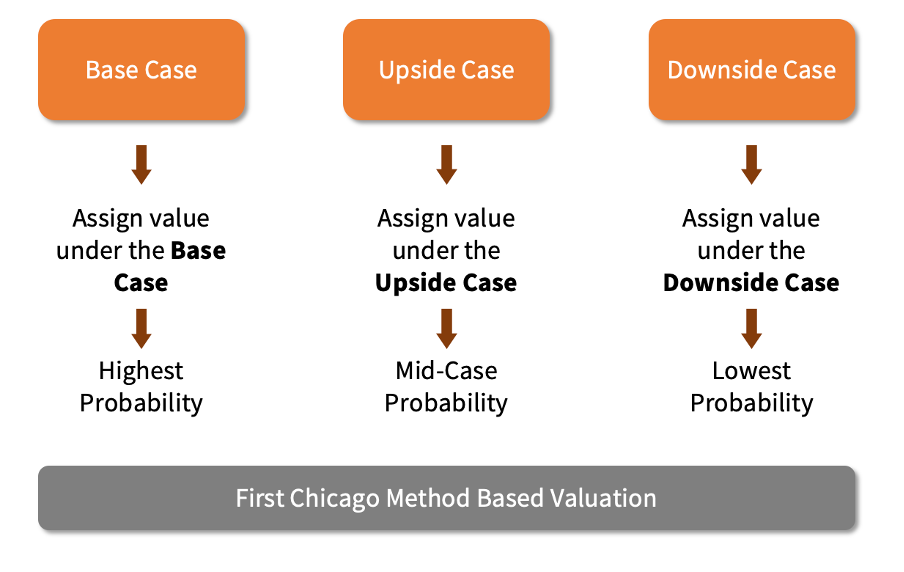
Discounted Cash Flow (DCF) Adjustments for Pre-Revenue Startups
While traditional DCF models depend on revenue projections, pre-revenue startups use scenario-based assumptions. Investors focus on long-term potential and discount future cash flows at higher rates to account for risk.
- Build multiple financial scenarios (optimistic, base, pessimistic).
- Estimate time to profitability and capital requirements.
- Apply a risk-adjusted discount rate (often 30%+ for early-stage ventures).
The Venture Capital Method: Focus on Exit Potential
This method values startups based on their expected exit value, such as an acquisition or IPO. Investors calculate the potential return by estimating future revenues and applying industry-specific multiples.
- Determine the target exit multiple (e.g., 5x revenue in SaaS).
- Estimate the startup’s market share at exit.
- Discount the exit value to present-day terms using the required rate of return.
Assessing the Strength of the Team and Execution Capability
A startup’s founding team and execution track record heavily influence valuation. Investors prioritize experience, adaptability, and domain expertise.
- Evaluate prior successes or failures in similar ventures.
- Analyze the team’s ability to scale operations and attract talent.
- Consider advisory board or investor network quality.
Leveraging Traction and Early-Stage Metrics
Even without revenue, metrics like user engagement, product validation, or partnerships signal potential. Investors assign value based on growth velocity and market fit.
- Track monthly active users (MAU) or customer waitlists.
- Assess pilot programs or early adopters in key markets.
- Measure customer acquisition cost (CAC) efficiency pre-revenue.
How do you value a company with no income?

How Do You Value a Company with No Income Using the Market Approach?
Valuing a company with no income often relies on comparable company analysis or precedent transactions. Investors assess similar businesses in the same industry, even if those companies generate revenue or profits. Key metrics like price-to-sales (P/S) ratios or user/base growth rates may be adapted to estimate value.
- Identify comparable companies in the same sector or stage.
- Analyze valuation multiples (e.g., P/S, EV/EBITDA) adjusted for growth potential.
- Adjust for differences in market position, technology, or scalability.
What Role Does Discounted Cash Flow (DCF) Play in Valuing a Non-Income Company?
While traditional DCF relies on projected cash flows, a company with no income may use hypothetical future revenue streams based on market potential. Assumptions about market size, customer acquisition rates, and long-term margins become critical.
- Estimate future revenue based on market research or industry benchmarks.
- Apply a discount rate reflecting risk (e.g., higher rates for early-stage ventures).
- Calculate terminal value to account for post-growth-phase stability.
How Does the Cost-to-Duplicate Method Apply to Valuing Such Companies?
This approach calculates the cost to replicate the company’s assets, such as technology, intellectual property, or infrastructure. It ignores future potential but provides a floor valuation.
- Sum expenses for R&D, patents, or proprietary technology.
- Include costs of building a similar team or acquiring customers.
- Compare to the company’s current asset book value.
Can Asset-Based Valuation Work for Companies Without Revenue?
Asset-based valuation focuses on tangible and intangible assets, such as property, equipment, or patents. For tech startups, intellectual property often drives value.
- Assess liquidation value of physical assets.
- Value intangible assets (e.g., patents, trademarks) via market comparables.
- Adjust for liabilities like debt or contractual obligations.
What Non-Financial Factors Influence Valuation for Pre-Revenue Companies?
Management quality, market timing, and competitive advantage heavily influence valuations. Investors may prioritize vision and scalability over short-term metrics.
- Evaluate the experience and track record of the leadership team.
- Analyze market trends and timing for product relevance.
- Assess barriers to entry or proprietary technology strength.
How do you calculate the value of a startup company?

Understanding the Core Valuation Methods for Startups
Calculating a startup’s value often relies on a mix of quantitative and qualitative approaches. Common methods include the Venture Capital (VC) Method, Discounted Cash Flow (DCF), and Market Multiples. These frameworks account for factors like projected revenue, market potential, and comparable company valuations.
- Venture Capital Method: Estimates future exit value and works backward to determine current valuation.
- Discounted Cash Flow: Uses projected cash flows adjusted for risk and time.
- Market Multiples: Compares startups to similar companies based on revenue, EBITDA, or user metrics.
Key Metrics to Assess Startup Financial Health
Startups are evaluated using metrics that reflect growth potential and operational efficiency. Critical indicators include Monthly Recurring Revenue (MRR), Customer Acquisition Cost (CAC), and Burn Rate.
- MRR: Predictable revenue from subscriptions or recurring services.
- CAC: Cost to acquire a customer, impacting profitability.
- Burn Rate: Rate at which a startup spends capital before profitability.
The Role of Market Size and Growth Potential
A startup’s valuation heavily depends on its Total Addressable Market (TAM) and Compound Annual Growth Rate (CAGR). Investors prioritize startups operating in large, expanding markets.
- TAM: Total revenue opportunity if the startup captures 100% market share.
- CAGR: Annual growth rate indicating market scalability.
- Market Penetration: Percentage of TAM the startup realistically targets.
Qualitative Factors Influencing Startup Value
Non-financial elements like team expertise, intellectual property, and competitive advantage significantly impact valuation.
- Founder Experience: Track record in scaling businesses or industry expertise.
- IP Portfolio: Patents or proprietary technology creating barriers to entry.
- Unique Value Proposition: Differentiation from competitors in product or service.
Adjusting for Risk and Stage of Development
Early-stage startups face higher risks, which lowers valuations. Factors include product maturity, regulatory hurdles, and funding stage.
- Pre-revenue vs. Post-revenue: Revenue-generating startups command higher valuations.
- Regulatory Compliance: Risks tied to legal approvals or industry regulations.
- Seed vs. Series A: Later funding rounds reduce risk, increasing valuation.
What is the valuation of a company if 10% is $100,000?
Understanding Company Valuation Basics
If 10% of a company is valued at $100,000, the total valuation can be calculated by dividing the partial value by the percentage it represents. This method assumes the stake reflects the company’s proportional worth. For example:
- Formula: Total Valuation = Partial Value / Stake Percentage.
- Calculation: $100,000 / 0.10 = $1,000,000.
- This implies the entire company is worth $1 million.
Key Factors Influencing Company Valuation
Valuation depends on multiple variables beyond simple arithmetic. Key factors include:
- Revenue and Profitability: Higher earnings often justify a larger valuation.
- Growth Potential: Future prospects can inflate current valuations.
- Market Conditions: Industry trends and economic climate impact investor perception.
Methods to Calculate Total Valuation
Different approaches are used to determine a company’s worth:
- Market Multiples: Comparing similar companies’ valuations.
- Discounted Cash Flow (DCF): Projecting future cash flows to present value.
- Asset-Based Valuation: Summing the value of tangible and intangible assets.
Importance of Accurate Valuation in Equity Sales
Precise valuation ensures fair equity distribution and investor confidence:
- Investor Trust: Overvaluation risks alienating investors.
- Equity Dilution: Incorrect valuations may force founders to surrender more equity.
- Regulatory Compliance: Accurate reporting avoids legal issues.
Common Mistakes in Determining Company Valuation
Errors in valuation can lead to financial missteps:
- Overestimating Growth: Assuming unrealistic revenue increases.
- Ignoring Liabilities: Failing to account for debts or obligations.
- Neglecting Market Trends: Not adjusting for industry downturns or disruptions.
Frequently Asked Questions (FAQs)
How Can You Value a Startup With No Revenue Using the Discounted Cash Flow (DCF) Method?
Valuing a revenue-less startup with the DCF method requires projecting future cash flows based on assumptions about market potential, growth rates, and operational scalability. Since there’s no historical revenue data, investors often rely on industry benchmarks, comparable companies, or proxy metrics (e.g., user growth, engagement rates) to estimate future performance. A high discount rate is typically applied to account for the elevated risk associated with unproven business models. Sensitivity analysis is critical here to evaluate how changes in assumptions impact the valuation.
What Non-Financial Factors Are Critical When Valuing a Pre-Revenue Startup?
Non-financial factors play a pivotal role in early-stage valuations. The founding team’s expertise, track record, and ability to execute are heavily weighted. Investors also assess the size and growth potential of the target market, the uniqueness of the product or technology (intellectual property, patents), and competitive advantages. Additionally, traction metrics like partnerships, pilot programs, or waitlist sign-ups can signal market validation, even without revenue.
How Does the Venture Capital (VC) Method Apply to Startups With No Revenue?
The VC method estimates valuation based on anticipated exit value, typically through an acquisition or IPO. Investors first project the startup’s potential revenue or earnings at exit, often using comparables from public companies or recent M&A deals. This future value is then discounted back to the present using a target return rate (e.g., 30–50%+), reflecting the high risk. Pre-revenue startups may see lower valuations here due to uncertainty in achieving scalability and market penetration.
What Are the Risks of Overvaluing a Startup With No Revenue?
Overvaluation can lead to dilution challenges in future funding rounds if the startup fails to meet growth milestones. It may also strain relationships with investors expecting unrealistic returns. Startups without revenue often face heightened scrutiny on burn rates and runway, and an inflated valuation can make it harder to justify operational costs. Additionally, market corrections or shifts in investor sentiment toward speculative ventures can abruptly reduce perceived value, impacting exit opportunities.
Leave a Reply
Our Recommended Articles