
Venture Capital Executive Compensation Survey


The venture capital industry, known for its high-stakes investments and dynamic growth trajectories, places significant emphasis on attracting and retaining top-tier talent. Executive compensation within this sector reflects a complex interplay of performance incentives, equity participation, and competitive benchmarking. This survey delves into the compensation structures of venture capital executives—from general partners to C-suite leaders—across firm sizes, geographies, and stages of specialization. By analyzing base salaries, carried interest, bonuses, and long-term incentives, the report uncovers trends shaping pay equity, transparency, and alignment with fund performance. As the industry evolves amid economic shifts, these insights offer a critical roadmap for firms navigating talent strategy and compensation fairness in a rapidly changing landscape.
- Analyzing Executive Compensation Trends in Venture Capital Firms
- What is the compensation package for a VC?
- How to do a compensation survey?
- What is the total compensation for a venture capital principal?
- How much do platform managers make in VC?
-
Frequently Asked Questions (FAQs)
- What is the purpose of the Venture Capital Executive Compensation Survey?
- Who typically participates in the Venture Capital Executive Compensation Survey?
- How does the survey account for differences in firm performance and geography?
- What are the key trends identified in recent Venture Capital Executive Compensation Surveys?
Analyzing Executive Compensation Trends in Venture Capital Firms
The Venture Capital Executive Compensation Survey provides critical insights into how top executives in the venture capital industry are compensated. This survey examines base salaries, bonuses, carried interest, and other forms of remuneration, offering a comprehensive view of compensation structures across firms of varying sizes and geographies. By analyzing this data, stakeholders can identify industry benchmarks, trends in equity distribution, and the impact of firm performance on executive pay.
See AlsoBiberk Business Insurance ReviewsKey Components of Venture Capital Executive Compensation
Executive compensation in venture capital typically includes base salary, annual bonuses, carried interest (a share of fund profits), and long-term incentives like equity stakes. Carried interest often constitutes the largest portion of total compensation, especially for senior partners. Additionally, benefits such as retirement contributions and healthcare packages are common. Below is a breakdown:
| Component | Description |
| Base Salary | Fixed annual income |
| Annual Bonus | Performance-based short-term incentive |
| Carried Interest | Profit share from fund returns |
| Equity Stakes | Ownership in portfolio companies or the firm |
| Benefits | Retirement, healthcare, and other perks |
Factors Influencing Compensation Structures
Compensation varies based on firm size, geographic location, fund performance, and individual seniority. Executives at larger firms or those managing high-performing funds often receive higher carried interest percentages. Regional disparities also exist, with North American executives typically earning more than counterparts in Europe or Asia.
See AlsoWashington LLC Annual Report| Factor | Impact on Compensation |
| Firm Size | Larger firms offer higher base salaries |
| Fund Performance | Directly tied to bonuses and carried interest |
| Seniority | Partners earn significantly more than junior executives |
| Location | North America leads in total compensation |
Compensation Benchmarks by Firm Size
Small firms (under $100M AUM) often prioritize equity-based compensation to align interests, while mid-sized firms ($100M–$500M AUM) blend salary and bonuses. Large firms ($500M+ AUM) dominate in carried interest allocations, sometimes exceeding 20% of fund profits for top executives.
| Firm Size | Average Base Salary | Carried Interest Range |
| Small | $150K–$250K | 10–15% |
| Mid-sized | $250K–$400K | 15–20% |
| Large | $400K–$600K+ | 20–25% |
Regional Variations in Executive Pay
North American venture capital executives earn 20–30% more than their European and Asia-Pacific peers, driven by higher fund sizes and a competitive talent market. In Europe, regulatory frameworks often cap carried interest, while Asia-Pacific firms emphasize performance-linked bonuses.
See AlsoIs It Illegal to Not Have Business Insurance?| Region | Average Total Compensation | Key Driver |
| North America | $800K–$1.2M | High fund performance |
| Europe | $600K–$900K | Regulatory limits |
| Asia-Pacific | $500K–$750K | Bonus structures |
Emerging Trends in Executive Compensation
Recent trends include a rise in ESG-linked bonuses, remote work allowances, and transparency initiatives. Firms are also experimenting with deferred compensation models to retain top talent. Additionally, diversity metrics increasingly influence bonus calculations.
| Trend | Adoption Rate | Impact |
| ESG-linked bonuses | 45% of firms | Aligns pay with sustainability goals |
| Remote work allowances | 60% of firms | Reduces geographic pay gaps |
| Deferred compensation | 30% of firms | Enhances retention |
What is the compensation package for a VC?

Core Components of a Venture Capital Compensation Package
A venture capitalist (VC) typically earns through a combination of management fees and carried interest (profit share). The structure aims to align incentives between investors (LPs) and the VC firm.
- Management fees: Usually 1.5–2.5% of assets under management (AUM), covering operational costs and salaries.
- Carried interest: A 20–30% share of profits after returning capital to LPs, often subject to a hurdle rate.
- Salary and bonuses: Junior roles may receive fixed salaries, while senior partners rely more on carried interest.
Management Fees: Sustaining VC Firm Operations
Management fees are critical for covering day-to-day expenses, including salaries, due diligence, and office costs. These fees typically decrease as the fund matures.
- Fee structure: Often 2% annually on committed capital during the fund’s investment period.
- Duration: Fees last 7–10 years but may taper after the investment phase.
- Scaling down: Larger funds may negotiate lower percentages due to economies of scale.
Carried Interest: The Performance-Based Incentive
Carried interest represents the VC’s share of profits, rewarding successful exits and long-term fund performance.
- Profit split: Typically 20% of gains after returning LP capital, though top firms may command 25–30%.
- Vesting period: Carried interest often vests over 5–10 years to retain key partners.
- Hurdle rate: Some LPs require a minimum return (e.g., 8%) before carried interest is paid.
Co-Investment Opportunities for VCs
Many VC firms allow partners to invest personal capital in portfolio companies, amplifying potential returns.
- Personal stake: Partners may co-invest at favorable terms, aligning interests with LPs.
- Enhanced returns: Successful exits yield direct financial benefits beyond carried interest.
- Risk alignment: Co-investing discourages reckless bets, as partners share downside risks.
Additional Perks and Non-Monetary Benefits
Beyond financial compensation, VCs often receive intangible benefits that enhance career growth and influence.
- Carry from other funds: Senior partners may earn carry across multiple funds.
- Board seats: Opportunities to shape company strategy and build networks.
- Reputation capital: High-profile exits bolster personal brand and future fundraising.
How to do a compensation survey?

1. Define the Objectives and Scope of the Survey
To conduct an effective compensation survey, start by clarifying its purpose. Are you benchmarking salaries, identifying pay gaps, or aligning with industry standards? Define the scope by determining which roles, departments, or geographic regions to include. Establish a timeline and budget to guide the process.
- Clarify goals: Align the survey with business needs, such as retention or market competitiveness.
- Identify stakeholders: Involve HR, finance, and department heads to ensure relevance.
- Set boundaries: Decide whether to focus on base pay, bonuses, benefits, or total compensation.
2. Identify Job Roles and Market Data Sources
Accurate comparisons require matching internal roles to market data. Use standardized job descriptions to avoid mismatches. Select reliable data sources, such as industry-specific surveys, government reports, or third-party platforms like Payscale or Mercer.
- Standardize job titles: Ensure roles align with external benchmarks (e.g., Software Engineer II vs. Mid-Level Developer).
- Choose data providers: Prioritize sources with up-to-date, region-specific salary data.
- Validate data relevance: Confirm that the data reflects your industry, company size, and location.
3. Design the Survey Methodology
A structured methodology ensures consistency. Decide between quantitative (numeric data) and qualitative (employee feedback) approaches. Use tools like spreadsheets, HR software, or specialized survey platforms to streamline data collection.
- Select metrics: Focus on base salary, bonuses, equity, and benefits like healthcare or retirement plans.
- Ensure anonymity: Protect participant confidentiality to encourage honest responses.
- Test the survey: Pilot the tool with a small group to identify flaws before full rollout.
4. Collect and Validate Data
Gather data systematically from both internal records and external sources. Cross-check entries for accuracy, and address discrepancies to maintain data integrity.
- Internal data: Extract salary histories, job grades, and tenure from HR systems.
- External data: Aggregate market rates from surveys, competitors, or public databases.
- Quality checks: Remove outliers and verify data consistency across sources.
5. Analyze Results and Benchmark Compensation
Compare internal pay structures against market data to identify gaps. Use statistical tools to calculate percentiles (e.g., 50th percentile for median pay) and visualize trends.
- Calculate compa-ratios: Divide an employee’s salary by the market median to assess competitiveness.
- Highlight disparities: Flag underpaid roles or departments needing adjustment.
- Prioritize actions: Create a roadmap for adjustments, considering budget and equity goals.
What is the total compensation for a venture capital principal?
Base Salary and Bonus Structure
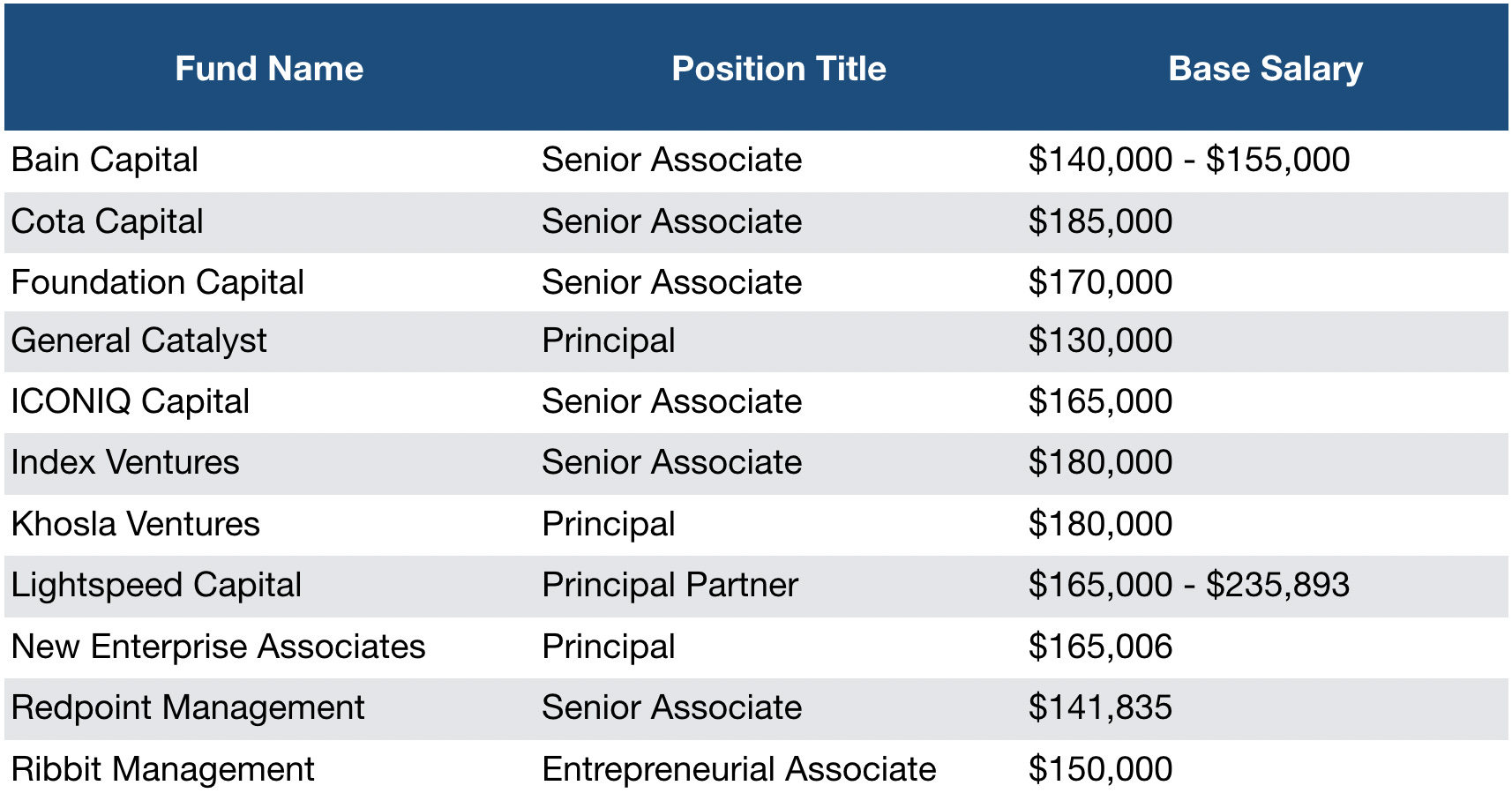
A venture capital principal typically earns a base salary ranging from $150,000 to $250,000 annually, depending on the firm’s size, location, and experience level. Bonuses, often tied to fund performance and individual contributions, can add 20%–50% of the base salary.
- Base salary: Determined by firm tier (e.g., top-tier firms offer higher ranges).
- Performance bonus: Linked to deal sourcing, portfolio growth, and exit outcomes.
- Signing/retention bonuses: Common in competitive markets to attract talent.
Carried Interest (Carry)
Carried interest represents a significant portion of a principal’s long-term compensation, typically 0.5%–2% of the fund’s profits. This “carry” is realized only after the fund returns capital to investors and meets a hurdle rate.
- Vesting period: Often 5–10 years, aligning with fund lifecycles.
- Profit-sharing tiers: Higher carry for principals who lead successful deals.
- Tax implications: Often taxed as capital gains, enhancing net returns.
Equity and Co-Investment Opportunities
Principals may receive equity stakes in the VC firm or opportunities to co-invest in portfolio companies, amplifying potential upside.
- Firm equity: Rare but offered by some partnerships to senior staff.
- Co-investment rights: Allows principals to invest personal capital in deals at favorable terms.
- Portfolio stock options: Occasionally granted by startups as part of deal terms.
Additional Benefits and Perks
Non-monetary benefits include healthcare, retirement plans, and deal-related incentives, such as travel or networking budgets.
- Deal sourcing commissions: Extra pay for identifying high-potential startups.
- Professional development: Conferences, courses, and mentorship programs.
- Lifestyle perks: Flexible work arrangements or expense accounts.
Factors Influencing Compensation Variability
Compensation fluctuates based on fund size, geographic region, and market conditions. Principals in Silicon Valley or New York often earn more due to higher costs of living and deal volumes.
- Fund stage: Early-stage funds may offer lower base salaries but higher carry.
- Track record: Proven principals command premium packages.
- Economic climate: Downturns may reduce bonuses but increase carry opportunities.
How much do platform managers make in VC?

Average Salary Range for Platform Managers in VC
Platform managers in venture capital (VC) typically earn between $80,000 and $200,000+ annually, depending on experience, firm size, and location. At early-stage VC firms, salaries may skew lower, while larger firms or those in high-cost regions often offer higher compensation. Additional bonuses or carried interest (carry) can significantly boost total earnings.
- Entry-level roles: $80,000–$120,000 base salary.
- Mid-career professionals: $130,000–$180,000, plus performance bonuses.
- Senior roles at top firms: $180,000–$200,000+, often with carry or equity.
Factors Influencing Platform Manager Compensation
Compensation varies based on firm size, geographic location, and individual impact. For example, platform managers in Silicon Valley or New York often earn 20–30% more than those in smaller markets. Firm stage (early vs. growth-stage VC) and the manager’s ability to drive portfolio value also play key roles.
- Firm AUM: Larger funds (>$500M) typically pay higher salaries.
- Location: High-cost cities like SF or Boston command premium wages.
- Portfolio support scope: Roles involving hands-on founder mentorship may include performance-linked bonuses.
Comparison to Other VC Roles
Platform managers generally earn less than investment partners but more than operational or administrative staff. While investment roles prioritize carried interest, platform managers often rely on base salary and discretionary bonuses. However, top performers can negotiate equity-like incentives.
- Investment associates: $100,000–$150,000 base, with carry potential.
- Operational roles: $70,000–$110,000, fewer bonuses.
- Platform managers: Balance stable pay with occasional carry opportunities.
Career Progression and Earning Potential
Advancing from a junior platform role to Head of Platform can double earnings. Leadership positions often include profit-sharing, larger bonuses, and involvement in firm strategy. Specializing in high-demand areas like talent acquisition or LP reporting also boosts income.
- Junior to mid-level: 3–5 years’ experience, 15–25% salary jumps.
- Head of Platform: $200,000–$300,000+, plus carry.
- Niche expertise: Roles focused on DEI or ESG may command premium fees.
Additional Compensation and Benefits
Beyond base pay, platform managers often receive performance bonuses, health benefits, and professional development budgets. Some firms offer carry (1–5% of fund profits), though this is less common than for investment teams.
- Bonuses: 10–30% of base salary, tied to KPIs.
- Carried interest: Rare but possible at senior levels.
- Perks: Networking budgets, conference access, and wellness programs.
Frequently Asked Questions (FAQs)
What is the purpose of the Venture Capital Executive Compensation Survey?
The Venture Capital Executive Compensation Survey aims to provide a comprehensive analysis of compensation trends for senior leaders within the venture capital industry. By collecting data on base salaries, bonuses, carried interest, and equity stakes, the survey helps firms benchmark their executive pay structures against industry standards. This data is critical for ensuring competitive compensation packages, attracting top talent, and maintaining alignment with market practices. The survey also highlights regional variations and the impact of firm size, performance, and seniority on compensation levels.
Who typically participates in the Venture Capital Executive Compensation Survey?
Participants in the survey primarily include venture capital firms of varying sizes, from early-stage boutique firms to large, established funds. C-suite executives (e.g., CEOs, CFOs), managing partners, and senior investment professionals are the key roles covered. The survey often aggregates anonymized data from global and regional firms to ensure a representative sample. Participation is voluntary, but firms are incentivized by receiving access to customized benchmarking reports that inform their compensation strategies.
How does the survey account for differences in firm performance and geography?
The survey categorizes data by firm performance metrics (e.g., fund returns, portfolio success rates) and geographic regions (e.g., North America, Europe, Asia-Pacific) to contextualize compensation trends. For instance, executives in high-performing firms or regions with competitive talent markets may report higher bonus structures or carried interest allocations. Adjustments are made for factors like local cost of living, regulatory environments, and economic conditions to ensure apples-to-apples comparisons across diverse markets.
What are the key trends identified in recent Venture Capital Executive Compensation Surveys?
Recent surveys highlight a growing emphasis on performance-linked incentives, with a larger share of compensation tied to fund returns and individual deal outcomes. There’s also increased transparency around carried interest distribution and equity participation for non-founding executives. Additionally, firms in emerging markets are closing the compensation gap with established hubs, reflecting global talent competition. Diversity and inclusion metrics are gradually influencing compensation frameworks, though progress remains uneven across regions.
Leave a Reply
Our Recommended Articles