
What Motivates You to Work as a Venture Capitalist or an Angel Investor


Venture capitalists and angel investors play a pivotal role in shaping the future of innovation by funding promising startups and guiding them toward success. But what drives individuals to pursue these high-risk, high-reward careers? For many, the motivation stems from a passion for entrepreneurship and a desire to support groundbreaking ideas that can transform industries. Others are drawn by the thrill of identifying potential in early-stage companies and the satisfaction of mentoring founders. Financial rewards, while significant, often take a backseat to the intrinsic fulfillment of fostering growth and creating lasting impact. This article explores the diverse motivations behind choosing a career in venture capital or angel investing.
- What Motivates You to Work as a Venture Capitalist or an Angel Investor?
- Why do you want to work for venture capital?
- Why would you want an angel investor?
- What is better angel investor or venture capitalist?
- What excites you about the venture capital field?
-
Frequently Asked Questions (FAQs)
- What drives individuals to become venture capitalists or angel investors?
- How does the thrill of risk and reward influence venture capitalists and angel investors?
- What role does mentorship and networking play in motivating venture capitalists and angel investors?
- How does the desire to create a lasting legacy inspire venture capitalists and angel investors?
What Motivates You to Work as a Venture Capitalist or an Angel Investor?
1. The Thrill of Discovering Innovative Ideas
One of the primary motivations for working as a venture capitalist or angel investor is the excitement of discovering innovative ideas and disruptive technologies. These professionals thrive on identifying startups with the potential to revolutionize industries. The process of evaluating pitches, conducting due diligence, and spotting high-growth opportunities is both intellectually stimulating and rewarding. It’s not just about financial returns; it’s about being at the forefront of innovation and shaping the future.
See Also What Are the Major Advantages of Being a Venture Capitalist?
2. Building and Supporting Entrepreneurial Ecosystems
Many venture capitalists and angel investors are driven by the desire to build and support entrepreneurial ecosystems. By providing capital, mentorship, and networking opportunities, they empower entrepreneurs to turn their visions into reality. This support often extends beyond funding, as investors actively contribute to the growth and success of startups. For many, this role is a way to give back to the business community and foster economic development.
3. Financial Rewards and High Returns
The potential for financial rewards is a significant motivator. Venture capitalists and angel investors often seek high returns on their investments, especially when backing startups that achieve exponential growth or successful exits through IPOs or acquisitions. While the risks are high, the possibility of substantial profits makes this career path appealing to those with a high tolerance for risk and a keen eye for lucrative opportunities.
See AlsoWhat Documents Do I Need When I Pitch Venture Capitalists or Angel Investors4. Personal Fulfillment and Legacy Building
For many, working as a venture capitalist or angel investor is deeply fulfilling on a personal level. It allows them to leave a legacy by supporting groundbreaking companies and contributing to societal progress. Whether it’s backing a startup that addresses a pressing global issue or helping a founder achieve their dreams, the sense of accomplishment and purpose is a powerful motivator.
5. Networking and Learning Opportunities
The role of a venture capitalist or angel investor offers unparalleled networking and learning opportunities. Engaging with entrepreneurs, industry experts, and other investors provides continuous exposure to new ideas and trends. This dynamic environment fosters personal and professional growth, making it an attractive career choice for those who value lifelong learning and collaboration.
See AlsoWhat Are the Requirements to Be Considered a Venture Capitalist| Motivation | Key Aspects |
|---|---|
| Innovative Ideas | Discovering disruptive technologies, high-growth potential |
| Entrepreneurial Ecosystems | Mentorship, networking, economic development |
| Financial Rewards | High returns, IPOs, acquisitions |
| Personal Fulfillment | Legacy building, societal impact |
| Networking and Learning | Collaboration, lifelong learning, industry trends |
Why do you want to work for venture capital?
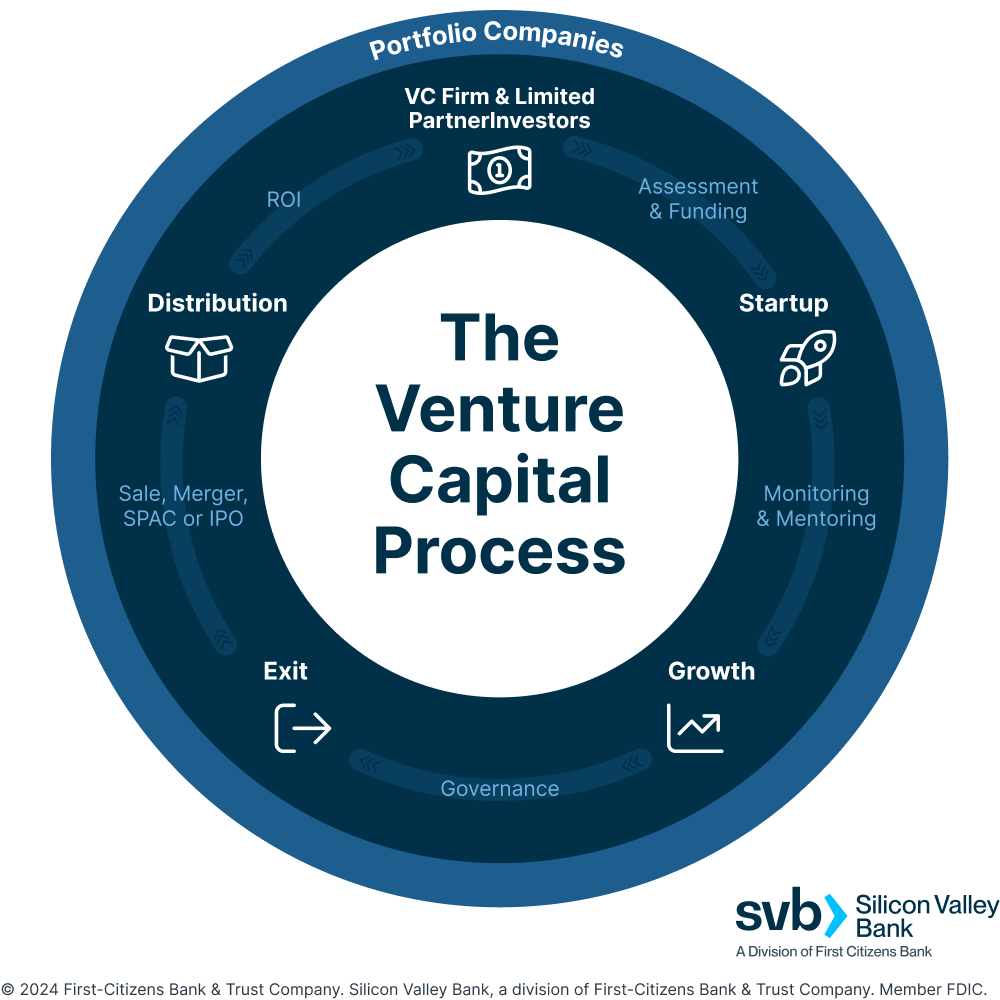
Passion for Innovation and Startups
Working in venture capital allows me to be at the forefront of innovation and support startups that are solving real-world problems. This field provides the opportunity to:
- Engage with cutting-edge technologies and disruptive business models.
- Help entrepreneurs turn their visionary ideas into successful businesses.
- Contribute to shaping the future of industries by identifying and nurturing high-potential companies.
Interest in Financial and Strategic Growth
Venture capital offers a unique blend of financial analysis and strategic decision-making. This role enables me to:
- Analyze market trends and evaluate the financial viability of startups.
- Develop strategies to maximize investment returns while minimizing risks.
- Collaborate with founders to create scalable growth plans for their businesses.
Desire to Build Long-Term Relationships
Working in venture capital involves building long-term relationships with entrepreneurs, investors, and industry experts. This aspect of the role is appealing because it allows me to:
- Establish trust and credibility with founders by providing mentorship and guidance.
- Network with industry leaders and expand my professional connections.
- Foster a collaborative environment that supports the growth of portfolio companies.
Opportunity to Learn and Grow Professionally
Venture capital is a dynamic field that offers continuous learning opportunities and professional growth. This role enables me to:
- Gain insights into various industries and emerging markets.
- Develop expertise in investment evaluation and portfolio management.
- Enhance my problem-solving and decision-making skills in a fast-paced environment.
Alignment with Personal Values and Goals
Working in venture capital aligns with my personal values of supporting innovation, fostering entrepreneurship, and making a meaningful impact. This role allows me to:
- Contribute to the success of mission-driven companies that aim to create positive change.
- Pursue a career that combines my passion for business strategy and financial growth.
- Be part of a community that values creativity, risk-taking, and collaboration.
Why would you want an angel investor?
:max_bytes(150000):strip_icc()/angelinvestor-f8192cd6f9184e998ddb7addb7ce4384.jpg)
Access to Capital Without Traditional Loans
One of the primary reasons to seek an angel investor is to gain access to capital without relying on traditional loans. This is particularly beneficial for startups or small businesses that may not qualify for bank loans due to lack of collateral or credit history. Angel investors provide the necessary funds to get your business off the ground or to scale it to the next level.
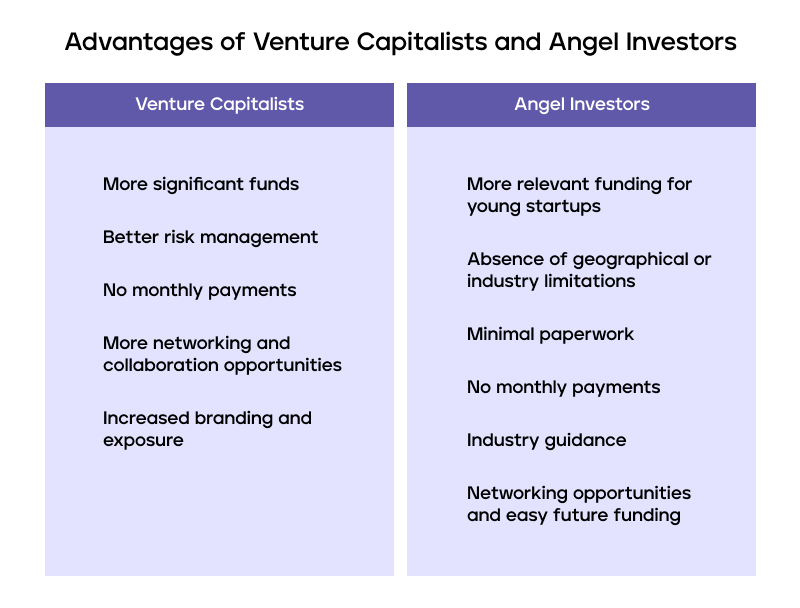
- No collateral required: Unlike banks, angel investors do not require physical assets as security.
- Flexible repayment terms: Angel investors often offer more flexible repayment terms compared to traditional loans.
- No monthly payments: Instead of monthly payments, angel investors typically expect a return on their investment through equity or a share of future profits.
Expertise and Mentorship
Angel investors often bring more than just money to the table; they bring expertise and mentorship. Many angel investors are seasoned entrepreneurs or industry experts who can provide valuable guidance and advice. This mentorship can be crucial in navigating the challenges of starting and growing a business.
- Industry insights: Angel investors can offer insights into market trends and customer behavior.
- Strategic planning: They can help in formulating business strategies and long-term plans.
- Networking opportunities: Angel investors often have extensive networks that can open doors to new partnerships and opportunities.
Equity Financing Without Immediate Pressure
Angel investors typically invest in exchange for equity in your company, which means they own a portion of your business. This type of financing does not require immediate repayment, allowing you to focus on growing your business without the pressure of monthly loan payments.
- No immediate repayment: Unlike loans, equity financing does not require regular payments.
- Shared risk: The investor shares the risk, which can be comforting for new entrepreneurs.
- Long-term partnership: Angel investors are often in it for the long haul, providing ongoing support and resources.
Validation and Credibility
Securing an angel investor can serve as a form of validation for your business. It shows that a third party believes in your idea and is willing to invest in its success. This can enhance your credibility with other potential investors, partners, and customers.
- Third-party validation: An angel investor's backing can validate your business model and concept.
- Increased credibility: It can make your business more attractive to other investors and stakeholders.
- Enhanced reputation: Being associated with a reputable angel investor can boost your business's reputation in the industry.
Flexible Investment Terms
Angel investors often offer flexible investment terms that can be tailored to the specific needs of your business. This flexibility can be a significant advantage, especially for startups that may not fit the rigid criteria of traditional financing options.
- Customizable agreements: Terms can be negotiated to suit both the investor and the entrepreneur.
- Varied investment amounts: Angel investors can provide varying amounts of capital, depending on the stage and needs of the business.
- Adaptable timelines: The investment timeline can be adjusted to align with the business's growth stages and milestones.
What is better angel investor or venture capitalist?
Understanding Angel Investors
Angel investors are typically individuals who invest their own money into startups, often in the early stages. They are usually experienced entrepreneurs or business professionals who provide not only capital but also mentorship and industry connections. Here are some key points about angel investors:
- Personal Investment: Angel investors use their own funds, which means they are highly motivated to see the startup succeed.
- Early-Stage Focus: They often invest during the seed or early stages when the risk is highest but the potential for high returns is also significant.
- Mentorship: Many angel investors offer valuable guidance and advice, leveraging their own business experience to help the startup grow.
Understanding Venture Capitalists
Venture capitalists (VCs) are professional investment firms that manage pooled funds from various investors to invest in startups and small businesses. They typically come in during later stages of a company's growth when the business model is more established. Here are some key points about venture capitalists:
- Institutional Investment: VCs invest money from a fund that is pooled from multiple investors, including institutions and high-net-worth individuals.
- Later-Stage Focus: They usually invest in companies that have already demonstrated some level of success and are looking to scale.
- Strategic Involvement: VCs often take an active role in the company, sometimes securing a seat on the board of directors to influence major decisions.
Key Differences Between Angel Investors and Venture Capitalists
While both angel investors and venture capitalists provide funding to startups, there are significant differences between the two. Here are some of the main distinctions:
- Source of Funds: Angel investors use their own money, whereas VCs invest funds from a pool of investors.
- Stage of Investment: Angels typically invest in early-stage startups, while VCs usually come in during later stages.
- Level of Involvement: Angels often provide mentorship and guidance, while VCs may take a more strategic, hands-on approach.
Pros and Cons of Angel Investors
Choosing an angel investor has its own set of advantages and disadvantages. Here are some key points to consider:
- Pros:
- Flexible terms and less stringent requirements compared to VCs.
- Personalized mentorship and industry connections.
- Quicker decision-making process due to individual investment.
- Cons:
- Limited funding capacity compared to VCs.
- Higher risk for the investor, which may lead to more cautious investment decisions.
- Potential for less structured support compared to institutional investors.
Pros and Cons of Venture Capitalists
Opting for venture capital funding also comes with its own set of benefits and drawbacks. Here are some key points to consider:
- Pros:
- Access to larger amounts of capital for scaling the business.
- Strategic guidance and industry expertise from experienced professionals.
- Potential for additional rounds of funding as the company grows.
- Cons:
- More stringent terms and conditions, including equity stakes and board seats.
- Longer and more complex decision-making process due to institutional involvement.
- Pressure to deliver high returns, which can lead to aggressive growth strategies.
What excites you about the venture capital field?

The Dynamic Nature of Innovation
What excites me most about the venture capital field is its direct involvement in fostering innovation. Venture capitalists have the unique opportunity to support groundbreaking ideas that can transform industries. This includes:
- Identifying and backing disruptive technologies that challenge the status quo.
- Witnessing the evolution of startups from early-stage concepts to market leaders.
- Contributing to the development of solutions that address global challenges, such as climate change or healthcare.
The Thrill of High-Risk, High-Reward Investments
The venture capital field is inherently tied to high-risk, high-reward scenarios, which makes it exhilarating. This aspect involves:
- Evaluating startups with the potential for exponential growth, despite their initial uncertainties.
- Balancing risk by diversifying investments across multiple sectors and stages.
- Experiencing the satisfaction of seeing a portfolio company achieve a successful exit, such as an IPO or acquisition.
Building Relationships with Visionary Founders
One of the most rewarding aspects of venture capital is the opportunity to collaborate with visionary founders. This includes:
- Working closely with entrepreneurs who are passionate about solving real-world problems.
- Providing mentorship and strategic guidance to help startups scale effectively.
- Building long-term partnerships that go beyond financial support, fostering trust and mutual growth.
Shaping the Future of Industries
Venture capital plays a pivotal role in shaping the future of various industries by:
- Investing in sectors like artificial intelligence, biotechnology, and clean energy, which are poised to redefine the global economy.
- Supporting startups that introduce new business models or technologies, driving competition and progress.
- Influencing market trends by identifying and backing emerging opportunities early on.
The Global Impact of Venture Capital
Venture capital has the power to create a global impact by:
- Enabling startups to expand internationally, creating jobs and economic growth across borders.
- Supporting initiatives that address pressing global issues, such as sustainability and social equity.
- Fostering a culture of entrepreneurship and innovation that transcends geographical boundaries.
Frequently Asked Questions (FAQs)
What drives individuals to become venture capitalists or angel investors?
Many individuals are motivated to become venture capitalists or angel investors by the desire to support innovation and entrepreneurship. They are often passionate about identifying and nurturing early-stage startups with the potential to disrupt industries or create significant societal impact. Additionally, the opportunity to be part of a startup's journey, from ideation to scaling, provides a sense of fulfillment and excitement. For some, the financial rewards of successful investments are also a key motivator, as they seek to generate substantial returns while contributing to the growth of groundbreaking ideas.
How does the thrill of risk and reward influence venture capitalists and angel investors?
The high-risk, high-reward nature of venture capital and angel investing is a significant motivator for many. These individuals thrive on the challenge of evaluating risky opportunities and making calculated bets on startups that could potentially yield exponential returns. The excitement of being involved in cutting-edge technologies or innovative business models adds to the allure. Moreover, the possibility of discovering the next unicorn or industry leader keeps them engaged and driven, despite the inherent uncertainties of the field.
What role does mentorship and networking play in motivating venture capitalists and angel investors?
For many venture capitalists and angel investors, the opportunity to mentor and guide entrepreneurs is a powerful motivator. They enjoy sharing their expertise, experience, and networks to help startups overcome challenges and achieve success. This mentorship role allows them to make a tangible impact on the growth of young companies and the careers of founders. Additionally, being part of a vibrant ecosystem of like-minded investors, entrepreneurs, and industry experts provides a sense of community and collaboration that many find deeply rewarding.
How does the desire to create a lasting legacy inspire venture capitalists and angel investors?
Many venture capitalists and angel investors are driven by the aspiration to leave a lasting legacy through their work. By supporting startups that address critical global challenges, such as climate change, healthcare innovation, or social equity, they aim to contribute to a better future. The idea of being remembered for enabling transformative companies or technologies is a powerful motivator. Furthermore, some investors are inspired by the opportunity to build a personal brand or establish a reputation as a visionary in the investment community, which can open doors to new opportunities and collaborations.
Leave a Reply
Our Recommended Articles