
What is Difference Between Angel Investor and Venture Capitalist


When exploring funding options for startups, two terms frequently arise: angel investors and venture capitalists. While both provide essential financial support to early-stage companies, they differ significantly in their approach, resources, and objectives. Angel investors are typically high-net-worth individuals who invest their own money into startups, often during the seed stage, and may offer mentorship alongside funding. Venture capitalists, on the other hand, represent firms that pool money from various sources to invest in businesses with high growth potential, usually at later stages. Understanding the distinctions between these two funding sources is crucial for entrepreneurs seeking the right financial partnership to fuel their ventures.
- What is the Difference Between Angel Investor and Venture Capitalist?
- Are Shark Tank angel investors or venture capitalists?
- Do you pay back angel investors?
- Are dragons den angel investors?
- What makes venture capitalists different from other investors?
-
Frequently Asked Questions (FAQs)
- What is the main difference between an angel investor and a venture capitalist?
- How do angel investors and venture capitalists differ in their involvement with startups?
- What are the typical investment amounts for angel investors versus venture capitalists?
- What are the risk profiles of angel investors compared to venture capitalists?
What is the Difference Between Angel Investor and Venture Capitalist?
1. Definition and Role
An angel investor is typically an individual who provides capital for a business start-up, often in exchange for convertible debt or ownership equity. They are usually high-net-worth individuals who invest their own money. On the other hand, a venture capitalist (VC) is a professional investor or a firm that manages pooled funds from many investors to invest in start-ups and small businesses with high growth potential. VCs often take a more active role in the management of the company compared to angel investors.
See AlsoHow Do Venture Capitalists Actually Work?2. Source of Funds
Angel investors use their personal wealth to fund businesses. This means the money comes directly from their own pockets. In contrast, venture capitalists invest money that has been pooled from various sources, including pension funds, endowments, and wealthy individuals. This distinction is crucial because it affects the level of risk each is willing to take.
3. Investment Size
Angel investors generally invest smaller amounts of money compared to venture capitalists. Angel investments typically range from $25,000 to $100,000, although some may invest more. Venture capitalists, however, usually invest millions of dollars in a single round of funding, often starting from $1 million and going up to $10 million or more.
See Also Who Are the Best Angel Investors in Minnesota?
4. Stage of Investment
Angel investors often invest in the seed stage or early stages of a start-up when the business is just getting off the ground. They are willing to take on higher risk for the potential of higher returns. Venture capitalists, on the other hand, usually come in during the Series A or later rounds of funding when the business has already demonstrated some level of success and is looking to scale.
5. Involvement and Control
Angel investors typically have a more hands-off approach and may offer advice and mentorship but generally do not seek control over the company’s operations. Venture capitalists, however, often take a more active role in the management and strategic direction of the company. They may require a seat on the board of directors and have a say in major business decisions.
See Also What Motivates You to Work as a Venture Capitalist or an Angel Investor
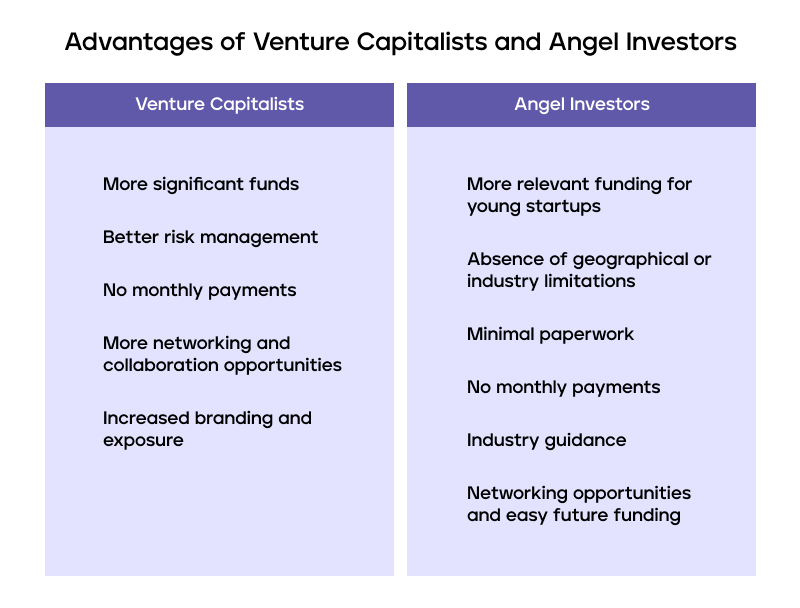
| Aspect | Angel Investor | Venture Capitalist |
|---|---|---|
| Source of Funds | Personal Wealth | Pooled Funds |
| Investment Size | $25,000 - $100,000 | $1 million - $10 million+ |
| Stage of Investment | Seed/Early Stage | Series A or Later |
| Involvement | Hands-off | Active |
| Control | Minimal | Significant |
Are Shark Tank angel investors or venture capitalists?
What is the Role of Shark Tank Investors?
The investors on Shark Tank are primarily angel investors and venture capitalists. They provide funding to entrepreneurs in exchange for equity in their businesses. The show features a mix of both types of investors, depending on the deal structure and the stage of the business.
See Also How to Start a Micro Vc Fund
- Angel investors typically invest their own money in early-stage startups.
- Venture capitalists often invest larger sums and focus on scaling established businesses.
- The Sharks may also act as mentors, offering guidance and industry connections.
How Do Shark Tank Investors Differ from Traditional Angel Investors?
While traditional angel investors often operate behind the scenes, Shark Tank investors are public figures who negotiate deals on television. This visibility adds a unique dynamic to their investments.
- Traditional angel investors may focus solely on financial returns.
- Shark Tank investors often seek both financial returns and personal branding opportunities.
- The Sharks may demand higher equity stakes due to the added exposure they provide.
Are Shark Tank Investors More Like Venture Capitalists?
Some Shark Tank investors, like Mark Cuban, operate more like venture capitalists by investing in businesses that are already generating revenue and have growth potential.
See Also What Are the Benefits of Venture Capital?
- They often invest larger amounts, sometimes exceeding $1 million.
- Their focus is on scaling businesses rather than just launching them.
- They may require more structured deals, including board seats or profit-sharing agreements.
What Types of Deals Do Shark Tank Investors Prefer?
Shark Tank investors prefer deals that align with their expertise and offer high growth potential. They often look for businesses with a clear competitive advantage.
- They favor businesses with strong branding and market appeal.
- They are attracted to scalable models, such as tech startups or consumer products.
- They may avoid industries they are unfamiliar with or consider too risky.
How Do Shark Tank Investors Impact Entrepreneurs?
Shark Tank investors provide more than just funding; they offer mentorship, industry connections, and marketing exposure that can significantly boost a business.
- Their involvement can lead to increased sales and brand recognition.
- They often help entrepreneurs refine their business strategies.
- Their public endorsements can attract additional investors and partnerships.
Do you pay back angel investors?

How Do Angel Investors Get Repaid?
Angel investors are typically repaid through the growth and success of the business they invest in. Unlike traditional loans, angel investments are not repaid in fixed installments. Instead, repayment occurs in the following ways:
- Equity Stake: Angel investors often receive an equity stake in the company, meaning they own a portion of the business. They are repaid when the company is sold, goes public, or generates profits.
- Exit Strategies: Repayment usually happens during an exit event, such as an acquisition, merger, or initial public offering (IPO), where the investor sells their shares for a profit.
- Dividends: In some cases, if the company becomes profitable, angel investors may receive periodic dividends as a form of repayment.
What Are the Terms of Repayment for Angel Investors?
The terms of repayment for angel investors are outlined in the investment agreement. These terms can vary widely depending on the deal structure:
- Convertible Notes: Some angel investors use convertible notes, which are loans that convert into equity during a future financing round. Repayment occurs when the note converts or matures.
- Equity Agreements: In equity-based deals, repayment is tied to the company's valuation and the investor's share of ownership.
- Revenue Sharing: In rare cases, angel investors may agree to a revenue-sharing model, where they receive a percentage of the company's revenue until a predetermined amount is repaid.
Do Angel Investors Expect Immediate Repayment?
Angel investors do not typically expect immediate repayment. They understand that startups and early-stage companies need time to grow and generate returns. Key points include:
- Long-Term Perspective: Angel investors often have a long-term investment horizon, sometimes spanning 5–10 years or more.
- Risk Tolerance: They are aware of the high risk involved and are prepared for the possibility of not being repaid if the business fails.
- Milestone-Based Returns: Repayment is often tied to achieving specific business milestones, such as reaching profitability or securing additional funding.
What Happens If the Business Fails?
If the business fails, angel investors typically lose their investment. This is because:
- No Collateral: Angel investments are unsecured, meaning there is no collateral to recover in case of failure.
- High-Risk Nature: Angel investors are aware of the high-risk, high-reward nature of startup investing and accept the possibility of losing their capital.
- No Legal Obligation: Unless specified in the agreement, there is usually no legal obligation for the entrepreneur to repay the investor if the business fails.
Can Angel Investors Negotiate Repayment Terms?
Yes, angel investors can negotiate repayment terms based on their preferences and the company's needs. Common negotiation points include:
- Equity Percentage: The amount of equity the investor receives in exchange for their investment.
- Vesting Period: The timeframe over which the investor's equity vests, ensuring alignment with the company's long-term goals.
- Liquidation Preferences: Terms that dictate how the investor is repaid in the event of a sale or liquidation, often prioritizing them over other shareholders.
Are dragons den angel investors?

What is Dragons' Den?
Dragons' Den is a popular television show where entrepreneurs pitch their business ideas to a panel of wealthy investors, known as Dragons. These investors evaluate the pitches and decide whether to invest their own money in exchange for equity in the business. The show originated in Japan and has been adapted in many countries, including the UK, Canada, and the US (where it is called Shark Tank).
- Entrepreneurs present their ideas to the Dragons.
- Dragons ask questions and negotiate terms.
- If interested, Dragons offer investment in exchange for equity.
Are Dragons' Den Investors Angel Investors?
While Dragons' Den investors share some similarities with angel investors, they are not exactly the same. Angel investors typically provide early-stage funding to startups in exchange for equity, often without the public scrutiny of a TV show. Dragons, on the other hand, invest their own money but operate within the context of a televised program, which adds a layer of entertainment and public exposure.
- Angel investors focus on early-stage startups.
- Dragons invest in a variety of business stages.
- Dragons' investments are made in a public setting.
Key Differences Between Dragons and Angel Investors
There are several key differences between Dragons and traditional angel investors. Dragons often invest larger amounts of money and may seek higher equity stakes. Additionally, their investments are made under the spotlight of a TV show, which can influence their decisions. Angel investors, however, typically operate privately and may offer mentorship alongside funding.
- Dragons invest in a public forum.
- Angel investors operate privately.
- Dragons may seek higher equity stakes.
How Do Dragons Evaluate Pitches?
Dragons evaluate pitches based on several factors, including the viability of the business model, the potential for growth, and the entrepreneur's passion and preparedness. They also consider the valuation of the business and the equity stake being offered. The competitive nature of the show often leads to intense negotiations.
- Assess the business model and growth potential.
- Evaluate the entrepreneur's preparedness and passion.
- Negotiate terms and equity stakes.
Can Dragons' Den Investments Lead to Success?
Many businesses that secure investments on Dragons' Den go on to achieve significant success. However, not all deals made on the show are finalized after filming, and some businesses fail despite the investment. The exposure from the show can be just as valuable as the funding, helping entrepreneurs gain public recognition and attract additional investors.
- Some businesses achieve significant growth post-investment.
- Not all deals are finalized after the show.
- The public exposure can be a major benefit.
What makes venture capitalists different from other investors?
Focus on High-Growth Startups
Venture capitalists (VCs) are distinct from other investors because they primarily focus on high-growth startups with the potential for exponential returns. Unlike traditional investors, who may seek steady, predictable returns, VCs are willing to take on higher risks for the possibility of outsized rewards. This focus often involves:
- Investing in early-stage companies with innovative ideas or disruptive technologies.
- Targeting industries with significant growth potential, such as tech, biotech, and clean energy.
- Providing not just capital but also strategic guidance to help startups scale rapidly.
Active Involvement in Portfolio Companies
Another key difference is the active role venture capitalists play in their portfolio companies. Unlike passive investors, VCs often take a hands-on approach to ensure the success of their investments. This involvement can include:
- Serving on the company's board of directors to influence decision-making.
- Offering mentorship and access to their network of industry experts.
- Assisting with recruitment, partnerships, and fundraising efforts.
Long-Term Investment Horizon
Venture capitalists typically have a long-term investment horizon, which sets them apart from other investors who may seek quicker returns. This approach allows startups the time needed to grow and achieve their full potential. Key aspects include:
- Investing in companies that may take 5-10 years to mature or exit.
- Accepting that many investments may fail, with the expectation that a few will generate significant returns.
- Focusing on exit strategies such as IPOs or acquisitions to realize gains.
Risk Appetite and Diversification
VCs are known for their high risk tolerance, which distinguishes them from more conservative investors. They understand that startups are inherently risky but balance this by diversifying their investments. This strategy involves:
- Investing in a portfolio of startups to spread risk across multiple ventures.
- Accepting that a majority of investments may not succeed, but a few unicorns can compensate for losses.
- Focusing on innovation and disruption rather than established, stable businesses.
Capital Structure and Fundraising
Venture capitalists operate within a unique capital structure, raising funds from limited partners (LPs) to invest in startups. This model differs from other investors who may use personal or institutional funds. Key elements include:
- Raising capital through venture capital funds, which pool money from LPs like pension funds and wealthy individuals.
- Charging a management fee (typically 2%) and taking a carried interest (usually 20%) on profits.
- Operating with a time-bound fund lifecycle, typically 10 years, to ensure timely returns to LPs.
Frequently Asked Questions (FAQs)
What is the main difference between an angel investor and a venture capitalist?
The primary difference between an angel investor and a venture capitalist lies in their source of funding and the stage of investment. Angel investors are typically individuals who invest their own personal funds into early-stage startups, often during the seed or pre-seed stages. On the other hand, venture capitalists manage pooled funds from institutional investors or high-net-worth individuals and usually invest in more established startups that have already demonstrated some level of growth or traction.
How do angel investors and venture capitalists differ in their involvement with startups?
Angel investors often take a more hands-on approach, providing mentorship, guidance, and networking opportunities to the startups they invest in. They may have a personal interest in the success of the business and often act as advisors. In contrast, venture capitalists tend to focus more on financial returns and may have less direct involvement in day-to-day operations. They often require a seat on the board of directors to influence major decisions and ensure the company aligns with their investment goals.
What are the typical investment amounts for angel investors versus venture capitalists?
Angel investors usually invest smaller amounts, ranging from $25,000 to $100,000, though some may invest up to $1 million or more depending on their personal wealth. These investments are often made in the early stages of a startup. Venture capitalists, however, typically invest larger sums, often starting at $1 million and going up to tens or even hundreds of millions of dollars. Their investments are usually made in later stages when the startup has shown significant potential for scaling.
What are the risk profiles of angel investors compared to venture capitalists?
Angel investors generally take on higher risks since they invest in very early-stage companies that may not have a proven business model or revenue stream. They often rely on the potential of the idea and the founding team. Venture capitalists, on the other hand, invest in startups that have already passed the initial risk phase and are looking to scale. While still risky, their investments are typically more calculated, as they focus on companies with a clearer path to growth and profitability.
Leave a Reply
Our Recommended Articles