
What is the Business Model of Venture Capital Firms?


Venture capital firms play a pivotal role in the global economy by fueling innovation and supporting high-growth startups. Their business model revolves around investing in early-stage or emerging companies with significant growth potential, often in exchange for equity. These firms raise funds from institutional investors, such as pension funds and endowments, and deploy this capital into promising ventures. The goal is to achieve substantial returns through successful exits, such as IPOs or acquisitions. By providing not only financial resources but also strategic guidance, venture capital firms help startups scale and disrupt industries. This article explores the intricacies of their business model, shedding light on how they generate value and manage risk.
What is the Business Model of Venture Capital Firms?
Venture capital (VC) firms are specialized financial institutions that invest in early-stage, high-potential, and often high-risk startups and companies. Their business model revolves around raising funds from limited partners (LPs), such as institutional investors, pension funds, and wealthy individuals, and then deploying that capital into promising startups in exchange for equity. The ultimate goal is to achieve significant returns on investment (ROI) when these startups grow, go public, or are acquired. Venture capital firms typically operate on a 2 and 20 fee structure, where they charge a 2% management fee on the total fund and take 20% of the profits (carried interest) once the investments yield returns.
See Also Which Scenario Would a Venture Capitalist Prefer?
How Do Venture Capital Firms Raise Funds?
Venture capital firms raise funds by creating a venture capital fund, which is a pool of money collected from limited partners (LPs). These LPs include institutional investors, endowments, pension funds, and high-net-worth individuals. The firm's general partners (GPs) are responsible for managing the fund and making investment decisions. The fundraising process involves pitching the fund's strategy, target sectors, and expected returns to potential LPs. Once the fund is closed, the capital is locked in for a specific period, usually 7-10 years, during which the VC firm invests in startups.
| Key Steps in Fundraising |
|---|
| 1. Identify potential LPs |
| 2. Pitch the fund's strategy |
| 3. Close the fund |
| 4. Lock in capital for 7-10 years |
What Types of Startups Do Venture Capital Firms Invest In?
Venture capital firms typically invest in high-growth startups with the potential to disrupt industries or create new markets. These startups are often in sectors like technology, biotech, fintech, and clean energy. VC firms look for companies with scalable business models, strong founding teams, and innovative products or services. They often invest in early-stage rounds (Seed, Series A, Series B) but may also participate in later-stage funding if the company shows exceptional growth.
See Also How Can Startup Companies Raise Money Initial Stage?
| Common Startup Criteria |
|---|
| 1. Scalable business model |
| 2. Strong founding team |
| 3. Innovative product/service |
| 4. High growth potential |
How Do Venture Capital Firms Make Money?
Venture capital firms generate revenue through two primary mechanisms: management fees and carried interest. The 2% management fee is charged annually on the total fund size to cover operational costs. The 20% carried interest is the share of profits the firm earns after returning the initial capital to LPs. For example, if a VC firm invests $100 million and the fund grows to $500 million, the firm takes 20% of the $400 million profit, which is $80 million.
| Revenue Streams |
|---|
| 1. Management fees (2%) |
| 2. Carried interest (20%) |
What is the Role of General Partners in Venture Capital Firms?
General partners (GPs) are the key decision-makers in a venture capital firm. They are responsible for fundraising, deal sourcing, due diligence, and portfolio management. GPs leverage their industry expertise and networks to identify promising startups, negotiate terms, and provide strategic guidance to portfolio companies. They also play a crucial role in exiting investments through IPOs or acquisitions to generate returns for LPs.
See Also Which of the Following Statements is Not True About Entrepreneurship It Creates a New Business It Creates New Jobs or Its About Profit Maximization
| Key Responsibilities of GPs |
|---|
| 1. Fundraising |
| 2. Deal sourcing |
| 3. Due diligence |
| 4. Portfolio management |
| 5. Exiting investments |
What are the Risks and Challenges in Venture Capital?
Venture capital is inherently risky due to the high failure rate of startups. Many investments may not yield returns, and only a few unicorns (startups valued at over $1 billion) generate substantial profits. Additionally, VC firms face challenges like market volatility, regulatory changes, and competition for deals. To mitigate risks, VC firms diversify their portfolios and conduct thorough due diligence before investing.
| Key Risks and Challenges |
|---|
| 1. High startup failure rate |
| 2. Market volatility |
| 3. Regulatory changes |
| 4. Intense competition |
What is the structure of a VC firm?

Key Roles in a VC Firm
The structure of a venture capital (VC) firm typically includes several key roles that ensure the smooth operation and success of investments. These roles are essential for decision-making, fund management, and portfolio support.
- General Partners (GPs): They are responsible for making investment decisions, managing the fund, and overseeing portfolio companies.
- Limited Partners (LPs): These are the investors who provide the capital for the fund but do not participate in day-to-day operations.
- Associates: They conduct market research, due diligence, and support GPs in evaluating potential investments.
- Principals: Mid-level professionals who often lead deal sourcing and execution, acting as a bridge between associates and GPs.
- Venture Partners: Experienced professionals who assist with deal flow and portfolio management on a part-time or project basis.
Fund Structure and Capital Allocation
The fund structure of a VC firm is designed to pool capital from various sources and allocate it strategically to high-potential startups. This structure ensures transparency and accountability.
- Fund Size: Typically ranges from $50 million to over $1 billion, depending on the firm's focus and investor base.
- Management Fees: Usually 2% of the total fund size, covering operational costs like salaries and office expenses.
- Carried Interest: GPs earn 20% of the profits after returning the initial capital to LPs, aligning their interests with investors.
- Investment Period: Lasts 3-5 years, during which the firm actively invests in startups.
- Harvest Period: Follows the investment phase, focusing on exiting investments and returning profits to LPs.
Investment Process in a VC Firm
The investment process in a VC firm is a structured approach to identifying, evaluating, and funding startups. It involves multiple stages to minimize risk and maximize returns.
- Deal Sourcing: Identifying potential investment opportunities through networks, events, and referrals.
- Due Diligence: Conducting thorough research on the startup's market, team, product, and financials.
- Term Sheet Negotiation: Outlining the terms of the investment, including valuation and equity stake.
- Investment Committee Approval: Final decision-making by senior partners before committing capital.
- Post-Investment Support: Providing mentorship, resources, and strategic guidance to portfolio companies.
Portfolio Management Strategies
Effective portfolio management is crucial for a VC firm to ensure the growth and success of its investments. This involves active involvement and strategic oversight.
- Board Participation: GPs or principals often join the boards of portfolio companies to provide guidance.
- Follow-On Investments: Additional funding rounds to support high-performing startups.
- Performance Monitoring: Regularly tracking key metrics like revenue growth, customer acquisition, and burn rate.
- Exit Planning: Preparing for IPOs, acquisitions, or mergers to realize returns on investments.
- Risk Mitigation: Diversifying the portfolio across industries and stages to reduce exposure to market volatility.
Challenges Faced by VC Firms
VC firms encounter several challenges in their operations, from sourcing deals to managing investor expectations. Addressing these challenges is critical for long-term success.
- Deal Flow Quality: Finding high-quality startups with scalable business models is increasingly competitive.
- Valuation Pressures: Rising valuations can lead to overpaying for investments, reducing potential returns.
- Regulatory Compliance: Navigating complex legal and financial regulations across different markets.
- LP Expectations: Balancing the need for high returns with the inherent risks of early-stage investing.
- Market Volatility: Economic downturns or shifts in technology trends can impact portfolio performance.
What type of business is venture capital?
:max_bytes(150000):strip_icc()/Venturecapital-2f7ba3a27d0545f682a6238ea6b16cb9.png)
What is Venture Capital?
Venture capital is a type of private equity financing that investors provide to startups and small businesses with high growth potential. It is typically offered in exchange for equity ownership in the company. Venture capital firms or individual investors, known as venture capitalists, take on the risk of investing in these early-stage companies with the expectation of significant returns if the business succeeds.
- Venture capital focuses on innovative and high-growth industries such as technology, biotechnology, and clean energy.
- It is often provided during the seed, early-stage, or expansion phases of a business.
- Venture capitalists not only provide funding but also offer mentorship, strategic guidance, and access to their professional networks.
How Does Venture Capital Work?
Venture capital operates through a structured process where investors identify promising startups, evaluate their potential, and provide funding in stages. The process involves:
- Deal sourcing: Identifying potential investment opportunities through networking, referrals, or pitch events.
- Due diligence: Conducting a thorough analysis of the business model, market potential, and team capabilities.
- Investment: Providing capital in exchange for equity, often through multiple funding rounds like Series A, Series B, etc.
Key Characteristics of Venture Capital
Venture capital is distinct from other forms of financing due to its unique characteristics:
- High-risk, high-reward: Investments are made in unproven businesses with the potential for exponential growth.
- Equity-based: Investors receive ownership stakes rather than debt obligations.
- Active involvement: Venture capitalists often play an active role in guiding the company's strategy and operations.
Types of Venture Capital Firms
Venture capital firms can be categorized based on their investment focus and stage of involvement:
- Early-stage investors: Focus on seed and Series A funding for startups.
- Growth-stage investors: Provide capital for scaling established businesses.
- Sector-specific firms: Specialize in industries like healthcare, fintech, or artificial intelligence.
Benefits of Venture Capital for Startups
Venture capital offers several advantages to startups, including:
- Access to capital: Significant funding to fuel growth and innovation.
- Expertise and mentorship: Guidance from experienced investors to navigate challenges.
- Networking opportunities: Connections to industry leaders, partners, and potential customers.
What is the venture capital financial model?
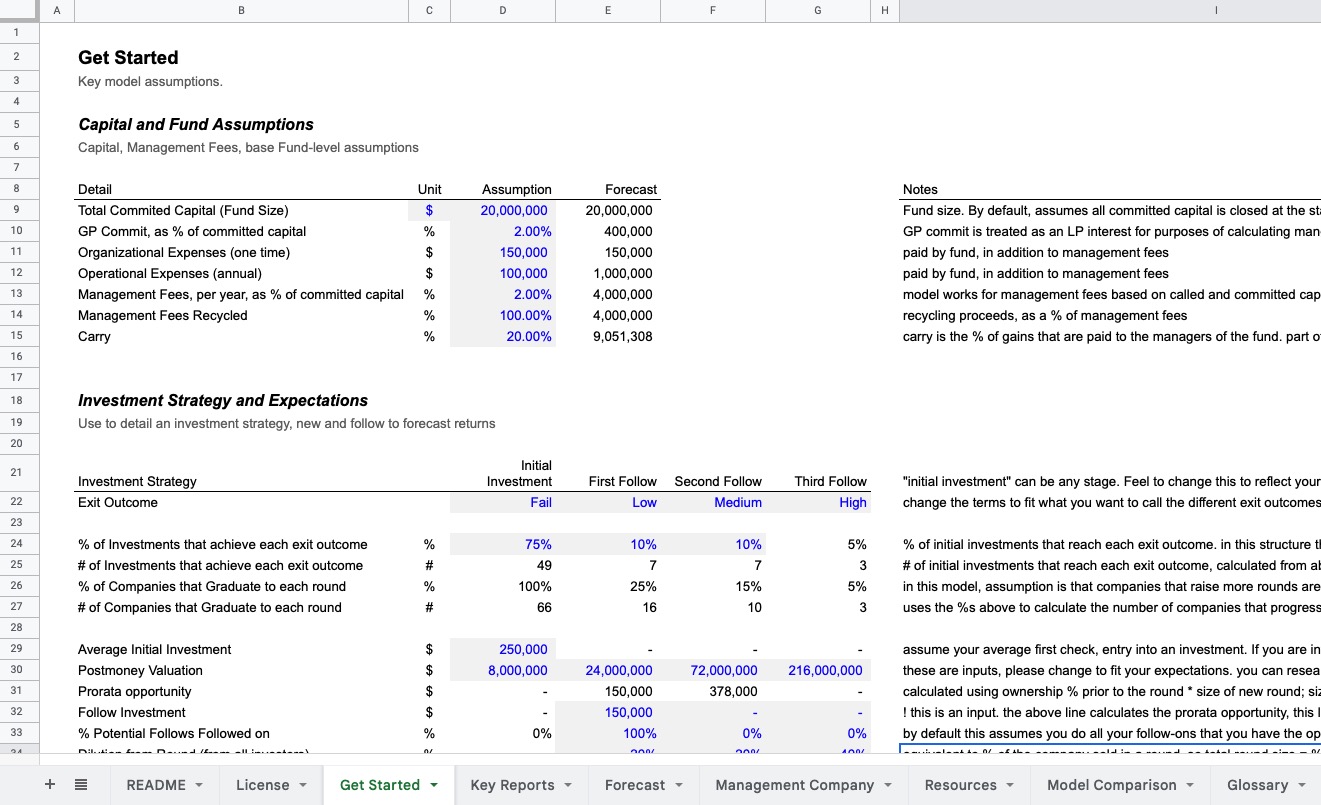
What is the Venture Capital Financial Model?
The venture capital financial model is a framework used by venture capitalists to evaluate and manage investments in high-growth startups. It involves projecting the financial performance of a startup, assessing potential risks, and estimating returns on investment. This model typically includes:
- Revenue Projections: Estimating future revenues based on market size, growth rates, and the startup's business model.
- Expense Forecasting: Predicting costs, including operational expenses, marketing, and R&D.
- Valuation Analysis: Determining the startup's pre-money and post-money valuation using methods like discounted cash flow (DCF) or comparable company analysis.
Key Components of the Venture Capital Financial Model
The venture capital financial model consists of several critical components that help investors make informed decisions. These include:
- Cash Flow Analysis: Tracking the startup's cash inflows and outflows to ensure liquidity.
- Scenario Planning: Creating best-case, worst-case, and base-case scenarios to understand potential outcomes.
- Exit Strategy: Identifying potential exit opportunities, such as IPOs or acquisitions, to maximize returns.
How Venture Capitalists Use Financial Models
Venture capitalists rely on financial models to assess the viability of startups and guide their investment decisions. The process involves:
- Due Diligence: Analyzing the startup's financial health, market potential, and team capabilities.
- Risk Assessment: Evaluating risks such as market competition, regulatory challenges, and technological hurdles.
- Return on Investment (ROI): Calculating potential returns to ensure the investment aligns with the fund's objectives.
Challenges in Building a Venture Capital Financial Model
Creating an accurate venture capital financial model can be challenging due to the inherent uncertainties in startups. Key challenges include:
- Unpredictable Revenue Streams: Startups often lack historical data, making revenue projections difficult.
- High Burn Rates: Early-stage companies may have significant cash outflows before achieving profitability.
- Market Volatility: Rapid changes in market conditions can impact the startup's growth trajectory.
Importance of Financial Models in Venture Capital
Financial models are essential tools for venture capitalists as they provide a structured approach to evaluating investments. Their importance lies in:
- Decision-Making: Helping investors decide whether to invest, how much to invest, and at what valuation.
- Performance Tracking: Monitoring the startup's progress against projected financial milestones.
- Investor Communication: Providing transparency to limited partners (LPs) and other stakeholders about the fund's performance.
Frequently Asked Questions (FAQs)
What is the primary business model of venture capital firms?
The primary business model of venture capital (VC) firms revolves around investing in early-stage or high-growth companies with significant potential for success. These firms raise funds from limited partners (LPs), such as institutional investors, wealthy individuals, or pension funds, and then allocate this capital to startups or emerging businesses. In return, VC firms typically take an equity stake in the companies they invest in, aiming to generate substantial returns when these companies either go public or are acquired.
How do venture capital firms generate profits?
Venture capital firms generate profits primarily through capital gains and management fees. The management fees, usually around 2% of the total fund size, cover operational costs. However, the bulk of their earnings come from the carried interest, which is a share of the profits (typically 20%) from successful investments. This profit-sharing mechanism aligns the interests of the VC firm with those of its investors, as both parties benefit when portfolio companies achieve high valuations or successful exits.
What types of companies do venture capital firms typically invest in?
Venture capital firms typically invest in high-growth industries such as technology, biotechnology, clean energy, and fintech. They focus on companies that demonstrate innovative solutions, scalable business models, and strong leadership teams. These firms often target early-stage startups (seed or Series A rounds) but may also participate in later-stage funding rounds for companies with proven traction and market potential.
What role do venture capital firms play in the growth of startups?
Venture capital firms play a critical role in the growth of startups by providing not only financial capital but also strategic guidance, mentorship, and access to networks. They often help startups refine their business models, connect with industry experts, and navigate challenges. Additionally, VC firms may assist in preparing companies for IPOs or acquisitions, leveraging their expertise to maximize the chances of a successful exit.
Leave a Reply
Our Recommended Articles