
LLC Operating Agreement: Georgia

Forming a limited liability company (LLC) in Georgia provides business owners with flexibility, liability protection, and tax advantages. However, drafting a comprehensive LLC operating agreement is a critical step often overlooked. While Georgia law does not legally require an operating agreement, this internal document establishes clear guidelines for managing the business, defining member roles, and resolving disputes. A well-structured agreement outlines profit-sharing arrangements, voting rights, and procedures for adding or removing members. It also helps preserve the LLC’s liability protections by demonstrating a separation between personal and business affairs. This article explores key considerations for creating an effective Georgia LLC operating agreement, including state-specific requirements, common clauses, and the importance of tailoring the document to your business’s unique needs.
- Understanding the LLC Operating Agreement in Georgia
- Is an LLC operating agreement the same as an LLC agreement?
-
How much does it cost to draft an LLC operating agreement?
- Factors Influencing the Cost of Drafting an LLC Operating Agreement
- Average Costs for Drafting an LLC Operating Agreement
- Hidden Costs to Consider When Drafting an LLC Operating Agreement
- Benefits of Hiring a Lawyer vs. Using Online Templates
- How to Reduce Costs When Drafting an LLC Operating Agreement
- Frequently Asked Questions About LLCs (FAQs)
Understanding the LLC Operating Agreement in Georgia
What Is an LLC Operating Agreement in Georgia?
An LLC Operating Agreement in Georgia is a legal document outlining the ownership structure, management roles, and operational rules for a limited liability company (LLC). While Georgia does not legally require LLCs to have an operating agreement, creating one is strongly recommended to avoid disputes, clarify financial responsibilities, and protect the company’s limited liability status. This agreement is customizable and binds members to agreed-upon terms, ensuring compliance with Georgia state laws (O.C.G.A. § 14-11-101 et seq.).
See AlsoSingle Member LLC Operating Agreement: Florida| Key Aspect | Description |
| Flexibility | Tailored to member needs |
| Liability Protection | Maintains separation between personal and business assets |
| State Compliance | Aligns with Georgia LLC statutes |
Key Components of a Georgia LLC Operating Agreement
A Georgia LLC Operating Agreement should include member details, profit/loss distribution, management structure, and dissolution procedures. It may also cover voting rights, meeting protocols, and dispute resolution. Clarity in these areas ensures smooth operations and legal protection.
| Component | Purpose |
| Member Contributions | Defines capital or asset investments |
| Profit Distribution | Outlines how earnings are divided |
| Management Roles | Specifies member-managed vs. manager-managed |
Is an Operating Agreement Legally Required in Georgia?
Georgia does not mandate an operating agreement for LLCs, but operating without one risks personal liability exposure and internal conflicts. Banks or investors may request it to verify business legitimacy. Drafting one ensures enforceability of internal rules under Georgia law.
See AlsoNJ LLC Operating Agreement| Requirement | Georgia Law |
| Mandatory | No |
| Recommended | Yes |
| Legal Weight | Binding if properly executed |
How to Amend an LLC Operating Agreement in Georgia
Amending a Georgia LLC Operating Agreement typically requires member consent, as outlined in the original agreement. Common reasons for amendments include adding members, changing profit splits, or updating management roles. Amendments must be documented in writing and signed by all members.
| Step | Description |
| Proposal | Submit changes for review |
| Voting | Follow agreement’s amendment clause |
| Documentation | File written amendments |
Single-Member vs. Multi-Member LLC Operating Agreements in Georgia
A single-member LLC Operating Agreement in Georgia focuses on preserving liability protection and succession planning. For multi-member LLCs, the agreement emphasizes governance, profit sharing, and conflict resolution. Both types must comply with Georgia’s LLC Act but differ in complexity.
See AlsoWyoming LLC Operating Agreement| Aspect | Single-Member | Multi-Member |
| Management | Sole decision-making | Voting or manager roles |
| Complexity | Simpler structure | Detailed governance rules |
Is an LLC operating agreement the same as an LLC agreement?
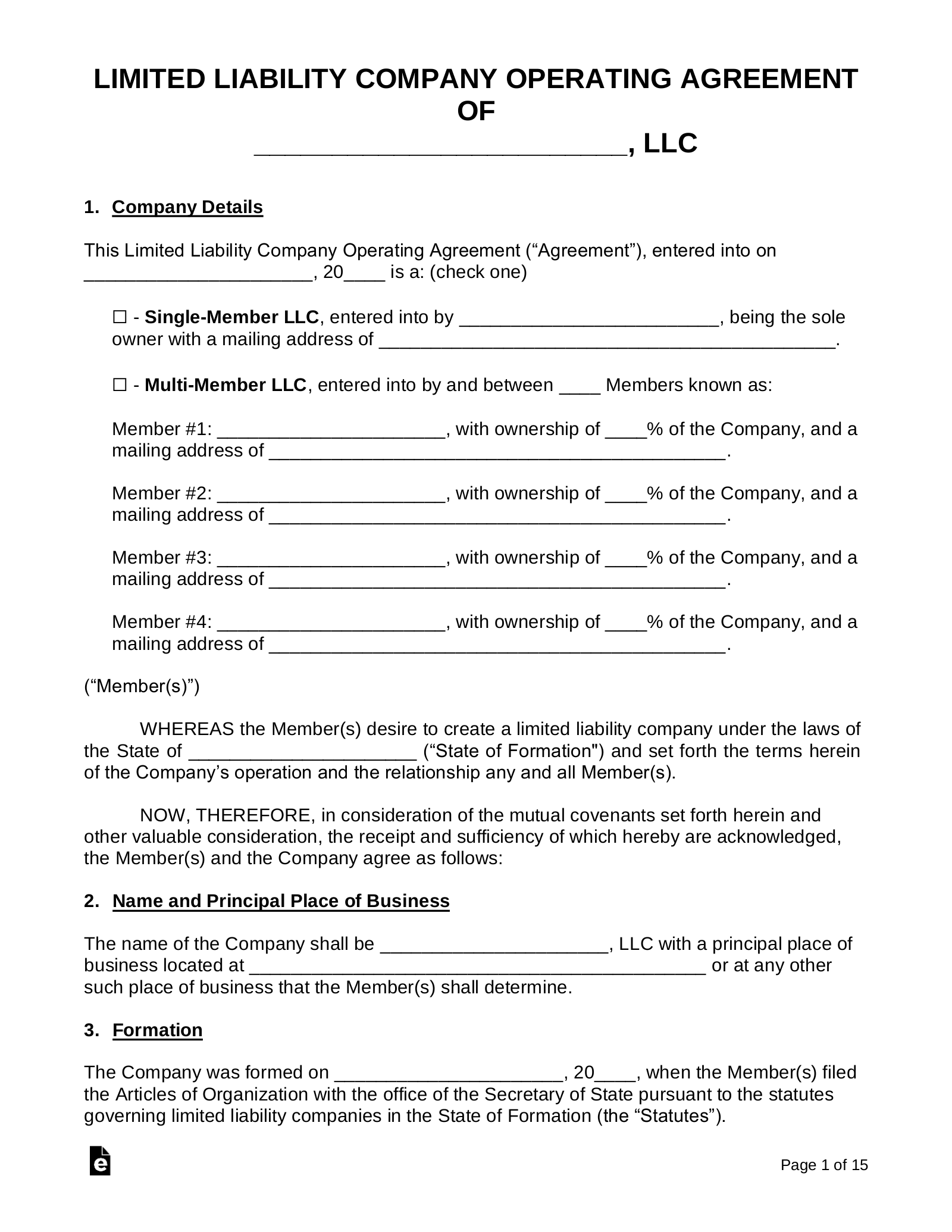
Is an LLC Operating Agreement the Same as an LLC Agreement?
An LLC Operating Agreement and an LLC Agreement refer to the same foundational document governing the operations and structure of a Limited Liability Company (LLC). The terminology varies based on regional preferences or legal phrasing, but both terms describe a contract that outlines ownership rights, management roles, profit distribution, and other operational rules.
See AlsoLLC Operating Agreement: Washington StateUnderstanding Terminology Differences
The distinction between an LLC Operating Agreement and an LLC Agreement is primarily semantic.
- Some states, like Delaware, commonly use LLC Agreement in statutes, while others, like California, prefer Operating Agreement.
- Both terms legally define the internal rules and member obligations of the LLC.
- Regardless of the name, the document serves the same purpose: establishing the LLC’s governance framework.
Core Components of Both Documents
Whether called an Operating Agreement or LLC Agreement, the document includes critical provisions for managing the business.
See AlsoIdaho LLC Operating Agreement- Ownership percentages and capital contributions from members.
- Procedures for voting, decision-making, and dispute resolution.
- Rules for profit/loss distribution and dissolution of the LLC.
Legal Implications of the Agreement
The LLC Operating Agreement/LLC Agreement is vital for legal protection and operational clarity.
- Without this document, the LLC defaults to state default rules, which may not align with members’ intentions.
- It reinforces the limited liability shield, separating personal and business assets.
- Courts may reference the agreement to resolve internal disputes, emphasizing the need for precision and completeness.
Customization Based on Business Needs
Both an LLC Operating Agreement and LLC Agreement are customizable to suit the LLC’s unique requirements.
- They can include clauses for admitting new members or buyout procedures.
- Tailored provisions for industry-specific regulations or tax strategies.
- Flexibility to address management structures, such as member-managed vs. manager-managed LLCs.
State-Specific Requirements and Filing
While terminology and structure may vary, compliance with state laws is essential for both documents.
- Some states mandate an Operating Agreement, while others merely recommend it.
- Filing requirements differ: most states do not require submission to authorities, but the agreement must be internally maintained.
- Legal counsel is advised to ensure alignment with state statutes and federal regulations.
How much does it cost to draft an LLC operating agreement?
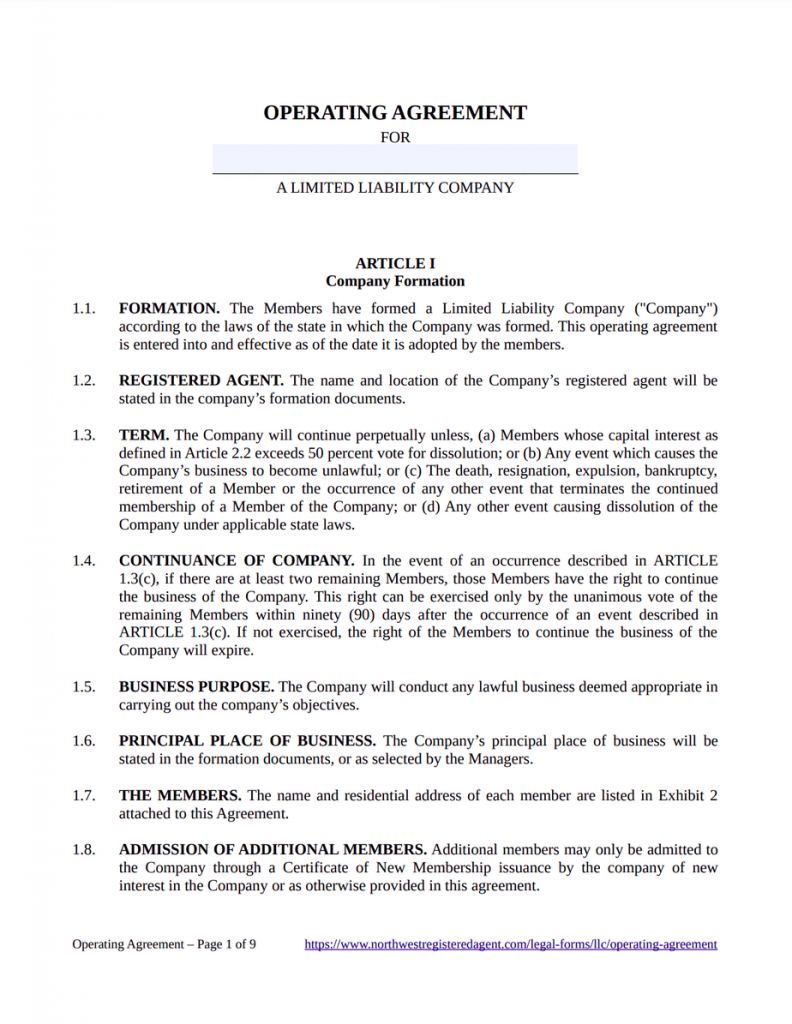
Factors Influencing the Cost of Drafting an LLC Operating Agreement
The cost of drafting an LLC operating agreement varies based on factors like complexity, attorney involvement, and customization.
- Complexity of the business structure: Multi-member LLCs or those with unique profit-sharing rules often require more detailed agreements, increasing costs.
- Attorney fees: Hiring a lawyer typically costs between $500 to $2,500, depending on their experience and location.
- DIY vs. professional services: Online templates ($50–$200) are cheaper but lack personalized legal advice.
Average Costs for Drafting an LLC Operating Agreement
The average price ranges from $100 to $2,500, depending on the method chosen.
- Online legal services: Platforms like LegalZoom charge $100–$350 for standardized agreements.
- Hiring a business attorney: Custom agreements drafted by lawyers average $1,000–$2,500.
- Free or low-cost templates: Basic templates cost under $50 but may not address state-specific requirements.
Beyond upfront fees, additional expenses may arise during the drafting process.
- Amendment fees: Updating the agreement later may cost $200–$500 per revision.
- State filing fees: Some states require separate fees (e.g., $50–$300) to register the LLC.
- Legal consultation costs: Hourly attorney rates ($150–$400) for reviewing or clarifying terms.
Benefits of Hiring a Lawyer vs. Using Online Templates
Choosing between a lawyer and templates depends on your needs for customization and legal compliance.
- Tailored solutions: Lawyers ensure the agreement aligns with state laws and business goals.
- Risk mitigation: Attorneys identify gaps in liability protection, reducing future disputes.
- Time savings: Online templates offer speed but may require revisions, costing time and money later.
How to Reduce Costs When Drafting an LLC Operating Agreement
Minimize expenses by balancing DIY efforts with professional input.
- Use hybrid approaches: Draft a template, then pay a lawyer ($200–$500) to review it.
- Compare multiple providers: Get quotes from several attorneys or online services.
- Check for bundled services: Some LLC formation packages include operating agreements at a discount.
Frequently Asked Questions About LLCs (FAQs)
Is an LLC Operating Agreement legally required in Georgia?
Georgia does not legally require LLCs to have an operating agreement. However, creating one is highly recommended. Without an operating agreement, your LLC will default to the Georgia LLC Act for governance, which may not align with your business’s specific needs. An operating agreement clarifies member roles, profit distribution, and dispute resolution, ensuring your LLC operates smoothly and maintains its limited liability protection.
What key provisions should a Georgia LLC Operating Agreement include?
A Georgia LLC Operating Agreement should outline ownership percentages, management structure (member-managed vs. manager-managed), and voting rights. It should also address profit and loss distribution, procedures for admitting or removing members, and rules for dissolving the LLC. Including dispute resolution methods, such as mediation, and guidelines for amending the agreement ensures adaptability as the business evolves. Always align the document with Georgia’s Articles of Organization filing requirements.
Can a Georgia LLC Operating Agreement be amended after formation?
Yes, a Georgia LLC Operating Agreement can be amended post-formation, provided the amendment process outlined in the original agreement is followed. Typically, amendments require a vote or unanimous consent from all members. Changes should be documented in writing, signed by members, and kept with the LLC’s records. For major changes, such as altering ownership structures, consult a Georgia business attorney to ensure compliance with state laws and avoid unintended tax or legal consequences.
What happens if a Georgia LLC operates without an Operating Agreement?
Operating without an LLC agreement in Georgia means your business is governed by the default rules of the Georgia LLC Act. This can lead to unintended outcomes, such as equal profit distribution regardless of capital contributions or member disputes over decision-making authority. Additionally, the absence of a formal agreement may weaken your liability protection, as courts could disregard the LLC’s separate legal entity status. Drafting an operating agreement mitigates these risks and provides clear operational guidelines.
Leave a Reply
Our Recommended Articles