
What is the Average Irr Achieved by Venture Capital Funds?

Venture capital (VC) funds are a cornerstone of innovation, providing critical funding to startups and high-growth companies. A key metric for evaluating the success of these funds is the Internal Rate of Return (IRR), which measures the profitability of investments over time. Understanding the average IRR achieved by venture capital funds is essential for investors, entrepreneurs, and industry analysts alike. This figure not only reflects the performance of the VC industry but also helps set expectations for potential returns. In this article, we explore the factors influencing IRR, historical trends, and what constitutes a strong performance in the competitive world of venture capital.
- What is the Average IRR Achieved by Venture Capital Funds?
- What is the average IRR for a VC?
- What's a good IRR for venture capital?
-
What is the average return on venture capital funds?
- What is the Average Return on Venture Capital Funds?
- Factors Influencing Venture Capital Returns
- Historical Performance of Venture Capital Funds
- Comparing Venture Capital Returns to Other Investments
- Risks Associated with Venture Capital Investments
- How to Evaluate a Venture Capital Fund's Potential Returns
- What is the 80/20 rule in venture capital?
- Frequently Asked Questions (FAQs)
What is the Average IRR Achieved by Venture Capital Funds?
Venture capital (VC) funds are known for their high-risk, high-reward investment strategies, primarily targeting startups and early-stage companies with significant growth potential. One of the key metrics used to evaluate the performance of these funds is the Internal Rate of Return (IRR), which measures the annualized effective compounded return rate. The average IRR achieved by venture capital funds can vary widely depending on factors such as the fund's focus, the stage of investments, market conditions, and the expertise of the fund managers.
See Also What Do Venture Capitalists Look for When Deciding to Invest in an Idea and a Team
Understanding IRR in Venture Capital
The Internal Rate of Return (IRR) is a critical metric in venture capital, representing the annualized return on investment over the life of the fund. It accounts for the time value of money, making it a more accurate measure of performance compared to simple return percentages. For venture capital funds, achieving a high IRR is often the primary goal, as it reflects the fund's ability to generate substantial returns from high-growth investments.
Historical Average IRR for Venture Capital Funds
Historically, the average IRR for venture capital funds has ranged between 15% to 27%, depending on the time period and market conditions. Top-performing funds, particularly those focused on early-stage investments in technology and innovation, have occasionally achieved IRRs exceeding 30%. However, it's important to note that these figures can fluctuate significantly based on economic cycles and the success of portfolio companies.
See Also What is the Reputation of the Vc Fund New Enterprise Associates (Nea)
Factors Influencing IRR in Venture Capital
Several factors influence the IRR of venture capital funds, including:
- Investment Stage: Early-stage investments typically offer higher potential returns but come with greater risk.
- Sector Focus: Funds investing in high-growth sectors like technology and biotech often achieve higher IRRs.
- Fund Management: The expertise and track record of the fund managers play a crucial role in achieving superior returns.
- Market Conditions: Economic cycles, interest rates, and investor sentiment can significantly impact fund performance.
Comparing IRR Across Different Fund Types
When comparing IRR across different types of venture capital funds, early-stage funds often outperform later-stage funds due to the higher growth potential of startups. However, later-stage funds may offer more stable returns with lower risk. Below is a comparison of average IRRs across fund types:
See Also Which of the Following Statements is Not True About Entrepreneurship It Creates a New Business It Creates New Jobs or Its About Profit Maximization
| Fund Type | Average IRR |
|---|---|
| Early-Stage VC Funds | 20% - 30% |
| Later-Stage VC Funds | 12% - 20% |
| Seed-Stage VC Funds | 25% - 35% |
Challenges in Achieving High IRR
Achieving a high IRR is not without challenges. Venture capital funds face significant risks, including:
- High Failure Rates: Many startups fail, leading to losses for the fund.
- Illiquidity: Investments in startups are often illiquid, making it difficult to exit positions quickly.
- Market Volatility: Economic downturns can negatively impact the performance of portfolio companies.
- Competition: Increased competition for high-quality deals can drive up valuations and reduce potential returns.
Strategies to Maximize IRR in Venture Capital
To maximize IRR, venture capital funds employ various strategies, such as:
- Diversification: Investing in a broad range of startups to spread risk.
- Active Management: Providing hands-on support to portfolio companies to drive growth.
- Focus on High-Growth Sectors: Targeting industries with significant growth potential, such as technology and healthcare.
- Timely Exits: Executing successful exits through IPOs or acquisitions to realize returns.
 Which Scenario Would a Venture Capitalist Prefer?
What is the average IRR for a VC?

The average Internal Rate of Return (IRR) for a Venture Capital (VC) fund typically ranges between 20% to 30%, depending on the fund's performance, market conditions, and the stage of investments. However, top-performing funds can achieve significantly higher IRRs, while underperforming funds may fall below this range. It's important to note that IRR is a measure of profitability over time and is influenced by factors such as exit timing, portfolio company performance, and market trends.
What Factors Influence the Average IRR for a VC?
The average IRR for a VC is influenced by several key factors:
- Investment Stage: Early-stage investments often carry higher risk but can yield higher returns if successful.
- Market Conditions: Economic trends, industry growth, and market demand significantly impact returns.
- Portfolio Diversification: A well-diversified portfolio can mitigate risks and enhance overall returns.
- Exit Strategy: Successful exits through IPOs or acquisitions are critical for achieving high IRRs.
- Fund Management: The expertise and track record of the VC team play a crucial role in fund performance.
How Does IRR Compare Across Different VC Funds?
IRR can vary widely across different VC funds based on their focus and strategy:
- Seed-Stage Funds: These funds often target IRRs above 30% due to the high-risk, high-reward nature of early investments.
- Growth-Stage Funds: Typically aim for IRRs between 20% to 25%, as they invest in more established companies.
- Top-Performing Funds: Elite funds may achieve IRRs exceeding 50%, driven by exceptional portfolio performance.
- Underperforming Funds: Funds that fail to meet expectations may report IRRs below 15%.
- Sector-Specific Funds: Funds focused on high-growth sectors like tech or biotech may see higher IRRs compared to generalist funds.
Why Is IRR Important for Venture Capital Investors?
IRR is a critical metric for VC investors for several reasons:
- Performance Measurement: It provides a clear benchmark for evaluating the success of a fund.
- Investor Confidence: High IRRs attract limited partners (LPs) and increase fundraising potential.
- Comparative Analysis: Investors use IRR to compare the performance of different funds and asset classes.
- Decision-Making: It helps investors assess whether to reinvest in a fund or explore other opportunities.
- Long-Term Planning: IRR projections assist in forecasting future returns and aligning investment strategies.
What Are the Challenges in Achieving High IRRs for VCs?
Achieving high IRRs is challenging due to several factors:
- Market Volatility: Economic downturns or industry disruptions can negatively impact returns.
- High Failure Rates: Many startups fail, leading to write-offs and reduced overall returns.
- Long Investment Horizons: VCs often wait years for exits, delaying realized returns.
- Competition: Increased competition for deals can drive up valuations and lower potential returns.
- Regulatory Risks: Changes in regulations can affect the viability of portfolio companies.
How Do VCs Calculate and Report IRR?
VCs calculate and report IRR using specific methodologies:
- Cash Flow Analysis: IRR is calculated based on the timing and amount of cash inflows and outflows.
- Net Present Value (NPV): The discount rate that sets the NPV of cash flows to zero is the IRR.
- Performance Benchmarks: VCs compare their IRR to industry standards and peer funds.
- Transparency: Accurate reporting of IRR is essential for maintaining trust with investors.
- Adjustments: VCs may adjust IRR calculations to account for unrealized investments or other factors.
What's a good IRR for venture capital?
Understanding IRR in Venture Capital
The Internal Rate of Return (IRR) is a key metric used in venture capital to measure the profitability of an investment. It represents the annualized effective compounded return rate, taking into account the timing and magnitude of cash flows. A good IRR for venture capital typically ranges between 20% to 30%, depending on the stage of investment, industry, and risk profile. Early-stage investments often demand higher IRRs due to their higher risk, while later-stage investments may have lower but more stable IRRs.
- IRR accounts for the time value of money, making it a more accurate measure of investment performance.
- Venture capital funds aim for high IRRs to compensate for the high risk and illiquidity of their investments.
- Benchmarking against industry standards is crucial to determine what constitutes a good IRR.
Factors Influencing a Good IRR
Several factors influence what is considered a good IRR in venture capital. These include the investment stage, market conditions, and the specific industry. For example, investments in high-growth sectors like technology or biotech may yield higher IRRs compared to more traditional industries. Additionally, the fund's strategy, such as focusing on early-stage startups versus mature companies, plays a significant role in determining the expected IRR.
- Early-stage investments often require higher IRRs due to increased risk and uncertainty.
- Market trends and economic conditions can impact the achievable IRR.
- Industry-specific risks and opportunities influence the target IRR.
Comparing IRR Across Investment Stages
The expected IRR varies significantly across different stages of venture capital investment. Seed-stage investments may target IRRs of 30% or higher, as these are highly speculative. In contrast, growth-stage investments might aim for IRRs in the range of 20% to 25%, as they involve less risk and more predictable cash flows. Understanding these differences is essential for investors to align their expectations with the risk-return profile of each stage.
- Seed-stage investments demand higher IRRs due to their high failure rates.
- Growth-stage investments offer lower but more stable IRRs.
- Later-stage investments may focus on lower IRRs with a higher probability of success.
IRR Benchmarks in Venture Capital
Benchmarking IRR against industry standards is critical for evaluating performance. Top-performing venture capital funds often achieve IRRs of 25% to 30% or higher. However, the average IRR for venture capital funds typically ranges between 15% to 20%. These benchmarks help investors assess whether a fund is meeting, exceeding, or falling short of expectations.
- Top-tier funds often achieve IRRs above 25%.
- The average IRR for venture capital funds is around 15% to 20%.
- Benchmarking helps investors gauge fund performance relative to peers.
Balancing IRR and Risk in Venture Capital
While a high IRR is desirable, it must be balanced against the associated risks. Investments with exceptionally high IRRs often come with significant risks, including the potential for total loss. Investors must evaluate whether the potential returns justify the risks involved. Diversification and thorough due diligence are essential strategies to manage risk while pursuing attractive IRRs.
- High IRRs are often correlated with high risk.
- Diversification can help mitigate risk while pursuing attractive returns.
- Due diligence is critical to assess the viability of high-IRR investments.
What is the average return on venture capital funds?
What is the Average Return on Venture Capital Funds?
The average return on venture capital funds varies significantly depending on the fund's performance, investment strategy, and market conditions. Historically, top-performing venture capital funds have delivered annualized returns of around 20% to 30%, while the median return for the industry is closer to 10% to 15%. However, these figures can fluctuate based on factors such as the stage of investments (early-stage vs. late-stage), sector focus, and economic cycles.
Factors Influencing Venture Capital Returns
Several factors influence the average return on venture capital funds:
- Investment Stage: Early-stage investments often carry higher risk but can yield higher returns if successful.
- Portfolio Diversification: Funds with a diversified portfolio across multiple sectors and stages tend to mitigate risks.
- Market Conditions: Economic downturns or booms can significantly impact exit opportunities and valuations.
- Fund Management: The expertise and track record of the fund managers play a critical role in achieving above-average returns.
Historical Performance of Venture Capital Funds
Historically, venture capital funds have outperformed traditional asset classes like stocks and bonds over the long term. For example:
- Top Quartile Funds: These funds have consistently delivered returns exceeding 20% annually.
- Median Funds: Median-performing funds typically achieve returns in the range of 10% to 15%.
- Underperforming Funds: Some funds may underperform due to poor investment choices or unfavorable market conditions.
Comparing Venture Capital Returns to Other Investments
When compared to other investment vehicles, venture capital funds often offer higher potential returns but come with increased risk:
- Stocks: The average annual return for the S&P 500 is around 8% to 10%, lower than top-performing venture capital funds.
- Bonds: Bonds typically yield 3% to 5%, making them less attractive for high-growth investors.
- Real Estate: Real estate investments average 6% to 8% annually, depending on the market.
Risks Associated with Venture Capital Investments
Investing in venture capital funds carries inherent risks that can impact returns:
- High Failure Rate: Many startups fail, leading to a total loss of invested capital.
- Illiquidity: Venture capital investments are typically locked in for 5 to 10 years, making them illiquid.
- Market Volatility: Economic shifts can drastically affect the valuation of portfolio companies.
How to Evaluate a Venture Capital Fund's Potential Returns
To assess the potential returns of a venture capital fund, consider the following:
- Track Record: Analyze the fund manager's historical performance and success rate.
- Investment Thesis: Understand the fund's focus areas and whether they align with high-growth sectors.
- Portfolio Companies: Evaluate the quality and potential of the startups in the fund's portfolio.
What is the 80/20 rule in venture capital?

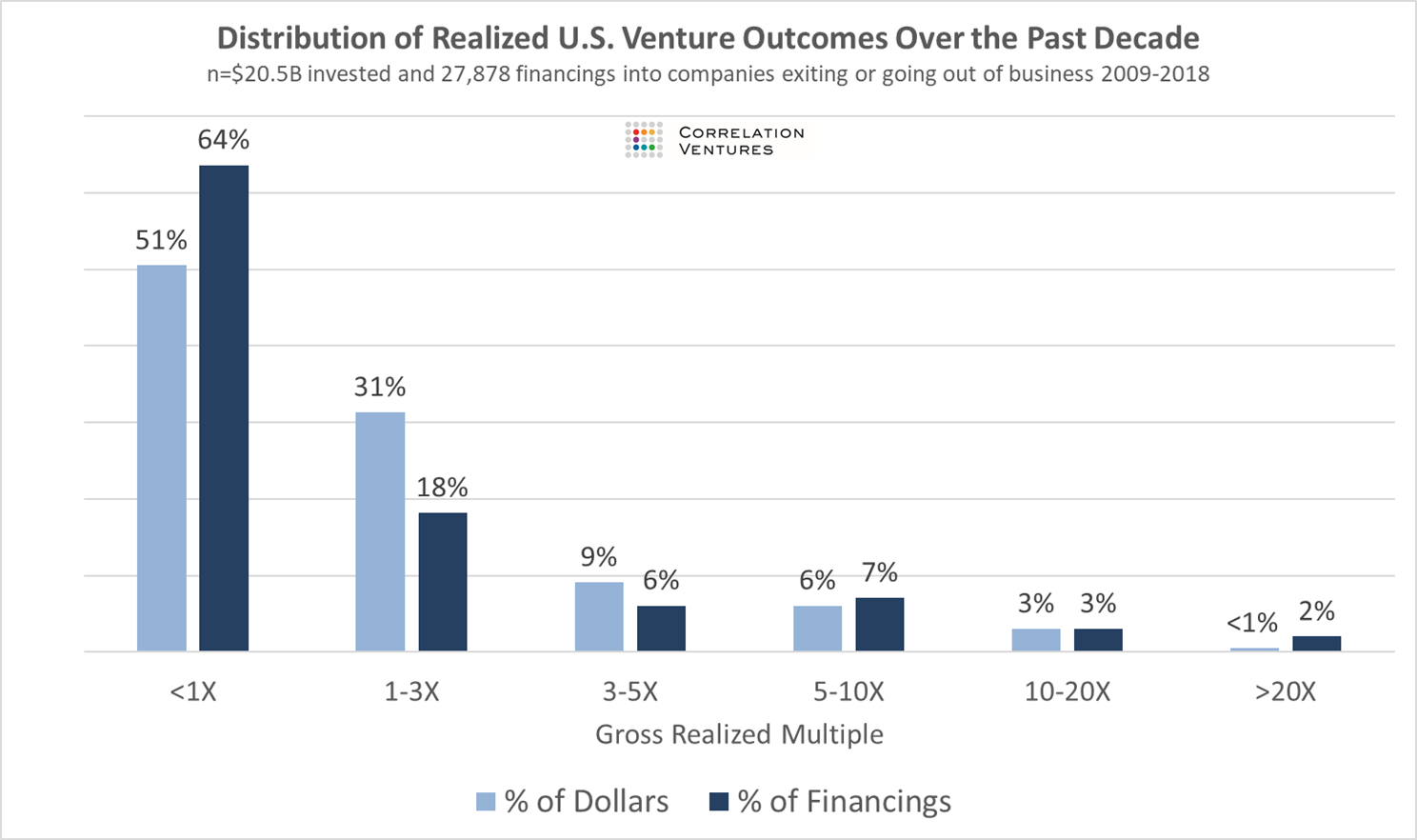
The 80/20 rule in venture capital refers to the observation that a small percentage of investments typically generate the majority of returns. Specifically, it suggests that 20% of a venture capital portfolio often accounts for 80% of the overall returns. This principle highlights the high-risk, high-reward nature of venture capital, where a few successful home runs can offset the losses from many underperforming or failed investments.
Understanding the 80/20 Rule in Venture Capital
The 80/20 rule, also known as the Pareto Principle, is a concept that applies to various fields, including venture capital. In this context, it emphasizes the importance of focusing on high-potential investments that can deliver outsized returns. Venture capitalists often accept that most of their investments may fail or underperform, but a small number of successful ones can drive the majority of the fund's profitability.
- High-risk, high-reward: Venture capital is inherently risky, with many startups failing to achieve significant returns.
- Portfolio diversification: Investors spread their capital across multiple startups to mitigate risks and increase the chances of hitting a home run.
- Focus on outliers: The rule underscores the importance of identifying and supporting startups with the potential to become market leaders.
Why the 80/20 Rule Matters in Venture Capital
The 80/20 rule is crucial in venture capital because it shapes how investors allocate resources and evaluate opportunities. By understanding that a small number of investments will drive most of the returns, venture capitalists can prioritize their efforts and capital on the most promising startups.
- Resource allocation: Investors focus on startups with the highest growth potential, often in emerging markets or disruptive technologies.
- Risk management: The rule helps investors accept that many investments will fail, but a few successes can compensate for losses.
- Strategic decision-making: It guides decisions on follow-on funding, exits, and portfolio management.
How Venture Capitalists Apply the 80/20 Rule
Venture capitalists apply the 80/20 rule by carefully selecting startups with the potential to deliver exponential growth. They often rely on data, market trends, and founder expertise to identify these high-potential opportunities.
- Due diligence: Investors conduct thorough research to assess a startup's market potential, team, and scalability.
- Focus on innovation: Startups with innovative solutions or disruptive technologies are more likely to become part of the 20% that generate significant returns.
- Active involvement: Venture capitalists often provide mentorship and strategic guidance to help their portfolio companies succeed.
Examples of the 80/20 Rule in Venture Capital
The 80/20 rule is evident in many successful venture capital portfolios. For instance, a fund might invest in 20 startups, with only 2 or 3 achieving substantial exits or valuations, while the rest either fail or deliver modest returns.
- Uber and Airbnb: These companies were part of the 20% that generated massive returns for their early investors.
- Failed startups: Many startups in a portfolio may shut down or struggle to scale, but their losses are offset by the success of a few outliers.
- Unicorn companies: Startups that reach billion-dollar valuations often account for the majority of a fund's returns.
Challenges of the 80/20 Rule in Venture Capital
While the 80/20 rule is a useful framework, it also presents challenges for venture capitalists. Identifying the 20% of startups that will succeed is difficult, and even experienced investors can make mistakes.
- Market unpredictability: Emerging markets and technologies are inherently uncertain, making it hard to predict success.
- Competition: High-potential startups often attract multiple investors, driving up valuations and reducing potential returns.
- Timing: Exits and liquidity events may take longer than expected, impacting overall fund performance.
Frequently Asked Questions (FAQs)
What is the average IRR achieved by venture capital funds?
The average Internal Rate of Return (IRR) achieved by venture capital funds typically ranges between 20% to 30%, depending on the fund's performance, market conditions, and the stage of investments. However, this figure can vary significantly based on factors such as the fund's focus (early-stage vs. late-stage), the quality of portfolio companies, and the overall economic environment. Top-performing funds may achieve IRRs well above this range, while underperforming funds might fall below it.
How does the average IRR of venture capital funds compare to other investment types?
Venture capital funds generally offer a higher average IRR compared to traditional investment types like public equities or bonds, which often yield returns in the range of 7% to 10%. This higher return potential is due to the high-risk, high-reward nature of venture capital, which involves investing in early-stage or growth-stage companies with significant upside potential. However, it's important to note that venture capital also carries a higher risk of loss compared to more conservative investments.
What factors influence the IRR of a venture capital fund?
Several factors influence the IRR of a venture capital fund, including the quality of the investment team, the sector focus of the fund, and the stage of companies in which the fund invests. Additionally, market timing, exit opportunities (such as IPOs or acquisitions), and the overall economic climate play crucial roles. Funds that successfully identify and invest in high-growth companies early often achieve higher IRRs, while those that fail to exit investments profitably may underperform.
Can individual investors expect to achieve the average IRR of venture capital funds?
Individual investors typically cannot directly access the average IRR of venture capital funds due to high minimum investment requirements and the illiquid nature of these investments. Most venture capital funds are limited to institutional investors or accredited individuals with significant capital. However, individual investors can gain exposure through venture capital ETFs, crowdfunding platforms, or by investing in publicly traded venture capital firms, though these options may not replicate the exact returns of traditional venture capital funds.
Leave a Reply
Our Recommended Articles