
What Do Venture Capitalists Look for When Deciding to Invest in an Idea and a Team


Venture capitalists (VCs) play a pivotal role in transforming innovative ideas into successful businesses. However, deciding where to invest their capital is no simple task. Beyond the allure of groundbreaking concepts, VCs meticulously evaluate both the idea and the team behind it. They seek scalable business models with significant market potential, clear competitive advantages, and a viable path to profitability. Equally important is the team’s ability to execute the vision—VCs look for founders with passion, expertise, resilience, and a proven track record. Understanding what venture capitalists prioritize can provide invaluable insights for entrepreneurs aiming to secure funding and drive their ventures forward.
- What Do Venture Capitalists Look for When Deciding to Invest in an Idea and a Team?
- What does a venture capitalist look for in a venture?
- How do VCs decide what to invest in?
- What are most venture capitalists looking for?
- What elements of a company would you look for in an ideal venture capital investment?
- Frequently Asked Questions (FAQs)
What Do Venture Capitalists Look for When Deciding to Invest in an Idea and a Team?
Venture capitalists (VCs) are always on the lookout for the next big opportunity. Their decision to invest in an idea and a team is based on a combination of factors that assess the potential for high returns. Below, we break down the key elements VCs consider when making investment decisions.
See Also How Much in Returns Do Venture Capitalists Generally Expect for Their Investment in a Startup
1. Market Potential and Scalability
VCs prioritize ideas that address large or rapidly growing markets. They look for businesses that can scale quickly and have the potential to dominate their industry. A startup targeting a niche market with limited growth potential is less likely to attract investment compared to one addressing a global or expanding market.
| Factor | Description |
|---|---|
| Market Size | The total addressable market (TAM) should be substantial to ensure significant growth opportunities. |
| Scalability | The business model should allow for rapid expansion without proportional increases in costs. |
2. Innovative and Differentiated Idea
A unique and innovative idea is crucial. VCs seek startups that offer something new or significantly better than existing solutions. The idea should solve a real problem or fulfill an unmet need in a way that sets it apart from competitors.
See Also Which Scenario Would a Venture Capitalist Prefer?
| Factor | Description |
|---|---|
| Innovation | The product or service should introduce a novel approach or technology. |
| Competitive Advantage | The startup should have a clear edge over competitors, such as intellectual property or a unique business model. |
3. Strong and Cohesive Team
The team behind the idea is just as important as the idea itself. VCs look for founders with relevant experience, a clear vision, and the ability to execute. A cohesive team with complementary skills increases the likelihood of success.
| Factor | Description |
|---|---|
| Experience | Founders should have a track record in the industry or a proven ability to build and grow businesses. |
| Team Dynamics | The team should work well together, with each member bringing unique strengths to the table. |
4. Traction and Proof of Concept
VCs prefer startups that have already demonstrated some level of traction. This could be in the form of early sales, a growing user base, or successful pilot programs. Traction validates the idea and reduces the perceived risk.
See Also What is the Reputation of the Vc Fund New Enterprise Associates (Nea)
| Factor | Description |
|---|---|
| Revenue | Early revenue streams indicate market demand and the potential for profitability. |
| User Growth | A rapidly growing user base suggests that the product or service is resonating with customers. |
5. Clear Exit Strategy
VCs invest with the expectation of a significant return, usually through an exit event such as an acquisition or IPO. A clear and realistic exit strategy is essential to attract investment.
| Factor | Description |
|---|---|
| Acquisition Potential | The startup should be an attractive target for larger companies in the industry. |
| IPO Readiness | The business should have the potential to go public, providing a lucrative exit for investors. |
What does a venture capitalist look for in a venture?
 Where Can I Find Examples of Investment Deal Memos Writen by Venture Capitalists
Strong Founding Team
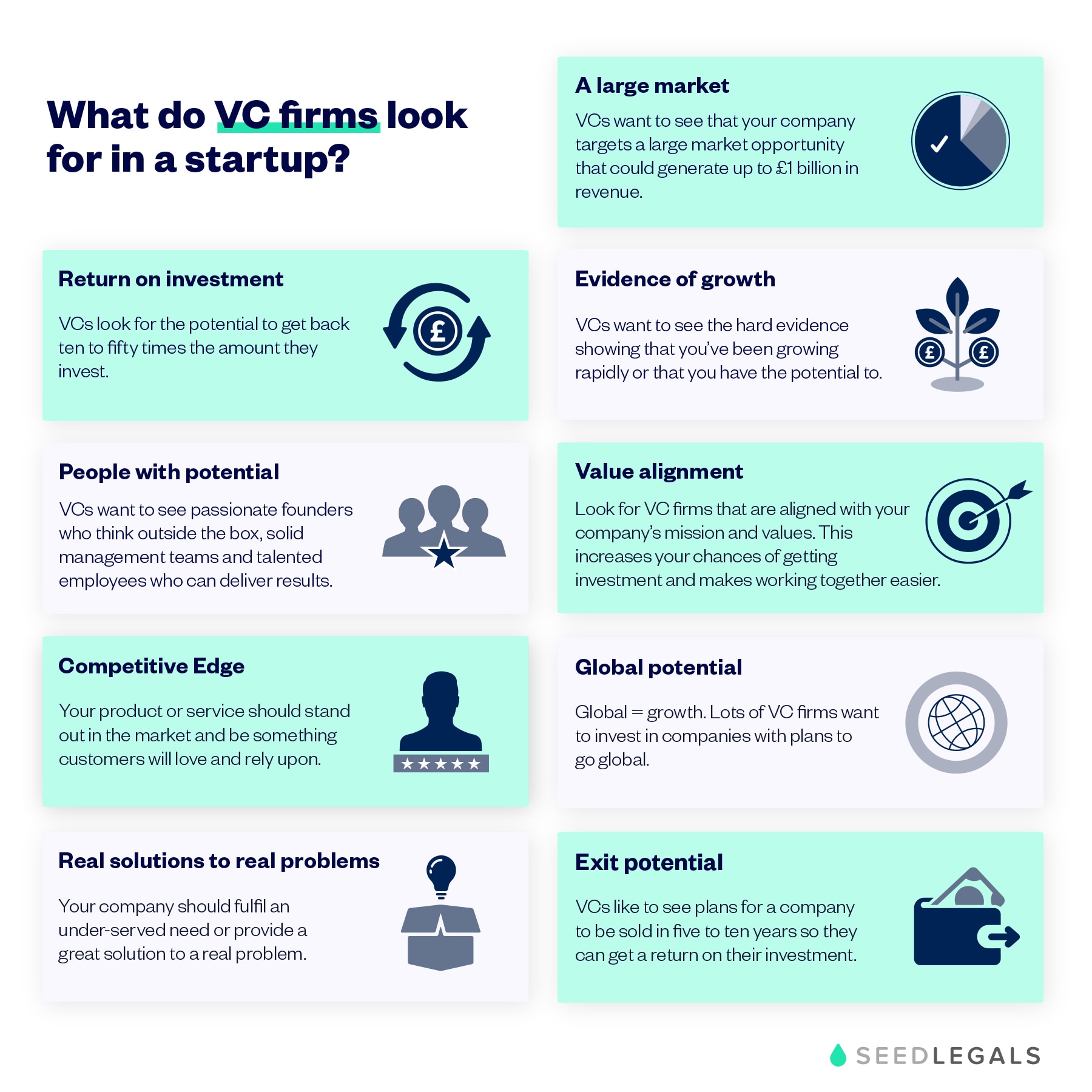
A venture capitalist prioritizes a strong founding team with a proven track record, relevant expertise, and the ability to execute the business plan effectively. They look for:
- Experience: Founders with prior entrepreneurial success or industry-specific knowledge.
- Leadership skills: The ability to inspire and manage a team.
- Adaptability: The capacity to pivot and respond to market changes.
Scalable Business Model
Venture capitalists seek ventures with a scalable business model that can grow rapidly and generate significant returns. Key factors include:
- Market potential: A large and growing target market.
- Revenue streams: Multiple or recurring revenue sources.
- Operational efficiency: The ability to scale without proportional cost increases.
Innovative Product or Service
An innovative product or service that solves a real problem or creates a new market is crucial. Venture capitalists evaluate:
- Uniqueness: A product or service that stands out from competitors.
- Customer demand: Evidence of market need and willingness to pay.
- Intellectual property: Patents or proprietary technology that provides a competitive edge.
Clear Exit Strategy
Venture capitalists look for a clear exit strategy that outlines how they will realize returns on their investment. This includes:
- IPO potential: The possibility of going public.
- Acquisition opportunities: Likelihood of being acquired by a larger company.
- Timeline: A realistic timeframe for achieving the exit.
Financial Viability
Financial viability is a critical factor, as venture capitalists assess the venture's ability to generate profits and sustain growth. They focus on:
- Revenue projections: Realistic and achievable financial forecasts.
- Burn rate: Efficient use of capital to extend runway.
- Profit margins: High margins indicating strong profitability potential.
How do VCs decide what to invest in?
Understanding the Market Potential
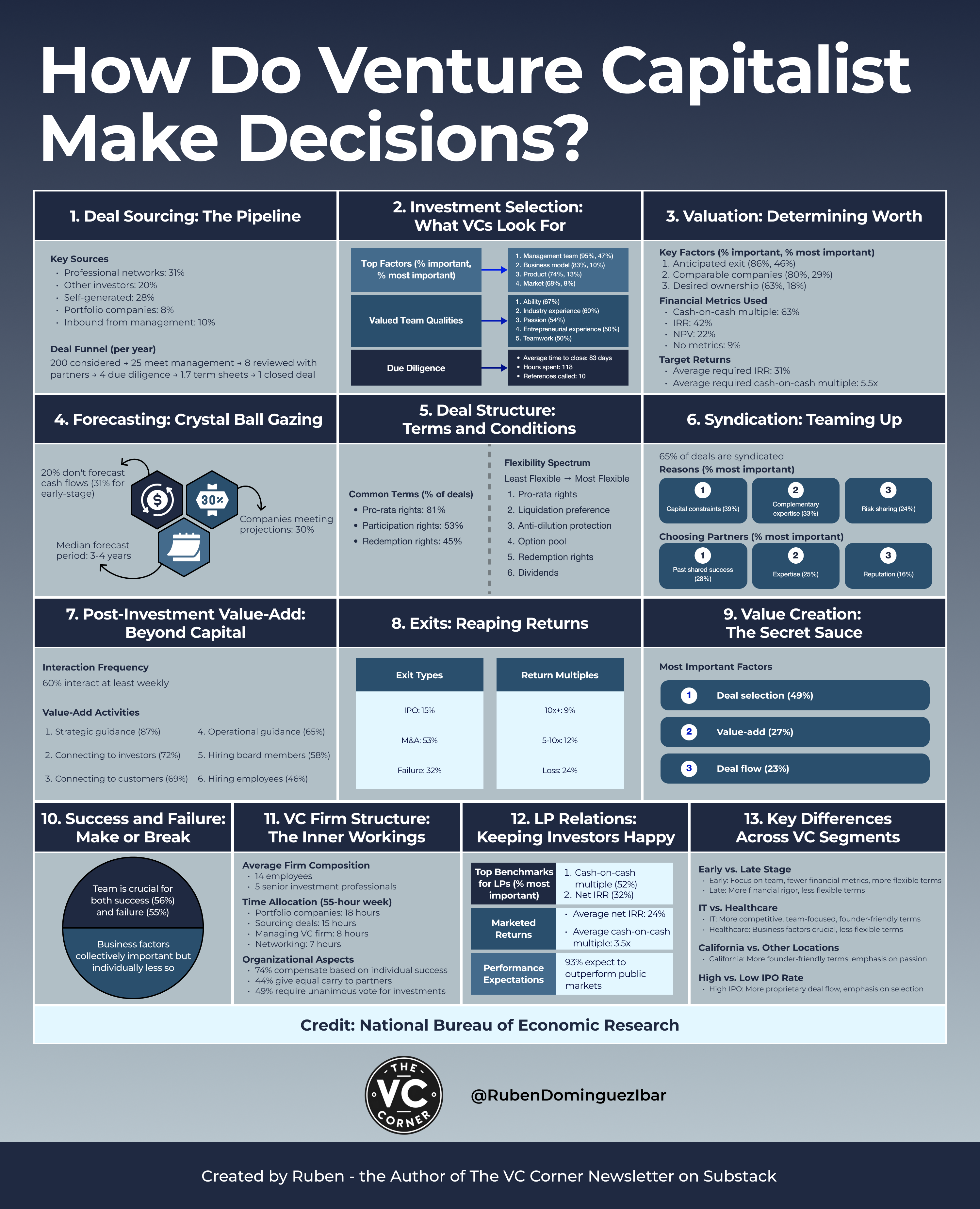
Venture capitalists (VCs) prioritize investments in startups that demonstrate significant market potential. They assess the size of the target market, growth rate, and scalability. Key factors include:
- Total Addressable Market (TAM): The overall revenue opportunity if the startup captures 100% of the market.
- Serviceable Available Market (SAM): The portion of the TAM that the startup can realistically target.
- Serviceable Obtainable Market (SOM): The share of the SAM the startup can capture in the near term.
Evaluating the Founding Team
VCs place immense importance on the founding team and their ability to execute the business plan. They look for:
- Experience: A track record of success in the industry or related fields.
- Vision: Clear and compelling long-term goals for the company.
- Resilience: The ability to adapt and overcome challenges.
Analyzing the Product or Service
The product or service itself is a critical factor in investment decisions. VCs evaluate:
- Innovation: How unique and differentiated the offering is from competitors.
- Scalability: The potential to grow without proportional increases in costs.
- Customer Demand: Evidence of market need and early traction.
Assessing Financial Metrics
VCs scrutinize the startup's financial health and projections to ensure a viable return on investment. Key metrics include:
- Revenue Growth: Consistent and rapid increases in revenue.
- Burn Rate: The rate at which the startup spends its capital.
- Profit Margins: The potential for profitability as the business scales.
Considering Exit Strategies
VCs invest with a clear exit strategy in mind, aiming to realize returns. They evaluate:
- IPO Potential: The likelihood of the company going public.
- Acquisition Opportunities: Interest from larger companies in acquiring the startup.
- Market Timing: The alignment of the startup's growth with favorable market conditions.
What are most venture capitalists looking for?
Strong Founding Team
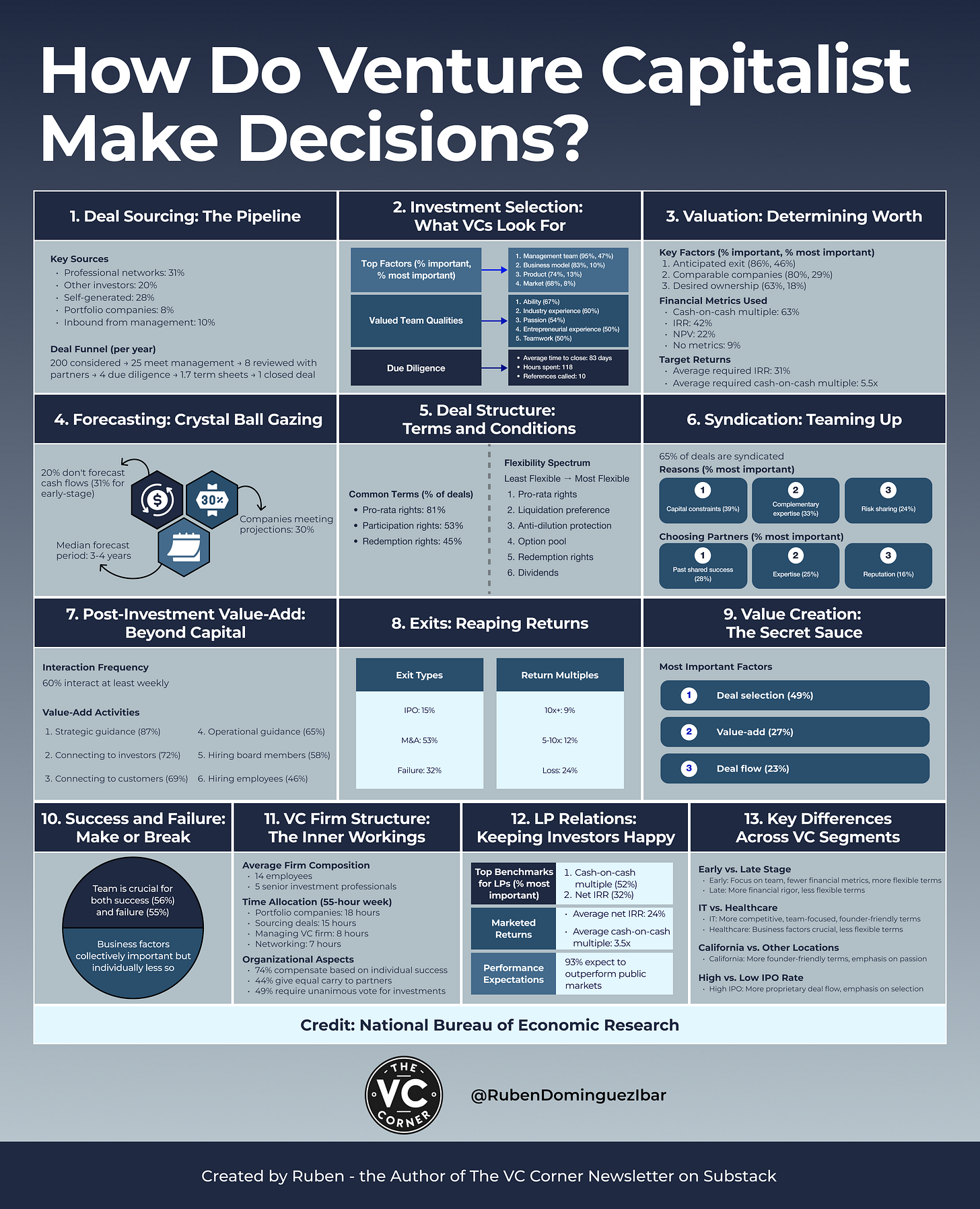
Venture capitalists prioritize a strong founding team with a proven track record, complementary skills, and a clear vision. They look for:
- Experience: Founders with prior entrepreneurial success or industry expertise.
- Leadership: The ability to inspire and manage a team effectively.
- Resilience: A demonstrated capacity to overcome challenges and adapt to setbacks.
Scalable Business Model
A scalable business model is crucial for attracting venture capital. Investors seek:
- Market Potential: A large and growing target market.
- Revenue Streams: Multiple or high-margin revenue opportunities.
- Efficiency: The ability to grow without proportional increases in costs.
Innovative Product or Service
Venture capitalists are drawn to innovative products or services that solve significant problems. Key factors include:
- Uniqueness: A product or service that stands out in the market.
- Technology: Proprietary technology or intellectual property.
- Customer Demand: Evidence of strong demand or early traction.
Clear Path to Exit
Investors want to see a clear path to exit that ensures a return on their investment. This includes:
- Acquisition Potential: Likelihood of being acquired by a larger company.
- IPO Readiness: Potential for an initial public offering.
- Timeline: A realistic and achievable timeline for exit.
Strong Financial Projections
Venture capitalists evaluate strong financial projections to assess the potential for high returns. They focus on:
- Revenue Growth: Projected revenue growth over the next 3-5 years.
- Profit Margins: High and sustainable profit margins.
- Burn Rate: Efficient use of capital to achieve milestones.
What elements of a company would you look for in an ideal venture capital investment?

Strong Management Team
When evaluating a company for venture capital investment, the management team is one of the most critical elements. A strong team demonstrates the ability to execute the business plan effectively and adapt to challenges. Key qualities to look for include:
- Experience: A track record of success in the industry or related fields.
- Leadership: The ability to inspire and guide the team toward achieving goals.
- Vision: A clear and compelling long-term strategy for the company.
Scalable Business Model
A company with a scalable business model is essential for venture capital investment. This means the business can grow significantly without a proportional increase in costs. Key indicators include:
- Market Potential: A large and growing target market.
- Revenue Streams: Multiple or diversified sources of income.
- Operational Efficiency: Systems and processes that can handle growth without excessive overhead.
Innovative Product or Service
An innovative product or service that addresses a clear market need is a strong indicator of a promising investment. The product should stand out in the market due to its uniqueness or superior quality. Key factors include:
- Differentiation: A unique value proposition that sets it apart from competitors.
- Customer Demand: Evidence of strong interest or demand from the target audience.
- Intellectual Property: Patents or proprietary technology that provides a competitive edge.
Clear Path to Profitability
Investors look for a clear path to profitability to ensure the company can generate returns. This involves understanding the company's financial projections and revenue model. Key aspects include:
- Revenue Growth: Consistent and sustainable increases in income over time.
- Cost Management: Effective control over expenses and operational costs.
- Break-Even Point: A realistic timeline for when the company will become profitable.
Strong Market Position
A company with a strong market position is more likely to succeed and attract investment. This includes having a competitive advantage and a solid brand presence. Key elements include:
- Market Share: A significant or growing portion of the target market.
- Brand Recognition: A well-known and trusted brand among customers.
- Barriers to Entry: Factors that make it difficult for competitors to enter the market.
Frequently Asked Questions (FAQs)
What are the key factors venture capitalists consider in an idea?
Venture capitalists primarily look for innovation, scalability, and market potential in an idea. They seek concepts that solve real problems in unique ways, as this often indicates a higher chance of success. Additionally, the idea must be scalable, meaning it can grow significantly with increased resources. A large and growing market is also crucial, as it ensures there is enough demand to support the business's expansion.
How important is the team when making investment decisions?
The team is one of the most critical factors for venture capitalists. They look for a strong leadership, diverse skill sets, and a proven track record. A cohesive team with complementary skills increases the likelihood of executing the idea successfully. Additionally, founders with prior entrepreneurial experience or industry expertise are often viewed more favorably, as they demonstrate the ability to navigate challenges and drive growth.
What role does traction play in securing venture capital funding?
Traction is a significant indicator of an idea's potential and is highly valued by venture capitalists. It includes metrics like user growth, revenue, partnerships, or product development milestones. Traction demonstrates that the idea has been validated in the market and reduces the perceived risk for investors. Even early-stage startups with minimal traction can attract funding if they show a clear path to achieving measurable progress.
How do venture capitalists evaluate the financial viability of an idea?
Venture capitalists assess financial viability by examining the business model, revenue projections, and unit economics. They want to see a clear plan for generating revenue and achieving profitability. A well-thought-out business model that outlines how the company will monetize its product or service is essential. Additionally, realistic and data-driven financial projections help investors understand the potential return on their investment.
Leave a Reply
Our Recommended Articles